Nnedi Okorafor Interview, Part 1: ‘Is everything written? And if it is, can you rewrite it?’

Nnedi OkoraforThe novelist Nnedi Okorafor is one of today’s most compelling YA authors. Her books offer a unique mix of African culture, science fiction and fantasy adventure, at once accessible to a wide audience and definitively rooted in a non-Western tradition.

In her latest novel, Akata Witch, all the tropes of Harry Potter and its ilk – the hero’s journey of a young magician, schools of wizardry, teens caught up in a battle for the fate of the world – are rethought and refreshed through a cosmopolitan, transnational perspective that ditches the grey stone and largely white faces of Hogwarts for a tender yet uncompromising Afrocentric vision of the cosmos.

Nnedi’s debut Zahrah the Windseeker won the Wole Soyinka Prize in 2008 – and Akata Witch (which I reviewed here for Brooklyn Rail), takes her writing to new heights.

Sunny, the 12-year-old ‘witch’ of the title, is an albino African-American who returns to Nigeria, her parental homeland, only to be doubly ostracized for her pale skin and US background. Sunny gradually discovers that she has magic powers, and is destined to play a small but vital role in a conflict that threatens the future of humanity.

As Nnedi explained when we met in Chicago’s Senegalese restaurant Yassa, ‘Destiny has always been something I’ve grappled with. Is everything written? And even if it is, can you rewrite it? I’m fascinated by destiny, but I also resist it.’

Nnedi’s own career owes directly to such acts of irresistible fate.

Growing up in the suburbs of Chicago, she was a teenage tennis star until surgery for scoliosis left her paralyzed and bedridden at the age of 19.

‘Until then, I’d never have thought to pick up a pen. I was only nineteen, really athletic, but scoliosis painted my life. I left college as an athlete – and came back using a cane!’

A friend recommended that Nnedi take a creative writing class, beginning a journey that took her through journalism, short stories and a PhD thesis en route to her current career as a novelist.

‘My bout of paralysis was terrible, brutal and completely changed my life in a very specific way. In the same way, the kids in Akata Witch are at the mercy of their powers – those gifts are part of who the kids are, but they can’t be chosen. Destiny is brutal, it does not care about you.’

This philosophical perspective shapes even the most action-packed moments of Nnedi’s writing.

In Zahrah, a key moment involves the teenage heroine’s encounter with a giant, deadly ‘whip scorpion’, from which she is ultimately saved by an even larger jungle beast.

Nnedi admits during our interview, ‘I actually stole Zahrah’s escape from the whip scorpion from the first Star Wars prequel – the sea creature chasing our heroes gets eaten by a larger monster, and Liam Neeson says, “There’s always a bigger fish.”

What seems corny in George Lucas’ hands (for a while, I wondered if ‘There’s always a bigger fish’ was going to replace ‘I’ve got a bad feeling about this’ as the inane Star Wars catchphrase), here ties in to Nnedi’s ideas about humility and fate.

In Akata Witch, Sunny is no Harry Potter, a ‘chosen one’ destined to be a key player in the battle for the survival of tAkata Witch by Nnedi Okoraforhe world.
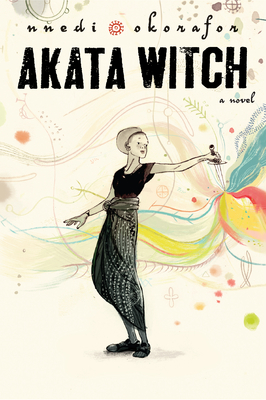
Sunny and her friends are explicitly told by their mentors that they are expendable in the fight against evil: ‘The world is bigger than you are, it will go on without you.’

Nnedi’s writing offers one balm for this uncomfortable truth: the realization that we must appreciate the gifts that life chooses to grant us.

The thrill of Sunny’s first soccer match grips the characters, and the reader, just as much as the climactic final showdown. Akata Witch may puncture the comforting notion of a guaranteed “special destiny,” but it also celebrates the shared adventure of everyday life on our planet.

Next time on this blog, more from my interview with Nnedi Okorafor, as we discuss her genre-busting position as a Young Adult writer whose work refuses to be pigeonholed.

Find the second part of the interview here.

>Interview with Cody Pickrodt, Comics Creator

>

A former teacher in public schools now inspires a new generation of comics creators in Brooklyn and beyond


‘Sometimes it felt like babysitting,’ comic book author Cody Pickrodt says of his days teaching in the California public school system. ‘There’s not enough money and not enough choice, when we need something more like a university, which caters to what the kids want to do.’

Cody is speaking to me in Café Grumpy, ‘a perfect café for comic book artists: big tables and not too loud.’ It’s located on a snowy streetcorner in Greenpoint, a world away from the West Coast schools where Cody first became involved in education. As an art teacher within the state, he would drive from school to school delivering sessions which increasingly came to focus on his first love, comic books. Returning to his native New York, Cody turned his passion into a profession as the leader of comic book workshops first for 3rd Ward, and then for Uproar Art.

Cody’s passion for comics in fact began in the city – specifically, in Chinatown. The young Cody’s Chinese-American mother took him on shopping trips where he developed a taste for Asian comic book imports.

‘I went from Disney comics straight to manga,’ Cody tells me. ‘I couldn’t read what they were saying at first, but the pictures told the story nonetheless. After a while, I even learned how to read Chinese, which after all is just another set of pictures. This was twenty years ago, well before the current popularity of manga today. And I actually learned something then, which I can’t say for the quality of manga that kids read today.’

Cody feels it’s vital to encourage a new generation even as Hollywood promotes comic adaptations from Spider-Man to Superman and Tamara Drewe to Scott Pilgrim. ‘It’s easy to forget that comics are actually on the wane. Graphic novel sales have dropped significantly in the last year. The boom in comics became a glut, and it’s only now that the industry is shrinking that there’s room to take creative chances. It’s a great time for young, original creators to jump on board.’

Cody has done his part to foster this new generation of talent among both students and teachers, having trained a new generation of instructors at 3rd Ward, including comics teacher Joanne Sherrow.

Now Cody’s workshops are available for all ages from Kindergarten to 12th Grade, via Max Goodman’s non-profit organization Uproar Art, featured last time on Books and Adventures.

Working around a simple 6-panel page format, Cody uses a variety of techniques and tricks to get creativity flowing among his classes. In one activity, students may pass their comic book to a partner between panels, creating a collaborative work.

‘These classes work with all ages from infant to adult,’ says Cody, although he’s particularly impressed by Kindergarteners, who he says ‘focus and really get into it’.

In common with Uproar’s director Max Goodman, Cody believes that many subjects can be taught via creative, practical art activities. The comic book form lends itself to almost any subject on the curriculum. And, taught in small groups – 6 students is the optimum number – Cody’s classes enable students to find their own creative impulses and express them through the comics medium.

Cody’s own journey from those Chinatown manga to his current output has been a painstaking one. Cody’s first comic book, Night Swim, boasting a 200 copy print run, was drawn, printed and individually assembled entirely by hand, prior to his experience using computers. Today his work, largely aimed at an adult audience, includes two concurrent narrative comics alongside countless cartoons, illustrations and the art project Men with Whom I Share the Same Height.

Cody works from a movie-style script, writing up to twelve issues in advance and creating thumbnails before moving on to a Zen-like drawing process. ‘It sounds odd, but I try not to think about drawing while I’m drawing. I’ll put on a movie or a listen to the news in the background, or just think about something else entirely, daydream even–anything to occupy that analytical part of my brain while I work. You achieve a purer line that way.’

Cody’s current series Francine Way, born during his studies for an BFA in Sequential Art, follows a teenage girl, interested in survivalism, who leaves her home for the nearby woods. Her illusions about a life of solitary freedom are shattered when she meets a feral boy, living rough in the wild, who may be linked to a series of violent and disturbing events in the town.

‘It’s a kind of Nancy Drew story with a twist,’ says Cody, ‘about an outsider girl who wants to find out who’s behind this mystery, but who also doesn’t want to jeopardize her friendship with this fellow outsider.’

More about Francine Way and Cody’s other work – some only suitable for adult readers – is available at http://codypickrodt.com/shop

In March, Cody will run a one-day parent and child workshop for Uproar Arts, sharing his expertise and giving families a taste of comic book creation. To find out more and get in touch with the Uproar team, visit http://www.uproarart.org/

>The Lesson of League Tables

>I’m sure many UK readers will have seen the news today about the primary school league tables, whose results have just been published.

Angela Harrison of the BBC reports that almost 1 in 10 of schools with validated and published results failed to meet minimum standards in the SATs. But how many of these schools will be located in the most challenged areas of this country, where pupils and parents alike need support and encouragement, rather than teachers bound to a regime of relentless formal assessment?

Teaching in a London school where a high percentage of pupils had English as an Additional Language, I was incredibly frustrated by the box-ticking mentality, especially in literacy.

Such an attitude encourages teaching to the test rather than a love of reading and writing. The best teachers in the world will find themselves sitting with an “underperforming” student on the day results are due in, thinking, “Just let me tick one more box so I can move you up another sub-level!”

My class made great progress in their literacy skills – but more from an attitude on the part of our year group that we would make learning fun, engaging and creative.

A poetry unit was delivered to rap music – our class gave themselves rap names and learned to freestyle to The 900 Number (“I like / chocolate / I want / CHOCOLATE CAKE!”). I knew we had made an impact when months later one of our pupils, who had little English and numerous educational needs, was still using the rap names with his friends in the playground.

In another class, we created a ‘living comic book’ together, using a whiteboard for each panel of the story of ‘Melon Boy’, a superhero who transformed into a caped, flying cantaloupe when he consumed too much of the fruit in question.

The story was inspired by a boy in our class who had given himself a laughing fit that morning, when he said, ‘My mum says if I eat too much melon, I might just turn into one.’

It was the first time he had ever given himself an attack of the giggles. He couldn’t stop, and the whole class ended up laughing along with him.

By using that moment as a springboard for our literacy lesson, the entire class became enthused and empowered to apply their own creativity to reading and writing.

When the education system mandates ‘teaching to the test’ in the very earliest stages of schooling, which should be about fostering a love of learning…
When teachers have their performance management directly linked to children’s formal levels….
It becomes incredibly difficult for classroom practitioners to be confident, creative and…dare we say it…a little subversive.

With the best will in the world, teachers find themselves ‘playing it safe’ and delivering mediocre education under such a system. Check-boxes will never prioritise the kind of passion for learning which brings together parents, pupils, and teachers – the kind of whole-community commitment which schemes like Paint the Town Read deliver so well in Australia.

It’s frustrating that around the world, so much of the ‘heavy lifting’ of encouragement and enthusiasm in education – work which is actively frustrated by the league table/”No Child Left Behind” mentality – falls to committed, creative, subversive teachers – and to those generous members of the community who commit to schemes like Volunteer Reading Help, Reading Partners, or Paint the Town Read. It’s time for the authorities to rethink their priorities and put a love of learning before league tables.

*

Well, that’s almost it for 2010. Next time on Books and Adventures, our review of the year, along with some sneak previews of features, interviews and guest writers for 2011!

>Patricia Wrightson, Part 5: Looking To The Future

>

You can find the first part of this feature here.

We’ve made it to the fifth and final part of our discussion of Patricia Wrightson, and it’s time to look towards the future.

The challenges of Wrightson’s legacy, the power of her storytelling, and the undeniable literary quality of her writing, make it an absolute shame that her books are so hard to get hold of today.

I was lucky that Judith Ridge’s notice of Patricia Wrightson’s death led me to pick up old paperback editions online, and lucky once more that Claire Massey of the Fairy Tale Cupboard led me to Katherine Langrish’s blog, Seven Miles of Steel Thistles.

A post on Seven Miles, ‘Cultural Appropriation and The White Saviour’, addressing Katherine’s own use of Native American myth in her fantasy writing, brings us forward to the 21st century. It pointed me towards the Australian government’s protocols on using Aboriginal culture in literature – a valuable initiative which nonetheless raises further interesting questions about how legal and governmental bodies regulate the imagination!

But ultimately, as Katherine points out: ‘While I find it terribly sad that Wrightson’s books were shunned, I can see also that when so much has been stolen, people are going to feel strongly about ownership of their own stories. Stories are the signature of a culture. And sometimes stories are all you have left.’

I recognise the limits of what we’ve done here at Books and Adventures this month. All I can hope is that, for readers as new to Wrightson as me, these few instalments on the blog have gone beyond the obituaries and given a little more attention to the issues, and existing discussions, surrounding Wrightson’s work.

Let’s give the last word to Mark Macleod, who talked to me about the prospects of a reissue for Wrightson’s works:

‘A very few publishers have shown that they are willing to republish Australian classics, but the problem is that the ‘classic’ presentation they choose has almost no appeal to young readers today, and the sales that result create a self-fulfilling prophecy about the likely level of interest in such writers. Maybe some enthusiast will find ways of making them work in the digital space, by focusing on readers who are not the traditional supporters of literary fiction.’

>Patricia Wrightson, Part 4: Shadows of Time

>

Patricia Wrightson’s Shadows of Time (1994) is a strange and powerful novel. It recounts the journey of an Aboriginal boy and English colonist girl who, by the gift of spirits, ‘travel in a timeless dimension’ – drifting without ageing or changing through Australian history. En route they are chased as devils, encounter various supernatural creatures and even come across a mysterious stone figure who may be the protagonist of the earlier Wirrun books. Although Wrightson had to some extent ‘let go’ of indigenous subject matter by this period, Shadows unmistakeably revisits some of the themes of her earlier novels.

Mark Macleod links Shadows to the Australian bicentenary of 1988. ‘That itself was a problematic anniversary. Indigenous Australians had already renamed Australia Day (26 January, the day when Captain Phillip took possession of the country in the name of the English king) ‘Survival Day’. And as the Bicentenary approached non-Indigenous Australians were increasingly asking ‘What is there to celebrate?’

The timeless quality of the children’s journey in Shadows, ‘given the privileges of water – to flow wherever is natural’, allows for a meditation on Australian history and, thereby, on Wrightson’s concept of culture.

As Mark Macleod explained in our recent interview:

‘In Shadows of Time, Wrightson invents a spirit character that seems very like those she borrowed from Indigenous culture in earlier works, but is in fact her own. For a writer who speaks repeatedly of borrowing only the equivalent of European ‘fairies’ and being careful not to touch the spirits of creation mythology, and who speaks of her terror of misrepresenting the spirits she does borrow, this is almost a defiant move, coming as it does after she has acknowledged that time has overtaken her whole project. The novel is therefore a coda to her major work, reasserting the mutability of cultures and her right as an artist to let her imagination flow where it will. Her readers and Wrightson herself might have changed their views over time – but not entirely.’

As time continues to flow, and Wrightson becomes a posthumous figure to be considered primarily through her legacy, there are challenges ahead for those who wish to preserve her work and circulate it for a new generation.

Mark Macleod comments, ‘I think we are still vaguely embarrassed or guilty about the idea that she might have been just another one in a long line of exploiters of Indigenous people.’

But it is precisely the encounter with Wrightson’s texts which dispels that idea, while at the same time forcing us to consider the complex and uncomfortable connections between storytelling and the legacy of colonialism.

A fantasy writer ‘cannot restore the original context for mythic stories, but she can create new contexts – as living cultures themselves do constantly. The fantasist can use all the resources available to the contemporary novelist to fill gaps within and around the story, and at the same time can alert the reader to some of what was lost.’ – Brian Attebery

Brian Attebery makes a distinction between a fantasy writer like Wrightson and any self-appointed white spokesperson for Aboriginal people: ‘Her job, as a writer, is to work out in fictional form her own relationship with Australia’s troubled history and haunted landscape. Her strategy has been to bring in Wirrun and other characters to share the task, going where she cannot go. These fictional collaborators remind readers that we need to invite other collaborators, fictional and real, to help us extend the quest for understanding beyond the boundaries of the text itself.’

Attebery’s comments raise so many questions worthy of debate. That fantasy writer ‘alerting the reader to some of what was lost’ sounds like those white 1930s poets busy writing on behalf of the Aboriginal culture they perceived to be dying, which leads us back to asking: Who set Wrightson the task of ‘working out in fictional form her own relationship with Australia’s troubled history and haunted landscape’? And what do we make of the notion of a ‘fictional collaborator’?

These are questions to which there’s no final answer, but they are thrown up by the challenge of Patricia Wrightson’s legacy today – which forms the basis of our final instalment, next time on Books and Adventures.

You can go to the fifth and final part of this feature by clicking here.

>Patricia Wrightson, Part 3: Outsiders and Indigenization

>

Patricia Wrightson was born in 1921 and grew up between the two World Wars of the 20th century. Publisher Mark Macleod points to her childhood in the 1930s as setting the context for her relationship to indigenous culture. The interwar years saw Australia disillusioned by the sacrifices of the First World War and turning away from ‘Old Europe’ towards the cultures of its own continent: ‘This was the Australia that Patricia Wrightson grew up in: with some sense of loss of its connection with Europe, and some sense of impending loss of its Indigenous culture and the need to ‘save’ it.
‘The devastating loss of young Australian lives in a war that had no geographical imperative for us, but was wholly motivated by the political connection with the UK, and the resulting destruction of European society on a massive scale produced a turning-away from Europe by many Australian artists. It seemed to many that European culture was moribund … So writers and visual artists particularly began to look to Indigenous Australian sources of energy for the imagination … The artists – having been brought up with the general belief that Indigenous Australian culture was dying – thought they were preserving it.’
John Murray locates Wrightson’s work within a tradition of literary ‘indigenization’ – fiction that seeks to bring European-descended inhabitants of countries like Australia ‘into imaginative contact with the lands in which most of them were born but in which, by comparison with their indigenous peoples, they are aliens.’ To Murray, Wirrun himself becomes an explicitly indigenizing figure, unifying Australia: by the final book of the trilogy, he has taken on heroic responsibilities to the entire spiritual and material ecology of the continent, from spirits to the white urban population and the animal kingdom besides.
Mark Macleod told me: ‘It is possible to read Patricia Wrightson’s emphasis on ‘folk’ as a romantic reverence for simplicity or innocence. This comes dangerously close to the racist construction of indigenous cultures generally as childlike … We understand now that we can kill the thing we love, but it is too easy to approach this difficult and complex issue ahistorically and condemn it out of hand.’
An alternative, Mark suggests, is to look at the overlapping experiences of outsiderness between indigenous Australians and other groups. He points to the poet Les Murray’s early interest in Indigenous subject matter in the 1960s and 70s: ‘With his Scots heritage and his upbringing in rural Australia, he sees a natural empathy between the marginalising of Celtic Australians, non-Anglo migrants and Indigenous Australians. They have all been colonised by the English.’
Brian Attebery, writing on Wirrun in 2005, chimes with this perspective when he discusses George, a white ‘Inlander’ who helps Wirrun at the climax of the first book by distracting other white Australians who threaten to interfere with our hero’s plans. George, a farmer of harsh and isolated country, is an outsider in the mainstream society of white Australian ‘Happy Folk’, figures who feature only in the margins of the Wirrun books.
Attebery suggests that the Australian continent is the real protagonist of The Song of Wirrun, and all the other characters are defined by their relationship to the land – a sliding scale from the ignorant, superficial Happy Folk with their air conditioning and service stations, graduating through the Inlanders to the Aboriginal People, heroes like Wirrun, and finally the spirits whose actions trigger Wirrun’s quest.
Mark Macleod writes, ‘The reality is that there are Indigenous and non-Indigenous Australians and they need to find ways to coexist. Their histories and mythologies are different; their values often seem diametrically opposed. [Wrightson’s] project to try and create a pan-Australian imagery therefore rests finally on the idea that all they really have in common is the land.’


‘There is a sense of loss by both Indigenous and non-Indigenous Australians. But what they all have in common is the land. Wrightson says repeatedly throughout her career that her books must not be read as ‘good vs. evil’ stories. The real issue is ecology: the rightful place of all beings.’ – Mark Macleod

Seen in this light, George the Inlander is an outsider, too – like Les Murray’s Celts. Although he’s not directly allied with Wirrun on his quest, he obliquely helps by keeping other white Australians away. He does this, tellingly, by taking on a number of roles which satirise relations between indigenous and non-indigenous Australians, pretending to be first an anthropologist, then the producer of a hippyish Aboriginal ‘happening’, and finally a snake collector who has hired Wirrun and company to collect poisonous reptiles.

Mark Macleod suggests that for Wrightson, the key figure was always that of the outsider, be that the artist in Australian society, or the child in the adult world. In their different ways, George and Wirrun, and Wrightson herself, are all outsider figures.

Wirrun was Wrightson’s first indigenous main character. As Macleod points out, ‘He is a city boy, who travels to the central Australian desert and reconnects with the Dreaming. He is marginalised in his own culture.’ Brian Attebery takes this further by pointing to the Stolen Generation of Aboriginal children who were taken from their families and raised in homes or adopted by white families. The white-educated Wirrun is likely either a member of the Stolen Generation, or a child of that generation – although this is not confirmed explicitly by Wrightson’s text.

Mark continues: ‘By the mid-70s, when the Wirrun books started to appear, Indigenous Australian voices were becoming a powerful political and cultural force … So Wrightson’s desire to alert non-Indigenous Australians to the need for a new vision was becoming increasingly irrelevant … She did realise it, and from the mid-80s she lets go of the Indigenous subject matter for which she had become known around the world.’

This idea of letting go of indigenous subject matter from the mid-80s is the line that is taken in Patricia Wrightson’s UK obituaries…but one of her most interesting and challenging books is the unusual, dreamlike Shadows of Time. This novel, published in the wake of Australia’s bicentenary, seemed almost to revisit the world of Wirrun, with both an indigenous main character and seemingly indigenous spirit characters.

We’ll be looking at Shadows next time on Books and Adventures. To go to part four of this feature, click here.

>Patricia Wrightson, Part 2 – The Representation of Aboriginality

>

Clare Bradford’s 2001 Reading Race: Aboriginality in Australian Children’s Literature was one of the key academic texts to question Patricia Wrightson’s use of Aboriginal myth.

Bradford’s study was a clear-headed critique of Aussie writing for children, with lasting value. Reading it now prompts us to consider, for example, that this year’s Australian movie Tomorrow, When the War Began, adapted from the 1980s novels by John Marsden, is also implicated in the period of colonialism by harking back to the ‘frontier spirit’ in a tale of white teens fighting back against Asian invaders.

For Bradford the key question was how children’s texts try to position their readers with regard to aboriginality. From 1950s books, where Aboriginal Australians ‘appear, if at all, as a melancholy presence, doomed to extinction’, to more recent appropriations of Aboriginal myth, she diagnoses a tendency to represent Aboriginal people as an undifferentiated ‘Other’ to the white Australian readership.

Bradford questions the image of Wrightson as an advocate or defender of Aboriginality. She writes: ‘To look closely at the discourses which inform these texts is to recognise how the warm glow of Aboriginality conceals its appropriating and controlling strategies.’

In Wrightson’s later Shadows of Time, Bradford suggests, the novel’s Australian spirits are merely mapped on to Western notions of hobgoblins, mermaids and dragons.

Brian Attebery and Mark Macleod have both emphasised that Wrightson was always careful to use figures from Aboriginal superstition and myth rather than sacred religious beliefs such as creation myths, trying to focus, as Attebery writes, on fantastic creatures ‘without explicitly invoking religious ideas.’

This was an attempt to show respect by populating her fantasies with the creatures of folk tale rather than figures of religious significance, but Clare Bradford questions the legitimacy of such a sliding scale, where all supernatural tales are assigned a value – sacred or trivial – according to the writer’s judgment: ‘Cinderella and ‘How The Kangaroo Got Its Hop’ jostling in the lowest level, Adam and Eve at the top with the Rainbow Serpent … Wrightson’s use of the term ‘superstitious’ degrades the narratives that she claims for her own purposes.’

Against this, we can read Attebery: ‘No amount of care can make [Wrightson] into a tribal elder, nor can her use of Aboriginal folklore ever be fully ‘authentic’. However, she can become… a participant in the reshaping of tradition for a modern world in which authenticity is an inaccessible ideal.’

So why was Wrightson looking to participate in these traditions at all? Next time we’ll go back to the 1930s, the time of her childhood, to look at the impulse by some white Australian artists to ‘save’ a culture they saw as threatened with extinction.

For part three of this feature, click here.

>Patricia Wrightson, Part 1: The Song of Wirrun and Beyond

I’m starting an in-depth look at the work of the late Patricia Wrightson (1921-2010) this week.

I read her trilogy The Song of Wirrun for the first time this year, immediately after hearing news of her death in March. It’s an absorbing, sophisticated fantasy quest rooted in Aboriginal mythology.

A few comments from my earlier blog post are here. I wrote it based on the books I happened to be reading at the time, Wirrun and John Gordon’s The Giant Under the Snow, which draws on British legends for its spooky, dark adventure. Now, looking back, my comments on ‘the power of the land’ seem rather naïve in the face of long and deep-rooted debates about the place of Aboriginal culture in Australian children’s writing.

I was keen to move beyond the snapshot of Wrightson’s work offered by the obituaries and, from my limited Pommie perspective, try to understand the issues raised by her use of indigenous Australian myth. In fact, I was compelled: these books were just so gripping for me as a reader, I needed to know why they were out of print and so controversial. Over the next few posts on the blog I hope to give an outline of the critical debates on Wrightson for readers as new to her novels as I was.

Mark Macleod, Patricia Wrightson’s friend and publisher at Random House, was kind enough to join me for an e-mail discussion of her work and legacy. I started by asking him about the importance she held for Australian children’s literature in the postwar period, as both a writer and as the editor of Australia’s School Magazine.

He explained how Wrightson acted as ‘an enabler, whose passionate commitment to making stories with an Indigenous theme part of the literary mainstream helped prepare readers for the many Indigenous and non-Indigenous artists who followed. The cross-cultural partnership of Dick Roughsey and Percy Trezise, who changed Australian picture books in the 1970s, for example, found an audience already used to thinking of Indigenous subject matter for children as exciting, dramatic and edgy. That is at least partly due to the high profile success of Wrightson as a ‘real author’ in the education market before them.’

Yet somehow Wrightson has become a writer less read than revered: a name to conjure with, but one whose books are difficult to obtain.

‘It was significant that news of her death was carried in Midwest newspapers and regional networks in the United States, but barely rated a mention in Australia,’ Mark Macleod suggests. ‘I think we are still vaguely embarrassed or guilty about the idea that she might have been just another one in a long line of exploiters of Indigenous people – but in many cases that view is not the result of close acquaintance with the texts themselves.’

So why are these fantasy adventures by a heavyweight of children’s literature so hard to get hold of these days? And what is there to say about her use of Aboriginal myths and beliefs in those fantasies?

Over the next few blog posts, I want to look a bit deeper at Patricia Wrightson’s work and legacy. As critic Brian Attebery points out in a 2005 article, ‘the borrowing of one culture’s traditions by another is a serious and risky business’, with a danger that privileged white societies ‘acquire whatever is of value in indigenous culture while consigning the bearers of that culture to invisibility or extinction.’

So how might we read Patricia Wrightson’s relationship to the Aboriginal myths in her writing – appropriation, advocacy or something else entirely?

We’ll be looking at this question next time on the blog. For part two of this feature, click here.

>help2read – Volunteer Literacy Support in South Africa

>Books and Adventures continues our world tour of literacy support this week, heading to South Africa to visit the literacy NGO help2read.

help2read founder Alex Moss started visiting South Africa shortly after the introduction of democracy to the country in 1994. A visit to a township with a leading member of the struggle against apartheid inspired Alex to help with the construction of a new society in South Africa.

‘I was struck by the shocking levels of illiteracy arising out of the lack of adequate education during the apartheid years,’ Alex explains. ‘I was convinced that the disadvantaged majority would only ever be able to reach their full potential if they could fully enjoy the benefits of education, benefits which require the prerequisite of literacy.’


Working as a volunteer with Volunteer Reading Help in the UK showed Alex a model of literacy support which could be taken to South Africa at a comparatively low cost, but it took time for the project to get off the ground.


Early in 2005, Alex met Dee Cawcutt, the Principal of Muizenberg Junior School, just outside Cape Town. Dee offered to put her school forward as the first for what would become the help2read programme. The children, aged 5-12, are selected by class teachers as being those, other than children with special needs, perceived as most in need of assistance. They read and play literacy games with their volunteer helper, working in the school library or a quiet place outside the classroom, supported by help2read’s resource boxes full of interesting and beautiful books.

Alex takes up the story:


‘In the summer of 2005 I persuaded my daughter to come back from Washington DC, to be trained at VRH and to go to Cape Town to set up the programme. She arrived in Cape Town in early November 2005 and quickly set about recruiting volunteers wherever she could. On 1 February 2006, six trained volunteers started at Muizenberg Junior School.’


Within weeks the school was reporting unprecedented change in the pupils on the programme, ‘from being completely shut down to becoming happily involved in school life and the excitement of learning.’


The early volunteers for help2read were, like those of VRH in the UK, often middle-class people eager to share the benefits of their education and make a contribution to society. In South Africa, this group continues to provide a significant minority of volunteers – but a great change has come about from 2006, when help2read began recruiting from among the parents of a township school.


This proved very successful and quickly became the model for most help2read volunteer recruitment. Alex explains: ‘The volunteers are the literate parents of children at the same school as the children they are helping and are able to achieve equally impressive results with the children as those we gained at Muizenberg. Volunteers also benefit from the empowerment that they experience in becoming a respected member of the school community and with the success which they achieve with the children they are helping.’


help2read has already helped over 5000 South African primary school children to become literate. ‘In every single case,’ says Alex, ‘these children would have been early drop outs from the education system without the help our volunteers have given them. Now each one of them has the opportunity to go all the way through the system, to university and beyond.’


help2read’s sights for the future are also set high. Having adapted the VRH model, developed in a wealthy Western country, to a South African setting, the help2read team are planning to extend their programme to all African countries where English is the medium for education.


‘We hope to open our first programme outside South Africa by 2012,’ says Alex. ‘In the longer term, we believe that the help2read concept can be replicated in other languages and can be a major part of the solution to the literacy problem that exists in all developing countries.’


To find out more and get involved, visit http://help2read.org/

Zahrah the Windseeker by Nnedi Okorafor

Nnedi Okorafor is hardly short of positive reviews at the moment, but I just wanted to drop a few lines about her 2005 Young Adult novel Zahrah the Windseeker, which I picked up this month.

The book sees thirteen-year-old Zahrah venture into a forbidden jungle on a quest to find the antidote to a poison which has claimed her best friend Dari. On Zahrah’s travels there are encounters with giant scorpions, psychic baboons, and a city of gorillas, as well as the small-mindedness of Zahrah’s native town to contend with.

There’s been a lot of praise for both the Afrocentric sci-fi setting Okorafor has imagined, and for Zahrah herself as a strong, yet vulnerable and credible, heroine. However, what I really loved about this novel was its focus on the importance, and future of, the book.

The charming, rebellious Dari whom Zahrah must save is a hero precisely because of his bookishness. Dari may not be up to the jungle quest which Zahrah undertakes, but his thirst for knowledge, driven by reading, helps to upset the stagnant and self-satisfied society which Zahrah challenges.

An erratically functioning ‘digi-book’, The Forbidden Greeny Jungle Field Guide, plays a vital part in Zahrah’s journey. Her relationship to this frustrating, inspiring piece of technology makes neat comment on the various brands of e-book reader, at once incredibly useful and unbelievably irritating. Every time she tries to access its pages for advice on a particularly fearsome beast, the otherwise indispensable guide can be counted on to malfunction.

The literary lineage of this chatty, occasionally useful device is hinted at by another reference, made in the novel by a talking frog which Zahrah encounters:

‘“Like every other human explorer I’ve met, you want to know the meaning of life […] The answer is forty-four. That machine was off by two,” the frog snapped.’

Which is up there with Doctor Who’s dressing gown as the neatest Hitchhiker’s reference you will see this decade!

Zahrah the Windseeker isn’t as jokey as The Hitchhiker’s Guide to the Galaxy, but somehow Okorafor has seen straight to the heart of the Hitchhiker’s series and the sense of wonder that permeates it.

She also makes a neat swipe at the current vogue for ‘adding value’ to books with interviews, extraneous material and reading-group prompts when Zahrah mentions her favourite novel:

‘I’d read it four times. But not once did I read the rambling thoughts of the author – on how to cook the perfect holiday fowl – that came stored in the digi-book along with the story. Of course, as I read the book, every ten pages a little window would pop up on the bottom, saying “Hey, why don’t you read a bit about my thoughts on glazed bush fowl? As you can see, I write brilliantly. I cook even better!’

You can find out more about Nnedi Okorafor at her website, The Wahala Zone, here.