My 2012 Zombies in the Library event in rural New South Wales has just been featured as an online ‘how-to’ feature at The Library as Incubator Project – http://www.libraryasincubatorproject.org/?p=8939 – a U.S. scheme highlighting the way that libraries and artists can work together.
Last month, British playwright Fin Kennedy wrote a compelling piece for the Oxford Culture Review on the value of arts collaborations with the higher education sector. He writes:
“When these sorts of collaborations work well they’re a brilliant two-way street; arts organisations get a share of Universities’ physical resources and manpower, Uni students get professional experience and links with industry, and inner city young people get friendly and accessible contact with Higher Education. And it all costs hardly anything – the ingredients are all there. It just takes a creatively-minded individual to bring them together. I’m a big advocate of artists taking that role. As freelancers we’re in a strong position to broker those relationships between organisations we all already have links with anyway.”

theoxfordculturereview's avatarThe Oxford Culture Review

Following a meeting with Culture Minister Ed Vaizey, award-winning UK playwright Fin Kennedy is running a campaign to raise governmental awareness of the effects of arts funding cuts upon theatres. I spoke to him about the project and the importance of the arts in Britain.

To anyone who doesn’t know about your campaign – what are you trying to achieve, and who can get involved?

Last month I met Culture Minister Ed Vaizey at a Writers’ Guild event at Parliament. He claimed that the recent round of swingeing cuts to public investment in the arts were having no impact at all on the development of new plays in the UK. I knew from my own experience of seeing the theatre industry I work in contracting all around me that this wasn’t true, but there are surprisingly few facts and figures available. Vaizey said he would look over any evidence I could…

View original post 1,676 more words

readitadmin's avatar

A youth event with a difference highlights the community value of libraries

There is no-one in the library when the children arrive.

Jagged letters are chalked across the door: SAVE YOURSELVES.

Blood is pooled on the front step.  Within, bookshelves have been knocked to the ground, their contents spilled across the carpet.

The air is thick with summer heat and silence.

The children suspect a prank.  They’re quick to investigate, eagerly picking over the vandalised interior, quizzing their teachers:

“Is it a murder mystery game?”

“Did you fake a burglary?”

Before the adults have time to answer, a terrible cry comes from the street outside.

The children run to the library doors.

They see figures approaching: gruesome, deformed individuals from the ranks of the walking dead. Zombies attack!  The children scream as the teachers hurry them inside and barricade the doors.

Only the library can save them now…

View original post 540 more words

readitadmin's avatar

A guest post by Dr Matt Finch

Snoopy was my first comic book hero.  Before I could read, before I could even follow the stories from frame to frame, I used to flip through the dozens of Peanuts books we had lying around our home, hunting out the pictures of Charlie Brown’s taciturn dog.

Charles Schulz, the creator of Peanuts, was a master cartoonist who could convey volumes with a minimal number of pen strokes.  The image above, capturing Snoopy in a soaring act of imagination, is potent because, though wordless, it belongs to the world of storytelling (and therefore literature) as much as art.

It took time for my infant self to fully make sense of Charlie Brown and company, but once I did, there was another mystery waiting for me – the inscriptions by my Mum and Dad in every edition.  It took a few years for…

View original post 541 more words

New tumblr at matthewfinch.tumblr.com

Click to see my Tumblr site
Matt at Coney Island Subway, March 2011

At the prompting of various friends and colleagues, I’ve launched a tumblr at matthewfinch.tumblr.com, where you can see photos and other media from recent adventures on the road in literacy, outreach and community education.

After this: more on my Antipodean experiences, Hong Kong visit and the long-awaited Scandinavian project. Stay tuned…

Australia’s Paint the Town Read Scheme Brings Communities Together

Dr Matt Finch with Behind the Book's Comic Workshop in Brooklyn, NYC

Tonight, Thursday 1st September, I’ll be the guest speaker at the opening dinner of Paint the Town REaD’s Annual Convention in Sydney.

You can find them online at their new home, http://paintthetownread.info/

To discover more about this amazing Australian community literacy scheme, read my recent piece on the website of New York literacy organisation Behind the Book:

http://behindthebook.wordpress.com/2011/08/17/in-australia-communities-come-together-to-%E2%80%98paint-the-town-read%E2%80%99-for-early-literacy/

Nnedi Okorafor Interview, Part 4: ‘Chittim’ and Earning for Learning

Find the first part of this interview here.

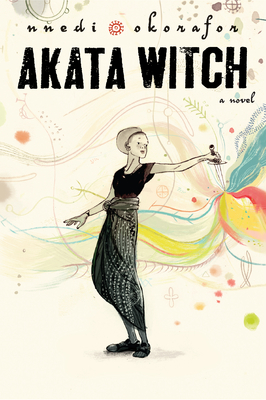
One of the most distinctive inventions of Nnedi Okorafor’s new novel Akata Witch is chittim – a currency earned by magical practitioners when they learn an important lesson, delivered in the form of a shower of varying-sized metal rods falling from the sky.

‘I liked the idea of earning something for your knowledge, for learning,’ says Nnedi. ‘The rods are based on objects used in real-life Nnedi Okoraformagical practices, but I don’t know where they come from in the world of the novel! They’re not from God, they just…fall from the sky when you learn something new.’

Like most writers and teachers, I could always do with some extra currency, and I love learning, so I adored the idea of chittim.

Nnedi offered her own example of a ‘chittim moment’ from her teenage years as a tennis player:

‘When I was about seventeen, I was in California playing the nationals. I don’t know what part of the draw I was at in the tournament. It was early on. Not the finals or semi-finals or anything. I was playing this girl. Both of us were there alone. No parents or friends or siblings had come with us. But we were battling. We were evenly matched. We had no audience.

‘As our match drew on for hours, other kids finished playing each other and went home for the day. But she and I kept slugging it out. We split sets (she won one set, then I won the second). We played for over FIVE HOURS. No one knew we were there on that far tennis court in the sun. No one cheered. No one was on the edge of his or her seat. But we were battling. We both wanted to win even if no one else cared.

‘I eventually won and there were no cheers. We sat together drinking water, quiet, smiling occasionally, sweaty as heck. It was awesome. It didn’t matter who won, that’s what I learned that day. It was all about the game, pushing yourself, and playing your brains out.’

Nnedi’s perspective on education is shaped by such experiences, and the notion that learning as embodied by chittim is not about formal study:

‘I was a late bloomer – I struggled with tests, and didn’t blossom until grad school. I felt I had missed out because of assumptions made at an early age about which class you were put through.

‘Exams and learning are sometimes really in conflict. It’s not about passing the test, it’s what you learn, the things you choose to develop. I don’t know how many chittim you would get from taking a formal exam…maybe one if you were lucky!’

‘I feel that kids should be given space to change. There’s so much pressure now on young people to achieve and conform. The whole idea of “Tiger Mothering” and “Helicopter Parenting” is also connected to people trying to control fate.

‘As a mother, I understand parents wanting to choose the destiny of your child. But you must let your child become her/his own person – and resist your urge to take control!’

With her writing appealing to a young adult audience, Nnedi has taken her work into high schools in the U.S. and beyond.

‘My last school visit was in Trinidad, a peaceful place where I was very comfortable! They really got Zahrah, because the world of Ginen reflects that same mix of peoples and cultures you find in Trinidad. They identified with that.

‘I had the students do a writing exercise – to work together and create a character, as a group.

‘I was delighted with the result – a mixed-race boy with pink hair…and he could fly!’

Nnedi’s future plans include more schools outreach work and contact with inspiring young writers like the students in Trinidad. In the meantime a film of Who Fears Death is in the works and, of course, Akata Witch is available in all good bookstores!

Akata Witch by Nnedi Okorafor

Nnedi Okorafor Interview, Part 3: Palm Tree Banditware – The Future of the Book

Find the first part of this interview here.

During our interview in Chicago, Nnedi showed off one of her prized possessions, an object which stands as a manifestation of her fantasy world in ours: a Kindle which has been decorated to resemble a giant folded leaf.

Reminiscent of the ‘Sandpiper’ laptops built from natural materials in William Gibson’s Idoru, Nnedi’s Kindle is a real-life emblem of the kind of distinctive technology which exists in her fantasy world, Ginen – a realm which blends plants and hardware, where the term ‘techno-organic’ has more to do with sustainability than the Borg or H.R. Giger’s Alien.

Zahrah the Windseeker coverThe defining technology of Nnedi’s stories, however, is one that’s already centuries old – the book. Time and again books play a key part in her novels, whether it’s Akata Witch’s Fast Facts for Free Agents – an unreliable, conservative set of rules for young wizards – or the Forbidden Greeny Jungle Guide of Zahrah The Windseeker, which is virtually a character in its own right.

Uncooperative and all too fallible, the Guide is Zahrah’s only source of information on the mysterious jungle into which she must venture. The device is reminiscent of science fiction’s first and greatest guidebook, The Hitch-hiker’s Guide to the Galaxy – and that’s not by chance.

Hitch-hiker’s was my first sci-fi experience, and the first book that ever made me laugh out loud,’ admits Nnedi. ‘The physics, the jokes, the way Douglas Adams writes. It was inspiring.

‘I added some extra features to the e-book of Zahrah to give it that Hitch-hiker’s feel. You can read entries from the Forbidden Greeny Jungle Guide on my website that don’t appear in the novel – including real creatures, like the suicide ant!

‘For the Zahrah e-book, I wanted pop-up ads – palm tree banditware, obnoxious recipes by the author – but it had to be exactly as I envisaged it, like in the book, and the technology’s not quite there yet. But just you wait!’

Fast Facts for Free Agents, the book given to Akata Witch’s hero Sunny as she enters the world of wizardry for the first time, is just as unreliable and prejudiced as Zahrah’s Guide.

Nnedi chalks some of this perspective up to her postgraduate studies, especially in journalism.

‘In grad school, I learned a new way of reading. It taught me that you can’t just ‘get information out of a book’. You need to know what forms of information exist, what angle they take.

‘Especially in Nigeria, authors of guide books are often almost yelling at you to convey their perspective –every ethnic group says their way is the best. There are no ‘facts’ in writing about some of the Nigerian villages – it’s always shaped by a perspective, by Original cover, Zahrah the Windseekersome writer talking down to you – yet these documents nonetheless contain real information.

‘The same is true of Fast Facts and the Guide – they’re examples of how to look at information, reminders to not always believe, and even when you do believe, always consider the perspective of one who gave the information.’

In the fourth and final part of my interview with Nnedi Okorafor, we talk about ways of learning, and the most distinctive inventions of Nnedi Okorafor’s new novel Akata Witch, chittim – a currency earned by learning , delivered as a shower of metal rods falling from the sky.

Nnedi Okorafor Interview, Part 2: Nigerian/American, Athlete/Nerd – Labelling Magic

Find the first part of this interview here.

Nnedi Okorafor has received great acclaim for her young adult writing, but her work spans journalism and academic research as well as short stories and novels for a more adult audience.

From an acerbic early short story skewering the notion of the ‘Magical Negro’ through to Who Fears Death, a mystic science-fictional meditation on weaponized rape, Nnedi’s writing is difficult to pigeonhole – and she wouldn’t want it any other way.

Who Fears Death‘I read everything when I was young – literary, mainstream, only a little sci-fi but a lot of fantasy. I wasn’t specifically looking for genre writing.

‘I was a product of the creative writing program at Champagne-Urbana, which was great, but my instructors spent so much time trying to get me not to write speculative fiction, fantasy or sci-fi. The change for me was going to the Clarion workshop at Michigan State, where they welcomed exactly that kind of writing!’

Even within the bounds of ‘genre fiction’, Nnedi’s work is especially resistant to conventional boundaries.

Zahrah is set in Ginen, a world inspired by African cultures and societies, while The Shadow Speaker takes place in the year 2070, bringing together magic and teen adventure in a post-apocalyptic Niger. And woven subtly through each novel are clues suggesting that all of these tales may be taking place in a shared universe.

Over lunch in Chicago, Nnedi laughs when I ask her about the problem of labels.

‘I’m very much a neither-and-both person: Nigerian/American, athlete/nerd – and that goes for my writing too. I don’t know who I am, on or off the page.

‘Even my first piece of non-fiction, “The House of Deformities” was magical – a memory of being 8 years old and venturing to the back of an old house in Nigeria to find pink ducks, bulldog puppies and an outhouse that looked like the mouth of hell!

‘My editor describes my work as ‘magical futurism’ – I love the term, but what even IS that?’

Who Fears Death, which features an adolescent protagonist but deals explicitly with issues such as rape and female circumcision, crosses boundaries of fantasy, science-fiction and even horror writing.

‘The closest comparison I can make for Who Fears Death is the movie Pan’s Labyrinth,’ says Nnedi.  ‘Both the book and the movie cross a borderline between adult and young adult material, with a young character going through a world which is dark both in terms of monsters and in terms of politics.’

Nnedi’s most provocative literary tool in dealing with these issues is Ginen, a science-fictional world which echoes African cultures and societies.

‘Ginen comes from a lot of things: happy childhood memories of Nigeria, the wishes I have for the future of Africa, and my huge American love of gadgets and technology!’

Ginen isn’t a utopia, except in the most literal sense of the word. Zahrah faces conservatism and prejudice among the populace of her home town. In The Shadow Speaker, Earth and Ginen collide – and Nnedi is scrupulous about documenting the flaws and virtues of both sides in the conflict.

Seeing the best and worst in more than one culture comes easily to Nnedi, with a perspective which is both Nigerian and American at once – something that her publishers initially found challenging.

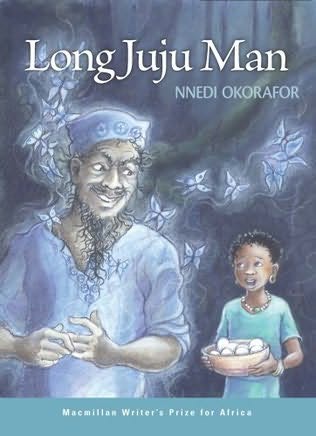
Nnedi’s children’s book Long Juju Man was pigeonholed as an African novel, with Macmillan only releasing it on that continent, butLong Juju Man the proud use of a provocative Igbo term in the title of Akata Witch brings together African and American contexts – a move which is typical of Nnedi’s work.
Akata – a derogatory term for foreign-born black people in Nigeria – came to the author after her editor suggested she change the proposed title Sunny and the Leopard People.

‘A Nigerian man had recently told me, “You’re not really one of us, you don’t speak Igbo, you weren’t born and raised in Nigeria. You’re an Akata!”

‘It’s a word that comes up often if you challenge the patriarchy. African-American women get accused of being lazy, ignorant and loose – corrupted by foreign influence. It’s a powerful slur.

‘At one level, Akata Witch is all about the conflict between and complexities within the world’s African communities – something I’d been meaning to address ever since I started writing. So akata was a perfect word to use in the title.

‘I decided to reclaim it wholly, positively for me – as a compliment. It marks you out as different, and although it denotes ugliness to Nigerians, I refuse to buy into perceived notions of beauty!

‘The same goes for witch – it’s a word that has a lot of weight in Nigeria, where men often use it – not always harshly, to be fair – to signify unmarried, independent and ‘different’ women.’

Next time on Books and Adventures we’ll be looking at books and technology in the novels of Nnedi Okorafor. Find part 3 of this interview here.