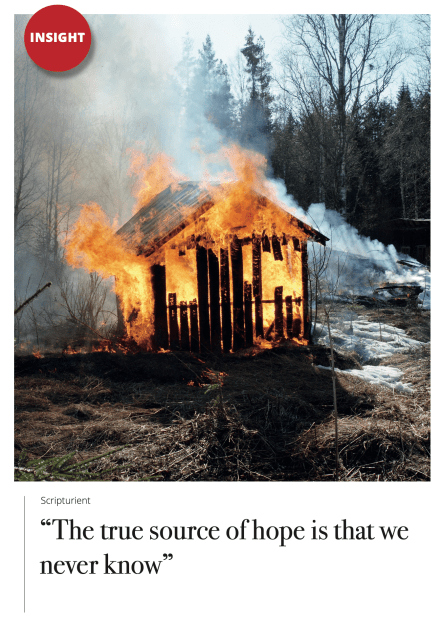
The latest edition of Scripturient, my quarterly column for Information Professional magazine, is out now and can be downloaded here.
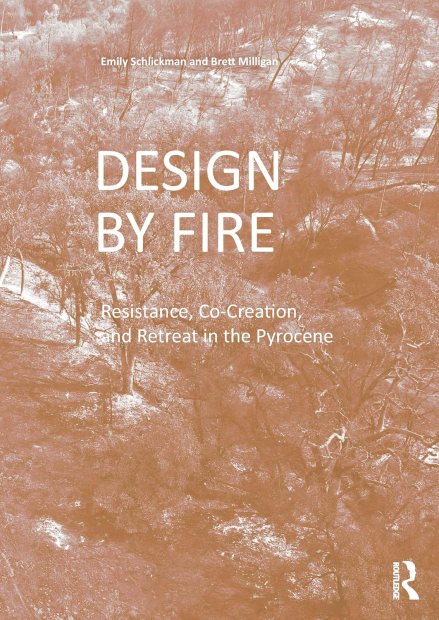
In it, I interview UC Davis’s Brett Milligan, who together with Emily Schlickman is the author of Design by Fire, a new book exploring our relationship to wildfires.
A transcript from the interview underpinning my column can be read below.
Matt: What was your first ever encounter with fire in nature?
Brett: It would have been the hearth at home, or campfires; my dad took me, sometimes the whole family, camping a lot as a kid and would be very clear about taking care to extinguish it properly. I wasn’t exposed to wildfires until my time in California, decades later, and my first close-up experience with a large wildfire, the smoke, the immediacy of it, came with the LNU (Sonoma-Lake-Napa Unit) complex fires a few years back.
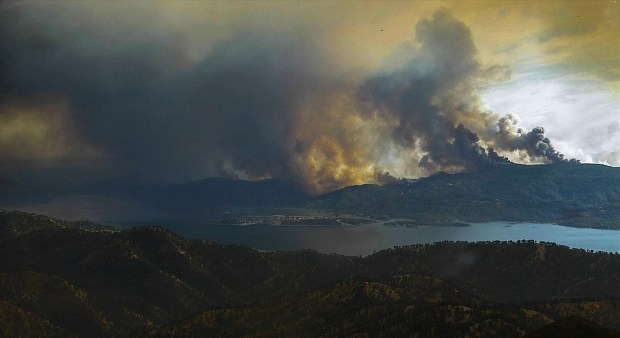
M: In the book, Emily and yourself speak about the specificity of writing from Davis, where the proximity of wildfire is palpable. What led to this being the specific book that you two chose to write?
B: We were both taken by how important, and how unavoidable, this issue is in California, and how challenging it’s going to be based on past legacies: how we’ve approached fire, how we’ve approached development, how we’ve approached risk; the colonial legacy, too.
For me, the particular interest is landscape dynamics, and designing for change rather than stasis. One of the past legacies we’re dealing with is that of treating landscapes as something static, when in fact they’re getting more and more dynamic, with aggregating impacts and drivers. For both Emily and I, it was simply impossible to ignore; we felt a responsibility, as designers of the land, to address fire as something which touches so many things. I don’t think we could have avoided it!
M: And yet, it takes a specific act of noticing. There are so many Californians who manage to live in this way that does avoid facing the question of what fire will do to their environment. The act of drawing attention to this thing that hides in plain sight also requires someone to willingly take up that role.
This is a book with international case studies, it speaks to the issue of the whole planet getting hotter, and yet it is also very much a Californian book. You talk about design across scales, down to the cellular; how does California specifically give this book its tone and perspective?
B: California is a fire-prone, fire-dependent region, one where fire has always been a fundamental part of how the landscape works. That was the basis for us, and a lot of the other environments we look at are similar, for example the Mediterranean climates, with their coolish winters and long, droughtish summers in which the landscape’s going to burn. We asked: what about California is common to other places as well?
There are many landscapes in that realm, where it’s unavoidable that the fire element is going to be there; we hoped to understand what we might do in California, but also how this is being dealt with elsewhere. Are people working with fire as an integral part of the landscape – or not? Are we going to keep trying fire suppression over and over, or what alternatives are there?
M: Every part of the world is in dialogue with fire in a different way, based not just on the landscape but also histories and traditions, from the Mediterranean to Aboriginal communities in Australia; there’ll be different relationships in each place, potentially, even if there are some commonalities.
Something that really excites me about your book is the way it spans history, theory, case studies, and future scenarios, and it led me to wonder about the way that science, as a practice, arrives on the back of a colonial enterprise. What does it mean to be in dialogue with scientific authority in this kind of book, which is pragmatic but also culturally respectful and decolonial?
B: My experience is that, working directly with fire ecologists and scientists who are working with fire, there’s an amazing amount of humility, of not knowing, of acknowledging very novel conditions given the changing climate and the legacies we’ve inherited. Even just trying to understand how fire works, and what is the deep intrinsic variability in patterns based on so many different variables and chance occurrences, means that most people doing the science on this topic are deeply humbled by what they’re looking at and seeing that there are so many questions, there’s so much we don’t know and may never know.
Fire itself is a very elusive phenomenon; it’s a contextual landscape event, dependent on time and place and what has gone before. It requires a more active and intensive engagement from scientists, from all of us; it’s not something that can simply be controlled or suppressed.
M: You use this powerful term “the Pyrocene” and it reminds me of the debate around the word “Anthropocene” and who exactly is the Anthropos being named there: is it really about the effects of capitalism, or colonialism, or industrial activity, rather than just being something caused by the human race as a whole? What are the benefits of thinking in terms of the Pyrocene?
B: I share your trouble with the Anthropocene! I struggle with those labels as well. I was very influenced by the work of Steven J. Pyne. He reaches further back and frames the whole human-influenced Earth in terms of combustion, and the ways in which we have created a condition where fire begets fire, woven into climate change and so many other things. The more we have burned things in different ways, or stopped things from burning, we’ve created these really interested distortions and changes. It’s just a lens, one among many – to focus on a process, something as elemental as fire, and how it has changed across time.
M: Emily and you draw on Pyne in the book when you note that we have departments which look at water, at soil, at air quality – but fire departments exist to extinguish and contain the thing that they’re named for!
Maybe it goes beyond a scholarly perspective to something more primal, but is there something to say here about the way we relate to elemental forces?
B: For me, personally, that’s how I work. In the past, I’ve worked on water and sediment. These kinds of elemental processes and the ways they get enmeshed in culture, and how we deal with them, is endlessly interesting to me.
M: Can you say what brought you, personally, to this field of study – not just fire but this wider package?
B: I’ve always been interested in landscapes, being in landscapes, and how they change, evolving or co-evolving with people. My undergraduate degree was actually in anthropology; I was always interested in how people create their worlds. I then did commercial photography, and artistic photography. I had planned to make ethnographic films after college, and ended up getting into environmental portraiture, which is about people and landscapes. Over time, when I went into design, it really came out that I was very interested in exploring the processes of landscape change, and how design works with or against these things. That led to me looking at water infrastructure and its effect on different types of landscapes, then sediment, and then fire came in – just inevitably, I guess.
M: It seems to be what it does!

B: Fire has different rhythms to it, compared to other things I’ve studied. I guess, at a base level, I’m interested in how we co-create landscapes: how they make us, and we make them, and going deep on that.
I did my master’s degree at the University of New Mexico. During that time, I took a research trip to Silver City, in the southern part of the state, and went to see the Santa Rita open-pit copper mine. It’s one of these gigantic holes in the ground, this Sisyphean earth-moving operation which evolved from a simple shaft mine that dates back to before the arrival of the Spanish; it’s believed Indigenous people were using it beforehand for the same purpose. With the onset of industrial open pit mining, a town rose up next to it, that town being Santa Rita; over time, as the pit expanded the town eventually had to be relocated. Habitation was displaced by the very resource extraction designed to support it. The visit opened up a vortex for me, seeing these holes, these excavations into the earth that it’s impossible for us ever to reverse. These impacts that you can’t escape, or that we can never undo, and which become toxic places, relics which we’ll have to reckon with for a long time.
I started to track the network of these places through the southwest, visiting Arizona and other places, documenting the landscapes, and ended up creating an alternative corporate annual report, which was about how a corporation was changing land, rather than focusing on its profits and finances. That was pivotal for me, leading me to notions of materiality, change, and the very specific human impact of how we choose to work.
When I was subsequently practising landscape architecture in Portland, Oregon, I got to work on the removal of a dam which had long prevented salmon migration. Indigenous communities had wanted rid of the dam for a long time, and the dam wasn’t producing much power any more, so the opportunity came up to work with an engineering firm and create a decommissioning plan. That included finding creative ways to work with all the sediment that had built up behind the dam, basically replicating a really large storm event: blowing a hole in the dam while intentionally setting downstream water levels differently at the Bonville dam below, with the aim of directing sediment to particular areas to create wetlands. It made me realise, again, that the human impact on earthmoving is vast. We are the world’s preeminent geological agents, exceeding all the so-called natural forces. It’s something I keep coming back to: so much of what we do and change in landscapes in contemporary practices is accidental or an “externality”. In terms of our collective agency, how might we alter landscapes in less destructive, and more intentional and forward thinking ways? And is that even possible?
M: Temporality seems to be key. With these interventions you describe, it’s not that one can turn back time but one has to figure out how to move the landscape forward. And your practice as a photographer is, I guess, about creating these moments which also speak to what has gone before the instant of the snapshot, and what might transpire after.
So how did you find your way into a kind of futures turn, where you and Emily begin to explore scenarios in this book?
B: Landscape architecture and design, my discipline, is a future-oriented practice: how am I going to change this? Should I change this? What’s my motivation and my reasoning?
The first time I got involved with scenario planning was in the California Delta, the Sacramento-San Joaquín Delta, where I do a lot of work. Together with a colleague, Rob Holmes, I did this project called Wicked Ecologies. In brief, the Delta has all kinds of problems; it’s been reclaimed, it’s sinking and subsiding, it’s the fulcrum for the state’s water structure, it’s very a fraught and rapidly changing landscape.
Scenario planning was, for me, a way to approach such wicked problems; getting out of a siloed way of thinking, and testing out different possibilities. The power of “what if?”, and trying to say less about “what should happen” and more exploring “what could happen”.
M: John Dewey has this line about “reflection on a felt difficulty” being a great source of new ideas, and I like the idea that scenarios help us feel different difficulties, or feel difficulties differently; the exploratory approach to the future, rather than the specification of what is desired or hoped for, can be rewarding and useful.
Given how fraught California’s situation is when it comes to the changing climate, what does it mean to find hope and agency under such uncertain and potentially challenging circumstances?
B: It depends on the day for me, whether there’s hope or not; there’s such an emotional component to this work, and when you look at some of the trends, some of the data, hope can be very hard to find. But there is always hope, right? “What if we did this thing? What if this constraint changed? What if we did rebel against what we’ve been given?”

I have to check myself when I start to think, “All these trends mean this, there’s no other way things can go now’ – and the truth is, when it comes to the future, I don’t know! None of us know.
The great thing about scenario work is that you’re not getting it right in terms of prediction, you’re recognising that you’re going to be surprised. The true source of hope is that we never know. We’re always being surprised. Some weird thing arrives that you didn’t anticipate, circumstances shift in a different way, and perhaps something there will prove to be usable.
M: What do the joyous days look like, in your line of work?
B: Working, helping, assisting, documenting; I always learn something, and every day brings something new. The learning, the coming together with other people, sharing experience, and the physicality of it all, too: being on the land, smelling the fire. The tangibility of the work, the evidence that your process has brought a result, the social aspect to it – that’s where the joy comes from.
M: A visceral experience, but also a collective experience. Fire can be a great leveller, in that it doesn’t care who we are when we encounter it; yet, at the same time, there are also evident inequities and inequalities in terms of how our societies set us up to encounter fire. Who gets helped? Who is safe?
What does it mean to achieve equity in terms of how communities face fire and its impacts?
B: This is one of the hardest questions to face in vulnerable places such as the fast-growing wild-urban interface, that weird zone on the edge of settlement. I don’t have the answer to it; it’s a very situationally complex issue, especially in a state like California with a very high cost of living. People move to certain areas in order to have a certain lifestyle, or own their own home, and these contribute to the scale of the problem in this vast, populous state facing increasing levels of risk.
There are darker sides to that, too: what happens with development, and where those with capital are deciding to make things. There are places where people know that they are building into risk. Insurance is rapidly changing, because it can’t make the profits it wants under the new risk conditions. In some of the scenarios we looked at, the question was raised of how communities could have more autonomy and take care of themselves, as it seems that, at least in the way the United States is today, the resources aren’t available to tend to these communities and the sheer scale of the problem.
The equity question is a primary one, and also one of the most difficult to think through; the same is true for flooding, flood insurance, and those who are in harm’s way. When we think in terms of retreat, it’s inevitable in some ways, but how we make that equitable is a paramount issue.
M: “Equitable retreat”, what a compelling phrase. In terms of the public debate around these things, there’s often a lag; we don’t talk the issues through until the wolf is at the door and the crisis has arrived. Are ordinary people in the street starting to think about what fire is going to do to the state?
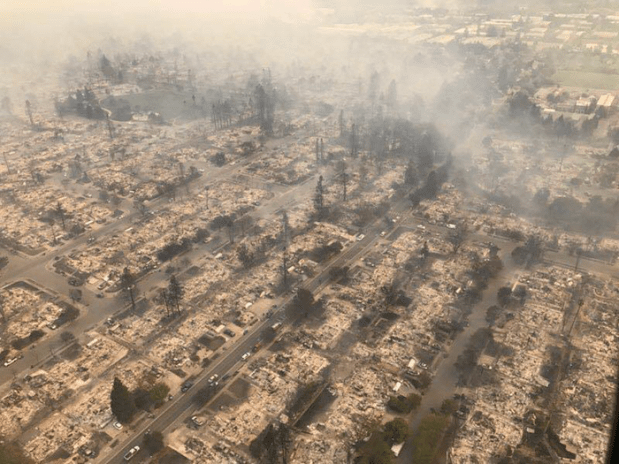
B: It’s just so much more on people’s minds, having had a lot of these really huge fires in recent years, many of us breathing smoke for months at a time which is toxic because of the things that the fire has burned. In general, there is a lot of concern and anxiety about the future of fire; it has really popped into cultural everyday discourse, at least in California. A lot of things are changing, including government priorities, research, but also the wider discourse.
The Pyro Futures exhibit which we’ve put up has generated comments indicating that people are looking for where the hope might be in the face of some hard things which are coming. This is so much on people’s minds; fire is out there now, in the public consciousness. There’s fear in terms of the unknownness about how we’re going to work through it.
M: But as you said earlier, the unknown contains not only fear but also the glimmer of hope. Precisely because we don’t know how things will play out, there’s still the chance to craft things.
B: I think the best kind of futures work isn’t just conceptual, it brings some kind of emotional, aesthetic experience. It’s tangible and you take flight with it, you just go into it, and it becomes less of a conceptual exercise than an experiential one which makes the future real for yourself.
It’s all a construct, anyway, right? There is no past, no future, there’s just now. To me, the past, present, and future fold back and forth through the scenario experience. In these exhibits, you go to a possible future that is shown to have already occurred, and think, “Oh yeah, that happened!” Past tense. It’s speaking the future in the past, in a way.
M: That resonates with what you said about the tangible joy of practical work on fire; the sensory and experiential aspect, this sense of absolute immersion. It resonates with Richard Sandford’s articulation of the “thick present”, also: the present entangled with what has gone before and what is to come after. It sounds like there’s a value as much in terms of unmooring people from their expectations today, as showing them any one particular vision of what might lie ahead tomorrow.
B: We wanted to give people access to the issues we were exploring, and hopefully you can see that in the book design. It’s an aesthetic experience, however limited by the format, including photographic spreads, diagrams, and so on. The Pyro Futures exhibit aimed to go beyond the book and taking these three scenarios, that read like fiction, out into space – not just negative visions but ones that could be seen as positive, albeit differing from one another. It was a way of inviting people to feel their way into the future. The Pyro Futures exhibition opens with this huge map of California, letting you see how your own life and experience in California relates to fire. After that, there are all kinds of objects, such as burnt clothing, to help people come as close as possible to the impossible task of actually feeling the future.
Emily and I – who, of course, are already working collaboratively – were lucky enough to bring together colleagues at UC Davis, artists, scientists, people working on Indigenous sovereignty, but also a wider community of friends we had made through our conversations about fire. A lot of what’s in the exhibit are objects which people helped us find, or contributed, such as drone imagery, or plant material from a community’s cultural burn, or a piece of clothing designed for women to be in a fire – as opposed to the default protective clothing, which tends to be designed for males. The question becomes, “You see these three scenarios: what would you bring to these discussions of the future?”
We were also well supported by the staff of the museum; it was the first time that this space, usually a classroom space, had been used in this way, for an experimental futures-oriented exhibition. That shared, multiple-voices aspect led us to something a bit more interesting than a single authored sort of thing.
In the exhibit, we have these fire journals, places for people to share what they are concerned about, their feelings and experiences. It’s not just idea-based, it’s grounded in emotions – and because the fire journals are sitting there on a table, you can read everybody else’s, you can see how your concerns are part of a wider conversation. The aim is to impart a sense that we have a choice about what happens in the future, it’s not just a given outcome, but something dependent on what we do. That’s the biggest thing we’re trying to do, coming from a design perspective – the choice in the future we collectively make – and the most gratifying thing is when we hear people recognising their plausibility, and sensing their own agency in what lies ahead.
M: What are yours and Emily’s own hopes and desires in terms of what people will take from this book and the exhibit? What might it provoke or spark among a wider readership?
B: We’re hoping, in some ways, it might create some openings. Just showing that how we’ve been dealing with fire previously has been a historic aberration; it wasn’t like that prior to the colonial era. And, looking ahead, an openness to experimentation: How should we be thinking about fire? Is fire really bad? It can be quite a generative thing, and it can be in some ways designed and stewarded, even if it is not fully controllable. We hope it will open the conversation a little bit more, and the book is intended to reach design and planning audiences, though of course we are glad when it reaches other readerships too. We hope to encourage more exploratory thinking and doing with fire.
M: You talk about the impossible task of feeling the future, and it strikes me that we can only get so close to the future in the same way we can only get so close to a fire. Being on-site at a fire is a bit like being on-site at the bleeding edge of the future.
That’s not the only boundary we face here, either; the work is profoundly interdisciplinary. How does that work for you, operating within an academic institution?
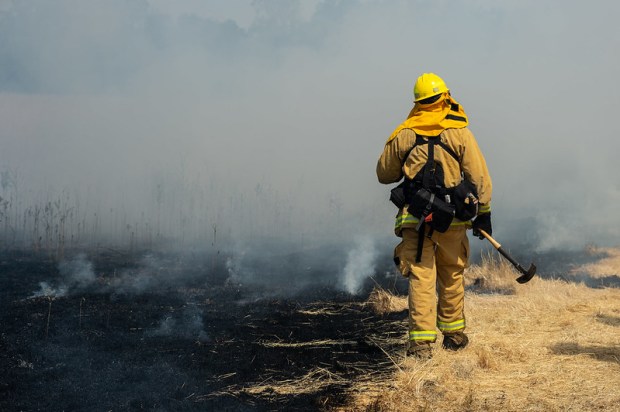
B: The way I’ve come to work, what I’m most interested in, doesn’t all fit neatly within a discipline like, say, landscape architecture. I wouldn’t say what I do fits into any one discipline. Scenario planning is helpful to me because it’s inherently transdisciplinary, which is what I think I’m trying to advance or do: working across disciplines, but also with communities and publics of concern about whatever is being proposed, planned or designed. I feel comfortable when I’m talking with people who are disciplined to think in other ways; I gain a lot from trying to understand that way of thinking, and how that relates to mine or the ways of another person. I spend much of my time on project work doing that kind of thing; and I’m probably often wrestling with this question of what are the bounds of the project, or is there even a boundary?
M: Just as it’s difficult to impose a boundary on fire, and resistance or retreat are insufficient responses to this encroaching phenomenon, the same seems to be true about the intellectual encounter with fire.
B: Some colleagues in my discipline might think that I’ve breached that boundary, they potentially locate it somewhere else; but there are others who may see the branches of where I’m coming from as a designer. So, I may not look for or perceive consistency from others of what the work is, either! The multi-faceted, boundary-breaking questions of transdisciplinary practice is one I constantly wrestle with. I don’t think disciplinary thinking has always gotten us very far in addressing complex problems and complex issues, so it’s a necessary part of the work to find ways to go beyond it.
Find more about Design by Fire at the website of its publishers, Routledge.
 matt finch / mechanical dolphin