OECD, Hidden Spire, QUT Futures Unlocked

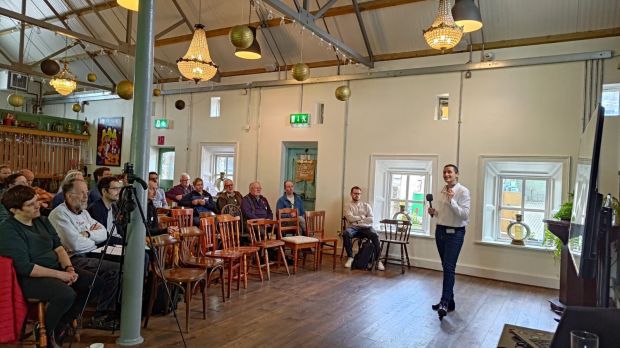
I recently presented at the launch of the new OECD report on an ecosystems approach to curriculum change, drawing on recent foresight work at the University of Oslo and the University of Queensland exploring the future of education. You can read more on that work here, in a blog post from the OECD’s Josh Polchar: “How seaworthy is your curriculum reform?”

I also ran a workshop with Oxford colleague Halina Suwalowska for the Old Fire Station in Oxford. This is an arts centre in the heart of the city “which takes a risk and entertains”, with the motto, “Art is for everyone. Art has potential.”

The Old Fire Station’s tower is Oxford’s “Hidden Spire”, almost concealed by the collegiate skyline, and this has lent its name to an artmaking collective.

The Hidden Spire project brings together people from different walks of life; many have experience of homelessness, having initially come to the Old Fire Station through the homeless charity Crisis.

The Collective work together to make publicly shared artworks, always deciding collaboratively what they make through a process of co-creation.

Halina and I worked with the artists to look at the future of Oxford, beyond hopes, fears, and expectations – exploring the city of 2041 as a contribution to this year’s forthcoming public artwork.

Soon, I’ll be contributing to the Futures Unlocked series at Queensland University of Technology (QUT), with a presentation to their foresight community on 28th July.

Peat Hub Ireland Podcast Write-up

“It’s easy to look at those scenarios on a screen. It’s much harder to get a room full of scientists, government officials, and local farmers to sit together and actually inhabit them…This is a deeply philosophical, sometimes heavy conversation. We dig into the trust gap between researchers and landowners, the heavy weight of climate grief, and what it really means to have hope when the future feels profoundly uncertain.

If you’ve ever felt overwhelmed by the scale of environmental loss, or wondered how we actually get people with competing interests to share the same imaginative space, this episode is a must-listen.”

There’s a great write-up of last week’s podcast for RE-PEAT with my colleague Kate Flood, over at the RE-PEAT Substack page.

Wise Enough for an Uncertain World: Scenarios, Metrics, and Social Impact 

My latest piece of writing, “Wise Enough for an Uncertain World: Scenario Planning and Social Impact“, can be found at the Danish social impact nonprofit Impact Insider.

It’s an exploration of how we make a measurable difference to social issues in an unpredictable world, drawing on research with the University of Oslo, the Global Outbreak Alert and Response Network (GOARN), the IMAJINE project, and Peat Hub Ireland.

If social impact means creating long-term change, then we face a difficult problem: we live in turbulent times, and the future in which our impact will unfold is deeply uncertain.

Scenario planning can help by developing multiple plausible and contrasting futures, relevant to current concerns but challenging to our assumptions. Building and using scenarios offers the opportunity to critically explore expectations, hopes, and fears about the world within which we hope to make an impact.

Photo by Raul Kozenevski on Pexels.com

Scenarios can inform the design of impact metrics which embody deeper values by considering the question: What might future generations wish we had measured in hindsight?

As we consider what inhabitants of different future scenarios might value, we can then identify and design appropriate impact measures to implement today. 

Read “Wise Enough for an Uncertain World” at Impact Insider.

Celebrating five years of “Laboratorios Ciudadanos” with Spanish Ministry of Culture

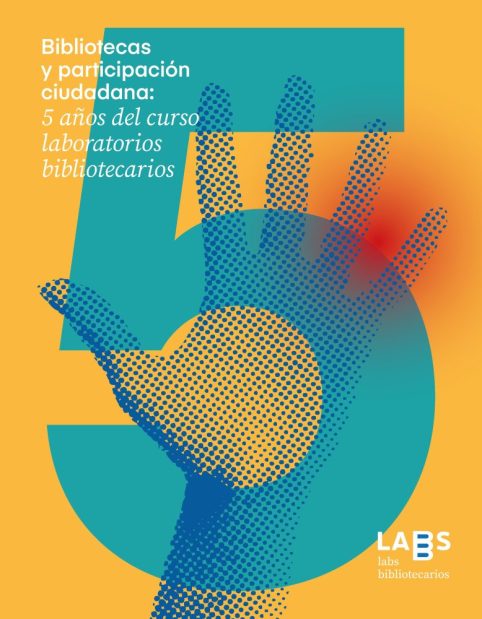
The course Cómo montar un laboratorio ciudadano en bibliotecas y otras instituciones culturales” (How to set up a citizen laboratory in libraries and other cultural institutions), run by the Spanish Ministry of Culture, recently celebrated its fifth anniversary with a special publication, “Bibliotecas y participación ciudadana” (Libraries and citizen participation), which is now free to download in PDF format.

It has been my pleasure to contribute to the course as a tutor since its inception, and to make a small contribution to the celebratory volume, which offers a range of practical tools for those who might want to set up their own “citizen laboratory”, working with communities and institutions to experiment and innovate on social and cultural issues.

You can find “Bibliotecas y participación ciudadana” here.

Navigating the sea of uncertainty: Global Youth Climate Summit Recording

One of my contributions to the 2025 Global Youth Climate Summit, hosted by the University of Oxford, has just gone online at the Oxford Climate Change Challenge site.

In the newly-released talk “Navigating the sea of uncertainty: challenging assumptions about what the future holds“, we consider ways to address times of turbulence, when the context in which we operate seems to be unsteady and unpredictable.

You can also see a previously released talk from the same event, “The black box of action: how to make your climate project count“, at the same site.

New article: Uncertainty, agency, and the future context of internet governance

Uncertainty, agency, and the future context of internet governance: a foresightful conversation” is an article I co-wrote for the Journal of Internet Technology and Politics with colleagues Lucia Vesnic-Alujevic, Sophie Mitchell, Zoe Hawkins, and Cho Khong.

We explore how the structures, dynamics, and value of internet governance may play out in different scenarios – and the implications for the situations and decisions we face today.

Photo by panumas nikhomkhai on Pexels.com

Right Here, Right Now Global Youth Climate Summit

I’m pleased to be delivering two sessions as part of the University of Oxford’s contribution to the Right Here Right Now Global Youth Climate Summit, a 24-hour virtual event presented by UN Human Rights and the Saïd Business School.

The online gathering brings together students and educators from across the world to share ideas about embedding climate action at the heart of education systems.

Find out more at the Saïd Business School website or register for the 24-hour livestream here.

'Dreaming Spires', by Flickr User JJBullock - Copyright JJ Bullock 2010
‘Dreaming Spires’, by Flickr User JJBullock – Copyright JJ Bullock 2010

“The True Source of Hope Is That We Never Know”: Scripturient x Design by Fire, with Brett Milligan

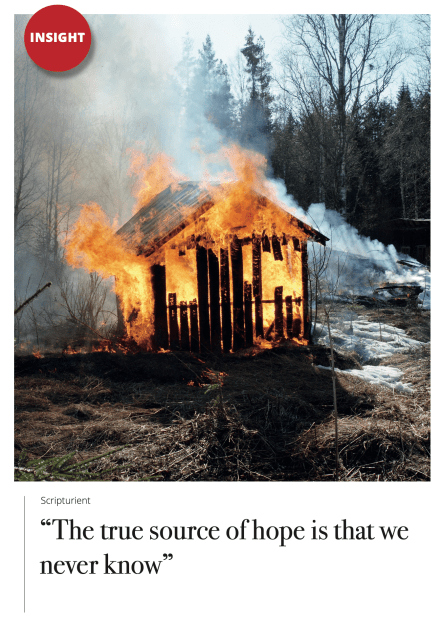
The latest edition of Scripturient, my quarterly column for Information Professional magazine, is out now and can be downloaded here.

In it, I interview UC Davis’s Brett Milligan, who together with Emily Schlickman is the author of Design by Fire, a new book exploring our relationship to wildfires.

A transcript from the interview underpinning my column can be read below.

Matt: What was your first ever encounter with fire in nature?

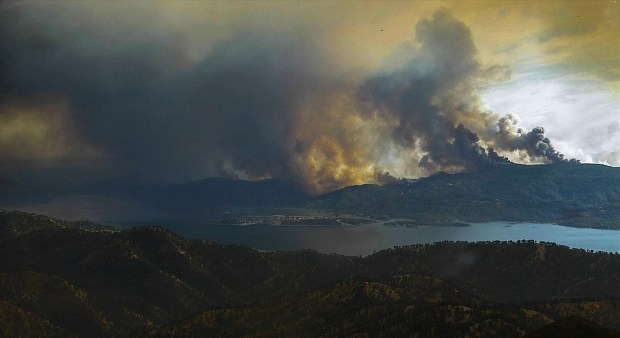
Brett: It would have been the hearth at home, or campfires; my dad took me, sometimes the whole family, camping a lot as a kid and would be very clear about taking care to extinguish it properly. I wasn’t exposed to wildfires until my time in California, decades later, and my first close-up experience with a large wildfire, the smoke, the immediacy of it, came with the LNU (Sonoma-Lake-Napa Unit) complex fires a few years back.

By Dripwoods – Taken of the LNU Hennessey Fire, CC BY-SA 4.0, https://commons.wikimedia.org/w/index.php?curid=93869076
Read more

Peat Hub Ireland: 2050 Scenarios

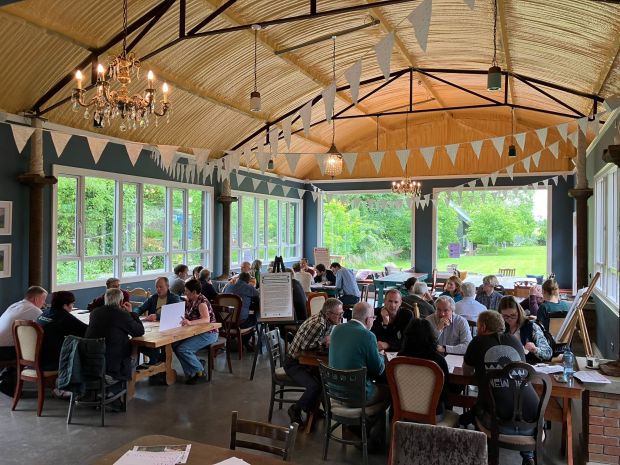
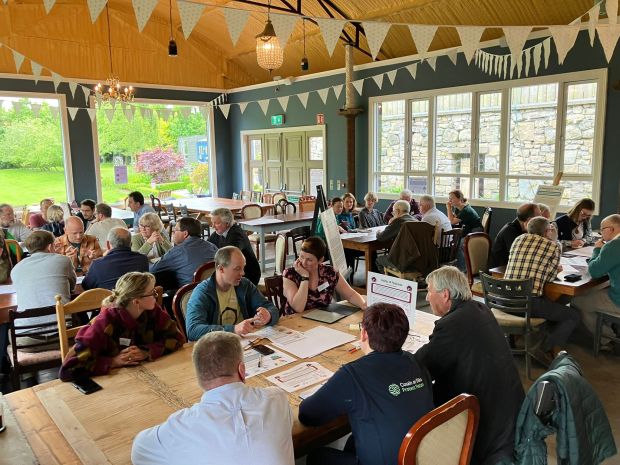
I’m just back from collaborating with the Peat Hub Ireland team on a scenarios workshop which invited participants from across the communities and institutions involved in Irish peatlands management to explore three visions of the world in 2050.

Historians, scientists, community members, officials, archaeologists, educators, researchers, activists, and businesspeople all gathered to find new ways to think about sustainability and custodianship, suitable for times of turbulence and unpredictability.

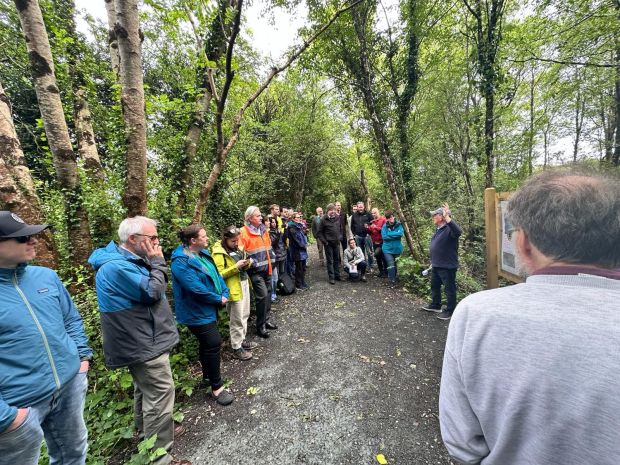
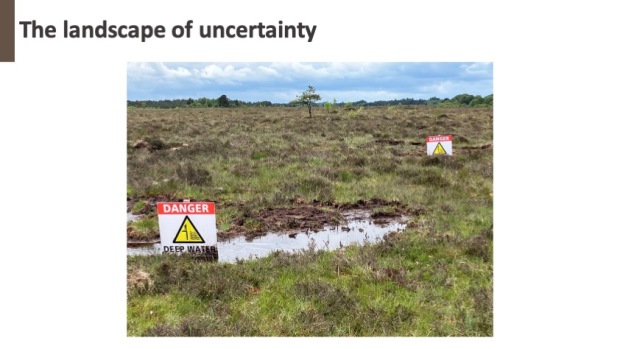
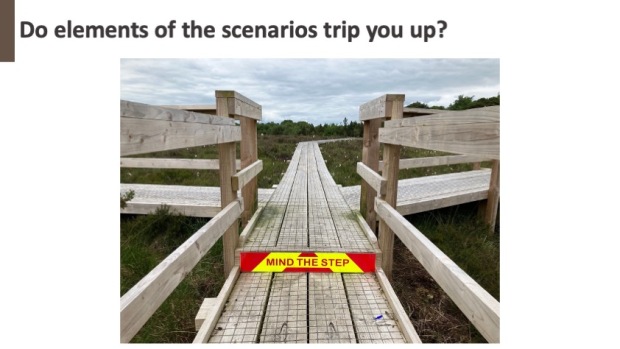
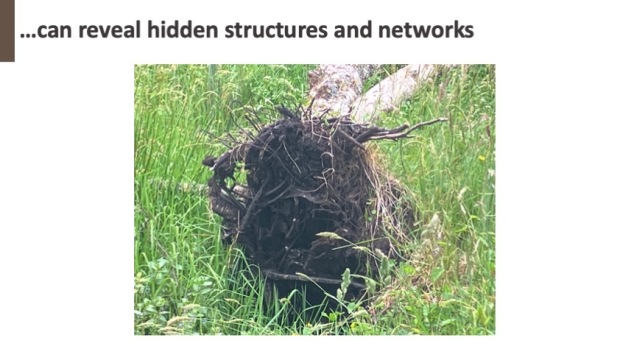
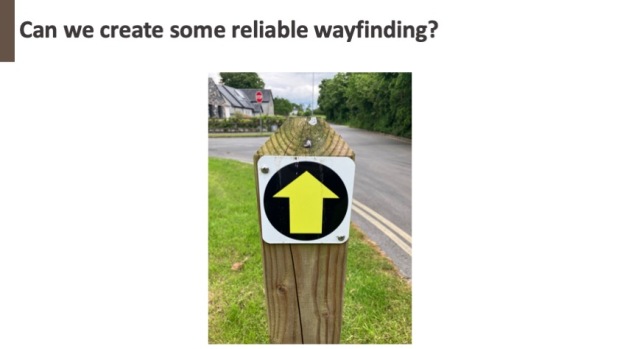
It was quite unique to run a scenarios day incorporating a two-hour break for a lunchtime country walk – but being out on the bog gave us a shared experience of the landscape whose future we were exploring, and some useful metaphors for dealing with conditions of uncertainty.

Our work built on the scenario elements of the Horizon Europe-funded IMAJINE project, which were led by the University of Galway’s Marie Mahon and myself. Peat Hub Ireland’s Florence Renou-Wilson, David Wilson, and Kate Flood worked with me to develop IMAJINE materials into a fresh set of scenarios for the world of peatlands management in 2050. We were supported in delivering the workshop by colleagues including Elena Aitova and Liz Bruton.

You can find out more about Peat Hub Ireland at their website – and there’s an account of the day from the Department of the Environment, Climate, and Communications’ Dave Dodd here. Stay tuned for more about the scenarios, too.

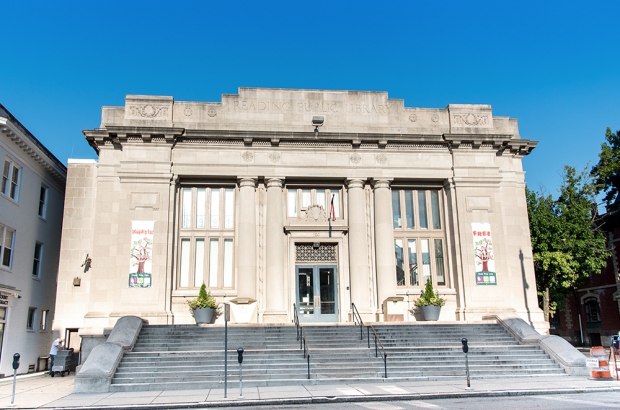
Reading Public Library: Scenarios to inform resilient strategy

“The flexibility of the plan in part helps us to present our goals and efforts, because those goals and efforts can reshape as real world events interfere with business as usual…It really leaves room for creativity and the flexibility to adjust to the real world.”

Melissa Adams, executive director of Pennsylvania’s Reading Public Library, interviewed by Nancy K. Herther of the University of Minnesota, explains how a COVID-era scenario planning process informs robust and resilient strategy for her organisation and community.

“Another advantage was experienced during the transition between executive directors. The plan was decidedly not the prior executive director’s plan, it was the organization as a whole body’s plan. This made it easier for me, as the incoming executive director, to keep the plan moving forward…the article we co-authored has helped me really take ownership of this strategic plan.”

Reading Public Library, Pennsylvania