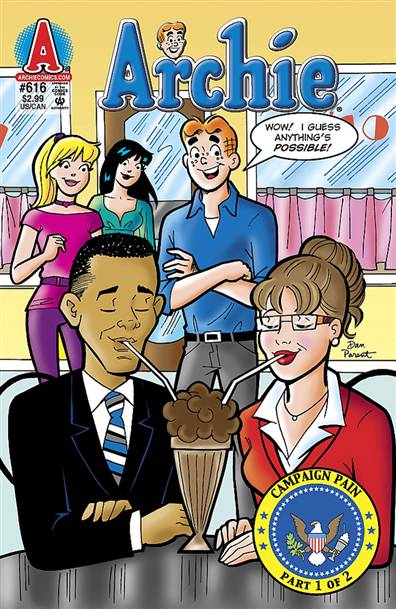
Alex Simmons Interview, Part 2: Archie Meets Obama and Palin

Click for the first part of this interview with Alex Simmons.

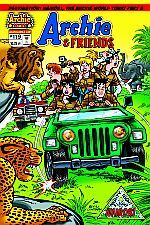
Comic creator Alex Simmons’ most recent work has been a two-part story for Archie Comics. In it, Barack Obama and Sarah Palin visit the high school at Riverdale, home to all-American teen Archie Andrews and his friends since the 1940s.
Archie’s World Tour by Alex Simmons
Alex has previously written numerous stories for Archie, including Archie’s World Tour and a series which reimagines the easygoing Jughead Jones as a hard-boiled private investigator, but writing two of the most recognised political figures in America today was a special challenge…
Alex Simmons reimagines Jughead Jones as a ‘semi-private investigator’

‘Victor Gorelick, the Senior Editor at Archie, called me requesting a story featuring President Obama and Sarah Palin. My first pitch was based on environmental issues, but we felt this was too edgy. A comic like this is not a soapbox for political views – although we also don’t want to paint these heavyweight politicians as sweet or innocent. The challenge was finding a way into these real-life characters through the Riverdale mindset.’

Barack Obama and Sarah Palin visit Riverdale in Archie Comics issues 616-617, written by Alex Simmons

Alex’s finished story focusses on spin and media manipulation. Rival candidates for the class presidency, Archie and Reggie both lose sight of their moral compass when their respective campaign managers, Veronica and Trula, encourage them to pose for photographs with Obama and Palin! The implied endorsement sends their popularity skyrocketing, but the politicians catch wind of the media manipulation and descend on Riverdale to assert control of their public images.

Alex explains how the media came to be at the heart of this high-profile political story:

‘This comes back to the idea about balance which shaped my Blackjack story about the Touaregs: one man’s insurgent is another man’s freedom fighter! I felt I couldn’t weigh in on specific issues which divide the parties. But politicians are politicians – they have to do certain things to get where they are – and it’s important that we hold them to account. So the message behind my story is one of responsibility for your actions in the public arena.’

Archie and Reggie eventually repent and redeem themselves by taking responsibility for the media spin done in their name by Trula and Veronica. For this plot twist, Alex drew inspiration from Republican presidential nominee John McCain’s personally gracious defeat speech on the day of President Obama’s victory, in which he stepped back from what had been an aggressive campaign and chided those among his supporters who booed Obama’s victory.

‘In the Archie story, I wanted to show what should happen – politicians being true leaders and taking responsibility for things done in their name. Comic books are fun, but especially when they’re aimed at children, a positive message never hurts.’

Next time on Books and Adventures, we look at Alex’s greatest contribution to comics for children, the international Kids Comic Con convention. Click for the third and final part of this interview with Alex.

Alex Simmons Interview, Part 1: Blackjack

This week, our Books and Adventures interview is with Alex Simmons, who has written for the stage, screen and radio alongside work as an educator, performer and comics creator.

Over the course of a 20-year career, Alex has founded the Kids Comic Con and taken it around the world from Buffalo, NY to Senegal, created the African-American comic-book adventurer Blackjack, and even brought Barack Obama and Sarah Palin to Riverdale in a special two-part story in Archie Comics.

In a conversation that covered everything from 30s movie serials to the outreach work of Bronx Community College, Alex demonstrated that Books and Adventures are his business.

Appropriately for Black History Month, we began by talking about his character Arron Day, a globe-trotting soldier of fortune known to the world as…Blackjack.

‘In the 1930s, we were prepared to go out and explore. To inspire kids to be good adults.’

In his teens, Alex Simmons attended a film club on New York’s West 40th Street, showing old movie serials such as Captain Marvel, King of the Rocket Men and The Phantom. One particular show stayed with him.

Daredevils of the Red Circle stood out,’ Alex explains. The 1939 serial followed a trio of acrobats turned private investigators, who seek revenge for the death of a family member. ‘Daredevils had a black character: he was the butler to one of the main characters…and his name was “Snowflake”!
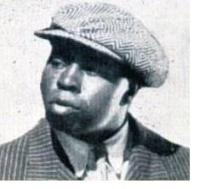
Fred Toones aka “Snowflake”

‘He was an awful stereotype, rolling his eyes, with this high-pitched voice, but I remember one episode where the heroes were trapped in a garage filling with fumes…The stereotype suddenly falls away, Snowflake helps break into the garage and rescue the others. It’s his one moment of competence. Of course, nobody even acknowledges this, and within a minute he’s straight back to the old characterization.

‘Watching that serial made me think – this was the 1930s. There was a black presence. We were there. And not just rolling our eyes and waving our hands in the air! I wanted to tell stories about the African American presence in this time, when parts of the world were still full of mystery and wonder, when we were willing to go out and explore! Unlike now when we’re so jaded by technology and shaped by the media that the devout can go to confession through an iPhone app.’

Alex came up with Blackjack in 1988 as a conduit for telling stories about the 1930s and writing an African-American presence back in to our vision of those times. Arron Day, adventurer for hire, grew up travelling the world with his soldier-of-fortune father. As he takes on enemies both foreign and domestic, he explores his father’s legacy and rights the wrongs of a blood-soaked past.

Arron is a two-fisted protagonist in the style of Indiana Jones, but also a thinking man’s action hero, perceptive and astute. In the Blackjack stories, Arron’s ability to pick out a face in the crowd or spot a secret glance between two conspirators is often the key to his survival and ultimate success in saving the day. Alex, who wrote the stage play Sherlock Holmes and the Hands of Othello, acknowledges a certain debt to the man from 221b Baker Street:

‘I’m a big fan of Conan Doyle’s writing and I wanted Arron to be an intelligent hero, without being a carbon-copy Sherlock. He doesn’t pull together evidence to make elaborate deductions, like Holmes – but Arron is supremely observant.’

Arron is accompanied in his adventures by Tim Cheng, a dignified Asian servant who Alex wrote as an intelligent and independent figure – ‘my apology for Charlie Chan.’

Tim falls into Arron’s service after Arron wins a New York brownstone ‘and everything in it’ during an unseen adventure prior to the first Blackjack story.

The Blackjack comic toys with the old Green Hornet/Kato dynamic by having Arron suspect that Tim resents being ‘owned’ by another man. In the storyline Blood and Honor, Arron and Tim are called on a mission to China, during which Tim’s trustworthiness is put in doubt – but Tim’s secret loyalty proves to be to his family, rather than Blackjack’s enemies. By choosing to live in New York with his bride, alongside Arron as a friend and partner, Tim ultimately redeems the loner hero whom he serves.

Alex’s commitment to redressing past prejudice extends to the villains Arron confronts on his travels. The first Blackjack comic sends our hero to the Middle East, a location suggested to Alex by his mentor, the celebrated editor-illustrator Dick Giordano.

‘We wanted to open the Blackjack series with a story that showed Arron to be a globetrotting hero. This got me thinking of those prejudiced old Thirties movies again. I couldn’t have all the Middle Easterners be dumb bad guys who go ‘Aieeeee!’ when they die. So I focussed on the Touareg people, nomads who had fought against the colonial powers.

‘In Second Bite of the Cobra, Arron faces a principled, intelligent villain – a Touareg rebel gone sour, robbing from his own people. So the final showdown between hero and villain is also a crisis of conscience, with the Touareg leader forced to recognise that he’s betrayed his own beliefs.’

Alex always envisaged Blackjack as a legacy character whose heroic mantle is passed down through the generations. Arron’s father Matthew appears in the series seen through the prism of his son’s memory, and Alex even played Matthew, alongside his own son as the young Arron, in the flashback scenes of a 2001 radio play. Alex also laid plans for a sequel series running in the present, where Arron’s estranged grandson finds himself drawn back into the family business.

With comic books and even a radio show to his name, Blackjack remains a compelling character and a great contribution to the roster of African-American heroes. But his greatest adventures are surely yet to come…

Next time we move from Alex Simmons’ original creations to a famous American comic-book brand, which Alex took into the 21st century by bringing Barack Obama and Sarah Palin face to face with none other than…Archie!
>Interview with Cody Pickrodt, Comics Creator

>

A former teacher in public schools now inspires a new generation of comics creators in Brooklyn and beyond


‘Sometimes it felt like babysitting,’ comic book author Cody Pickrodt says of his days teaching in the California public school system. ‘There’s not enough money and not enough choice, when we need something more like a university, which caters to what the kids want to do.’

Cody is speaking to me in Café Grumpy, ‘a perfect café for comic book artists: big tables and not too loud.’ It’s located on a snowy streetcorner in Greenpoint, a world away from the West Coast schools where Cody first became involved in education. As an art teacher within the state, he would drive from school to school delivering sessions which increasingly came to focus on his first love, comic books. Returning to his native New York, Cody turned his passion into a profession as the leader of comic book workshops first for 3rd Ward, and then for Uproar Art.

Cody’s passion for comics in fact began in the city – specifically, in Chinatown. The young Cody’s Chinese-American mother took him on shopping trips where he developed a taste for Asian comic book imports.

‘I went from Disney comics straight to manga,’ Cody tells me. ‘I couldn’t read what they were saying at first, but the pictures told the story nonetheless. After a while, I even learned how to read Chinese, which after all is just another set of pictures. This was twenty years ago, well before the current popularity of manga today. And I actually learned something then, which I can’t say for the quality of manga that kids read today.’

Cody feels it’s vital to encourage a new generation even as Hollywood promotes comic adaptations from Spider-Man to Superman and Tamara Drewe to Scott Pilgrim. ‘It’s easy to forget that comics are actually on the wane. Graphic novel sales have dropped significantly in the last year. The boom in comics became a glut, and it’s only now that the industry is shrinking that there’s room to take creative chances. It’s a great time for young, original creators to jump on board.’

Cody has done his part to foster this new generation of talent among both students and teachers, having trained a new generation of instructors at 3rd Ward, including comics teacher Joanne Sherrow.

Now Cody’s workshops are available for all ages from Kindergarten to 12th Grade, via Max Goodman’s non-profit organization Uproar Art, featured last time on Books and Adventures.

Working around a simple 6-panel page format, Cody uses a variety of techniques and tricks to get creativity flowing among his classes. In one activity, students may pass their comic book to a partner between panels, creating a collaborative work.

‘These classes work with all ages from infant to adult,’ says Cody, although he’s particularly impressed by Kindergarteners, who he says ‘focus and really get into it’.

In common with Uproar’s director Max Goodman, Cody believes that many subjects can be taught via creative, practical art activities. The comic book form lends itself to almost any subject on the curriculum. And, taught in small groups – 6 students is the optimum number – Cody’s classes enable students to find their own creative impulses and express them through the comics medium.

Cody’s own journey from those Chinatown manga to his current output has been a painstaking one. Cody’s first comic book, Night Swim, boasting a 200 copy print run, was drawn, printed and individually assembled entirely by hand, prior to his experience using computers. Today his work, largely aimed at an adult audience, includes two concurrent narrative comics alongside countless cartoons, illustrations and the art project Men with Whom I Share the Same Height.

Cody works from a movie-style script, writing up to twelve issues in advance and creating thumbnails before moving on to a Zen-like drawing process. ‘It sounds odd, but I try not to think about drawing while I’m drawing. I’ll put on a movie or a listen to the news in the background, or just think about something else entirely, daydream even–anything to occupy that analytical part of my brain while I work. You achieve a purer line that way.’

Cody’s current series Francine Way, born during his studies for an BFA in Sequential Art, follows a teenage girl, interested in survivalism, who leaves her home for the nearby woods. Her illusions about a life of solitary freedom are shattered when she meets a feral boy, living rough in the wild, who may be linked to a series of violent and disturbing events in the town.

‘It’s a kind of Nancy Drew story with a twist,’ says Cody, ‘about an outsider girl who wants to find out who’s behind this mystery, but who also doesn’t want to jeopardize her friendship with this fellow outsider.’

More about Francine Way and Cody’s other work – some only suitable for adult readers – is available at http://codypickrodt.com/shop

In March, Cody will run a one-day parent and child workshop for Uproar Arts, sharing his expertise and giving families a taste of comic book creation. To find out more and get in touch with the Uproar team, visit http://www.uproarart.org/

>Interview – Max Goodman, Uproar Art

>Never mind the nightlife and the skyscrapers, one of the most exciting things about New York is the commitment of the many artists and educators who serve their community through not-for-profit work. Over the coming weeks, Books and Adventures will be speaking to some of these American heroes striving to provide the best possible start for their city’s children.

Today we speak with Max Goodman. Max is a young artist and educator who, in 2009, founded Uproar Art, a Brooklyn-based non-profit organization which delivers weekend workshops and after-school classes to the local community. A talented jeweler in her own right, Max has assembled a team of artist-educators who offer courses on everything from recycled art to creating your own comic book.

Max is a dynamic and independent figure – she created her own first job in NYC by contacting 3rd Ward, who were advertising their own arts classes, and convincing them to take her on as an instructor! Although she had intended to teach in New York schools, the constraints of the system led her to found her own non-profit organization for arts education.

‘When I arrived in January 2009, there was a hiring freeze in the district,’ Max explains. ‘Founding Uproar Art gave me the chance to commit fully to my students without giving up my own art-making practice. It was a great way to give back to the young art-making community without sacrificing my own art.’

Max believes that an artist-educator who remains committed to their own practice can offer students new ways into learning, beyond the traditional classroom.

‘Pattern, rhythm and symmetry can all be used in art, but they’re concepts repeated in math and music. Working with paints and metals helps students understand chemistry in a way that a science textbook could only illustrate flatly on a page. Frequently, students who feel they cannot achieve in other subjects are able to find an outlet in the arts, and in this way art keeps students in school who otherwise might drop out.’

Max gives the example of an 8-year-old student who spoke no English when they first met: ‘Her eyes lit up when she was in my art room, because she could follow the visual examples and create a beautiful piece. She expressed herself without worrying about the boundaries of language. That kind of outlet is absolutely invaluable in our world of standardized tests and rubrics.’

We’ve discussed British educational assessment on Books and Adventures before, but Max’s comments highlight the issues raised by testing on this side of the Atlantic, where there is a move to regulate education at a more national level. Max is ambivalent about this move:

‘I believe that funding for education should be sourced and therefore equalized on the national level, but I do not think it’s reasonable to expect students everywhere to pass nationalized standardized tests. Individual communities understand the challenges facing their students, and should be afforded more local control over curriculum. A national curriculum should definitely be offered, but expecting students who speak English as a second language, or those with learning disabilities, to test the same as their peers is absolutely unproductive.’

As Max’s home patch in Brooklyn undergoes gentrification, wealth brings new opportunities and resources to the community – but it can also divide a neighborhood. On a recent visit to Bedford-Stuyvesant, I spoke with a local parent who decried the privileged do-gooders who parachuted in to a deprived area – but were free to leave the community’s problems behind at the end of the day.

Max’s team at Uproar Art are sensitive to these issues and committed to the place where they live: ‘We seek to ease tension and conflict – to make sure we’re serving the community that has existed before the influx of wealth as well as the newcomers.’

Wherever possible, Uproar Art offers free and low-cost workshops alongside their comprehensive range of classes. ‘Eventually, we’d like to be a resource for children with an interest in the arts who may not have the means or support to pursue it extra-curricularly, as well as for the students that have the support system in place. We’re hoping to offer sliding scale payments for classes over the coming year.’

Max’s ethical commitments extend to opposing the involvement of the private sector in public education: ‘I think no for-profit entities should be allowed to play any role in our educational system. When I was a student in the Philadelphia public school district, a for-profit company sought to take over our schools in order to use them as a fertile captive audience for advertising. Education is for the good of the students and of the society in general, and somebody seeking to profit from that loses sight of these moral truths.’

Uproar is on the cusp of finishing its incorporation process, which will enable it to accept grants for future projects – and Max’s team are already looking ahead to the months and years beyond.

‘Our first year of business has gone well: we’ve found many allies in the local community, and have been welcomed with open arms into local studios. In the coming year we’d really to work more directly with local schools. It’s time to start reaching out to the parts of the community that don’t have access to programs like ours.’

In the immediate future, Max is excited by launching her own workshop on Organic Sculpture in Lefferts Garden. It’s based in part on the work of Andy Goldsworthy, who makes temporary artwork from found items in the environment.

‘Before now it’s been difficult to find a location that parents and art studios were both comfortable allowing students to make nature based art, but I’m very excited to see what my 6-8 year old sculpture students discover in our own back yard. In addition to teaching Organic Sculpture we also offer a Recycled Art course. Because of our strong community focus we’re always looking for ways to blend art making and the environment, and luckily there’s no shortage of other environmentally friendly non-profits ready to partner with us – friends like Glenn Robinson at Bags for the People or Annie Novak of Rooftop Farms.

To find out more about Uproar Art and get in touch with Max and her team, visit http://www.uproarart.org/.

>A thank you on behalf of VRH

>I wanted to write a brief thank-you note to everyone who supported my fundraising efforts for Volunteer Reading Help in 2010.

I’ve just heard that, including gift aid, we reached a final total of £680. This will pay for four children to receive one-to-one reading support in this school year.

It is only through the generosity of people like you that Volunteer Reading Help can give this much-needed support…so if you ponied up the cash in 2010…give yourself a pat on the back!

>The Lesson of League Tables

>I’m sure many UK readers will have seen the news today about the primary school league tables, whose results have just been published.

Angela Harrison of the BBC reports that almost 1 in 10 of schools with validated and published results failed to meet minimum standards in the SATs. But how many of these schools will be located in the most challenged areas of this country, where pupils and parents alike need support and encouragement, rather than teachers bound to a regime of relentless formal assessment?

Teaching in a London school where a high percentage of pupils had English as an Additional Language, I was incredibly frustrated by the box-ticking mentality, especially in literacy.

Such an attitude encourages teaching to the test rather than a love of reading and writing. The best teachers in the world will find themselves sitting with an “underperforming” student on the day results are due in, thinking, “Just let me tick one more box so I can move you up another sub-level!”

My class made great progress in their literacy skills – but more from an attitude on the part of our year group that we would make learning fun, engaging and creative.

A poetry unit was delivered to rap music – our class gave themselves rap names and learned to freestyle to The 900 Number (“I like / chocolate / I want / CHOCOLATE CAKE!”). I knew we had made an impact when months later one of our pupils, who had little English and numerous educational needs, was still using the rap names with his friends in the playground.

In another class, we created a ‘living comic book’ together, using a whiteboard for each panel of the story of ‘Melon Boy’, a superhero who transformed into a caped, flying cantaloupe when he consumed too much of the fruit in question.

The story was inspired by a boy in our class who had given himself a laughing fit that morning, when he said, ‘My mum says if I eat too much melon, I might just turn into one.’

It was the first time he had ever given himself an attack of the giggles. He couldn’t stop, and the whole class ended up laughing along with him.

By using that moment as a springboard for our literacy lesson, the entire class became enthused and empowered to apply their own creativity to reading and writing.

When the education system mandates ‘teaching to the test’ in the very earliest stages of schooling, which should be about fostering a love of learning…
When teachers have their performance management directly linked to children’s formal levels….
It becomes incredibly difficult for classroom practitioners to be confident, creative and…dare we say it…a little subversive.

With the best will in the world, teachers find themselves ‘playing it safe’ and delivering mediocre education under such a system. Check-boxes will never prioritise the kind of passion for learning which brings together parents, pupils, and teachers – the kind of whole-community commitment which schemes like Paint the Town Read deliver so well in Australia.

It’s frustrating that around the world, so much of the ‘heavy lifting’ of encouragement and enthusiasm in education – work which is actively frustrated by the league table/”No Child Left Behind” mentality – falls to committed, creative, subversive teachers – and to those generous members of the community who commit to schemes like Volunteer Reading Help, Reading Partners, or Paint the Town Read. It’s time for the authorities to rethink their priorities and put a love of learning before league tables.

*

Well, that’s almost it for 2010. Next time on Books and Adventures, our review of the year, along with some sneak previews of features, interviews and guest writers for 2011!

>Paint the Town Read – Interview with Rhonda Brain, Part 2

>

You’ll find Part One of this Interview here:

Rhonda Brain, founder of Australia’s Paint the Town Read scheme, now takes the PTTR message to other towns across New South Wales and beyond.

“When I share our scheme with communities, I always remind them that we have been going for a long time, so they shouldn’t be daunted by the amount of things we do….Other towns may use as many or as few of our strategies as they like: they’re a springboard.” 

A number of the communities have adopted the idea of a reading mascot, and most run a Community Reading Day, but as Rhonda puts it, “on the whole, committees take on the concept and run with it! The concept is THE biggest “engenderer” of creative and fun ideas, I have ever come across….PTTR committees are always amazed and excited at how the ideas will flow…”

For example – in Toongabbie, New South Wales, the Portico Plaza shopping centre worked with local authorities at Holroyd City Council this year to run storytelling and craft sessions for children, hosted by local reading mascot Poppy the Possum.

‘Poppy the Possum’ in Holroyd, NSW encourages the community to ‘Paint the Town Read’


Diane Hacking of Portico Plaza explains why the staff and management were so keen to get behind the scheme:

“We’re a small neighbourhood centre, and the majority of our shoppers are families. We had no hesitation in helping local children to get a good start, giving them a chance to be better educated, and hopefully to secure a good job later in life. Many of them will grow up to be the teenagers, mothers and fathers who we serve here at Portico Plaza.”

The fun-filled events run by PTTR committees are fuelled by grassroots passion, but based in the latest scholarship on language development.

“There’s a plethora of research now on the brain’s need for stimulus for language development, from birth right up to age five,” says Rhonda Brain. “But it’s of little use if parents near hear of it….so, our motto is RESEARCH SAYS IT, WE SPREAD IT! In a creative, fun-filled, celebratory way.”

Rhonda sees a profound impact in this apparently light-hearted approach: “When something is celebrated, it is given value. We create a climate of wanting to read…with the whole community owning the project, from the mayor to the schools, businesses, parents, maternity wards, police, and beyond!”

Rhonda is emphatic that such a project serves the whole community, not just infants:

“We’ve seen the huge impact such a project can have on building social capacity and connectiveness – addressing our 3 basic emotional needs: to have a sense of belonging; a sense of worth and a sense of competency; relationships – not to mention the positive impact it could have on the economy…”

In 2010, PTTR continues to spread from town to town and Rhonda is now lobbying the government of New South Wales to adopt it as an official scheme.

‘Whether they do or they don’t, it’s happening, spreading like wildfire from town to town’ she says. ‘I would love to hold a book relay across New South Wales…and then Australia. One day we hope to have Australians celebrating literacy at the same level we celebrate sport – wouldn’t THAT be something!’

>Paint the Town Read – Interview with Rhonda Brain, Part 1

>

‘I hope you’re reading to the baby, Mum, ‘cause I don’t want a dumb sister’

When a child in a New South Wales kindergarten met his newborn sister for the first time, he knew just what advice to give his mother.

The young boy wasn’t even in primary school yet, but he had been brought up to value literacy thanks to ‘Paint the Town Read’ (PTTR), an Australian campaign to raise awareness of children’s need for a language-rich environment right from birth.

It seems that no-one does ‘Books and Adventures’ quite like Australians. We’re back down under on the blog this week to talk with Rhonda Brain, a former headteacher from New South Wales who has seen the PTTR scheme, which she devised, take her homeland by storm.

Teaching in Parkes, New South Wales, Rhonda and her team realised that there were a growing number of children coming to kindergarten with delayed language development. Rhonda decided to target every new parent right at source – in the maternity ward!

She continues the story: “I wrote to every school and pre-school in Parkes, asking them to donate an agreed amount to purchase books for every new born, with a message in it from the schools …and later from the Shire Library.”

Government funding allowed Rhonda to think even bigger. She recruited a team of movers and shakers in childcare and literacy, including teachers, maternity nurses, and the local speech pathologist. With a motto of “We don’t want your money but we do want your co-operation!”, the team quickly secured the support of the mayor and other town leaders.

Rhonda explains: “It is wonderful, the town really do have ownership of the scheme, even to the point of being annoyed when TV reports the latest person as coming up with this wonderful idea of reading to your children from a young age.

“We held our launch in August 1996, gave the first baby born after the launch many books and prepared for our first Reading Day, held in 1997. We had many out-of-town guests from educational institutions and from parliament. The mayor held a civic reception for them and our committee and principals. Special education expert Dr Loretta Gircelli spoke at our launch and at our first reading day.”

PTTR activities today fall into three categories: on-going, one-off and annual.

Communities involved in PTTR arrange for books to be given to every child throughout their early years. The first of these on-going gifts is given to every newborn baby by their maternity nurse, complete with a personal message, and is followed by age-appropriate PTTR-designed story booklets, given out at immunization days, antenatal bookings and high school events.

One-off events included the clever appropriation of Y2K media panic to create the Millennium Reading Bug in 2000. This mascot has become increasingly popular, even generating its own fun dance at school socials and PTTR events. (When the Reading Bug laid an egg in 2004, children were encouraged to visit it and read to it just as their parents read to them!).

Along with a human chain of readers stretching more than a kilometre down Parkes Main Street, a 12-hour overnight “readathon”, and other attention-grabbing activities, Rhonda’s team have worked hard to keep literacy in the spotlight across New South Wales. In 2005, a Reading Relay saw a book passed, like the Olympic torch, from town to town across over 60 communities and 5500 kilometres in just two weeks. The message to ‘Paint the Town Read’ travelled by hot air balloon, motorbike, fire engine and even on horseback in a striking celebration of the communities’ dedication to encouraging children’s literacy.

The highlight of the PTTR calendar is the Annual Community Reading Day. Now in its fourteenth year, this event sees schoolteachers rise early to literally ‘paint the town read’, decorating shopfronts and streets throughout the town. Pupils, teachers and local workers all dress up according to a theme, and storytelling events take place in the town’s stores before the local park plays host to a celebratory ceremony that has over 2000 people in attendance. Guest speakers have included sports personalities, writers, government ministers, and even the Governor General of Australia.

Next time on Books and Adventures we’ll follow Rhonda as she takes the message of Paint the Town Read to communities across Australia.

You’ll find Part Two of this Interview here:

>NaNoWriMo Young Writers Program – Chris Angotti Interview

>It’s been hard to miss it this month – in cafés and libraries from Vancouver to Vienna, you’ll have seen them hunched over laptops or notepads. The Internet is resounding with their hopes, dreams…and occasional frustration as they battle on towards a final word count.

Over 250,000 people worldwide are participating in this year’s National Novel Writing Month (NaNoWriMo), which sets contestants the challenge of producing their own novel between 1st and 30th of November.

Among those thousands of dedicated souls are 50,000 under-18s who have signed up for NaNoWriMo’s Young Writers Program, setting their own word count goal for the month. The Program provides a wide range of resources and support for budding novelists and their classroom teachers – available here.

Chris Angotti, who runs the Young Writers Program for NaNoWriMo’s parent organization, joins us today for an interview on Books and Adventures.

What was the aim of setting up the Young Writers Program at NaNoWriMo? Was it hard to get schools on board initially?
The Young Writers Program was originally set up as a way to support teachers who wanted to implement NaNoWriMo in their classrooms. In the beginning, many of them were participants or friends of participants. So it wasn’t hard to get schools onboard; these folks were already aware of the potential of NaNo. Since then, we’ve done some outreach, but most of our expansion has been through word of mouth, with more and more young writers and educators excited by NaNo every year.

What has been the Program’s greatest success to date?
I think our greatest success has been how much we’ve evolved. We’ve gone from a few classrooms to thousands. Our materials have gotten better, and we’re seeing the results of the hard work we’ve put in.

In terms of specific successes, I get those when I ask for stories from our participants. My greatest satisfaction is when I hear about kids—sometimes whole classes—who have gone from writing simple sentences to entire, involved novels. All because of the Young Writers Program.

What else does the YWP teach apart from creative writing skills? How does it affect students’ broader outlook?
I’m very proud of what we do for students’ self-esteem. In our surveys, almost 100% of educators agree that the program has made kids look at themselves as more capable and accomplished. They tell us that their students are ready to take on far more in life than just writing.

In addition, the program teaches time and project management skills—life lessons that are well conveyed through this challenge.

Is there a danger of pupils taking away a message of quantity not quality from the Young Writers’ Program? Are there educational benefits to a ‘quality not quantity’ approach?
We’ve always said that what NaNoWriMo helps with is a first draft. We definitely think it’s important that writers edit and revise their work. By the end of November, students are so attached to their novel that they want to do this. It’s no longer the chore it might be during standard grammar lessons. These young authors are proud of their work, and they want it to shine.

There’s a lot of pressure on teachers to fill an already packed school day with all the curriculum activities demanded by education authorities. How much time should they make for NaNoWriMo each day and why?
It’s really up to the individual teacher to determine how NaNo can work with his or her class. Some teachers simply introduce the challenge, and then students work on it individually at home. Others make it a major part of November, with time spent in class for planning, sharing, and editing. I think it depends most on students’ needs, and nobody knows that better than good teachers.

Have there been any memorable ‘Thank Goodness It’s Over’ parties held by the YWP groups?
We hear about people doing all kinds of stuff: prizes—quills, crowns, certificates—for writers; presenting students with finished copies of their novels; even just eating lots of pizza and celebrating. The TGIO party is an important part of the process—to acknowledge what students have completed and to make a special time to celebrate it.

One of my favorite parties is the one the Washington School for the Deaf throws every year. That’s a great inspiration.

What have been your own experiences as a ‘Wrimo’?
This is actually my first November as YWP Director, and my first year doing NaNoWriMo. So far, I’ve been keeping up the best I can with my word count. It’s not as hard as people think! The support I’ve gotten from the office, and from my local region, has been invaluable. I love it, and I’m happy to be forced to write. I know that even if my book is not perfect (or even close to it), I’ll have accomplished something that most others haven’t.

What are your favourite books?
I like most anything by Fitzgerald or Hemingway. They’re my go-to authors. Two more recent books that I really love are Jim the Boy by Tony Earley and Underworld by Don DeLillo. Each is epic and evocative in its own way—one more simple and restrained, the other sprawling. I’m always reading, though, and have too many favorites to list.

You can find out more about NaNoWriMo’s Young Writers Program at http://ywp.nanowrimo.org/


>Patricia Wrightson, Part 5: Looking To The Future

>

You can find the first part of this feature here.

We’ve made it to the fifth and final part of our discussion of Patricia Wrightson, and it’s time to look towards the future.

The challenges of Wrightson’s legacy, the power of her storytelling, and the undeniable literary quality of her writing, make it an absolute shame that her books are so hard to get hold of today.

I was lucky that Judith Ridge’s notice of Patricia Wrightson’s death led me to pick up old paperback editions online, and lucky once more that Claire Massey of the Fairy Tale Cupboard led me to Katherine Langrish’s blog, Seven Miles of Steel Thistles.

A post on Seven Miles, ‘Cultural Appropriation and The White Saviour’, addressing Katherine’s own use of Native American myth in her fantasy writing, brings us forward to the 21st century. It pointed me towards the Australian government’s protocols on using Aboriginal culture in literature – a valuable initiative which nonetheless raises further interesting questions about how legal and governmental bodies regulate the imagination!

But ultimately, as Katherine points out: ‘While I find it terribly sad that Wrightson’s books were shunned, I can see also that when so much has been stolen, people are going to feel strongly about ownership of their own stories. Stories are the signature of a culture. And sometimes stories are all you have left.’

I recognise the limits of what we’ve done here at Books and Adventures this month. All I can hope is that, for readers as new to Wrightson as me, these few instalments on the blog have gone beyond the obituaries and given a little more attention to the issues, and existing discussions, surrounding Wrightson’s work.

Let’s give the last word to Mark Macleod, who talked to me about the prospects of a reissue for Wrightson’s works:

‘A very few publishers have shown that they are willing to republish Australian classics, but the problem is that the ‘classic’ presentation they choose has almost no appeal to young readers today, and the sales that result create a self-fulfilling prophecy about the likely level of interest in such writers. Maybe some enthusiast will find ways of making them work in the digital space, by focusing on readers who are not the traditional supporters of literary fiction.’