>Q&A with Ken White, Manager of Educational Programs at Brookhaven National Laboratory

>

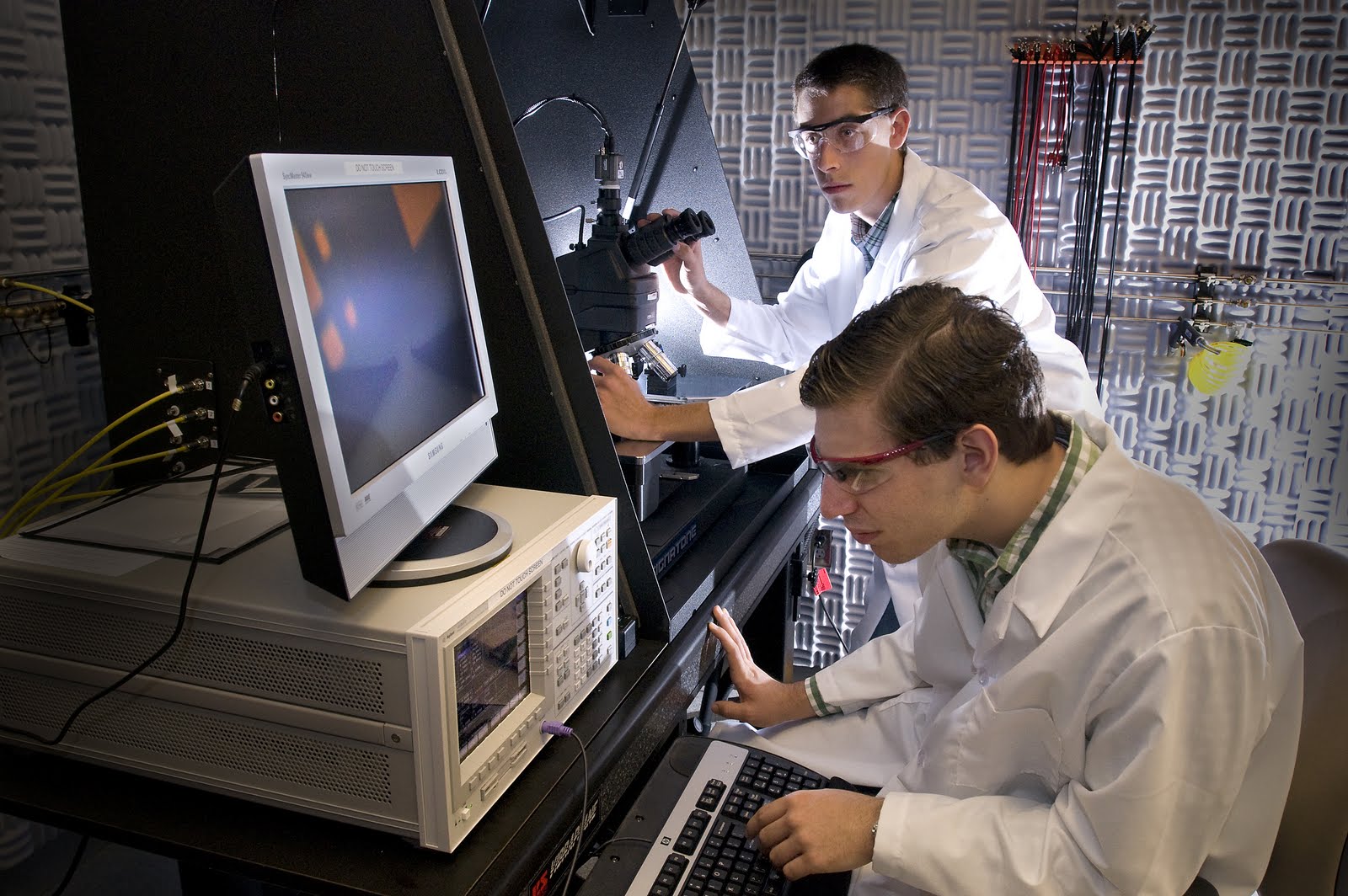
This week on Books and Adventures we’re joined by Ken White, manager of educational programs at Brookhaven National Laboratory (BNL), an advanced research facility run by the U.S. Department of Energy.


BNL was founded in 1947, with a mandate to promote research across the fields of physics, chemistry, biology and engineering. I began by asking Ken how long BNL has been involved with schools outreach and science education.


‘The Laboratory has been a supporter of science education pretty much since its inception. Science education and workforce development are part of our mission at BNL, and we have been fortunate to have leadership support to enable greater interaction with our academic community.  College students have come here for internships since the early 1950s and the Lab frequently had open houses and school outreach programs well back into the early 1960s. 

Over the past six years we have developed hands-on inquiry-based experiences for middle and high school students to enable them to conduct science similar to that of our researchers.  These are offered at cost and have become quite popular with local schools.  These programs have expanded the way in which we satisfy our responsibility for educating the next generation of scientists.

Successful offerings need to be exciting, with engaging activities that enable students to realize science is accessible to them.  The best programs often include a story as well – we try to humanize the program by relating it to our scientific staff actually working on the problems being presented.  Programs that show how the academic work applies to real life problems we face as a society tend to do well.’

What can a visit to BNL do for students in mainstream schooling?

A visit to BNL becomes a very memorable experience for students.  The excitement of science and the magnitude of the facilities, with seven Nobel Prizes being earned here, leaves a lasting impression.  Ideally, the visit provides students with relevance to their academics, a bit of career exploration, an understanding of the integration of subject matter, and an appreciation for what science is and can do for humanity.


How can you make cutting edge research accessible to such a wide age range of visitors?

This can be a challenge because of the depth of training our scientists go through to become world class researchers.  Their communication processes become fraught with technical jargon and complex content to the point that researchers in other fields may not fully understand the content.  One thing you find out quickly about scientific staff is that they have a passion for sharing their work with interested people.   Often, we will work with researchers to help them drop their jargon and put things into laymen’s terms, and to help them clarify the “so what” of their research.  This makes for a more enjoyable interaction for both the scientists and the audiences they reach out to.


What is the lasting impact of a visit to BNL?

As noted above, the experience is usually a memorable one. There are several ways for students to stay engaged. Venues would include everything from readings in a bibliography supporting our elementary programs, to summer research experiences, attending open to the public seminars and lectures, or participating in science-based competitions.  Another great way is to have the teacher participate in programs such as our “Introducing Synchrotron Science to the Classroom” or the “Open Space Stewardship Program.”  In these programs, teachers can work with the Lab, interact with scientific staff and others, and develop and enhance their own skills in guiding students in science classes and research.  

Do your educational programs focus on “hard science” or is there scope for students to consider the social & philosophical implications of BNL’s work?
Much of the work at BNL is on the hard sciences, but there are often considerable social and philosophical implications from our work as well.  For example, students working in the nuclear diagnostics area for neuroimaging are deeply engaged in “hard science,” but their results can have a profound impact on the larger understanding of addiction and treatment.  Another good example is the work the Lab does on nuclear non-proliferation.  This work is technical in nature, but also crosses into policy discussions affecting nuclear material management, control and safeguards. 

In an age of ruthlessly pragmatic ‘Tiger Mothering’ and an increasing focus on educating children to aid them in a future job market, what can students learn from the ‘blue skies’ research at BNL?
So much of talent in the workplace is in the ability to question, think critically, solve problems, be resilient to failure, and move forward productively toward a reasonably well understood objective, while still being flexible to change.  “Blue Skies” kind of research can be a way to learn many of these skills.  Be creative and thoughtful, design a means to test your hypothesis, don’t be afraid of failure, and find a way to right yourself. What more could an employer want?
You can find out more about the educational programs at Brookhaven National Laboratory at http://www.bnl.gov/education/

Telling Stories From Cultures Not Our Own

This week’s guest post comes from Eric Maddern, writer, teacher, singer, storyteller and mastermind behind the Welsh retreat centre Cae Mabon.

Eric – an experienced traveller and storyteller – kindly agreed to share his thoughts on ‘Telling Stories from Cultures Not Our Own’.

By what right do storytellers tell stories from Africa, Native America, Aboriginal Australia and other similar cultures? Isn’t appropriating and telling these peoples’ stories an extension of colonialism? We stole their lands and livelihoods; we decimated their cultures; we virtually drove them to extinction. Now we want to tell their stories. Isn’t this just the latest stage of colonial theft? It’s not surprising that some survivors from such cultures think so.

Storytellers who want to tell stories from other cultures need to be sensitive to this issue, in terms of both choice of story and where and when the story is told. It seems any story in print is fair game and therefore tellable. But first you have to find a story you like.

A storyteller may read dozens of stories before finding one he or she wants to tell. And then it’s not just a matter of liking it. You’ve got to develop a relationship with it. Learning it for telling requires effort. In time you must grow to love your story. If you don’t it won’t survive in your repertoire.

The more you love and relate to a story the more meaningful it becomes. It helps if you care about its culture of origin. You have to make the story your own, but in the telling you have to show an appreciation of its source. As you get inside the story so, to a degree, do you get inside the culture itself. The story should help you cultivate an empathy for the culture that you will convey in the telling.

It makes sense to look, initially, for stories from cultures you already have some relationship with, whether it be ancestral, geographic or perhaps through travel. Knowing what is your ‘own culture’ is not always easy these days. The mixing of bloodlines, geographic mobility and increasing globalisation mean that roots and influences can be many and varied.

I was born in Australia with Cornish and Scottish ancestry, spent my teenage years in England, travelled for ten years around the world through the Americas, the Pacific and Australasia, and now live in Wales. That’s quite a mix but at least it gives me scope to choose stories from cultures with which I have associations.

One of the biggest influences on me was the work I did in the Aboriginal communities of Central Australia. This led me to feeling great sympathy for the people. Not surprisingly the first story I ever told was an Aboriginal story. I wanted a tale that would convey the power and beauty of the culture. The story I chose came from ‘Australian Dreaming’, a beautiful coffee table book edited by Jennifer Isaacs. It was from the Dalabon people in northern Australia about how the rainbow bird stole fire from the crocodile.

The story was only a paragraph in length so I was soon embellishing it in the telling. I’d throw myself on the ground to become the crocodile, stand on one leg with outstretched arms to be the bird. After telling this story for years, my publisher – I was writing children’s picture books by then – asked for another story and I sent them ‘Rainbow Bird’. An artist was chosen and the book progressed to the point where ‘the galleys’ were done. The text and pictures were ready to be made into the book.

It was at this time that I went to Australia again, my first visit in ten years. Eventually I made my way to Katherine in the Northern Territory to visit a cousin who worked in Aboriginal communities. He took me to Manyallaluk where, it turned out, they knew ‘Rainbow Bird’ story. I had the galleys with me and so showed them to a young man who carefully read the entire text then said: ‘Come to me tomorrow and I’ll tell you the story.’

The next morning he dictated the story and made me write it down. He wanted to be sure I got it right. This meant I could ask questions for clarification. I wanted to know, for example, whether at the beginning the main character was a man or a crocodile. He was a man. The young man and his friend demonstrated the fire making referred to in the story. And I learned about the nits! It was a much fuller and more satisfying version of the story than my original.

But back in Britain my publishers couldn’t change the galleys, as it meant redoing the whole book. So the picture book remained based on the Dalabon version from ‘Australian Dreaming’, not the more nitty gritty, personal version I’d been given at Manyallaluk. Paradoxically, though it is the picture book I’m least satisfied with, it sells more than any other book I’ve done. Perhaps the title ‘Rainbow Bird’ has the appeal. Would it have sold so well if it had nits in it? Who knows? Fortunately I was later able to get the fuller version published in the ‘Young Oxford Book of World Folktales’ edited by Kevin Crossley Holland.

I was lucky to track down my first story to its source and to be given both a fuller version and, it seemed, permission to tell it. Very rarely will storytellers be able to do such a thing. Even though I feel I have permission to tell the story I’m still careful about where I do. I feel OK telling Aboriginal stories in Britain where there are very few Aboriginal people to speak for themselves. But in Australia I’d be more cautious. If I was trying to get white Australians to appreciate Aboriginal culture it might be fine. But if there were Aboriginal people present I probably wouldn’t, or at least I’d ask them if it was OK first.

Paradoxically I now live in Wales and am often called upon to tell traditional Welsh legends and folktales to Welsh kids and sometimes adults. Perhaps here the difference is that very few Welsh adults can tell the traditional tales and they enjoy hearing them told well. Also, the time when those stories were a really live part of the culture is, for most people, long ago, so there’s not so much of an issue about ownership and rights any more.

But in other cultures – the Native American for example – the stories are still very much a live part of their culture. Although plenty of their stories are in print and therefore available for retelling (always bearing in mind the context), if you hear a Native American storyteller tell a story which you’d love to tell, you must ask for permission first. And don’t expect it to be granted. Or if it is it may come with a condition. For example I once asked a Lebanese storyteller if I could tell a story she’d told which had been written by a Palestinian man for his daughter. ‘You can tell it,’ she said, ‘As long as you tell it better than I do!’

So we have to be sensitive in choosing the stories we tell. Those in the public domain are, by and large, available to tell but, as always, need to be appropriate to your audience. Preferably choose stories where you have some personal connection to the culture of origin. Develop a relationship with the story. Get inside the story and let the story get inside you. Be cautious about telling someone else’s story where it’s clear they’ve done a lot of work on it. You must do your own work to make it yours. And where the story is particularly personal – either culturally or autobiographically – leave well alone. There are plenty of stories to choose from. Find ones you love and love them into life.

Find out more about Eric Maddern’s work at www.ericmaddern.co.uk

>Interview: Sally Wendkos Olds, Super Granny

>

Today’s interviewee, Sally Wendkos Olds, is an accomplished writer, with special expertise in child development, families and travel. Sally has 11 books and over 200 articles to her name. Even more importantly, she’s the devoted grandmother of 5 lucky children.
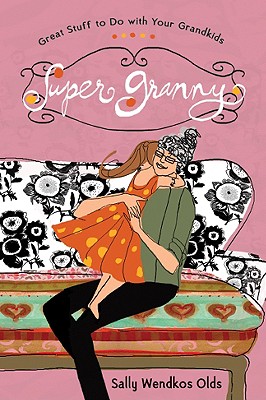
Sally’s book Super Granny: Great Stuff to Do With Your Grandkids is packed with original and exciting activities for modern grandmothers to do with grandkids of all ages, from high-tech intercontinental Skype chats to simply eating your dessert before your dinner!
Sally’s book and award-winning blog address the new breed of grandmothers who don’t look like the fluffy-haired, passive picture-book stereotype of the past. Glamorous, jet-setting, technologically savvy, the Super Granny is more likely to catch up with her grandkids via Blackberry than slump on the sofa with tea and biscuits.
Here at Books and Adventures we recognize that learning and reading is an adventure which children share with many people beyond their immediate family. Friends, teachers and relatives, including grannies, have so much to offer as we learn and grow.
Sally kindly took time for a Q-and-A with Books and Adventures by e-mail. There’s more on her work here, and you can find the Super Granny book here.
Q: The Super Granny ‘doesn’t look like the grandmothers in the picture books….like your own grandmothers or even your own mothers. And you don’t act like any of these either.’ What’s brought about this generational change?

A: One major reason this generational change came about is the improved health and vigor of today’s Super Granny generation, due partly to the fitness revolution, which encouraged women (and men) to exercise more, eat better, and in general pursue a healthier life style. Youthful experiences and attitudes have also played a part: people in their sixties, and even seventies, don’t consider themselves old and don’t act old (“60 is the new 40”). The new technologies are helpful, but the bigger change is in Super Granny’s willingness to use them.

Q: You also note in your book that grandmothering is an ancient tradition in which today’s grandmas still take part. So what common ground is there between Super Granny and her predecessors?
A: Grandmothers have always been the traditional “next-best-to-Mom” in terms of loving and caring for children. Even today, if a grandmother lives nearby, is healthy, and doesn’t have outside work commitments, she’s usually the caregiver of choice while Mom is at work or school. And in most cases, you couldn’t ask for anyone more loving to your children or better able to take care of them.
Q: How does a busy Super Granny make that time for her grandchildren? Are there sacrifices involved in being a Super Granny?
A: All through life we set priorities in terms of how we spend our time. No matter how busy a grandmother is, if the will is there to be with your grandchildren (and it usually is), you can manage to carve out some time for them. It’s not the quantity of time — the number of hours we spend — but the quality, so that when we are with our grandchildren, we are totally with them. This is what matters in any relationship, and what can be meaningful in a really short span of time.
Q: You have experience of living and working in Nepal, which clearly had a major influence on your life. What did you learn from Nepalese grandmothers? Is it truly possible to be a Super Granny without a cellphone, Skype account and plenty of frequent flyer points?
A: Sure, you can be a Super Granny without all those techno gadgets. The grandmothers I met in the hill villages of Nepal didn’t have any of them! Of course, the ones I met did live close to their grandchildren and were a constant presence in their lives. It’s harder, of course, when grandmothers (like me) live far away from our grandchildren and don’t have the time or the means to visit frequently, but still there are so many ways of reaching out. I do use phone, email, and Skype — but also snail-mail. Kids love getting letters, poems, and cards that they can actually touch — in addition, of course, to presents!
I have lived far from three of my grandchildren ever since they were born, so I am especially aware of the need to make extra efforts to have a relationship across the miles. And that’s why my book points out so many activities that Super Grannies can do long-distance — some that I have done myself, some that other grannies told me about.
Q: ‘Grandparents and grandchildren share a common enemy.’ What does a Super Granny, devoted to her grandchildren and armed with a roster of cool and creative projects, feel about the current debate around ‘Tiger Mothering’ and ‘Attachment Parenting’. Is having a Super Granny going to help a child get into law school? Or is it all about fun and frivolity?
A: There are many styles of grandmothering, just as there are styles of mothering. Some Super Grannies focus on fun and frivolity, while others are more interested in stimulating their grandchildren’s intellectual curiosity and offering projects that will, in fact, help children achieve in school and in life.
There’s no one right way for everyone. When I was researching my book, I was struck by all the different ways that the grandmothers I met related to their grandchildren. So some of the activities in the book don’t have any goal other than enjoying your time together, while others are more oriented toward education. You have to allow for individual differences in families and in individual personalities of both granny and child.
A Super Granny might relate one way to one grandchild and a different way to another. As long as you let all your grandchildren know that you love them, you don’t need to be the same kind of grandmother with each one.
Q: The research on parenting and child development is advancing all the time. Have your opinions on how we should bring up our children changed dramatically over the years between your roles as Super Mom and Super Granny?
A: My opinions about the important issues in raising children — being sensitive to their individual needs and encouraging them to follow their own interests and abilities, while helping them to become competent and caring members of society — have not changed. What has changed is my attitude.
I have discovered over the years that some of the things I worried about as a young mom — and even an older one — didn’t come to pass, and that lets me be more relaxed with my grandchildren than I was with my children. I care about and love my grandchildren as much as I did (and do) my children, but I don’t worry so much about them, and as a result I can enjoy them more. This is one of the glories of being a grandmother!
Find out more about being a Super Granny at Sally Wendkos Olds’ site – http://www.sallywendkosolds.com/.

My latest news from Peru can be found at http://lavidaidealist.org/2011/04/09/escrutineo/

>New Zealand Book Month Extended in Christchurch

>A quick update from New Zealand Book Month (NZBM), which has been extended into April for Christchurch after the recent earthquake.

Sadly numerous NZBM events in the city have been cancelled, including workshops with comic book writer Steve Malley, and the exciting ‘Create an NZ Superhero’ online competition – but libraries are still playing a major part in the recovery effort.


Carolyn Robertson, the city’s Libraries and Information Manager, told Books and Adventures, ‘I think books and library services were absolutely instrumental in helping people cope in the aftermath. The quake occurred on a Tuesday. By the following Sunday, there was a library story teller at every shelter with books, rhymes, and songs. The children’s responses varied from shelter to shelter: at one, they were very hyper and upset, at another they were painfully shy and needed lots of encouragement to even sit on the mat. So the library staff had to pull out all their tricks, and adjust the programme to meet different needs. 


‘Parents were having to queue for hours to get money, grants, information and so on, but the presence of our storytellers meant they could concentrate on the survival business and know their children were being well cared for – and within their eye sight.

‘We currently have eleven library sites open and our customers are thrilled to be enjoying these services again. We have stepped up our Mobile Library service, targeting the worst hit parts of the city, roads permitting, as well as taking pre-school outreach and other programmes further into the community. Some of our libraries are being used to accommodate essential council services, but we’re busy looking for ways to establish temporary sites or alternative services where there’s need and demand.”

Carolyn is pleased that NZBM were able to extend their activities for people in Christchurch: ‘NZ Book Month provides events that are fun and don’t involve much financial outlay. One of the things that gets some people down is the endless focusing on the quake and its impact. We also need to escape a bit – and we’re already planning for next year!’

Nnedi Okorafor: (Re)Writing Destiny

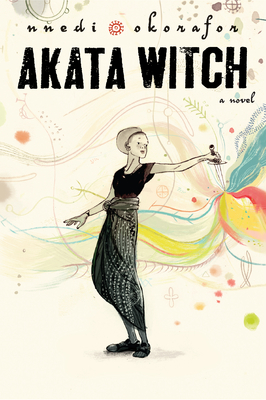
Next month’s issue of the New York arts journal Brooklyn Rail features my review of Nnedi Okorafor’s new Young Adult novel, Akata Witch.


I think Nnedi is one of the most important YA authors writing in English at the moment. Her books blend science fiction and fantasy in epic adventures, which draw heavily on African culture and beliefs. Zahrah the Windseeker, Nnedi’s Wole Soyinka Prize-winning debut, is my all-time favourite book for young people. I wrote on it a few months back, here.
Raised in Chicago by Nigerian parents, Nnedi was a teenage tennis star forced into more sedentary pursuits by a bout of scoliosis when she was at college.
When we met on my recent trip to Chicago, she told me: ‘I would not be writing but for the paralysis. I’d never have thought to pick up a pen. I was only nineteen, really athletic, but scoliosis painted my life.
‘It was like destiny making me write. It was terrible, brutal and completely changed my life in a very specific way. Destiny is brutal, it does not care about you.’
Destiny, and the limits of our freedom to question its demands, is a major theme of Akata Witch.
Its hero, 12-year-old Sunny, is an American-born girl who moves to Nigeria with her parents. As an albino and an akata (a derogatory term for black Americans), she is an outcast within her community. Yet when she begins to develop strange powers and joins the secret society of Leopard People, it seems Sunny may have a part to play in saving the world from apocalypse…
Nnedi freely admits she’s a fan of putting teenage protagonists through the Hero’s Journey as described by Joseph Campbell: ‘I LOVE the hero’s journey. I can’t get enough of it. Coming of age is a magical time, in-between, full of conflict. And writers love conflict!’
What makes Akata Witch stand out from other fantasy quests, is the marginalized quality of the heroic protagonist. Sunny is not ‘the chosen one’ nor even, like Harry Potter, a key player in the battle for the survival of the world.
When Sunny and her friends are sent to frustrate a child-murdering sorcerer’s attempt to summon a monstruous spirit, they are merely one more team in a long line of failed, dispensable young magicians.
Sunny is explicitly told by her elders that she is effectively cannon fodder: ‘The world is bigger than you are, it will go on without you.’
Destiny seems to have brought Sunny from the US to Nigeria to discover her powers, but it doesn’t guarantee her survival, or even victory.
As Nnedi puts it, ‘Destiny has always been something I’ve been fascinated with, but also resisted. Is everything written? And even if it is, can you rewrite it?’
I’ll be featuring more from my interview with Nnedi on Books and Adventures in the month of April, and you can find my review in the forthcoming issue of Brooklyn RailAkata Witch is released in the US by Viking Juvenile on April 14th – find out more at Nnedi’s site.

>A Child’s Adventure in the Swedish Countryside: Scandinavia House NYC feature at Playing By the Book

>Zoe Toft’s blog Playing by the Book has just posted my short feature on A Child’s Adventure in the Swedish Countryside, an installation designed by Sarah Edkins for the American Scandinavian Foundation at Scandinavia House, New York City.


Scandinavia House, NYC (c) Jonathan B. Ragle

 You can find my piece on this exciting children’s book exhibit here: http://www.playingbythebook.net/2011/03/21/a-child%E2%80%99s-adventure-in-the-swedish-countryside-children%E2%80%99s-literature-installation-at-scandinavia-house-nyc/

>New Zealand Book Month: Interview with Lincoln Gould of Booksellers NZ and Jo Ockey, World’s Smallest Library, Whanganui

>While I prepare to move my next literacy project with Domingo Savio school in Peru, on the other side of the world New Zealand Book Month continues.

On February 22nd, a magnitude 6.3 earthquake struck the city of Christchurch on New Zealand’s South Island. Among the many people left in need of assistance after the quake were booksellers, some of whom had been hit by the previous tremor in September 2010.

At the close of 2010, New Zealand had already begun to address the legacy of the previous quake through initiatives like Scholastic’s special picture book Quaky Cat, designed to help children cope with the shocking events they had experienced. Now, the city finds itself once again recovering from a natural disaster, and a number of bookstores have been badly damaged.

Zoe Toft at Playing By the Book was one of many bloggers who drew our attention to various relief schemes and aid programmes being run by the children’s book world, here: http://www.playingbythebook.net/2011/03/02/books-for-families-in-christchurch-new-zealand/

Lincoln Gould, CEO of trade association Booksellers NZ, joined Books and Adventures for an interview.

He told us by e-mail that international booksellers’ organizations have been quick to offer their support: ‘In particular, the American Booksellers’ Association has not only donated generously to the Relief Fund but has also offered help based on their experience in providing assistance to Members following the Katrina disaster.’

‘Every effort is being taken to restore the availability of books to readers,’ Lincoln explained. ‘One group, Paper Plus, have established a special scheme to allow customers in other parts of the country to donate books for distribution in Christchurch. The Board of Booksellers NZ will administer its own relief fund, used to assist member booksellers in practical ways. One idea is that the expenses might be met for Christchurch members to attend this year’s annual conference, which by necessity has been moved from Christchurch to Wellington.’

Details of the relief fund can be found here: http://www.booksellers.co.nz/book-news/christchurch-booksellers-relief-fund

Meanwhile, in the North Island community of Whanganui, New Zealand Book Month took on a celebratory form as Jo Ockey and the team at Open Studios opened the World’s Smallest Library.

Based on an idea piloted in the UK, the project sees a working telephone booth in Whanganui transformed into a tiny book-swapping venue.

‘We’ve got stuff for all ages – everything from books for wee ones right though to the oldies,’ Jo told us via e-mail. ‘I have been trying to get folks to swap their favourite, not just any old book! There’s a real mixed bag: To Kill a Mockingbird up next to hand-bound books.’

The World’s Smallest Library is also the World’s Smallest Publishing House. Poet David Merritt will be taking up a residency at the micro-library during New Zealand Book Month. There’s a method to David’s madness as he perches on a park bench with a pile of old Reader’s Digests and Jeffrey Archer potboilers. Jo explains: ‘David makes new books from recycled ones – he cuts and stamps and in about 6 minutes creates these beautiful new editions with his own poems inside. David’s a very quiet man but every so often he may recite from the books too!’

The phone booth library is a bit of fun for local residents, but there’s also a serious point for Jo and the rest of the Open Studios team of community artists. ‘NZ Book Month gives us a chance to show the rest of the country a good side to our city. Over the past 6 years, we’ve had some bad press, but I want our town to realize how clever we all are – and understand that sharing is caring! Whanganui is a beautiful town with some spirited folks, and tons to do!’

For more information on the scheme, visit http://www.openstudios.co.nz/


Up next on Books and Adventures, more NZ news from the Create a Superhero project in quake-stricken Christchurch itself, interviews with Wole Soyinka prize winner Nnedi Okorafor and Finnish education minister Henna Virkkunen, plus charter schools and the future of US education. Stay tuned!

>New Zealand Book Month: Interview with Nikki Crowther

>


When a teenage photography apprentice picked up a 25-year-old fantasy novel to while away a long train journey through New Zealand, he could hardly have known that his choice of reading would lead to a knighthood and a piece of Kiwi cinematic history.

But for movie director Sir Peter Jackson, J.R.R. Tolkien’s Lord of the Rings would become one of the books that changed his life.

This March, the people of New Zealand are being encouraged to share the books closest to their hearts as New Zealand Book Month announces that ‘Books Change Lives!’

Undeterred by the tragedy of the recent earthquake, the campaign is running over 200 events across the country, from the ‘World’s Smallest Library in a Whanganui phone box to a nationwide giveaway of four million ‘Books Change Lives’ vouchers.

Throughout March, Kiwis will find these discount vouchers in their schools, banks, gas stations and letterboxes – a free gift from New Zealand’s booksellers and publishers to readers old and new.

‘New Zealand Book Month celebrates books and reading – all books, any books – and takes that message out to an audience who do not necessarily frequent libraries and bookshops. We have strong ongoing support from committed and passionate readers,’ Book Month director Nikki Crowther told me by e-mail, ‘but we wanted to extend our message to lapsed and occasional readers, and to parents of young children – to remind and re-engage them: with books, and the value that books can bring to all of our lives.’

Across the world, Books and Adventures – always a lover of Kiwiland – has found organizations recognizing the power of the book, especially in the early years of childhood. Australia’s Paint the Town Read scheme, which featured on the blog last November, has encouraged parents to read with their children right from the maternity ward. New York Presbyterian Hospital’s Reach Out and Read program, which I also wrote on for Books and Adventures (here) and DNAInfo (here), ensures that their child patients each receive a book at every clinic visit from birth until the age of five.

That’s not to say that the Kiwi book lovers are being prescriptive with their scheme. Nikki explained:

‘As far as we’re concerned, any book you enjoy is a good book. Choosing a book for oneself is an important step to becoming a passionate reader, and we hope to empower as many people as possible by having them choose the right book for them.’

To help readers find that special book, Nikki and her team have instigated a national conversation around the books that have changed Kiwis’ lives. Not everyone will read a book, as Peter Jackson did, and find themselves making a multi-million-dollar movie adaptation – but many of us have special favorites that have sustained us through significant moments in our lives.

Some of these choices can be very revealing: a British survey of male and female readers in 2006 suggested that men and women had very different senses of what constituted a ‘life-changing’ read, and Nikki Crowther admitted that the results of her survey in New Zealand were equally surprising:

‘So many people voted for the classics! Do people feel compelled to pick what they think they “ought” to love, rather than the books they really couldn’t put down and raved to all their friends about?

‘My first life-changing book was Ballet Shoes by Noel Streatfield. There have been many since – perhaps it was rather cruel to ask other folk to choose just one. I certainly couldn’t. I always reckon that the next book I read will be the next life-changer…!’


While New Zealand Book Month was born among Kiwi publishing insiders, it’s supported by a network of passionate volunteers across the nation.

‘I’m completely awestruck by our “activists”,’ admitted Nikki, ‘in terms of the time, energy and ideas that they put into promoting books and reading in their local communities. We’re taking the message that “Books Change Lives” out to a much wider audience than the traditional places where books exist – so that it touches people sitting at home in front of the TV, or listening to the radio, or visiting their local bank.

‘We hope to promote the notion that books can be a part of everyday life – and that by giving people a good reason to pick up a book during March, we will encourage just some of them into starting a regular reading habit!’

To find out more about New Zealand Book Month and its nationwide program of events in March, visit http://www.nzbookmonth.co.nz/

>World Read Aloud Day at New York-Presbyterian Hospital, Manhattan

>Busy times here at Books and Adventures. Caught up in the celebrations for World Read Aloud Day, I managed to turn in a photo story for local Manhattan news website DNAInfo.

You can check out the great work of New York-Presbyterian Hospital’s Reach Out and Read program at http://www.dnainfo.com/20110310/washington-heights-inwood/waiting-rooms-become-reading-rooms-on-world-read-aloud-day

Next – New Zealand Book Month’s Nikki Crowther joins us to discuss book token giveaways, Kiwi lit culture, and her own life-changing reads…