>Q&A with Ken White, Manager of Educational Programs at Brookhaven National Laboratory

>

This week on Books and Adventures we’re joined by Ken White, manager of educational programs at Brookhaven National Laboratory (BNL), an advanced research facility run by the U.S. Department of Energy.


BNL was founded in 1947, with a mandate to promote research across the fields of physics, chemistry, biology and engineering. I began by asking Ken how long BNL has been involved with schools outreach and science education.


‘The Laboratory has been a supporter of science education pretty much since its inception. Science education and workforce development are part of our mission at BNL, and we have been fortunate to have leadership support to enable greater interaction with our academic community.  College students have come here for internships since the early 1950s and the Lab frequently had open houses and school outreach programs well back into the early 1960s. 

Over the past six years we have developed hands-on inquiry-based experiences for middle and high school students to enable them to conduct science similar to that of our researchers.  These are offered at cost and have become quite popular with local schools.  These programs have expanded the way in which we satisfy our responsibility for educating the next generation of scientists.

Successful offerings need to be exciting, with engaging activities that enable students to realize science is accessible to them.  The best programs often include a story as well – we try to humanize the program by relating it to our scientific staff actually working on the problems being presented.  Programs that show how the academic work applies to real life problems we face as a society tend to do well.’

What can a visit to BNL do for students in mainstream schooling?

A visit to BNL becomes a very memorable experience for students.  The excitement of science and the magnitude of the facilities, with seven Nobel Prizes being earned here, leaves a lasting impression.  Ideally, the visit provides students with relevance to their academics, a bit of career exploration, an understanding of the integration of subject matter, and an appreciation for what science is and can do for humanity.


How can you make cutting edge research accessible to such a wide age range of visitors?

This can be a challenge because of the depth of training our scientists go through to become world class researchers.  Their communication processes become fraught with technical jargon and complex content to the point that researchers in other fields may not fully understand the content.  One thing you find out quickly about scientific staff is that they have a passion for sharing their work with interested people.   Often, we will work with researchers to help them drop their jargon and put things into laymen’s terms, and to help them clarify the “so what” of their research.  This makes for a more enjoyable interaction for both the scientists and the audiences they reach out to.


What is the lasting impact of a visit to BNL?

As noted above, the experience is usually a memorable one. There are several ways for students to stay engaged. Venues would include everything from readings in a bibliography supporting our elementary programs, to summer research experiences, attending open to the public seminars and lectures, or participating in science-based competitions.  Another great way is to have the teacher participate in programs such as our “Introducing Synchrotron Science to the Classroom” or the “Open Space Stewardship Program.”  In these programs, teachers can work with the Lab, interact with scientific staff and others, and develop and enhance their own skills in guiding students in science classes and research.  

Do your educational programs focus on “hard science” or is there scope for students to consider the social & philosophical implications of BNL’s work?
Much of the work at BNL is on the hard sciences, but there are often considerable social and philosophical implications from our work as well.  For example, students working in the nuclear diagnostics area for neuroimaging are deeply engaged in “hard science,” but their results can have a profound impact on the larger understanding of addiction and treatment.  Another good example is the work the Lab does on nuclear non-proliferation.  This work is technical in nature, but also crosses into policy discussions affecting nuclear material management, control and safeguards. 

In an age of ruthlessly pragmatic ‘Tiger Mothering’ and an increasing focus on educating children to aid them in a future job market, what can students learn from the ‘blue skies’ research at BNL?
So much of talent in the workplace is in the ability to question, think critically, solve problems, be resilient to failure, and move forward productively toward a reasonably well understood objective, while still being flexible to change.  “Blue Skies” kind of research can be a way to learn many of these skills.  Be creative and thoughtful, design a means to test your hypothesis, don’t be afraid of failure, and find a way to right yourself. What more could an employer want?
You can find out more about the educational programs at Brookhaven National Laboratory at http://www.bnl.gov/education/

Nnedi Okorafor: (Re)Writing Destiny

Next month’s issue of the New York arts journal Brooklyn Rail features my review of Nnedi Okorafor’s new Young Adult novel, Akata Witch.


I think Nnedi is one of the most important YA authors writing in English at the moment. Her books blend science fiction and fantasy in epic adventures, which draw heavily on African culture and beliefs. Zahrah the Windseeker, Nnedi’s Wole Soyinka Prize-winning debut, is my all-time favourite book for young people. I wrote on it a few months back, here.
Raised in Chicago by Nigerian parents, Nnedi was a teenage tennis star forced into more sedentary pursuits by a bout of scoliosis when she was at college.
When we met on my recent trip to Chicago, she told me: ‘I would not be writing but for the paralysis. I’d never have thought to pick up a pen. I was only nineteen, really athletic, but scoliosis painted my life.
‘It was like destiny making me write. It was terrible, brutal and completely changed my life in a very specific way. Destiny is brutal, it does not care about you.’
Destiny, and the limits of our freedom to question its demands, is a major theme of Akata Witch.
Its hero, 12-year-old Sunny, is an American-born girl who moves to Nigeria with her parents. As an albino and an akata (a derogatory term for black Americans), she is an outcast within her community. Yet when she begins to develop strange powers and joins the secret society of Leopard People, it seems Sunny may have a part to play in saving the world from apocalypse…
Nnedi freely admits she’s a fan of putting teenage protagonists through the Hero’s Journey as described by Joseph Campbell: ‘I LOVE the hero’s journey. I can’t get enough of it. Coming of age is a magical time, in-between, full of conflict. And writers love conflict!’
What makes Akata Witch stand out from other fantasy quests, is the marginalized quality of the heroic protagonist. Sunny is not ‘the chosen one’ nor even, like Harry Potter, a key player in the battle for the survival of the world.
When Sunny and her friends are sent to frustrate a child-murdering sorcerer’s attempt to summon a monstruous spirit, they are merely one more team in a long line of failed, dispensable young magicians.
Sunny is explicitly told by her elders that she is effectively cannon fodder: ‘The world is bigger than you are, it will go on without you.’
Destiny seems to have brought Sunny from the US to Nigeria to discover her powers, but it doesn’t guarantee her survival, or even victory.
As Nnedi puts it, ‘Destiny has always been something I’ve been fascinated with, but also resisted. Is everything written? And even if it is, can you rewrite it?’
I’ll be featuring more from my interview with Nnedi on Books and Adventures in the month of April, and you can find my review in the forthcoming issue of Brooklyn RailAkata Witch is released in the US by Viking Juvenile on April 14th – find out more at Nnedi’s site.

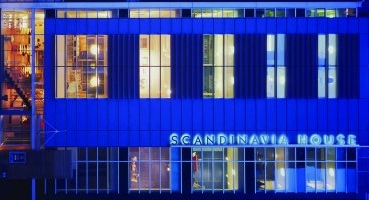
>A Child’s Adventure in the Swedish Countryside: Scandinavia House NYC feature at Playing By the Book

>Zoe Toft’s blog Playing by the Book has just posted my short feature on A Child’s Adventure in the Swedish Countryside, an installation designed by Sarah Edkins for the American Scandinavian Foundation at Scandinavia House, New York City.


Scandinavia House, NYC (c) Jonathan B. Ragle

 You can find my piece on this exciting children’s book exhibit here: http://www.playingbythebook.net/2011/03/21/a-child%E2%80%99s-adventure-in-the-swedish-countryside-children%E2%80%99s-literature-installation-at-scandinavia-house-nyc/

>New Zealand Book Month: Interview with Lincoln Gould of Booksellers NZ and Jo Ockey, World’s Smallest Library, Whanganui

>While I prepare to move my next literacy project with Domingo Savio school in Peru, on the other side of the world New Zealand Book Month continues.

On February 22nd, a magnitude 6.3 earthquake struck the city of Christchurch on New Zealand’s South Island. Among the many people left in need of assistance after the quake were booksellers, some of whom had been hit by the previous tremor in September 2010.

At the close of 2010, New Zealand had already begun to address the legacy of the previous quake through initiatives like Scholastic’s special picture book Quaky Cat, designed to help children cope with the shocking events they had experienced. Now, the city finds itself once again recovering from a natural disaster, and a number of bookstores have been badly damaged.

Zoe Toft at Playing By the Book was one of many bloggers who drew our attention to various relief schemes and aid programmes being run by the children’s book world, here: http://www.playingbythebook.net/2011/03/02/books-for-families-in-christchurch-new-zealand/

Lincoln Gould, CEO of trade association Booksellers NZ, joined Books and Adventures for an interview.

He told us by e-mail that international booksellers’ organizations have been quick to offer their support: ‘In particular, the American Booksellers’ Association has not only donated generously to the Relief Fund but has also offered help based on their experience in providing assistance to Members following the Katrina disaster.’

‘Every effort is being taken to restore the availability of books to readers,’ Lincoln explained. ‘One group, Paper Plus, have established a special scheme to allow customers in other parts of the country to donate books for distribution in Christchurch. The Board of Booksellers NZ will administer its own relief fund, used to assist member booksellers in practical ways. One idea is that the expenses might be met for Christchurch members to attend this year’s annual conference, which by necessity has been moved from Christchurch to Wellington.’

Details of the relief fund can be found here: http://www.booksellers.co.nz/book-news/christchurch-booksellers-relief-fund

Meanwhile, in the North Island community of Whanganui, New Zealand Book Month took on a celebratory form as Jo Ockey and the team at Open Studios opened the World’s Smallest Library.

Based on an idea piloted in the UK, the project sees a working telephone booth in Whanganui transformed into a tiny book-swapping venue.

‘We’ve got stuff for all ages – everything from books for wee ones right though to the oldies,’ Jo told us via e-mail. ‘I have been trying to get folks to swap their favourite, not just any old book! There’s a real mixed bag: To Kill a Mockingbird up next to hand-bound books.’

The World’s Smallest Library is also the World’s Smallest Publishing House. Poet David Merritt will be taking up a residency at the micro-library during New Zealand Book Month. There’s a method to David’s madness as he perches on a park bench with a pile of old Reader’s Digests and Jeffrey Archer potboilers. Jo explains: ‘David makes new books from recycled ones – he cuts and stamps and in about 6 minutes creates these beautiful new editions with his own poems inside. David’s a very quiet man but every so often he may recite from the books too!’

The phone booth library is a bit of fun for local residents, but there’s also a serious point for Jo and the rest of the Open Studios team of community artists. ‘NZ Book Month gives us a chance to show the rest of the country a good side to our city. Over the past 6 years, we’ve had some bad press, but I want our town to realize how clever we all are – and understand that sharing is caring! Whanganui is a beautiful town with some spirited folks, and tons to do!’

For more information on the scheme, visit http://www.openstudios.co.nz/


Up next on Books and Adventures, more NZ news from the Create a Superhero project in quake-stricken Christchurch itself, interviews with Wole Soyinka prize winner Nnedi Okorafor and Finnish education minister Henna Virkkunen, plus charter schools and the future of US education. Stay tuned!

>New Zealand Book Month: Interview with Nikki Crowther

>


When a teenage photography apprentice picked up a 25-year-old fantasy novel to while away a long train journey through New Zealand, he could hardly have known that his choice of reading would lead to a knighthood and a piece of Kiwi cinematic history.

But for movie director Sir Peter Jackson, J.R.R. Tolkien’s Lord of the Rings would become one of the books that changed his life.

This March, the people of New Zealand are being encouraged to share the books closest to their hearts as New Zealand Book Month announces that ‘Books Change Lives!’

Undeterred by the tragedy of the recent earthquake, the campaign is running over 200 events across the country, from the ‘World’s Smallest Library in a Whanganui phone box to a nationwide giveaway of four million ‘Books Change Lives’ vouchers.

Throughout March, Kiwis will find these discount vouchers in their schools, banks, gas stations and letterboxes – a free gift from New Zealand’s booksellers and publishers to readers old and new.

‘New Zealand Book Month celebrates books and reading – all books, any books – and takes that message out to an audience who do not necessarily frequent libraries and bookshops. We have strong ongoing support from committed and passionate readers,’ Book Month director Nikki Crowther told me by e-mail, ‘but we wanted to extend our message to lapsed and occasional readers, and to parents of young children – to remind and re-engage them: with books, and the value that books can bring to all of our lives.’

Across the world, Books and Adventures – always a lover of Kiwiland – has found organizations recognizing the power of the book, especially in the early years of childhood. Australia’s Paint the Town Read scheme, which featured on the blog last November, has encouraged parents to read with their children right from the maternity ward. New York Presbyterian Hospital’s Reach Out and Read program, which I also wrote on for Books and Adventures (here) and DNAInfo (here), ensures that their child patients each receive a book at every clinic visit from birth until the age of five.

That’s not to say that the Kiwi book lovers are being prescriptive with their scheme. Nikki explained:

‘As far as we’re concerned, any book you enjoy is a good book. Choosing a book for oneself is an important step to becoming a passionate reader, and we hope to empower as many people as possible by having them choose the right book for them.’

To help readers find that special book, Nikki and her team have instigated a national conversation around the books that have changed Kiwis’ lives. Not everyone will read a book, as Peter Jackson did, and find themselves making a multi-million-dollar movie adaptation – but many of us have special favorites that have sustained us through significant moments in our lives.

Some of these choices can be very revealing: a British survey of male and female readers in 2006 suggested that men and women had very different senses of what constituted a ‘life-changing’ read, and Nikki Crowther admitted that the results of her survey in New Zealand were equally surprising:

‘So many people voted for the classics! Do people feel compelled to pick what they think they “ought” to love, rather than the books they really couldn’t put down and raved to all their friends about?

‘My first life-changing book was Ballet Shoes by Noel Streatfield. There have been many since – perhaps it was rather cruel to ask other folk to choose just one. I certainly couldn’t. I always reckon that the next book I read will be the next life-changer…!’


While New Zealand Book Month was born among Kiwi publishing insiders, it’s supported by a network of passionate volunteers across the nation.

‘I’m completely awestruck by our “activists”,’ admitted Nikki, ‘in terms of the time, energy and ideas that they put into promoting books and reading in their local communities. We’re taking the message that “Books Change Lives” out to a much wider audience than the traditional places where books exist – so that it touches people sitting at home in front of the TV, or listening to the radio, or visiting their local bank.

‘We hope to promote the notion that books can be a part of everyday life – and that by giving people a good reason to pick up a book during March, we will encourage just some of them into starting a regular reading habit!’

To find out more about New Zealand Book Month and its nationwide program of events in March, visit http://www.nzbookmonth.co.nz/

>World Read Aloud Day, Part 2: Q and A with Pam Allyn

>

For the first part of this featured interview with Pam Allyn, click here.

Continuing our interview with Pam Allyn, founder of LitWorld, we moved on from World Read Aloud day to the wider work of her non-profit organization in fighting illiteracy around the world.

Are literacy challenges the same in developing countries as in a place like New York City?
In some significant ways, literacy challenges are far more extreme in developing countries. In other ways, they are more alike than you might care to think.

In terms of differences, the developing world has only just come to the idea of mandatory primary education. It is only in recent years that the expectation that all children must attend school is adhered to (and in many cases, still not completely). This is of course a good and great thing, but most of the developing world was not prepared to handle all the children who then poured into schools. As a result, there are far too few teachers per child (in Liberia, the average ratio in a classroom is 90:1), hardly any classroom supplies at all, and not nearly enough structures in place to train teachers on an ongoing basis or to provide state of the art learning that will help children move forward and stay in school. The conditions are grueling and difficult, for teachers and children alike.

In the developing world, we have access to extraordinary resources, especially literature written specifically for children, that teaches children how to read and conveys important big ideas. In fact, the materials used to teach reading can be too dense: they’re not written at a level children can understand and don’t do enough to draw a child into a world of words.

Even here in the United States, we do not guarantee equity of access to all children. High poverty districts are far more likely to have fewer books and computers in the classroom. And this is 2011! We still use outmoded forms of teaching in classrooms all over this country, and sad to say, the testing mania has driven us back to some terrible teaching practices that I haven’t seen since I was a child.

Just when we have to teach innovatively and creatively, we are all across the world teaching out of fear and insecurity, and that is not going to raise children to be the innovators and creators we hope and know they can all be.

Do your literacy schemes like use a particular approach to teaching and learning literacy? Are you subscribers to a particular philosophy of education?

I am a fierce advocate for what I call a “toolkit” approach to the teaching of reading. There are skills every child needs to learn to read; these include phonics, but also include fluency, stamina and comprehension. One without the others is a waste of time.

I believe in an integrated approach that will both help the child decode words but also beyond that help him to soar through them and transcend the work on the page to see reading as a joy, an art, a pleasure.

One of my heroes is Paolo Freire, who famously asked women in rural villages to tell their own stories as a way to learn to read and write. He was convinced that narrative is the force that drives us in everything we do and that was how he taught women how to read, was by asking them to tell the stories of who they were. I advocate this in my work with children; if they write about their experiences, both imaginative and real, and then read them back, they have a far better chance of becoming lifelong readers. They understand the power of story.

When I started LitWorld, I was thinking a lot about the most vulnerable children I had met, especially those who had been displaced or traumatized, and I wondered if teaching writing could actually HELP to build resilience. Teachers of such children often focused on their trauma. I wondered if by writing narratives that told the stories in ways that would give hope and strength, we could teach the child how to read and write, but also how to grow strong.

I developed the Seven Strengths model in response to that: learning based around Belonging, Compassion, Esteem, Friendship, Confidence, Curiosity, and Hope. We end up raising healthier children emotionally because they can use literacy as a tool for their own sustenance.

In much of the world, literacy and education are not seen as a priority for girls and women, but is this really true of the USA, where you also run your Girls’ Clubs?

At first we thought it would simply be fun for the girls here to join our worldwide network. We thought that the needs of girls here are more taken care of, and there wouldn’t be such a demand for the Clubs in the USA. What startled me here is how necessary they are HERE too. The girls we work with in Harlem tell us that the Clubs have been lifesaving. They feel very vulnerable and isolated in their communities, and find it difficult to talk in class. Here in the Clubs, we provide a sanctuary.

You can find out more about LitWorld here, and about Pam at her own website, http://pamallyn.com/.

Next time on Books and Adventures, we head down under for the opening days of New Zealand Book Month!

>World Read Aloud Day: Interview with Pam Allyn, Director of LitWorld

>

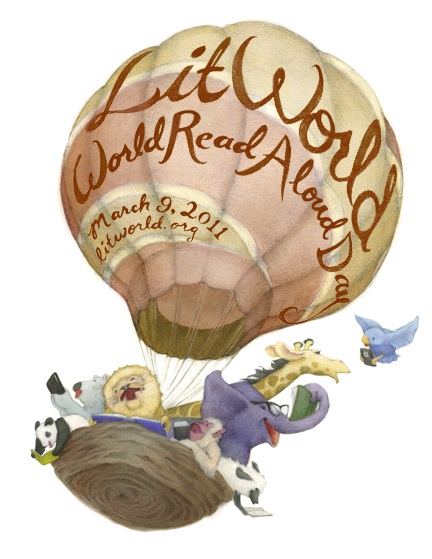
Today is World Read Aloud Day, an event which draws attention to the 774 million people in the world who cannot read or write.

The event is run by LitWorld, an international non-profit organization based here in New York which seeks to cultivate literacy initiatives around the world.

At 1am I will be reading in Times Square from my prize-winning children’s story ‘Shark with the Mind of a Rabbit’ in support of World Read Aloud Day. LitWorld’s goal is for people around the world to read aloud for a grand total of 774 million minutes on 9th March, drawing attention to the challenges faced by those on the planet who cannot enjoy their right to literacy.

In just 4 years, LitWorld has managed to extend its work in literacy advocacy across 35 countries. With initiatives including Girls’ Reading Clubs, workshops for literacy leaders in developing countries, family reading initiatives and book supply to low-income communities, the non-profit takes on literacy challenges wherever it may find them.

I was joined by Pam Allyn, director of LitWorld, on the eve of World Read Aloud Day.

She said, ‘World Read Aloud Day is an advocacy event for all people, to really raise our voices together through the act of reading aloud itself. This is where WRAD is special. We have children and adults all over the world on March 9th reading aloud with the idea that their voices are going to matter for each other.

‘Literacy is the linchpin for all the UN Millennium Development Goals. The statistics are staggering and untenable. Women who are educated even to fifth grade are sixty percent more likely to vaccinate their own children. High poverty areas have higher rates of illiteracy worldwide. Children who are not in school have poorer nutrition and girls who drop out get pregnant earlier. But beyond the plain facts that a literate person can read a medicine bottle, navigate a subway, apply for a job and keep one, there are more spiritual benefits to literacy.

‘A child who can read can comfort himself, make himself laugh, find refuge in a good story and discover the magic of the imaginative universe. It should be a human right to be happy, and reading makes us happy.

Literacy is democratizing. When we have access to information, we know ourselves and the world far more deeply. We can take action and stand up for what is right. We can advocate for ourselves, our children and for each other. And we can connect with all humanity.

‘If I could not read or write, I would miss the way I can connect with others, with friends and even strangers who have touched my life in so many ways through notes, emails and messages. It’s an extraordinary power, literacy. Someone once asked, what is the opposite of fear? And the answer was love. With all this talk about data and accountability in schools, at the end of the day, being literate teaches us how to love. Love of people, love of ideas, love of story. And that’s what I’d miss most.’

You can find out more about World Read Aloud Day and the wider mission of LitWorld at http://www.litworld.org/.

Pam joins us again for a Q and A session on Books and Adventures next time – click here for the second part of this interview.

Alex Simmons Interview, Part 3. Kids Comic Con: ‘Giving Comics Back to Kids Again’

Click for the first part of this interview with Alex Simmons.

‘When your children are growing up, you suddenly realise – I’m not Batman, I’m Batman’s Dad!’

Comic creator, writer and educator Alex Simmons’ main community endeavour these days is the international Kids Comic Con, which gives children their own comic book event at a time when so much of the industry seems focussed on marketing to geeky adult males.

The Comic Con originated when Alex provided a children’s activity area at Wizard World’s Chicago Con around 1998. Many visitors used the area as a babysitting service while they toured the convention, but that small side event was enough to provoke Alex’s creative streak.

‘That experience validated what I already suspected – that we needed events specifically for kids. Overall, the comic book industry is geared towards selling to guys in their thirties – and in economically depressed times, they’ll continue to follow the money.

‘It’s another symptom of the way we are short-changing our children in society at large. We keep giving them failure, anger and frustration. They are the future – and that doesn’t just mean training up a new generation to look after us in our old age – it means giving them their own lives, their own opportunities and choices.’

Alex’s yearly Comic Con brings together artists and publishers, librarians and educators, to give children and their caregivers just such opportunities to explore the world of comics. Attendees participate in workshops and meet with the men and women behind the adventures of their favourite characters. In 2010, the Convention went to Senegal to bring their brand of fun along with an art exhibit called, ‘The Color of Comics‘ to an African audience of children, fans, educators and – hopefully – future comics creators!

Alex couches his sense of mission and personal responsibility in terms of comic books. ‘I love sidekicks like Robin from Batman or Short Round from Indiana Jones – as a kid, I was inspired by junior heroes who were an integral part of helping the hero win. Later I went through the stage of life where you identify with Batman. And then your children are growing up and you suddenly realise – I’m the parent that gets killed now! I’m not Batman, I’m Batman’s Dad!’

Alex’s acceptance of his role as a parental figure and mentor is part of his unique success as the mastermind of Kids Comic Con – ‘How come it was me of all people who set this up? It wasn’t that i was the only one on the planet who could do it… But i was the one committed to making it happen. Obsessed, even. I had the contacts in the comic book industry and the connections with educators too.’

Alex didn’t do this alone, though. ‘Much of what we’ve achieved would never have happened without Eugene Adams, Director of Collaborative Education at Bronx Community College. Working with him is endlessly remarkable, endlessly rewarding. He’s been a kindred spirit who gave the Comic-Con a plan, a venue, and a staff of volunteers. If we hadn’t made it happen with all that support, then we’d have been asleep at the wheel.’

A large part of the work of Kids Comic Con involves empowering young creators with the latest technology, using free workshops and outreach sessions to give a taste of the software used in modern comics production. My recent interview with Cody Pickrodt showed how hard it can be for young creators with no computer skills to work in this medium.

Kids Comic Con offers a wide range of opportunities for young people to develop such technical skills. Even the convention website was originally designed by students at Borough of Manhattan Community College.

Alex says, ‘The future is in danger of separating us into technological haves and have-nots. People need access to the means by which they can make a living, and more and more that means technology. Not every child we work with may grow up to be a graphic designer, but they’ll surely need more from a computer than just Facebook.’

Kids Comic Con brings together many strands of Alex Simmons’ work over the past 20 years: a sense of social and historical consciousness, seen in his 1930s adventure stories; a duty to empower young readers and writers with critical thinking, as found in his Archie-meets-Obama story; and above all, a sense of wonder and desire to explore and engage with the world around us.

‘No child is born with a desire to fail. It’s our mission to fire their sense of wonder and of possibility. To empower them to believe in the thoughts which occur to them, and give themselves time to consider the value of their own ideas.’

Check out the Kids’ Comic Con website for more information.


Alex Simmons Interview, Part 2: Archie Meets Obama and Palin

Click for the first part of this interview with Alex Simmons.

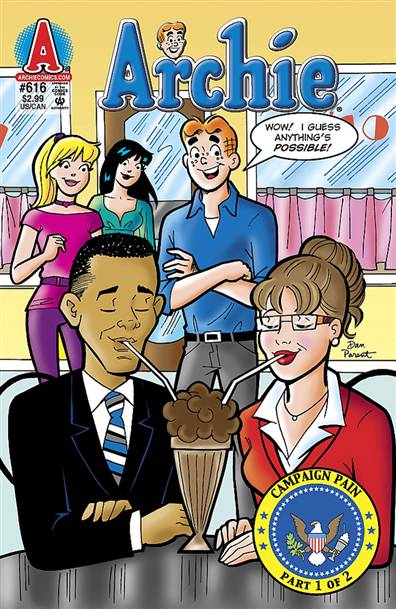
Comic creator Alex Simmons’ most recent work has been a two-part story for Archie Comics. In it, Barack Obama and Sarah Palin visit the high school at Riverdale, home to all-American teen Archie Andrews and his friends since the 1940s.
Archie’s World Tour by Alex Simmons
Alex has previously written numerous stories for Archie, including Archie’s World Tour and a series which reimagines the easygoing Jughead Jones as a hard-boiled private investigator, but writing two of the most recognised political figures in America today was a special challenge…
Alex Simmons reimagines Jughead Jones as a ‘semi-private investigator’

‘Victor Gorelick, the Senior Editor at Archie, called me requesting a story featuring President Obama and Sarah Palin. My first pitch was based on environmental issues, but we felt this was too edgy. A comic like this is not a soapbox for political views – although we also don’t want to paint these heavyweight politicians as sweet or innocent. The challenge was finding a way into these real-life characters through the Riverdale mindset.’

Barack Obama and Sarah Palin visit Riverdale in Archie Comics issues 616-617, written by Alex Simmons

Alex’s finished story focusses on spin and media manipulation. Rival candidates for the class presidency, Archie and Reggie both lose sight of their moral compass when their respective campaign managers, Veronica and Trula, encourage them to pose for photographs with Obama and Palin! The implied endorsement sends their popularity skyrocketing, but the politicians catch wind of the media manipulation and descend on Riverdale to assert control of their public images.

Alex explains how the media came to be at the heart of this high-profile political story:

‘This comes back to the idea about balance which shaped my Blackjack story about the Touaregs: one man’s insurgent is another man’s freedom fighter! I felt I couldn’t weigh in on specific issues which divide the parties. But politicians are politicians – they have to do certain things to get where they are – and it’s important that we hold them to account. So the message behind my story is one of responsibility for your actions in the public arena.’

Archie and Reggie eventually repent and redeem themselves by taking responsibility for the media spin done in their name by Trula and Veronica. For this plot twist, Alex drew inspiration from Republican presidential nominee John McCain’s personally gracious defeat speech on the day of President Obama’s victory, in which he stepped back from what had been an aggressive campaign and chided those among his supporters who booed Obama’s victory.

‘In the Archie story, I wanted to show what should happen – politicians being true leaders and taking responsibility for things done in their name. Comic books are fun, but especially when they’re aimed at children, a positive message never hurts.’

Next time on Books and Adventures, we look at Alex’s greatest contribution to comics for children, the international Kids Comic Con convention. Click for the third and final part of this interview with Alex.

Alex Simmons Interview, Part 1: Blackjack

This week, our Books and Adventures interview is with Alex Simmons, who has written for the stage, screen and radio alongside work as an educator, performer and comics creator.

Over the course of a 20-year career, Alex has founded the Kids Comic Con and taken it around the world from Buffalo, NY to Senegal, created the African-American comic-book adventurer Blackjack, and even brought Barack Obama and Sarah Palin to Riverdale in a special two-part story in Archie Comics.

In a conversation that covered everything from 30s movie serials to the outreach work of Bronx Community College, Alex demonstrated that Books and Adventures are his business.

Appropriately for Black History Month, we began by talking about his character Arron Day, a globe-trotting soldier of fortune known to the world as…Blackjack.

‘In the 1930s, we were prepared to go out and explore. To inspire kids to be good adults.’

In his teens, Alex Simmons attended a film club on New York’s West 40th Street, showing old movie serials such as Captain Marvel, King of the Rocket Men and The Phantom. One particular show stayed with him.

Daredevils of the Red Circle stood out,’ Alex explains. The 1939 serial followed a trio of acrobats turned private investigators, who seek revenge for the death of a family member. ‘Daredevils had a black character: he was the butler to one of the main characters…and his name was “Snowflake”!
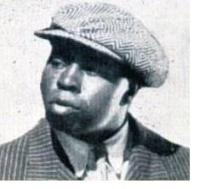
Fred Toones aka “Snowflake”

‘He was an awful stereotype, rolling his eyes, with this high-pitched voice, but I remember one episode where the heroes were trapped in a garage filling with fumes…The stereotype suddenly falls away, Snowflake helps break into the garage and rescue the others. It’s his one moment of competence. Of course, nobody even acknowledges this, and within a minute he’s straight back to the old characterization.

‘Watching that serial made me think – this was the 1930s. There was a black presence. We were there. And not just rolling our eyes and waving our hands in the air! I wanted to tell stories about the African American presence in this time, when parts of the world were still full of mystery and wonder, when we were willing to go out and explore! Unlike now when we’re so jaded by technology and shaped by the media that the devout can go to confession through an iPhone app.’

Alex came up with Blackjack in 1988 as a conduit for telling stories about the 1930s and writing an African-American presence back in to our vision of those times. Arron Day, adventurer for hire, grew up travelling the world with his soldier-of-fortune father. As he takes on enemies both foreign and domestic, he explores his father’s legacy and rights the wrongs of a blood-soaked past.

Arron is a two-fisted protagonist in the style of Indiana Jones, but also a thinking man’s action hero, perceptive and astute. In the Blackjack stories, Arron’s ability to pick out a face in the crowd or spot a secret glance between two conspirators is often the key to his survival and ultimate success in saving the day. Alex, who wrote the stage play Sherlock Holmes and the Hands of Othello, acknowledges a certain debt to the man from 221b Baker Street:

‘I’m a big fan of Conan Doyle’s writing and I wanted Arron to be an intelligent hero, without being a carbon-copy Sherlock. He doesn’t pull together evidence to make elaborate deductions, like Holmes – but Arron is supremely observant.’

Arron is accompanied in his adventures by Tim Cheng, a dignified Asian servant who Alex wrote as an intelligent and independent figure – ‘my apology for Charlie Chan.’

Tim falls into Arron’s service after Arron wins a New York brownstone ‘and everything in it’ during an unseen adventure prior to the first Blackjack story.

The Blackjack comic toys with the old Green Hornet/Kato dynamic by having Arron suspect that Tim resents being ‘owned’ by another man. In the storyline Blood and Honor, Arron and Tim are called on a mission to China, during which Tim’s trustworthiness is put in doubt – but Tim’s secret loyalty proves to be to his family, rather than Blackjack’s enemies. By choosing to live in New York with his bride, alongside Arron as a friend and partner, Tim ultimately redeems the loner hero whom he serves.

Alex’s commitment to redressing past prejudice extends to the villains Arron confronts on his travels. The first Blackjack comic sends our hero to the Middle East, a location suggested to Alex by his mentor, the celebrated editor-illustrator Dick Giordano.

‘We wanted to open the Blackjack series with a story that showed Arron to be a globetrotting hero. This got me thinking of those prejudiced old Thirties movies again. I couldn’t have all the Middle Easterners be dumb bad guys who go ‘Aieeeee!’ when they die. So I focussed on the Touareg people, nomads who had fought against the colonial powers.

‘In Second Bite of the Cobra, Arron faces a principled, intelligent villain – a Touareg rebel gone sour, robbing from his own people. So the final showdown between hero and villain is also a crisis of conscience, with the Touareg leader forced to recognise that he’s betrayed his own beliefs.’

Alex always envisaged Blackjack as a legacy character whose heroic mantle is passed down through the generations. Arron’s father Matthew appears in the series seen through the prism of his son’s memory, and Alex even played Matthew, alongside his own son as the young Arron, in the flashback scenes of a 2001 radio play. Alex also laid plans for a sequel series running in the present, where Arron’s estranged grandson finds himself drawn back into the family business.

With comic books and even a radio show to his name, Blackjack remains a compelling character and a great contribution to the roster of African-American heroes. But his greatest adventures are surely yet to come…

Next time we move from Alex Simmons’ original creations to a famous American comic-book brand, which Alex took into the 21st century by bringing Barack Obama and Sarah Palin face to face with none other than…Archie!