Comics in NZ Education: Kiwi Batman and his good-humoured NZ Commissioner Gordon

After my discussion with New Zealand Educational Gazette and our recent features on NZ’s use of comics in education, it pleased me to see one Kiwi don the Caped Crusader’s cowl for a light-hearted prank during the Rugby World Cup.

TVNZ reports that a man in full Batman regalia visited a Christchurch police station demanding to see the commissioner and know why the “Bat-signal” – the White Lights of Hope commemorating the recent earthquake – had been lit. He’s not even the first Kiwi Batman, as the name has apparently already been applied to a 91-year-old community patrol volunteer in Waipawa.

The quakes’ impact on the Christchurch community is discussed from a literacy and outreach perspective in the recent Books and Adventures interview with Carolyn Robertson of the city’s library services.

Wonderfully, the Kiwi police appear to have responded to the Batman prankster with good humour. I’ve no idea if it’s deserved, but they’ve been building a reputation for tolerance and light-heartedness ever since an officer appeared on TV reminding a suspected carjacker to “always blow on the pie” when eating hot food from a late night convenience store.

You can find all the recent Books and Adventures posts on Comics in New Zealand Education here:

https://booksadventures.wordpress.com/category/nz-comics-education/

Comics in NZ Education: Auckland Libraries’ Comic Book Month 2011

Auckland Libraries Create a Character Competition featuring Scott PilgrimAs September comes to an end, Auckland sees the grand finale of Comic Book Month, a celebration of graphic literature across the 55 public libraries of New Zealand’s Super City. Books and Adventures joins them for another in our current series on comic book education in New Zealand. You can find my original piece for the New Zealand Education Gazette here.

Auckland’s Comic Book Month events have ranged from dress-as-a-character days to a city-wide prize draw for readers borrowing 6 comic book items in September. Libraries ran illustrator workshops, comic-book-themed performances, dress-up storytimes for younger readers and cosplay contests for older participants. Local businesses including comic stores Heroes For Sale and Gotham Comics became partners with the scheme and New Zealand’s major comic convention, Armageddon, also got on board with organiser Bill Geradts providing free passes as prizes.

Comic Book Month co-ordinator Pip Henderson from Auckland Libraries’ Youth Service Development explained why she and her colleagues chose to focus on comics for this month-long celebration:

“Our customers like to immerse themselves in stories in different ways other than purely print; there are many ways to tell a story!

“Comics were once thought of as an easy read with little substance. Parents, especially, were keen to move their kids away from them but many are now seeing the value. Comics can be just as challenging for young readers, and just as beneficial in terms of concept comprehension and vocabulary extension as a chapter book.

Read more

Comics in NZ Education: Guest Post by Raymond Huber

Today as part of our ongoing feature on comics in New Zealand education, we’re joined by the New Zealand children’s author, editor and educator Raymond Huber. You can find out more about him and his great books, including the Ziggy Bee stories, at http://www.raymondhuber.co.nz/

Here’s Raymond on ‘Comics in the Classroom.’

The thought of comic books in the classroom is frowned upon by many teachers and parents. Comics still have an image problem with many adults – a mistrust of the comic format based on suspicions about quality, content, and most of all, literary value. There might be a grain of truth in the first two: comics used to be cheaply produced, and they can contain offensive material. Some comics do take the Readers Digest approach to literature, but there are also many that now take the comic form to its own artistic heights, especially comic picture books and graphic novels.

Why use comics in the classroom?

Perhaps the best reason is that children love reading stories in the comic form. Consider the Tintin books, selling over 120 million copies, and public libraries often put a limit on withdrawals of the books. Given a choice in class, many children will grab comic picture books before novels. And most of these readers will be boys – another great reason for using comics in class.

Read more

Comics in New Zealand Education – Interview with Steve Saville of Alfriston College

Alfriston College is a Decile 3 school in South Auckland, serving a mixed population of Maori, Pacific Islanders, pakeha and other immigrants.

Working with Jeremy Bishop of DMC Comics – interviewed here on Books and Adventures – Alfriston has produced some striking comic book work thanks to a pioneering project that empowers students and gives them a platform for their creative expression.

Today we’re joined by Deputy Head Steve Saville to discuss Alfriston’s work as part of our ongoing feature on comics in New Zealand education.

Set out in the South Auckland suburbs, Alfriston College is determinedly non-traditional – it’s referred to, by critics and fans alike, as “that place where they play music instead of ringing a bell Comics from Alfriston Colllegebetween lessons”. The school’s philosophy is to use the latest research to deliver education for the 21st century. Innovations include a timetable of three 100-minute lessons a day, and termly ‘Three Day Episodes’, when students are given time to work on a self-selected project.

As Deputy Head Steve Saville puts it, ‘We’re trying to cultivate things a little bit outside the box. Authenticity and imagination are our watchwords. Traditional schooling was failing disadvantaged communities, and particularly the Maori, so why use it in a brand-new school?’

A British-born teacher with experience in both schools and universities, Steve arrived at Alfriston four years ago as Deputy Principal with responsibility for curriculum, bringing with him a lifelong comic-book obsession.

Read more

Comics in New Zealand Education: Interview with Steve Malley

Today, Books and Adventures continues a series of posts exploring the use of comics in New Zealand education. You can find my New Zealand Education Gazette piece on the subject here.

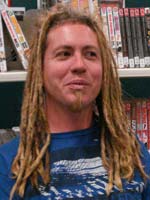
Artist, author and comic book creator Steve Malley

A fine arts graduate turned tattooist, then comic book creator and novelist, the American Steve Malley was already a wandering soul before a tattoo commission from a Christchurch librarian drew him into the world of New Zealand comic book education.

Minnesota-born Steve abandoned a career as an artist in the US to develop his skills in tattooing, eventually taking his trade to a new home on the South Island of Aotearoa.

Steve wandered into educational work after doing a full sleeve tattoo on a librarian, as he told me over a pint on the outskirts of Christchurch’s quake-shattered Central Business District back in May.

Read more

Kiwi comics lead the world: Discussion with New Zealand Education Gazette

My discussion with New Zealand Education Gazette Editor Geoff Vause can be found in the print-only curriculum support supplement to Volume 90, Issue 17 of the magazine, out today.

In it, we talk about New Zealand’s leading role in the use of comics in the classroom.

You can see more on using comics in the classroom under the comicsedu tag on this site.

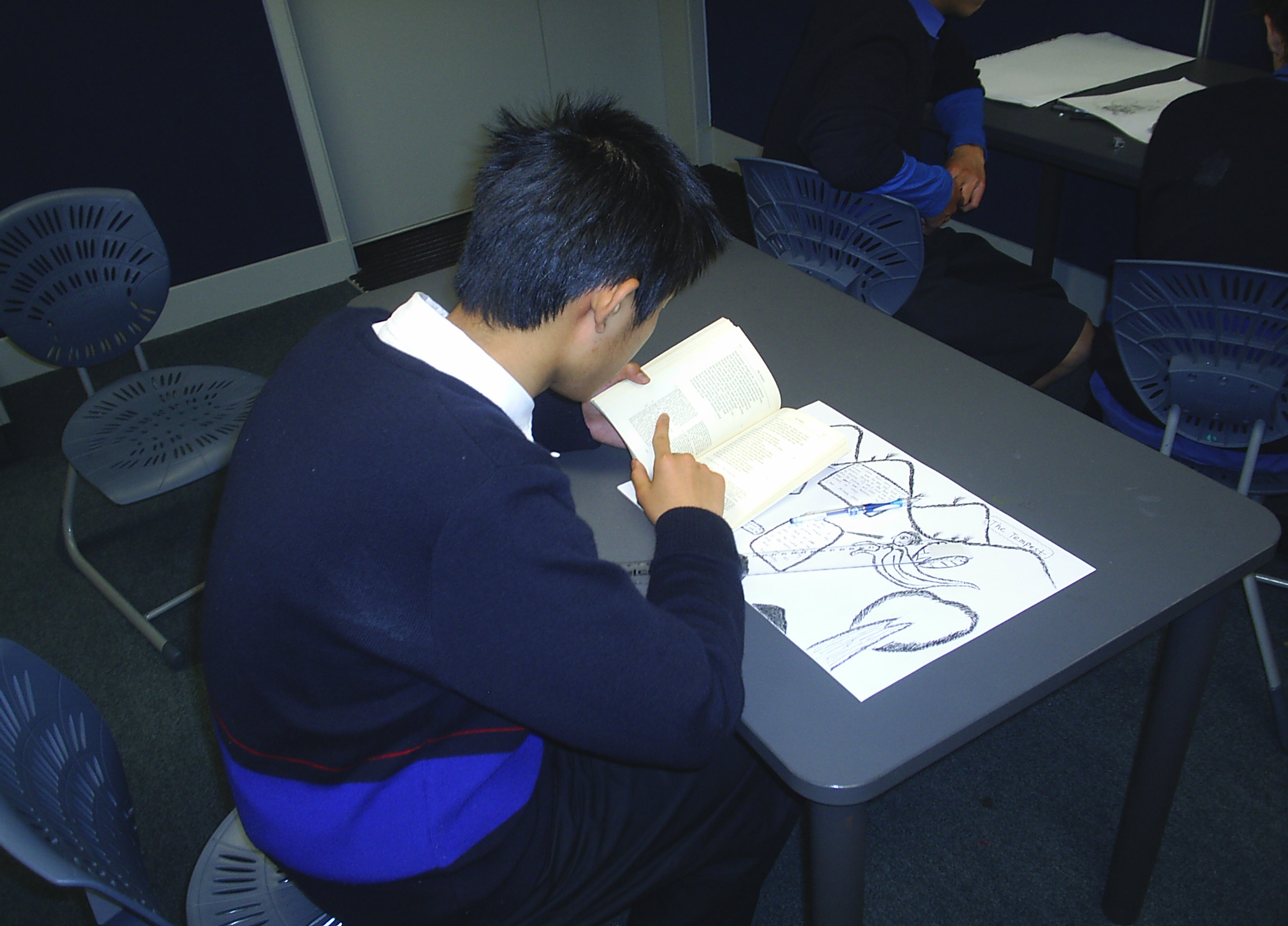
Comic book learning in action at Alfriston College
Comic book learning in action at Auckland’s Alfriston College

Kiwi use of comics in education outstrips even that of New York, the hub of the global comic-book industry, according to British educator Dr Matt Finch.

“With its small population, New Zealand encourages contacts between comic book professionals, educators and students in a way that few larger nations can match – and with visual literacy a key element of today’s NZ arts curriculum, Kiwi comics are a more valuable educational resource than ever,” Dr Finch said.

Read more

Guest Post: The Physics of Reading by Raymond Huber

Continuing our Kiwi theme, today Books and Adventures is joined by New Zealand author and editor Raymond Huber with a guest post on ‘The Physics of Reading’. A skier, teacher, apiculturist and all-round adventurer, Raymond is currently in Australia promoting his novel for junior readers, Wings.

Wings by Raymond Huber

‘The universe is made of stories, not atoms’ (Muriel Rukeyser). There’s truth in the poet’s words: the universe is only 4% atoms while the rest (mysterious dark stuff) has barely been fathomed. Some scientists believe the universe is geared towards the development of mind – ‘The universe is aboutsomething’ (Paul Davies, physicist) . That’s why I think stories matter.

Consider the mental energy of reading for children. ‘When reading takes place, the brain is forever changed’ (Maryanne Wolf). Reading forges new neural pathways which then become available for innovative thinking. One reason for this is that reading a book encourages the brain to be active in constructing and imagining the story. Imagination is like the electromagnetic force which has infinite range. It’s the force behind the great children’s books. In the Moomin stories for example, Tove Jansson imagines a fantasy world populated with endearing creatures such as brave Moomintroll and the shocking Hattifatteners.


Read more

‘In a way, the quakes have pushed us to develop our community role’: Interview with Carolyn Robertson of Christchurch City Libraries, New Zealand

There can be no greater challenge to a library service than a natural disaster – except perhaps that same disaster repeated.

That’s exactly what faced Carolyn Robertson and her team at Christchurch Libraries when, in September 2010 and again in February and June of this year, earthquakes struck their home city on New Zealand’s South Island.

Yet, as Carolyn explained to me recently, ‘In a way, the quakes have pushed us to further develop our community role. They’ve actually strengthened Christchurch Libraries’ vision of equity of access.’

Carolyn Robertson of Christchurch City Libraries, New Zealand
"We understand the word “library” in the widest possible sense." - Carolyn Robertson, Christchurch City Libraries

I visited Carolyn, Christchurch City Libraries and Information Manager, at the city’s South Library earlier this year. It’s one of the liveliest and most modern I’ve seen in on literacy adventures throughout Northern Europe, the USA, and Australia as well as New Zealand.

The community has clearly taken to this bright, multipurpose space which includes a great café, children’s play area and an exceptional periodicals collection. The only evidence of the quakes is a display of letters from well-wishers around the world, which brightens one wall of the reading area.

Yet this lovely headquarters for the library service is actually a fallback space, taken up as the city’s principal library after the February quake put the Central Business District out of bounds.

In the days immediately following the disaster, the librarians of Christchurch demonstrated the importance of libraries as a community service in times of need – a vital message at a time of increasing financial austerity around the world.

Read more

>New Zealand Book Month Extended in Christchurch

>A quick update from New Zealand Book Month (NZBM), which has been extended into April for Christchurch after the recent earthquake.

Sadly numerous NZBM events in the city have been cancelled, including workshops with comic book writer Steve Malley, and the exciting ‘Create an NZ Superhero’ online competition – but libraries are still playing a major part in the recovery effort.


Carolyn Robertson, the city’s Libraries and Information Manager, told Books and Adventures, ‘I think books and library services were absolutely instrumental in helping people cope in the aftermath. The quake occurred on a Tuesday. By the following Sunday, there was a library story teller at every shelter with books, rhymes, and songs. The children’s responses varied from shelter to shelter: at one, they were very hyper and upset, at another they were painfully shy and needed lots of encouragement to even sit on the mat. So the library staff had to pull out all their tricks, and adjust the programme to meet different needs. 


‘Parents were having to queue for hours to get money, grants, information and so on, but the presence of our storytellers meant they could concentrate on the survival business and know their children were being well cared for – and within their eye sight.

‘We currently have eleven library sites open and our customers are thrilled to be enjoying these services again. We have stepped up our Mobile Library service, targeting the worst hit parts of the city, roads permitting, as well as taking pre-school outreach and other programmes further into the community. Some of our libraries are being used to accommodate essential council services, but we’re busy looking for ways to establish temporary sites or alternative services where there’s need and demand.”

Carolyn is pleased that NZBM were able to extend their activities for people in Christchurch: ‘NZ Book Month provides events that are fun and don’t involve much financial outlay. One of the things that gets some people down is the endless focusing on the quake and its impact. We also need to escape a bit – and we’re already planning for next year!’

>New Zealand Book Month: Interview with Nikki Crowther

>


When a teenage photography apprentice picked up a 25-year-old fantasy novel to while away a long train journey through New Zealand, he could hardly have known that his choice of reading would lead to a knighthood and a piece of Kiwi cinematic history.

But for movie director Sir Peter Jackson, J.R.R. Tolkien’s Lord of the Rings would become one of the books that changed his life.

This March, the people of New Zealand are being encouraged to share the books closest to their hearts as New Zealand Book Month announces that ‘Books Change Lives!’

Undeterred by the tragedy of the recent earthquake, the campaign is running over 200 events across the country, from the ‘World’s Smallest Library in a Whanganui phone box to a nationwide giveaway of four million ‘Books Change Lives’ vouchers.

Throughout March, Kiwis will find these discount vouchers in their schools, banks, gas stations and letterboxes – a free gift from New Zealand’s booksellers and publishers to readers old and new.

‘New Zealand Book Month celebrates books and reading – all books, any books – and takes that message out to an audience who do not necessarily frequent libraries and bookshops. We have strong ongoing support from committed and passionate readers,’ Book Month director Nikki Crowther told me by e-mail, ‘but we wanted to extend our message to lapsed and occasional readers, and to parents of young children – to remind and re-engage them: with books, and the value that books can bring to all of our lives.’

Across the world, Books and Adventures – always a lover of Kiwiland – has found organizations recognizing the power of the book, especially in the early years of childhood. Australia’s Paint the Town Read scheme, which featured on the blog last November, has encouraged parents to read with their children right from the maternity ward. New York Presbyterian Hospital’s Reach Out and Read program, which I also wrote on for Books and Adventures (here) and DNAInfo (here), ensures that their child patients each receive a book at every clinic visit from birth until the age of five.

That’s not to say that the Kiwi book lovers are being prescriptive with their scheme. Nikki explained:

‘As far as we’re concerned, any book you enjoy is a good book. Choosing a book for oneself is an important step to becoming a passionate reader, and we hope to empower as many people as possible by having them choose the right book for them.’

To help readers find that special book, Nikki and her team have instigated a national conversation around the books that have changed Kiwis’ lives. Not everyone will read a book, as Peter Jackson did, and find themselves making a multi-million-dollar movie adaptation – but many of us have special favorites that have sustained us through significant moments in our lives.

Some of these choices can be very revealing: a British survey of male and female readers in 2006 suggested that men and women had very different senses of what constituted a ‘life-changing’ read, and Nikki Crowther admitted that the results of her survey in New Zealand were equally surprising:

‘So many people voted for the classics! Do people feel compelled to pick what they think they “ought” to love, rather than the books they really couldn’t put down and raved to all their friends about?

‘My first life-changing book was Ballet Shoes by Noel Streatfield. There have been many since – perhaps it was rather cruel to ask other folk to choose just one. I certainly couldn’t. I always reckon that the next book I read will be the next life-changer…!’


While New Zealand Book Month was born among Kiwi publishing insiders, it’s supported by a network of passionate volunteers across the nation.

‘I’m completely awestruck by our “activists”,’ admitted Nikki, ‘in terms of the time, energy and ideas that they put into promoting books and reading in their local communities. We’re taking the message that “Books Change Lives” out to a much wider audience than the traditional places where books exist – so that it touches people sitting at home in front of the TV, or listening to the radio, or visiting their local bank.

‘We hope to promote the notion that books can be a part of everyday life – and that by giving people a good reason to pick up a book during March, we will encourage just some of them into starting a regular reading habit!’

To find out more about New Zealand Book Month and its nationwide program of events in March, visit http://www.nzbookmonth.co.nz/