New York Harbor School: Interview with Founding Principal Nate Dudley

Back in October, I got in touch with the folks at New York Harbor School on the eve of their First Annual Regatta, a nautical event to celebrate the school’s work bringing a unique brand of maritime education to the city’s students.

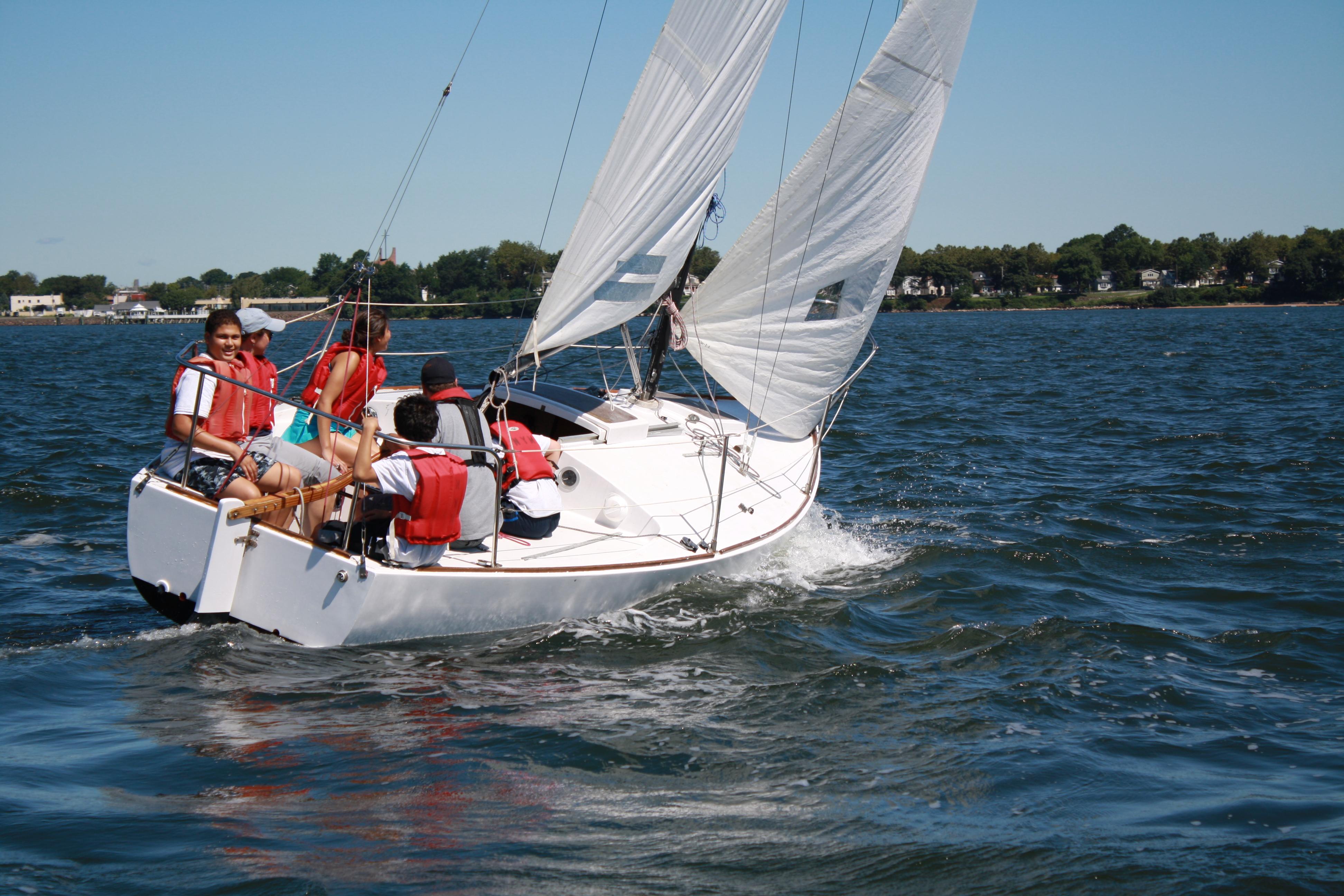
Harbor School students at work in the waters of NYC

I discovered the Harbor School while auditing a course for Special Education leaders at New York’s Bank Street College back in February. I was impressed to encounter a US institution which brought together public education with a strong community commitment and a fearsome range of practical training including marine technology, commercial diving and aquaculture!

In my teens I was keener to skive off kayaking lessons and sneak out to Birmingham for shopping and pizza than get on the water. Now, at 31, I can only dream of the kind of maritime opportunities the Harbor School offers its students.

Nate Dudley, the founding principal, got in touch with me by e-mail to discuss the educational adventure currently taking place on Governor’s Island in New York.

Read more

New York Harbor School: First Annual Regatta after 8 Years Leading Maritime Public Education

New York Harbor School's 1st Annual Regatta, October 6th 2011
Teaching environmental stewardship and maritime skills in the heart of the city

Thursday 6th October sees a unique school in the heart of New York launch a special celebration after eight years delivering teaching and learning from the city’s harbour.

New York Harbor School’s First Annual Regatta will take place at Governors Island, attended by guests from the city’s business and media.

Funds raised will support New York City’s only public maritime high school, which delivers an innovative curriculum blending environmental awareness, practical sea skills and hands-on learning.

We’ll be looking deeper into the work of New York Harbor School in a forthcoming feature on Books and Adventures. In the meantime, you can find out more from the school’s own site, nyharborschool.org

Kiwi comics lead the world: Discussion with New Zealand Education Gazette

My discussion with New Zealand Education Gazette Editor Geoff Vause can be found in the print-only curriculum support supplement to Volume 90, Issue 17 of the magazine, out today.

In it, we talk about New Zealand’s leading role in the use of comics in the classroom.

You can see more on using comics in the classroom under the comicsedu tag on this site.

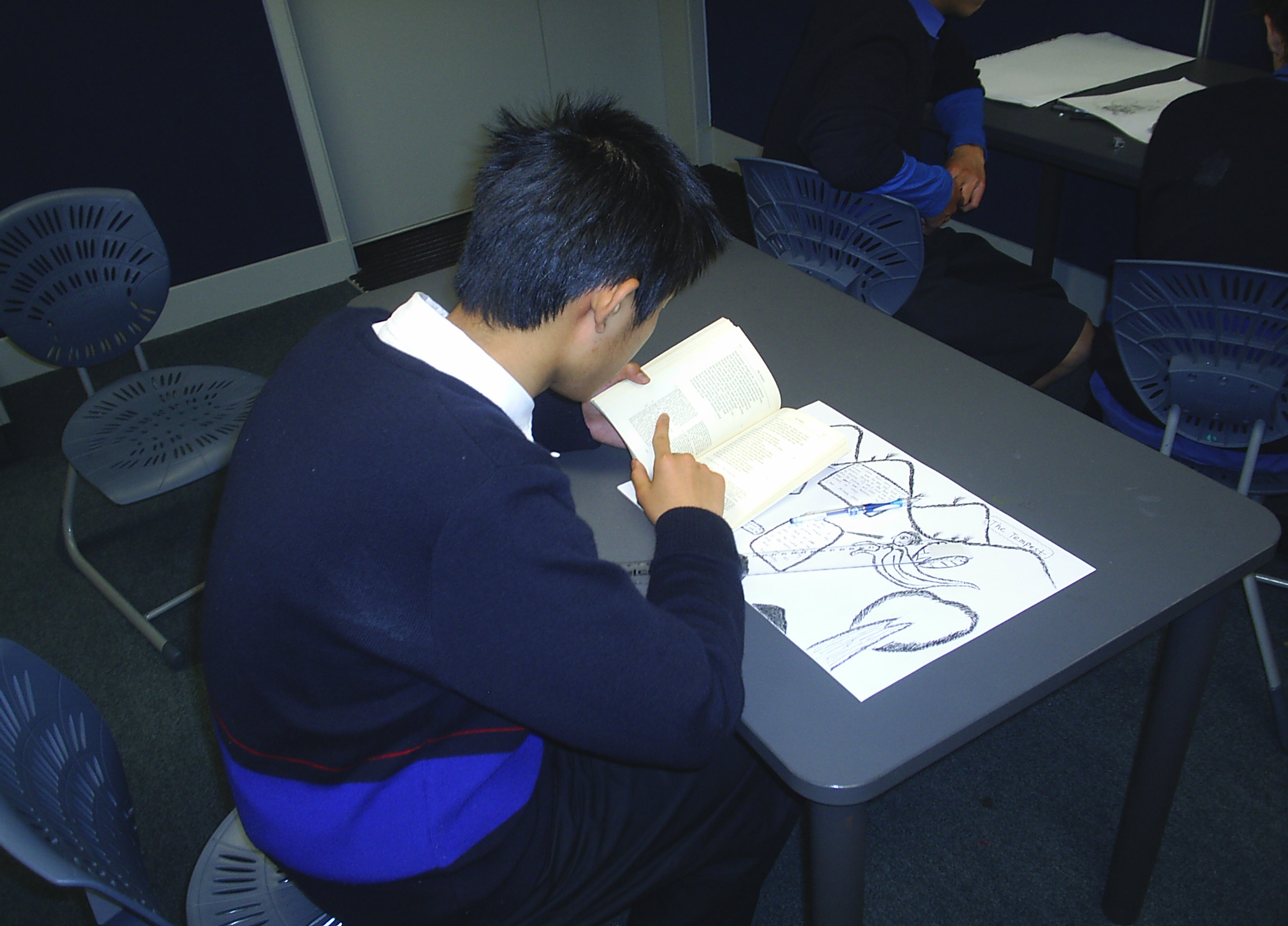
Comic book learning in action at Alfriston College
Comic book learning in action at Auckland’s Alfriston College

Kiwi use of comics in education outstrips even that of New York, the hub of the global comic-book industry, according to British educator Dr Matt Finch.

“With its small population, New Zealand encourages contacts between comic book professionals, educators and students in a way that few larger nations can match – and with visual literacy a key element of today’s NZ arts curriculum, Kiwi comics are a more valuable educational resource than ever,” Dr Finch said.

Read more

Writing, Designing and Acting Doctor Who – Holiday courses at NIDA Sydney

Australia’s Cockatoo Island has a chequered past as a former shipyard and prison turned nature reserve – but recent school holidays saw it transformed once more. The UNESCO world heritage site in the city of Sydney became the scene for intergalactic adventure and time-travelling mystery as the BBC’s Doctor Who came to Australia in a whole new form.

Work from NIDA's Designing Doctor Who Course
A monster design from Designing Doctor Who at NIDA

For three years, NIDA, Australia’s National Institute of Dramatic Art, has offered a range of Doctor Who-themed holiday courses for children and young people, taught by industry professionals. I dropped in to see what was on offer and speak with the team behind this unique education programme.

This year, Designing Doctor Who students spent three days creating their own detailed alien worlds and artefacts, while Writing Doctor Who students got the opportunity to devise mini-scripts performed by students on the Acting on Screen: Doctor Who course in front of an audience of parents and friends.

The holiday activities including location shooting on Cockatoo Island, where one student-penned adventure saw the Doctor and his companion Amy pursued by Fashion Police opposed to bow ties and short skirts!

Peter Mountford, Manager of Youth and Holiday activities at NIDA, said, “This was the third holiday program at NIDA to feature Doctor Who themed courses and I am pleased to say that it was the most successful yet. Both tutors and students had a fantastic time filming their self-devised Doctor Who stories out at Cockatoo Island – a setting that is perfect for time-travelling adventurers!”

Read more

Teaching and testing – the Finnish case

Helsinki Panorama by Flickr user Huzhead


A tweet from Trevor Cairney, a fellow writer-educator based in Sydney, led me to David Sirota’s recent article on Finnish education in Salon.com.

Sirota’s article gives the lie to claims that a culture of rigorous testing is the only way to improve standards in US schools – pointing to Finland’s success in creating a world-class education system by cherishing teachers, rather than imposing tests.

The Finns have a remarkable system which produced top scores in the last PISA (Programme for International Student Assessment) study by the OECD.

Teaching staff lie at the heart of Finland’s achievement. Well-trained, well-supported and given a great deal of independence, Finland’s teachers are trusted academic professionals, choosing their methods and materials themselves. Testing is used as the teacher sees fit – for self-evaluation and development, rather than for league tables and outcomes.

The Finns’ success is a great riposte to forces in the UK and US who continually push intensive testing regimes on our schools. As I said at the House of Commons last year, the current culture of testing and targets is so harmful to learning, especially in the field of literacy.

Read more

>World Read Aloud Day, Part 2: Q and A with Pam Allyn

>

For the first part of this featured interview with Pam Allyn, click here.

Continuing our interview with Pam Allyn, founder of LitWorld, we moved on from World Read Aloud day to the wider work of her non-profit organization in fighting illiteracy around the world.

Are literacy challenges the same in developing countries as in a place like New York City?
In some significant ways, literacy challenges are far more extreme in developing countries. In other ways, they are more alike than you might care to think.

In terms of differences, the developing world has only just come to the idea of mandatory primary education. It is only in recent years that the expectation that all children must attend school is adhered to (and in many cases, still not completely). This is of course a good and great thing, but most of the developing world was not prepared to handle all the children who then poured into schools. As a result, there are far too few teachers per child (in Liberia, the average ratio in a classroom is 90:1), hardly any classroom supplies at all, and not nearly enough structures in place to train teachers on an ongoing basis or to provide state of the art learning that will help children move forward and stay in school. The conditions are grueling and difficult, for teachers and children alike.

In the developing world, we have access to extraordinary resources, especially literature written specifically for children, that teaches children how to read and conveys important big ideas. In fact, the materials used to teach reading can be too dense: they’re not written at a level children can understand and don’t do enough to draw a child into a world of words.

Even here in the United States, we do not guarantee equity of access to all children. High poverty districts are far more likely to have fewer books and computers in the classroom. And this is 2011! We still use outmoded forms of teaching in classrooms all over this country, and sad to say, the testing mania has driven us back to some terrible teaching practices that I haven’t seen since I was a child.

Just when we have to teach innovatively and creatively, we are all across the world teaching out of fear and insecurity, and that is not going to raise children to be the innovators and creators we hope and know they can all be.

Do your literacy schemes like use a particular approach to teaching and learning literacy? Are you subscribers to a particular philosophy of education?

I am a fierce advocate for what I call a “toolkit” approach to the teaching of reading. There are skills every child needs to learn to read; these include phonics, but also include fluency, stamina and comprehension. One without the others is a waste of time.

I believe in an integrated approach that will both help the child decode words but also beyond that help him to soar through them and transcend the work on the page to see reading as a joy, an art, a pleasure.

One of my heroes is Paolo Freire, who famously asked women in rural villages to tell their own stories as a way to learn to read and write. He was convinced that narrative is the force that drives us in everything we do and that was how he taught women how to read, was by asking them to tell the stories of who they were. I advocate this in my work with children; if they write about their experiences, both imaginative and real, and then read them back, they have a far better chance of becoming lifelong readers. They understand the power of story.

When I started LitWorld, I was thinking a lot about the most vulnerable children I had met, especially those who had been displaced or traumatized, and I wondered if teaching writing could actually HELP to build resilience. Teachers of such children often focused on their trauma. I wondered if by writing narratives that told the stories in ways that would give hope and strength, we could teach the child how to read and write, but also how to grow strong.

I developed the Seven Strengths model in response to that: learning based around Belonging, Compassion, Esteem, Friendship, Confidence, Curiosity, and Hope. We end up raising healthier children emotionally because they can use literacy as a tool for their own sustenance.

In much of the world, literacy and education are not seen as a priority for girls and women, but is this really true of the USA, where you also run your Girls’ Clubs?

At first we thought it would simply be fun for the girls here to join our worldwide network. We thought that the needs of girls here are more taken care of, and there wouldn’t be such a demand for the Clubs in the USA. What startled me here is how necessary they are HERE too. The girls we work with in Harlem tell us that the Clubs have been lifesaving. They feel very vulnerable and isolated in their communities, and find it difficult to talk in class. Here in the Clubs, we provide a sanctuary.

You can find out more about LitWorld here, and about Pam at her own website, http://pamallyn.com/.

Next time on Books and Adventures, we head down under for the opening days of New Zealand Book Month!

>World Read Aloud Day: Interview with Pam Allyn, Director of LitWorld

>

Today is World Read Aloud Day, an event which draws attention to the 774 million people in the world who cannot read or write.

The event is run by LitWorld, an international non-profit organization based here in New York which seeks to cultivate literacy initiatives around the world.

At 1am I will be reading in Times Square from my prize-winning children’s story ‘Shark with the Mind of a Rabbit’ in support of World Read Aloud Day. LitWorld’s goal is for people around the world to read aloud for a grand total of 774 million minutes on 9th March, drawing attention to the challenges faced by those on the planet who cannot enjoy their right to literacy.

In just 4 years, LitWorld has managed to extend its work in literacy advocacy across 35 countries. With initiatives including Girls’ Reading Clubs, workshops for literacy leaders in developing countries, family reading initiatives and book supply to low-income communities, the non-profit takes on literacy challenges wherever it may find them.

I was joined by Pam Allyn, director of LitWorld, on the eve of World Read Aloud Day.

She said, ‘World Read Aloud Day is an advocacy event for all people, to really raise our voices together through the act of reading aloud itself. This is where WRAD is special. We have children and adults all over the world on March 9th reading aloud with the idea that their voices are going to matter for each other.

‘Literacy is the linchpin for all the UN Millennium Development Goals. The statistics are staggering and untenable. Women who are educated even to fifth grade are sixty percent more likely to vaccinate their own children. High poverty areas have higher rates of illiteracy worldwide. Children who are not in school have poorer nutrition and girls who drop out get pregnant earlier. But beyond the plain facts that a literate person can read a medicine bottle, navigate a subway, apply for a job and keep one, there are more spiritual benefits to literacy.

‘A child who can read can comfort himself, make himself laugh, find refuge in a good story and discover the magic of the imaginative universe. It should be a human right to be happy, and reading makes us happy.

Literacy is democratizing. When we have access to information, we know ourselves and the world far more deeply. We can take action and stand up for what is right. We can advocate for ourselves, our children and for each other. And we can connect with all humanity.

‘If I could not read or write, I would miss the way I can connect with others, with friends and even strangers who have touched my life in so many ways through notes, emails and messages. It’s an extraordinary power, literacy. Someone once asked, what is the opposite of fear? And the answer was love. With all this talk about data and accountability in schools, at the end of the day, being literate teaches us how to love. Love of people, love of ideas, love of story. And that’s what I’d miss most.’

You can find out more about World Read Aloud Day and the wider mission of LitWorld at http://www.litworld.org/.

Pam joins us again for a Q and A session on Books and Adventures next time – click here for the second part of this interview.

Alex Simmons Interview, Part 3. Kids Comic Con: ‘Giving Comics Back to Kids Again’

Click for the first part of this interview with Alex Simmons.

‘When your children are growing up, you suddenly realise – I’m not Batman, I’m Batman’s Dad!’

Comic creator, writer and educator Alex Simmons’ main community endeavour these days is the international Kids Comic Con, which gives children their own comic book event at a time when so much of the industry seems focussed on marketing to geeky adult males.

The Comic Con originated when Alex provided a children’s activity area at Wizard World’s Chicago Con around 1998. Many visitors used the area as a babysitting service while they toured the convention, but that small side event was enough to provoke Alex’s creative streak.

‘That experience validated what I already suspected – that we needed events specifically for kids. Overall, the comic book industry is geared towards selling to guys in their thirties – and in economically depressed times, they’ll continue to follow the money.

‘It’s another symptom of the way we are short-changing our children in society at large. We keep giving them failure, anger and frustration. They are the future – and that doesn’t just mean training up a new generation to look after us in our old age – it means giving them their own lives, their own opportunities and choices.’

Alex’s yearly Comic Con brings together artists and publishers, librarians and educators, to give children and their caregivers just such opportunities to explore the world of comics. Attendees participate in workshops and meet with the men and women behind the adventures of their favourite characters. In 2010, the Convention went to Senegal to bring their brand of fun along with an art exhibit called, ‘The Color of Comics‘ to an African audience of children, fans, educators and – hopefully – future comics creators!

Alex couches his sense of mission and personal responsibility in terms of comic books. ‘I love sidekicks like Robin from Batman or Short Round from Indiana Jones – as a kid, I was inspired by junior heroes who were an integral part of helping the hero win. Later I went through the stage of life where you identify with Batman. And then your children are growing up and you suddenly realise – I’m the parent that gets killed now! I’m not Batman, I’m Batman’s Dad!’

Alex’s acceptance of his role as a parental figure and mentor is part of his unique success as the mastermind of Kids Comic Con – ‘How come it was me of all people who set this up? It wasn’t that i was the only one on the planet who could do it… But i was the one committed to making it happen. Obsessed, even. I had the contacts in the comic book industry and the connections with educators too.’

Alex didn’t do this alone, though. ‘Much of what we’ve achieved would never have happened without Eugene Adams, Director of Collaborative Education at Bronx Community College. Working with him is endlessly remarkable, endlessly rewarding. He’s been a kindred spirit who gave the Comic-Con a plan, a venue, and a staff of volunteers. If we hadn’t made it happen with all that support, then we’d have been asleep at the wheel.’

A large part of the work of Kids Comic Con involves empowering young creators with the latest technology, using free workshops and outreach sessions to give a taste of the software used in modern comics production. My recent interview with Cody Pickrodt showed how hard it can be for young creators with no computer skills to work in this medium.

Kids Comic Con offers a wide range of opportunities for young people to develop such technical skills. Even the convention website was originally designed by students at Borough of Manhattan Community College.

Alex says, ‘The future is in danger of separating us into technological haves and have-nots. People need access to the means by which they can make a living, and more and more that means technology. Not every child we work with may grow up to be a graphic designer, but they’ll surely need more from a computer than just Facebook.’

Kids Comic Con brings together many strands of Alex Simmons’ work over the past 20 years: a sense of social and historical consciousness, seen in his 1930s adventure stories; a duty to empower young readers and writers with critical thinking, as found in his Archie-meets-Obama story; and above all, a sense of wonder and desire to explore and engage with the world around us.

‘No child is born with a desire to fail. It’s our mission to fire their sense of wonder and of possibility. To empower them to believe in the thoughts which occur to them, and give themselves time to consider the value of their own ideas.’

Check out the Kids’ Comic Con website for more information.


>Interview – Max Goodman, Uproar Art

>Never mind the nightlife and the skyscrapers, one of the most exciting things about New York is the commitment of the many artists and educators who serve their community through not-for-profit work. Over the coming weeks, Books and Adventures will be speaking to some of these American heroes striving to provide the best possible start for their city’s children.

Today we speak with Max Goodman. Max is a young artist and educator who, in 2009, founded Uproar Art, a Brooklyn-based non-profit organization which delivers weekend workshops and after-school classes to the local community. A talented jeweler in her own right, Max has assembled a team of artist-educators who offer courses on everything from recycled art to creating your own comic book.

Max is a dynamic and independent figure – she created her own first job in NYC by contacting 3rd Ward, who were advertising their own arts classes, and convincing them to take her on as an instructor! Although she had intended to teach in New York schools, the constraints of the system led her to found her own non-profit organization for arts education.

‘When I arrived in January 2009, there was a hiring freeze in the district,’ Max explains. ‘Founding Uproar Art gave me the chance to commit fully to my students without giving up my own art-making practice. It was a great way to give back to the young art-making community without sacrificing my own art.’

Max believes that an artist-educator who remains committed to their own practice can offer students new ways into learning, beyond the traditional classroom.

‘Pattern, rhythm and symmetry can all be used in art, but they’re concepts repeated in math and music. Working with paints and metals helps students understand chemistry in a way that a science textbook could only illustrate flatly on a page. Frequently, students who feel they cannot achieve in other subjects are able to find an outlet in the arts, and in this way art keeps students in school who otherwise might drop out.’

Max gives the example of an 8-year-old student who spoke no English when they first met: ‘Her eyes lit up when she was in my art room, because she could follow the visual examples and create a beautiful piece. She expressed herself without worrying about the boundaries of language. That kind of outlet is absolutely invaluable in our world of standardized tests and rubrics.’

We’ve discussed British educational assessment on Books and Adventures before, but Max’s comments highlight the issues raised by testing on this side of the Atlantic, where there is a move to regulate education at a more national level. Max is ambivalent about this move:

‘I believe that funding for education should be sourced and therefore equalized on the national level, but I do not think it’s reasonable to expect students everywhere to pass nationalized standardized tests. Individual communities understand the challenges facing their students, and should be afforded more local control over curriculum. A national curriculum should definitely be offered, but expecting students who speak English as a second language, or those with learning disabilities, to test the same as their peers is absolutely unproductive.’

As Max’s home patch in Brooklyn undergoes gentrification, wealth brings new opportunities and resources to the community – but it can also divide a neighborhood. On a recent visit to Bedford-Stuyvesant, I spoke with a local parent who decried the privileged do-gooders who parachuted in to a deprived area – but were free to leave the community’s problems behind at the end of the day.

Max’s team at Uproar Art are sensitive to these issues and committed to the place where they live: ‘We seek to ease tension and conflict – to make sure we’re serving the community that has existed before the influx of wealth as well as the newcomers.’

Wherever possible, Uproar Art offers free and low-cost workshops alongside their comprehensive range of classes. ‘Eventually, we’d like to be a resource for children with an interest in the arts who may not have the means or support to pursue it extra-curricularly, as well as for the students that have the support system in place. We’re hoping to offer sliding scale payments for classes over the coming year.’

Max’s ethical commitments extend to opposing the involvement of the private sector in public education: ‘I think no for-profit entities should be allowed to play any role in our educational system. When I was a student in the Philadelphia public school district, a for-profit company sought to take over our schools in order to use them as a fertile captive audience for advertising. Education is for the good of the students and of the society in general, and somebody seeking to profit from that loses sight of these moral truths.’

Uproar is on the cusp of finishing its incorporation process, which will enable it to accept grants for future projects – and Max’s team are already looking ahead to the months and years beyond.

‘Our first year of business has gone well: we’ve found many allies in the local community, and have been welcomed with open arms into local studios. In the coming year we’d really to work more directly with local schools. It’s time to start reaching out to the parts of the community that don’t have access to programs like ours.’

In the immediate future, Max is excited by launching her own workshop on Organic Sculpture in Lefferts Garden. It’s based in part on the work of Andy Goldsworthy, who makes temporary artwork from found items in the environment.

‘Before now it’s been difficult to find a location that parents and art studios were both comfortable allowing students to make nature based art, but I’m very excited to see what my 6-8 year old sculpture students discover in our own back yard. In addition to teaching Organic Sculpture we also offer a Recycled Art course. Because of our strong community focus we’re always looking for ways to blend art making and the environment, and luckily there’s no shortage of other environmentally friendly non-profits ready to partner with us – friends like Glenn Robinson at Bags for the People or Annie Novak of Rooftop Farms.

To find out more about Uproar Art and get in touch with Max and her team, visit http://www.uproarart.org/.

>Reading Partners – One to One Literacy Support in California and Washington D.C.

>This week Books and Adventures crosses the Atlantic to feature Reading Partners.

This US non-profit literacy organisation, which celebrates its tenth anniversary this year, helps children to become lifelong readers by developing communities’ ability to provide individual literacy support.

I was particularly excited to discover the scheme as there are many parallels between Reading Partners and the UK literacy charity Volunteer Reading Help, on which you can find more here.

Reading Partners was founded in 1999. A retired school nurse, Mary Wright Shaw, was working in a neighbourhood of Palo Alto, California, when she discovered that many local children were unable to read the books provided in her clinic’s waiting room. Together with two friends, she committed to do something about this – and what was then the ‘YES Reading’ programme was born.

Now known as Reading Partners, the organisation has expanded throughout California and Washington D.C., serving over 1700 pupils and growing from a single trailer outside of an elementary school to 37 school sites.

Volunteers work on school campuses in 45-minute one-to-one sessions with children who need extra help to get their reading up to grade level. Many pupils, coming from homes where English is not the first language, may have stronger speaking skills, but still require support with reading and writing. Reading Partners, whose volunteers range all the way from high-schoolers through to retirees, records an 88% success rate in helping students accelerate their progress in reading.

Development Manager Allison W. Cohen joins Books and Adventures to tell us more.

‘Our model is scalable, high impact, and high quality,’ she explains. ‘In the past five years Reading Partners has grown by over 600% and maintained consistent results for students in the program.’

The Reading Partners scheme has its own curriculum, designed to California Department of Education standards in collaboration with experts from the Stanford School of Education. The organisation uses Houghton Mifflin’s RIGBY PM to assess student progress, alongside state standardized tests.

This commitment to providing measurable results makes Reading Partners an attractive option for charitable donors, as Allison makes clear: ‘Reading Partners gives donors measurable, tangible results that they can point to. It is easy to see how your money is being used and the value of that donation.’

Reading Partners has responded to the challenges of the economic climate by partnering with the federal AmeriCorps programme. As the charity becomes leaner and more efficient, plans for the future are optimistic: ‘We hope to serve at least 100 schools in the next three years and tackle the childhood literacy crisis on a national scale.’

You can find out more about Reading Partners, and read their report ’10 Stories for 10 Years’, here.