In Limn magazine, Oxford’s Javier Lezaun writes of mesocosms: experimental devices which allow us to observe natural interactions in a bounded and partially enclosed environment.
Specifically, Lezaun writes about polyurethane bags, mounted on hexagonal frames, which float in Taliarte harbour, on the east coast of the German island of Kiel.
Filled with water from the North Atlantic, the four-metre-long bags are used to determine how plankton responds when alkaline materials are added to seawater. Each bag contains a different quantity of sodium carbonate and sodium bicarbonate, so that different levels of alkalinity can be compared.
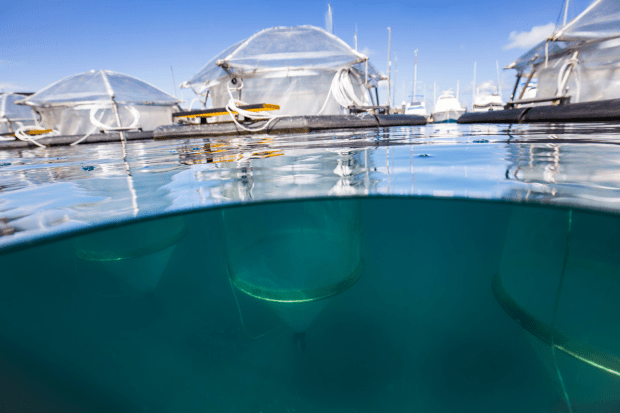
Scientists are doing this to explore the impact of methods which could increase the oceans’ alkalinity at scale, accelerating their uptake of CO₂.
“Can we imagine a climate future in a giant plastic bag?”, asks Lezaun.
Read more
