On Thursday 30th April, I’ll join an interdisciplinary panel of researchers for an online discussion, organised by Surveillance & Society, about Steven Spielberg’s 2002 film Minority Report.
The movie is a dystopian thriller released early in the post-9/11 eraa, set in a world where the US government is beginning to use technologies to survey the future and stop crimes before they occur. The film follows a cop (Tom Cruise) who becomes targeted by the very systems he deploys to catch others before they act.
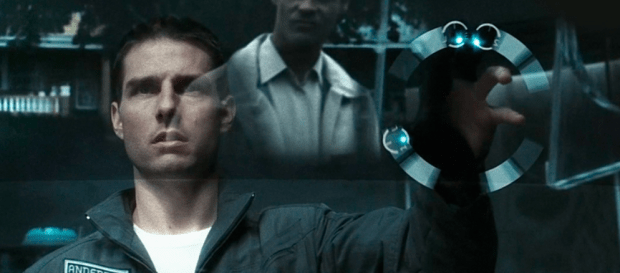
This early digital blockbuster captures a historic moment where safety and surveillance were often inextricably linked, while speaking to a future era defined by algorithmic surveillance, where our behaviors are swayed and dictated by mechanisms beyond our sight and often beyond our control.
My fellow panellists include University of Oslo media and communications researcher Professor Steffen Krueger; Associate Professor Kellie Marin of Texas State University, who specialises in research on civic participation within the surveillance state; and Malka Older, the writer, aid worker, and sociologist, who teaches on predictive fictions at Arizona State University. Our host and moderator is Texas Tech Associate Professor Fareed Ben-Youssef, who writes on the intersections between surveillance studies and popular cinema.
This interdisciplinary roundtable will consider how the competing visions of the future staged by the film echo contemporary concerns about prediction, control, and resistance in a networked world.
Sign up for the webinar via the Zoom event page for “Surveying the (Criminal) Future” .


