I started writing about that awful word “bromance” after the launch of Auckland Libraries’ Dark Night festival exploring sex and sexuality on page, stage, and screen. Our guest speaker, Dr. Pani Farvid, introduced the movie Shame by pointing out that it many ways it wasn’t about sex at all. Its topic was addiction, and more broadly than that, the ways in which society disciplines all of our feelings, not just our sexuality; telling us that these are the permissible ways in which to have and express emotions.
In the pub afterwards, we talked about how heterosexual men define themselves as much through their relationships with other men as those with women. And after that, I knew I would spend this week of Dark Nights writing about Mike, and Jules, and J. That, if I could write about sexual relationships of varying intensity and duration, I could do the same for three varieties of “bromance”. Read more →
As we finally reach the opening of Dark Night, Auckland Libraries’ guerrilla season of events exploring sex and sexuality, I’m blogging on the way that films and literature shape the way we think about relationships.
It’s a different take on the arguments I’ve been making in recent weeks, that libraries offer a place for us to immerse ourselves in culture and participate in a way unique from any other space.
The books we read and the movies we watch can have drastic effects on the lives we lead: in this third Dark Night post, I look at the way films skewed my take on romance and led to me poisoning myself for love at a London railway station. Read more →
I’m also offering you a different take on the arguments I’ve been making in recent weeks, that libraries offer a place for us to immerse ourselves in culture and participate in a way unique from any other space. Libraries as a place of imagination, learning, and connection applies to everyone, from the guy who wants an auto repair manual to the devotee of erotic fan fiction. As I argued last time on this blog, in a world where Fifty Shades of Grey sells 70 million copies world wide, libraries need to be part of the conversation around contemporary erotica.
Here, I wanted to connect our most intimate relationships with two kinds of text – the movies and literature we consume, but also the wider discourse of city life.As Auckland’s Dark Night opens with the New York-set movie Shame, I figured the time was ripe to contemplate “Sex and the Super City”.
21st June sees the launch of Auckland Libraries’ Dark Night, a guerrilla festival of burlesque, literary, and cinematic events that question, celebrate, and challenge sex and sexuality on page, stage, and screen.
Opening with a screening of Steve McQueen’s Shame, a harrowing portrait of sex addiction starring Michael Fassbender and Carey Mulligan, the season includes library services in Auckland bars, author talks, and a cabaret evening including the sultry, saucy stars of Auckland Fringe Festival, Oh! Is For Opera. Read more →
I could also distinguish the glint of a special puddle (the one Krug had somehow perceived through the layer of his own life), an oblong puddle invariably acquiring the same form after every shower because of the constant spatulate shape of a depression in the ground. Possibly something of the kind may be said to occur in regard to the imprint we leave in the intimate texture of space.
Nabokov is writing about a fictional character, but I’ve been arguing that all of us, living and dead, real and fictional, leave these kind of impressions in the world through words, images, deeds, artefacts – the kind of things which it’s a library’s job to help members of the public find and use as they see fit.
In my previous post, ‘The Mission of the Librarian’, I used an essay by the philosopher Ortega y Gasset to suggest that librarianship itself was, like the other professions, one of these puddly spaces, slowly etched by our peers and predecessors, which we get to fill with our own daily life and action.
Usually I’m more excited by librarians than libraries. Politicians like cutting the ribbons on big new builds of steel and glass, but what interests me is what services you can provide when there’s zero budget, zero resources, the politicians disapprove, and all you really have is your own imagination and initiative. I really like that R. David Lankes sometimes asks if librarianship has a future separate from libraries themselves – and I pushed pretty hard for Auckland’s librarians to go off-site and offer their services in other spaces, like comic book stores and even bars.
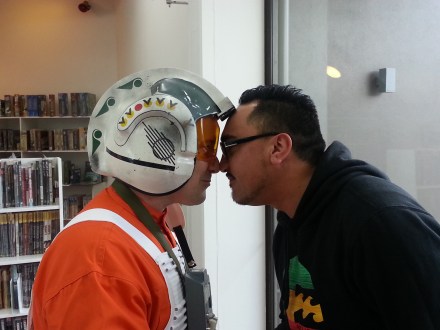
Distinctively geeky, distinctively Kiwi – Auckland Libraries staff in a comic book store for Star Wars Day
BUT…I have been thinking about library spaces too, since I last wrote.
I’m currently working on a couple of projects that provoked this.
This is a standalone blog post, but also the second part of some larger thoughts around archives, libraries, and how words shape who we are. Click to read the first part.
When I first started working with libraries, I downloaded and read a copy of the Spanish philosopher José Ortega y Gasset’s ‘The Mission of the Librarian’ (PDF download). It was written in 1934, but I hoped there would be some lingering insights about libraries or – let’s be frank – cool, glib quotes that I could share in speeches or workshops to make myself look smart and erudite.
One of my favourite novels is Vladimir Nabokov’s Bend Sinister. I guess it’s a pretty minor work of his, and I only ever picked it up because I liked the goofy, almost Hitchockian cover of the Penguin paperback.
Vladimir Nabokov, Bend Sinister
The book’s about Adam Krug, a philosopher from an Eastern European country which is under a totalitarian regime. He fights the tyrannical dictator Paduk at great personal cost, building to a bizarre climax in which Krug is saved from a moment of grief and rage thru a bit of metafictional deus ex machina. It’s really not the best thng Nabokov ever wrote. It’s kind of M. Night Shyamalan for the Times Literary Supplement set, but I still love it – and partly for that cheat ending, which includes the narrator (Nabokov himself?) uttering the lines:
I could also distinguish the glint of a special puddle (the one Krug had somehow perceived through the layer of his own life), an oblong puddle invariably acquiring the same form after every shower because of the constant spatulate shape of a depression in the ground. Possibly something of the kind may be said to occur in regard to the imprint we leave in the intimate texture of space. Twang. A good night for mothing.
I love that whole paragraph. It’s so perfect, right down to that mad ‘twang’ and reference to Nabokov’s lepidoptery, it sets me on fire. [Pale Fire?] It’s something that you’d never, never say in real life – it’s the essence of wanky literary-speak – and yet, it has a poetry. The vision of the puddle, the imprint in the ground, filling with water – seeing this on the page, knowing it to be a trick of words – to me it’s the essence of why we read. To see that constant depression filled once again with a glint of life.
Key 23 is something I only discovered because, working in Auckland for six months, I am using a public library like a regular reader for once – borrowing books simply because they interest or excite me.
A lot of the books I’m borrowing are comics – I love the economy of storytelling and really believe, as I was telling the State Library of New South Wales last year, that this medium might hold the future of space, word, and image. Among the comics I’ve been reading is Grant Morrison’s The Invisibles, which chronicles the adventures of a secret society battling extradimensional forces in the run up to the year 2000.
In The Invisibles, there’s a drug called Key 23 which makes the user experience whatever they read as real. It’s a lovely conceit, which Morrison also flips by adding the notion of a ‘fiction suit’ which (I may have got this wrong…) allows characters to travel through the world of discourse.
Dream, reality, self and other are breaking down in Grant Morrison’s The Invisibles
Training as an infant school teacher brought me back to public libraries for the first time in ages. I’d stopped using them since the Internet had supplanted the local library as my source for obscure music, and I guess before that my last memory of a library was being brutally mocked by some badass teenage girls drinking round the back of one, the first time me and my best friend tried to get served in a pub underage!
As a teacher, school trips to the library were pretty anodyne – the best bit was the forced march three blocks or so from the infant school, the kids’ faces full of wonder as they held hands in pairs and went on a five year old’s adventure into the Big World of grocer’s stores and banks and traffic lights…then, the library.
It was an old building in sore need of refurbishment, overlit within by fluorescent striplights, walls painted the blank cream colour of a hospital corridor, and fitted with that curious, bristly tiled carpet forever associated with Britain’s more dismal civic spaces – probably not even the same colour throughout, with a patch of grey lingering in one corner where the fitters had run out of brown.
 I started writing about that awful word “bromance” after the launch of Auckland Libraries’ Dark Night festival exploring sex and sexuality on page, stage, and screen. Our guest speaker, Dr. Pani Farvid, introduced the movie Shame by pointing out that it many ways it wasn’t about sex at all. Its topic was addiction, and more broadly than that, the ways in which society disciplines all of our feelings, not just our sexuality; telling us that these are the permissible ways in which to have and express emotions.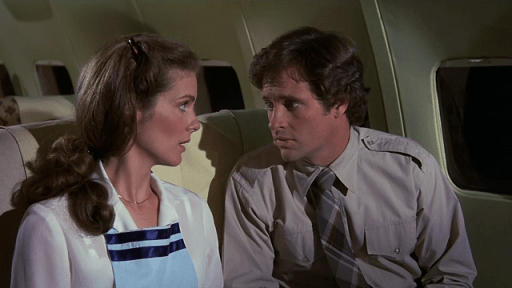




 matt finch / mechanical dolphin