Appointment to Futures Council, National Security College, Australia

I’m pleased to have been appointed to the Futures Council of the National Security College (NSC) at Australian National University.

The Council is an international group of individuals with expertise relating to the mission of the NSC’s Futures Hub, a whole-of-government and whole-of-nation resource for futures analysis in Australia.

Read more about the Hub and their work at the NSC here.

ISF Podcast: Threat Horizon and the auDA scenarios

I recently joined the Information Security Forum’s Mark Ward and auDA’s Sophie Mitchell for a short podcast discussion exploring foresight, uncertainty, cybersecurity, and Internet governance.

We looked at these issues through the prism of auDA’s recent scenarios for the future of the Internet and ISF’s own Threat Horizon foresight product.

Check out our episode of the ISF podcast here.

“Portraits of queer futurity” at National Portrait Gallery, Canberra

Where do we find the limits of identity and desire? What secret possibilities of thinking the world anew exist in quiet suburbs, remote farmsteads, Olympic pools, and the farthest reaches of time and space?

Join me next month for a special online virtual tour of Australia’s National Portrait Gallery, exploring portraits that offer different gateways to worlds beyond, blending past, present and future.

‘The future is queerness’s domain. Queerness … allows us to see and feel beyond the quagmire of the present.’ – José Esteban Muñoz

Futures of the networked world – auDA Internet governance scenarios

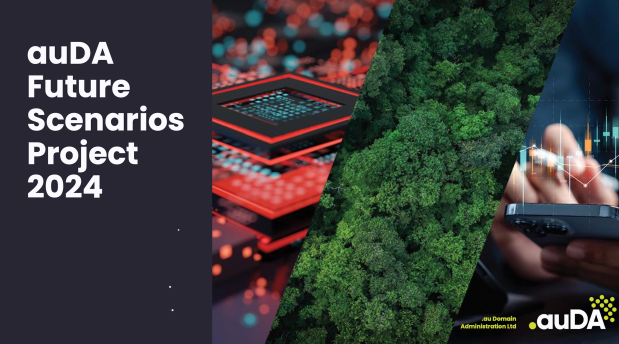
Australia’s Internet domain name self-regulatory body, the .au Domain Administration (auDA), has released a public version of its scenarios exploring the future of Internet governance. I’m pleased to have supported auDA in this process, and you can find the full scenario set here.

auDA is endorsed by the Australian government to administer the .au domain, with a mission to ensure it is a secure, accessible, and trusted asset for Internet users. In addition to its domestic duties, auDA also advocates for the .au domain and participates in global Internet governance processes. The organisation’s Future Scenarios Project provides a basis for wider strategic and policy conversation about our networked world and its governance, and how they might evolve in times to come.

You can read auDA’s own blog introducing the scenarios here – and there’ll be more to come, from auDA and myself, in due course.

auDA Future of the Internet Scenarios Launch, 7 May 2024

How might global Internet governance change in times to come? What uncertainties surround our networked world, and how might they play out in ways that challenge the assumptions underpinning “business as usual” today?

Together with Australia’s auDA and a wide range of international stakeholders, I’ve worked to develop a set of scenarios for the future of the Internet in 2044.

They invite all of us who work with digital technologies to consider plausible, challenging, and relevant futures that offer fresh vantage points on the issues we face today.

Join auDA’s CEO Rosemary Sinclair AM, myself, and the team next month for the launch of these scenarios online. 7th May, 1pm AEST – with a recording to follow.

BMJ Medical Humanities Podcast: Scenario Planning, Healthcare, and the Humanities with Professor Matthew Molineux

Years ago, casting around for a way to explore “applied medical humanities”, I read Matthew Molineux’s essay “A Labour in Vain”, a kind of intellectual history of occupational therapy which spoke directly to the fraught, pragmatic question of what good we really do, when we strive to help others. It’s one of my all-time favourite pieces of scholarly writing and you can find it as a free PDF download from publishers Wiley here.

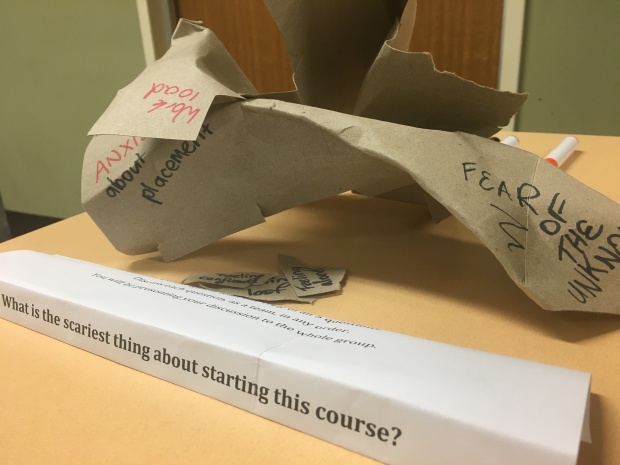
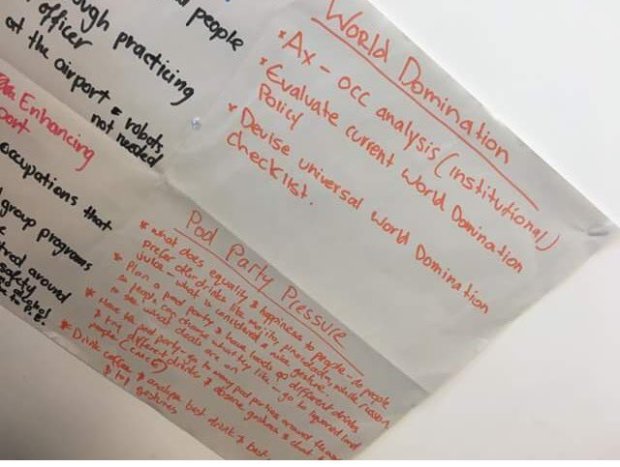
Working with Matthew in a collaboration between Griffith University and State Library of Queensland, I got to know him not just as a great writer, but a colleague and a friend. Combining a creative hands-on approach to occuaptional therapy education with foresight and psychodynamic work, we took Griffith students to distant futures — all in the service of exploring occupational therapists’ role in a changing world.

Toys, cake, and cardboard were just some of the materials which were brought into the work, which included a challenge to produce an edible presentation. The students were resourceful, empathetic, creative, good-humoured – exemplfying the best characteristics of their profession.

Now for The BMJ’s Medical Humanities podcast, Matthew and I join hosts Cristina Hanganu-Bresch and Brandy Schillace to explore scenario planning, healthcare, art, foresight, and the humanities.

Scripturient: AI and the future of intellectual property

The latest edition of Scripturient, my column for Information Professional magazine, features Alex Roberts of IP Australia, the government body responsible for administering intellectual property (IP) law in Australia.

As director of the agency’s IPAVentures unit, Alex leads a team dedicated to exploring what might be needed for the IP rights system of the future. They use foresight and innovation tools to consider how we regulate “creations of the mind”: everything from literary and artistic works to trademarks, brand names, and protected product designs.

Recently, IPAventures developed a set of scenarios exploring the impact of generative AI on intellectual property – ranging from ever more lengthy and elaborate patent specifications to accelerated ideations by inventors and even changes to the regulation of plant breeding.

You can read more about the scenarios, and IPAVentures’ work, in our interview from the latest issue of Information Professional magazine.