IMAJINE: Digital Futures

Citizens gaming artificially intelligent policy mechanisms, a telepresence Luddite movement, ecological damage from cyberattacks, corporations supplanting governments, & rights for intelligent software agents – Caroline Baylon of the UK’s All-Party Parliamentary Group for Future Generations explores potential implications for the digital world, cybersecurity, and AI in the IMAJINE scenarios.

You can read Caroline’s response to the scenarios at the IMAJINE website.

Facing the Strategic Sublime: Scenario Planning as Gothic Narrative

Marie Mahon of NUI Galway and I are in Vector with a new piece taking a literary approach to strategy, scenarios, and foresight.

In “Facing the Strategic Sublime: Scenario Planning as Gothic Narrative“, we investigate how constructing plausible future scenarios can help people to test their assumptions, suspend preconceptions, and engage with issues and information that they had previously framed out of consideration.

In doing this, we argue, scenarios are akin to Gothic literature, offering what Leila Taylor calls “a means of working through the discomfort of a changing world through the safety of fiction”.

Treating scenarios in this way “restores both our humility with regard to external forces that may seem almost unbearable to face, & the troubling sense that our own desires may not be pure or uncomplicated…”

See more at the Vector website.

IMAJINE Workshop: Territorial Inequalities, Cohesion Policy, and Spatial Justice

On 23rd March in Brussels, the IMAJINE project hosts a hybrid event bringing together researchers & policy experts to discuss territorial inequalities within Europe.

IMAJINE explores key questions of territorial inequality, cohesion, and spatial justice: do Europeans have equal rights and opportunities regardless of where they live? Is your ability to realise your rights compromised by where you live?

You can’t simply “run the numbers” when it comes to the future of justice, because it is defined narratively and socially. Questions of what is fair and just are framed, debated, discussed, and negotiated over time.

As well as gathering and analysing fresh data about European inequalities today, IMAJINE explores the theories and concepts by which those inequalities are understood. It also investigates the mechanisms which institutions and communities use to intervene in inequalities. The IMAJINE team have developed future scenarios to help people explore how these issues might play out and be understood in times to come.

You can see IMAJINE’s four scenarios for the future of European regional inequality in 2048 here (PDF download).

On 23rd March, as part of the one-day IMAJINE event, a panel will discuss the IMAJINE scenarios and what they might help us to learn – or unlearn – about regional inequalities in the present. Find out more, and sign up for the event, here.

IMAJINE: “Levelling up” and the future of media

The British government has announced its “levelling up” plan to address regional inequalities across the UK.

The IMAJINE project, delivered by a consortium of 16 institutions across 13 countries, investigates questions of inequality and injustice within and between Europe’s nations and regions.

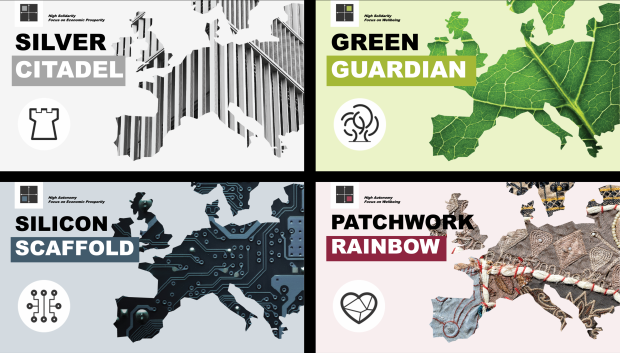
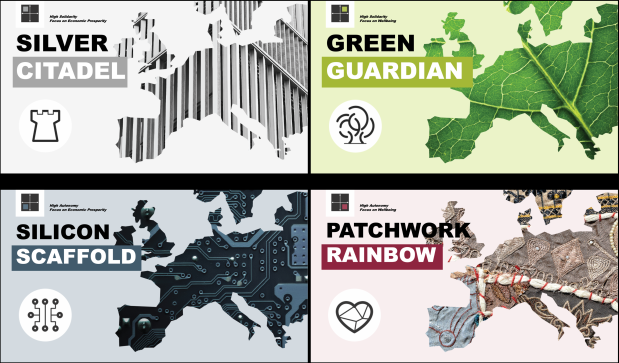
To give us a unique vantage point on what “fair treatment” means for different parts of Europe, the team worked with stakeholders to develop four scenarios for Europe in 2048 (PDF download): SILVER CITADEL, GREEN GUARDIAN, SILICON SCAFFOLD, and PATCHWORK RAINBOW. The scenario set includes responses from experts at the OECD, European Trade Union Institute, Capgemini, UK Space Agency, and many other institutions, exploring the implications for a range of sectors.

One key insight of this process was that it’s never sufficient to merely “run the numbers” when it comes to questions of what is fair or just between regions. We define justice through the stories we tell about what matters to us. Addressing regional inequality is not merely a case of measuring the difference between today’s “haves” and “have-nots”, then seeking to narrow the gap according to today’s metrics. It’s also about understanding what, where, and who we will value, now and in times to come.

The scenarios provide one way of reflecting on those questions of value, and how things are changing compared to the past. SILVER CITADEL sees regional policymakers lobbying centralised bodies for their fair share of an economic “pie” carved up by artificial intelligence. GREEN GUARDIAN explores a climate-ravaged future where Europeans have given up on consumer values and choose to live by new measures of sustainability and wellbeing. In SILICON SCAFFOLD, tech corporations dominate and the nation-state is on the wane, in a world where almost all of our daily life has migrated to privatised virtual spaces. And in PATCHWORK RAINBOW, Europe fragments into a jigsaw of regions with wildly different cultural and social values.

Since the scenarios’ publication in October 2021, we’ve received additional expert commentary from Madeleine Gabriel at Nesta on sustainability implications, the Danish Design Center’s Oskar Stokholm Østergaard on the future of design, and Belgium’s EU Digital Champion Saskia Van Uffelen on how “digital society” might develop in each scenario. And there’s more to come.

The latest expert response, published today, is from Cardiff University’s Caitriona Noonan, and explores what the IMAJINE scenarios mean for the future of media production in Europe. Who will make the content that appears on our screens? How will it be distributed? Caitriona notes that we are at a critical moment for the future of Europe’s film and television sector. IMAJINE’s scenarios offer a unique viewpoint into how that moment is going to play out.

Find out more about IMAJINE at www.imajine-project.eu.
“Imagination Infrastructure”: Interview with Oskar Stokholm Østergaard, Danish Design Center

As part of the IMAJINE project using scenarios for the year 2048 to explore European regional inequality, I interviewed the Danish Design Center’s Oskar Stokholm Østergaard to find out what the scenarios might imply for the future of design.

Our conversation covered “design as diplomacy”, digital transition, moving from human-centred design to a planetary-level focus, and the notion of “imagination infrastructure” — among other topics.

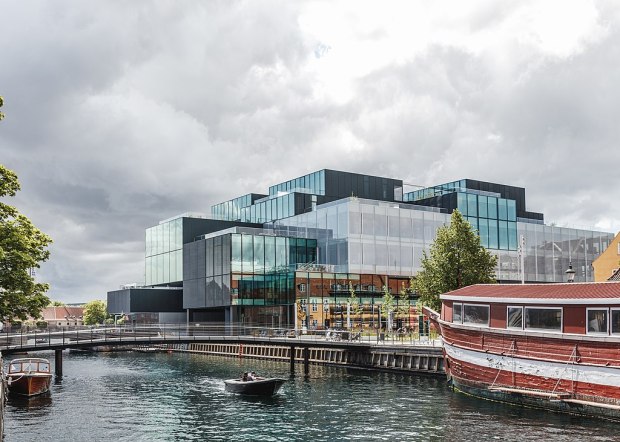
Danish Design Center, Copenhagen

You can read our full conversation at the IMAJINE website and find the complete scenario set as a PDF download here.

Sustainability, Scenarios, and Spatial Justice: IMAJINE at Resilience.org

Over at Resilience.org, the blog of the Post-Carbon Institute, Marie Mahon of the National University of Ireland Galway, David Robertson of Monash Sustainable Development Institute, and I discuss the sustainability implications of the IMAJINE scenarios for the future of European regional inequality.

I especially valued David’s comments on the Metaverse-like SILICON SCAFFOLD scenario, where “Near-infinite virtual geographies undermine the notion of ‘limits’ or ‘planetary boundaries’[…and t]he resources we use as we navigate digital worlds are hidden from us.” Will notions of sustainability be fundamentally recast and reframed by the generations which succeed us? How will future circumstances cause those frames and the values which define them to change?

The mission of Resilience is to “envision a world of resilient communities and re-localized economies that thrive within ecological bounds.”

Read more about IMAJINE’s contribution to that discussion here.

Publication of the IMAJINE Scenarios for the Future of European Regional Inequality

The four scenarios produced by the Horizon 2020 IMAJINE project to explore the future of European regional inequality have now been published.

The scenarios explore questions of territorial equality – Do EU citizens have equal rights and opportunities regardless of wherever they live? – and spatial justice – Are different places treated fairly? Is your ability to realise your rights compromised by where you live?

Questions of justice are defined socially and narratively – even when a court says it is considering “the balance of probabilities”, it adjudicates between competing stories told by the parties arguing a case. That means we can’t just run the numbers when it comes to the future of inequality, but must explore how notions of fairness and justice might change in times to come – and what those changing notions might tell us about issues in the present.

As Ursula K. Le Guin put it in the quote we chose for IMAJINE’s epigraph, “We will not know our own injustice if we cannot imagine justice. We will not be free if we do not imagine freedom.”

Each vision of Europe in 2048 offers a different perspective on these issues as they are emerging in the present, and offers an opportunity to reframe the discussion around regional development and inequality. The scenario set includes respondents from a wide range of sectors and institutions around the world, offering further insight into the implications of each scenario.

You can download the IMAJINE scenario document as a PDF from the project website – and there’ll be further updates and expert responses at the IMAJINE homepage as the scenarios are rolled out over the coming months.

Reimagining the future of urban-rural balance

How will Europe’s urban-rural balance shift in years to come? In times of uncertainty, when tomorrow may not look like today, how can researchers and decision-makers best explore future relationships and dynamics between regions? In addition, how can such speculations be related back to pressing questions in the here and now?

In the new issue of the Regional Studies Association’s online magazine, IMAJINE‘s Marie Mahon and I share our experiences using scenario planning to explore the future of regional development in Europe, and answer the question: why are serious researchers spending time dreaming of futures which may never happen?

Read more in our article, “Reimagining the future of urban-rural balance: using scenarios to explore territorial inequality”.

Tales of the times to come: the humanities and scenario planning

“What do the humanities have to offer strategists, policymakers, and decision-takers in the age of the algorithm? As machine intelligence and computational power increase, as we gather ever more data from ever more sources, do the humanities still offer a valuable perspective on times yet to come?”

Over at the website of the Irish Humanities Alliance, Marie Mahon and I have a piece on what our training in the humanities has brought to our work on the IMAJINE project for the future of European regional inequality.