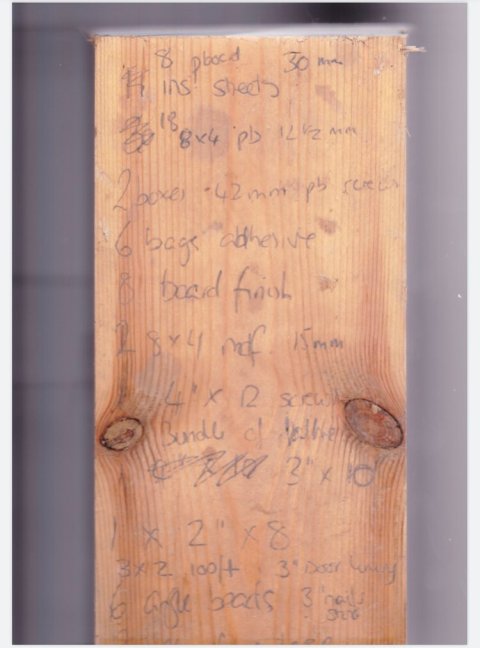
Something this weekend reminded me of the time I was too lazy to transcribe the builder’s order for materials and just scanned the plank he’d been writing on, so I could email it to the merchants.
Later, I was talking to my friend David, who teaches at a university. These days, student papers are submitted and marked electronically. That won’t surprise you, I’m sure, but what impressed me was that David delivers his marks and feedback as audio files which the students can then listen to when they get their grades.
The students have responded positively to the audio feedback, and David finds it more efficient, too. He reads the paper once, then goes back through it dictating into his phone. Not only does he get the work done in less time, but it helps him to highlight the reading experience to his students: “By the time I get to this point in the essay, I’m lost, because you haven’t established your argument on the preceding pages.”
Another friend who works in a senior academic role refuses to give book reports in written form; instead, he will mark out two hours of his time and take editors and publishers through his comments orally, over the phone. It saves time, means he can work from his notes, and enables them to question him or seek clarification as they go.

Earlier this month, I was leading an event for the Royal Dutch Library of the Netherlands exploring the future of our relationship to the written word. We pondered how new technologies and their social impact might affect this relationship, including developments in machine recognition of text and speech.
“If voice recognition and machine transcription were perfect,” we asked, “what would we gain? What would we lose?”
One of the first responses was immediate and positive. “No one would ever have to take minutes in a meeting again.”
We then started to explore issues around archiving and preservation, disability and accessibility, and division between technological ‘haves’ and ‘have-nots’.
Such explorations formed the basis of our event’s opening activity, which encouraged participants to challenge their thinking about the future, rather than resting on the assumptions of the past. It’s part of an ongoing project at the library to develop a space which explores the Netherlands’ relationship to the written word.
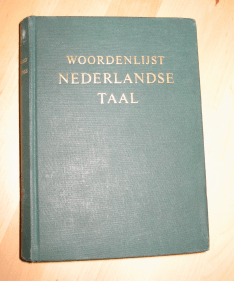
This is particularly interesting in a Dutch context, because the Dutch language is regulated by an international treaty which seeks to maintain consistency between use in the Netherlands, Belgium, and Suriname.
The Dutch Language Union puts out a regular publication, the “Green Book”, which includes official spellings for all Dutch words. However, another publication – the “White Book” – suggests alternative rules which some Dutch publishers and firms have preferred to follow. (The official spelling reform of 2015 was particularly controversial).
All of this dispute, debate, and linguistic politics provided rich pickings for a group of Dutch culture and information professionals trying to imagine a library space devoted to the future of the written word in the heart of Den Haag.
From speech recognition to linguistic treaties, graffiti and doodles, hate speech and ‘fake news’, the value of fan fiction, battles over privacy, piracy, and copyright, and the political power of the written word, there’s so much to be discussed when we imagine the future of reading and writing.
 matt finch / mechanical dolphin