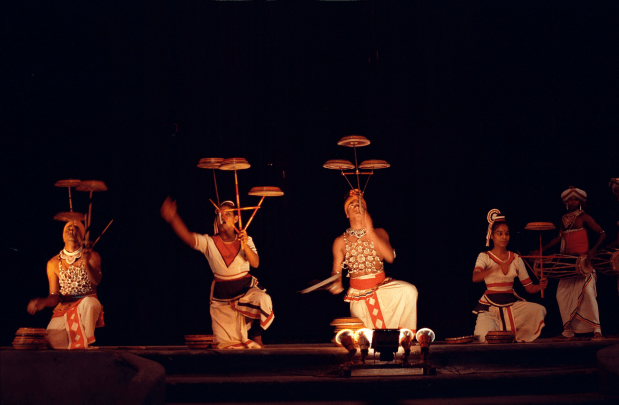
It’s a busy season and there are many plates to keep spinning. Moving from one to the next, tending them while keeping the whole in mind, stray thoughts arise.
Some thoughts dissipate. Some linger. Here are a few things that are currently on my mind when it comes to grappling with uncertainty.
- The duty to anticipate can also create blindspots
Speaking about AI and foresight recently on Australia’s Burning Platforms podcast highlighted, for me, the current efforts in that nation to legislate for a “Digital Duty of Care“, which is intended to “obligate online services to keep their users safe, prevent serious harms before they occur, and anticipate the next generation of harms on the horizon.”
Discussions about the proposed duty reminded me of work by Jeremy Brice, Andrew Donaldson, and Jane Midgley on the “Horsegate” scandal of 2013, where horseflesh was mixed with beef products.
The research highlighted that when a regulatory apparatus renders a business responsible for taking action against foreseeable threats or harms, businesses can develop forms of strategic ignorance which are compliant with the regulations but limit true anticipation…and liability.
As the researchers put it,
a food business which had access to, or could have obtained, information indicating that a breach of food law was likely to occur within its supply chain would be expected to have foreseen and taken precautions against such a lapse. It would therefore be left exposed to costly and reputationally damaging litigation should it later suffer such an incident without first implementing ‘reasonable’ risk management arrangements. Meanwhile, one able to argue that it could not reasonably have been expected to obtain such information would bear no legal responsibility for the offence. This often places food businesses in the paradoxical position of having to demonstrate their ignorance, and indeed their inability to know, of lapses within their extended supply chains.
[…M]any food businesses appear to respond by developing supply chain risk management strategies which strike a delicate balance between the gathering of information and the maintenance of defensible zones of plausible ignorance. On the one hand, such businesses must assemble sufficiently detailed and comprehensive information that they may be considered to have taken all reasonable precautions and exercised all due diligence. On the other, they must maintain a sufficiently limited knowledge of the provenance of their wares that they may plausibly deflect legal and regulatory challenges by claiming that they could not reasonably have foreseen any incidents which might transpire within their supply chains.
The work of Brice and colleagues was especially on my mind following an excellent presentation last week by Domenico Galimi on the institutional response to the 9/11 Commission Report. That document’s most infamous claim was that “the most important failure was one of imagination” when it came to preventing the terrible attacks on the US twenty-five years ago.
Galimi argued that subsequent attempts by government agencies to “bureaucratize” imagination within the field of national security prioritised data gathering, and led to the creation of an abundant – yet not always helpful – “surplus that does not know”.
An ever more surveilled society is not necessarily made any safer by databases which may contain the right information, but don’t connect it in a way that allows for effective preventive action. And because every thwarted attack is a counter-factual, it becomes additionally challenging to assess the efficacy of such schemes.
Think of the 2017 terror attacks in the UK, whose handling was reviewed by David Anderson QC. Intelligence was misinterpreted or not fully appreciated, and attackers being previously “on MI5’s radar” did not lead to action which prevented the attacks, though Anderson stated:
“It is conceivable that the Manchester attacks in particular might have been averted had the cards fallen differently.”
Galimi and Brice’s group both refer to “agnotology”, the study of how ignorance is produced and can even become a “productive asset” when institutions point to it as a reason for more resources, or to deflect liability, or demand greater licence.
As Galimi put it in his presentation, “No bad faith is required: strategic ignorance is at its most powerful when it appears genuine.”
- How will we manage an obligation to imagine?
Australia is also one of a number of nations bringing in climate reporting obligations. The Australian Accounting Standard broadly mirrors the international standard, and includes the obligation to do climate related scenario development, defining scenarios as “a plausible, but hypothetical, path of development leading to a particular future outcome.”
Significantly, the language of plausibility rather than probability is used – opening the space to alternative framings of what is going on around us and what the future might hold, highlighting the need to test what one actually finds plausible, and going beyond the merely quantitative.
It implies that meeting these standards will not just be a matter of saying “we looked at the IPCC projections [or any other climate graphs], ran the numbers, and now we’re covered.”
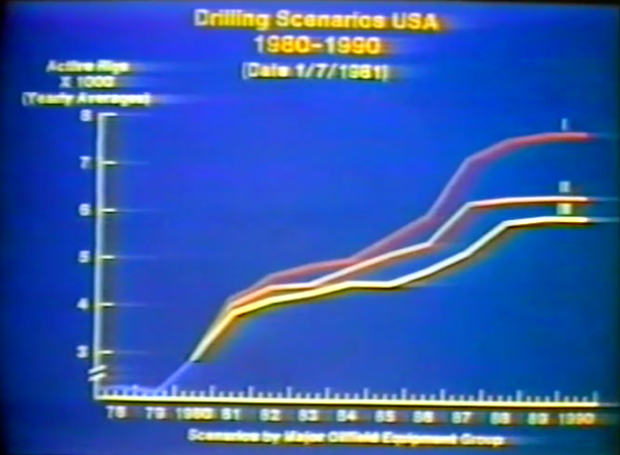
Pierre Wack infamously showed, many years ago, how plotting the future on a graph can deceive us – we look at the high, middle, and low lines, and then think we’ve reckoned with the full span of possibilities; we assume the highest and lowest values are extreme and outliers, then plump for something “reasonable” in the middle.
Instead of this, Wack argued for approaches to foresight which challenged their users to relinquish their current mental models and consider alternatives: “the gentle art of re-perception”, as he put it.
So another question nagging at my mind is: will next-generation climate compliance include the necessary space for other forms of foresight, or will it be a box-checking graph job?
Galimi’s work argued that the injunction of the 9/11 Commission “to find a way of routinizing, even bureaucratizing, the exercise of imagination” foundered precisely because it emphasized the bureaucratic element over the imaginative leap. That resonates with recent work by David Stühler on the “central paradox of counter-bioterrorism”, where endless theoretical scenarios are generated, yet actual events are few.
That leaves us, Stühler argues, in a position where:
the evolving field is shaped by not merely security logics but also the agendas of those promoting preparedness. While it is quite unclear whether an adversary as capable as depicted in counter-bioterrorism’s conception will ever emerge, increasing demonstrations of the feasibility of bioterrorist attacks keep security actors under continuous pressure to prepare. Because preparedness derives primarily from actors’ own anticipatory practices, counter-bioterrorism has become a strategic field in which actors are, in effect, compelled to play against their own imaginations.
In the age of AI, we are reminded that no amount of data will fully resolve our problems, because data is constructed according to particular framings and cannot, in any case, be gathered from events that haven’t happened yet. Nor will processing that data ever faster, or generating ever greater numbers of possible scenarios, immunize us from uncertainty either.
Some sensible foresight practitioners have argued for exploration of the ways in which generative AI can be a contributor to their processes, but the leading edge of foresight work in the 2020s is not really about automation or the sheer number of scenarios one contemplates.
Rather, it is about the formulation of shrewder questions to help us see what we might otherwise have missed or overlooked. In place of agnotology and the bureaucratic production of strategic ignorance, we face uncertainty with an open mind, taking seriously the organisational researcher Ellen Ramvi’s notion that “to learn is to get involved with what one doesn’t know.”
We are returned to the problems which the economist and strategist Thomas Schelling discussed as far back as 1962 –
The contingency we have not considered seriously looks strange; what looks strange is thought improbable; what is improbable need not be considered seriously.
– and we are returned, also, to Pierre Wack’s concern with reperception, reframing, and the shifting of mental models. The Galway Questions approach which I developed at the University of Galway highlights this by approaching foresight as a disciplined interrogation of current assumptions.
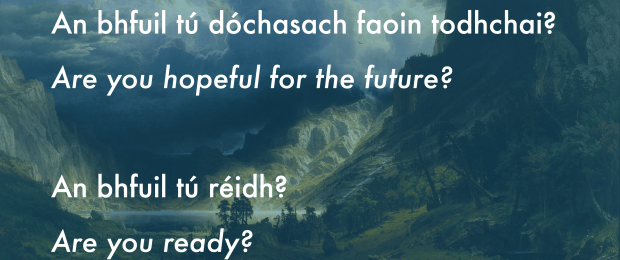
It asks us to reckon with who we might need to become as much as what we might need to do, and how our choices today will be remembered as much as what is about to take place.
It does this in order to force us to think otherwise and see what lies beyond our current way of understanding the world. In the age of the prompt, the context window, the big dataset, and the predictive model, the question of framing – and reframing – becomes paramount.
- WEIRDness waning and the vogue for false hope
There’s an enormous vogue for “desired” or normative futures at the moment, with people asking, “What do we want the world to look like in year X?” and then, “OK, so working back from that, how do we get there?”
Leaving aside the question of whether strategy and policy in a turbulent world truly work in this almost architectural way, I think a lot of this vogue is a response to the upsets of this century, which have shaken the self-belief of formerly confident rich and privileged nations.
In psychology, these countries are sometimes called WEIRD – White, Educated, Industrialized, Rich, and Democratic. Their societies have much to recommend them, of course, depending on where you stand – but they’re not perfect, they haven’t always treated other countries and populations and environments well, and they are far from the only game in town.
From COVID to the global financial crisis to the rise of Big Tech firms and AI technologies, plus shifts in the geopolitical balance of power, countries which once felt comfortable calling the shots have found that these days, their calls don’t always get heeded.
I have the privileged to teach on the Small Countries Financial Management Programme, a gathering of finance officials from smaller nations around the world. They are among my favourite students to teach – shrewd, lively, and most insightful. That is, in part, because they are used to the idea of having to play in a world where larger, more powerful entities tend to set the rules and get their way.
I find the vogue for hope among the WEIRD unconvincing, and it comes at a time when WEIRDness is having something of a wobble. I think it might be an attempt by people who feel things aren’t going their way, politically, to palliate their anxieties.
I can see the need in present times for wisdom, shrewdness, resolve, good judgement, compassion, care, and deft negotiation – but I’m not sure about wishful thinking. One doesn’t have to be Sigmund Freud to see that we don’t always know what we want, or admit what we want, or even take satisfaction if we do get what it is we thought we wanted in the first place. Desire is a messy and complex thing to try and pin your future on.
When tutoring students of negotiation at Oxford’s Saïd Business School, I often encourage them to think not merely of the outcome they want or the positions they currently hold, but the underlying interests, beliefs, and motivations of all parties involved in a situation.
Beginning here, and adopting a collaborative curiosity about what is possible, they often find ways to achieve more, and allow others to benefit, while designing an agreement that will stand the test of time.
Compared to that, wished-for futures are pretty thin soup.
The other problem is that if we asked, say, Australians in 1950 what they wanted the Australia of 2026 to look like, they may well have had a hopeful vision of a future that realised some of their desires and preserved some of their values.
Some of them, if transported forward in time, might well be horrified to see the Australia which they would actually encounter today. And yet, in 2026, we might also find ourselves grateful not to be living in the prison of their distant dream, having found our way to something else of greater value over the intervening years.
This is also the challenge for today’s proponents of Future Generations legislation, which I’ve discussed elsewhere. Given that future generations don’t exist yet, we can’t even know for sure what they want for breakfast. That doesn’t preclude striving to be a generous ancestor, or a prudent custodian of the increasingly fragile environment – but it does complicate the worthy yet potentially hubristic idea that we know what’s best for times which haven’t happened yet.
The alternative to the hope merchants is to reckon seriously, as I’ve suggested above, with future hindsight.
We ask, collectively, How might the future play out beyond what we currently hope, fear, and expect?
Then, how might inhabitants of different futures judge, in hindsight, the situation we’re in today and the decisions and positions we think oh-so-wise?
On that basis, we can then think more shrewdly and wisely about the possibilities of intervention in the present – and negotiate whatever lies ahead.
Of course, we can never be entirely sure we’ve made the right call, individually or collectively, until the future arrives. But we can do the next best thing – making a decision or an agreement that we can live with on the day we made it, after best efforts to understand what’s going on, what might yet transpire, and the potential consequences of our choice.
Maybe then we’ll be in slightly less of a pickle when it comes to our uncertain times.