Dark Night: Bromance Coda – Carol Borden on Superman and Masculinity

As a coda to my series  for Auckland Libraries’ Dark Night, I’m reposting a great essay on the Man of Steel from Carol Borden, editor of Canada’s great online arts journal The Cultural Gutter.

As Man of Steel hits our screens and offers us a pretty brutal take on the boy from Krypton, Carol finds new and exciting ways to affectionately explore gender identity in…“Loving the Alien”.

Read Loving the Alien: Superman and Masculinity at Carol’s website, Monstrous Industry.

Librarians in comic book stores – Free Comic Book Day and Star Wars Day in Auckland, New Zealand

A hongi with the Rebel Alliance

Librarians in Auckland ventured into comic book stores to celebrate Star Wars Day and Free Comic Book Day by issuing memberships and loaning items from their collections. More soon, but in the meantime here’s Twitter coverage via Storify.

[View the story “Auckland Libraries goes mobile for Star Wars Day/Free Comic Book Day” on Storify]

Guest post: Steve Saville on comics and creativity, part 2

In the second part of his guest post for Books and Adventures, Steve Saville of Alfriston College in Auckland, New Zealand, discusses the lessons to be learned from his pioneering comics in the classroom workshops.

Most educators currently involved in secondary schools in New Zealand would agree that creativity is a good thing and that it needs to be encouraged; that we need to nurture and encourage the creative young people who will solve the problems posed by our ever changing world.

We can all look to our own school environments and proudly detail how creativity is nurtured, encouraged, and celebrated in our schools. We provide ample opportunities for writing, artistic expression, the creative use of digital technologies, dance, and drama. Our schools have bands, singers, sculptors. We offer classes in creative writing and philosophy. It can be argued that we have countless opportunities for young people to express and develop their creative skills.

We can also think of numerous teachers that we would classify as creative in their approaches, talented educators who find new and exciting ways to get their learners thinking. Teachers who challenge thinking by making learners ask questions and by asking learners to seek the relevance and authenticity of material studied.

All of this is totally correct – but is it enough?

It may be creative to enable a learner to write a story, to perform in a play or to design a web page but who chose the play and who decided the topic and who wrote the brief?

There is a difference between asking a learner to produce a creative response to something on a particular day, as part of a particular programme of work, and allowing an individual to be creative.

More profoundly, how can creativity flourish in schools, which are essentially non-creative environments?

Read more

Guest post: Steve Saville of Alfriston College, Auckland, on comics in the classroom

Today, we’re joined by Steve Saville, deputy principal at Alfriston College in South Auckland. For four years, Steve has championed the use of comics in the classroom through a series of innovative workshops which have allowed students to develop and publish their own high quality comic books. In the first of a two-part guest post, Steve tells the story of Alfriston’s unique comic book education project.

See more on comics in the classroom via the “comicsedu” tag on this site.

Like most teachers, I can think of numerous times that I have attempted to encourage or develop creativity with students, both in and out of the classroom. Like most teachers, my in-class efforts have fallen firmly in the realm of teacher-directed, and therefore dictated, creativity.

Comic book learning in action at Alfriston College
Comic book learning in action at Auckland’s Alfriston College

More recently, I’ve spent a few years encouraging learners to genuinely take control of the creative process, exploring creativity through the medium of comics. The aim has been to produce original comics that are of a publishable and professional standard. I have done this within a single school environment, Alfriston College. A potted history of our programme follows.

Read more

No matter how hard they’re punched: on superheroes and real-world issues

To round off my recent series of posts on comics and education, I’m joined by Professor Mark D. White of CUNY; Master’s student Tom Miller of McMaster University in Canada; Australian critic and screenwriter Martyn Pedler, currently completing an interdiscplinary PhD thesis on superhero stories at the University of Melbourne; and Nick Sousanis, an artist-educator and doctoral candidate at Teachers College, Columbia University.
 
The discussion was prompted by a piece on the Batman: Arkham City computer game on the Overthinking It website.
Batman: Arkham City video game cover 
In it, John Perich argued that ‘Superhero comics are rarely a good medium to talk about real-world issues’:

Nothing about Arkham City is subtle. But then, nothing about superhero comics has ever been subtle.

Whenever superhero comics try to get “edgy” and “real,” they bump against the limits of the genre. Superhero comics are meant to have action and thrills. That’s why people read them. So when a writer introduces a problem in a comics storyline, it has to be a problem that can be solved through thrilling action.

I used the article as a leaping-off point to ask Mark, Tom, Martyn, and Nick whether the need for fisticuffs prevents superhero comics from exploring deeper issues.

Read more

Guest post: Neill Cameron on pirates, dinosaurs and comics in the classroom

Neill Cameron writes and draws for The Phoenix, Britain’s new weekly comic for children, as well as giving illustrated talks and workshops for young comics creators. Neill Cameron giving a comics workshop

When mainstream comic companies sometimes seem to neglect younger readers, it’s exciting to see a publication like The Phoenix aimed at an earlier age range. Neill’s work for the comic includes a gripping pirates-versus-dinosaurs adventure and a series teaching readers ‘How To Make Awesome Comics’.

Neill joins us now as part of my site’s discussion of comics in education, which you can browse via the comicsedu tag.

Read more

Comics in the classroom: supporting female students, part 2

This is the second part of a discussion about engaging female students using comic books. Read the first part of the girls in comics discussion here, or browse all posts on comics in the classroom.

Queen and Country by Greg Rucka

Reflecting on girls, comics and education are comics commentator Dee Pirko from Girls Read Comics Too, educator and editor Lisa Fary from Pink Raygun, and Carol Borden, editor of The Cultural Gutter, as well as children’s writer Louie Stowell and Adele Walsh, who runs Melbourne’s Centre for Youth Literature.

I concluded the discussion by asking our panel to recommend good comics for educators and librarians to use with girls and young women.

Read more

Comics in the classroom: supporting female students, part 1

This week, our discussion of comics in the classroom turns to the question of how we can engage female students using comic books.

I’m joined by comics commentator Dee Pirko from Girls Read Comics Too, educator and editor Lisa Fary from Pink Raygun, and Carol Borden, editor of The Cultural Gutter, as well as children’s writer Louie Stowell and Adele Walsh, who runs Melbourne’s Centre for Youth Literature.

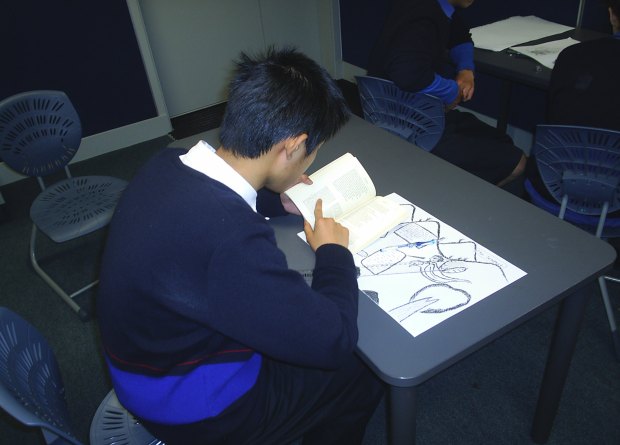
Michelle Bai of Alfriston College drawing her own comic

I started by asking the panel, “What are the benefits, and challenges, of using comics in education?”

Read more

Zombie Pandemic! Comic books and public health communications from the CDC

Can a comic book help you prepare for hurricane season?

What about bioterrorism? Or a natural disaster?

What about a zombie pandemic?

Preparedness 101: Zombie Pandemic comic from CDCIn the 21st century, using comics in education stretches far beyond the campus or the classroom. Health organisations around the world are increasingly looking towards comic strips as a medium for public health communication.

The ‘graphic medicine’ movement had a cover feature in the 2010 British Medical Journal, looking at a range of applications – from training doctors to understand patients’ healthcare experience through to public information and outreach programmes.

Last year, America’s Centers for Disease Control and Prevention (CDC) published an unusual educational comic called Preparedness 101: Zombie Pandemic.

In it, everyday folk caught up in an apparent attack by the walking dead turn to the CDC for advice and support.

I caught up with Maggie Silver of the CDC communications office to find out more, and to make sure I’m ready for the coming zombie apocalypse.

Read more

My Dinner With Hergé: Raymond Huber and Hugh Todd

This is one in a series of posts supporting my article in the June 18th curriculum supplement to the New Zealand Education Gazette. Find more resources, interviews and features on comics in education via my site’s comicsedu tag.

Today, I’m joined by Raymond Huber and Hugh Todd, lifelong devotees of the iconic boy reporter, Tintin.

Tintin and Snowy

Raymond is a New Zealand children’s author whose novel Wings was a finalist in the 2012 Julius Vogel awards.

Hugh, a fellow Kiwi now based in Australia’s Blue Mountains, is a cartoonist, graphic designer and author of the Scholastic picture book Bring Back the Ball, Daisy Dog.

Raymond and Hugh agreed to discuss the enduring appeal of Europe’s most famous comic book character and his creator, Georges Remi, over an informal “dinner with Hergé”.

Read more