Beyond Panels: The Presenterless Future?

Our quest to mitigate guest speakers’ privilege, plus include audiences as participants in workshops and panel discussions, continues.

Last week I spoke at USQ – where audience members were invited on stage as part of my live-streamed presentation – and I also delivered a workshop “Are we asking the right questions of our digital future?” at Broadband for the Bush.

For the latter, I wanted to create a way of talking about the future that was open to all and could even be held in venues with limited access to technology.

I put together twelve provocations: 400-word texts, followed by questions which served to prompt discussion. Workshop participants were invited to choose one or two of the twelve provocations, read them, and then discuss them with their tablemates.
Read more →

Dimestore Futurism

This week I spoke at both the University of Southern Queensland (USQ) and the national Broadband for the Bush Forum. The Forum is an annual gathering of people working to improve access to digital communications in remote and regional Australia. You can watch the USQ talk above.

Both events aimed to get people questioning their assumptions and exploring what they exclude or overlook in their visions of the future.

Read more →

No Longer at Ease / The Life of Lines – Interview with Beth Povinelli

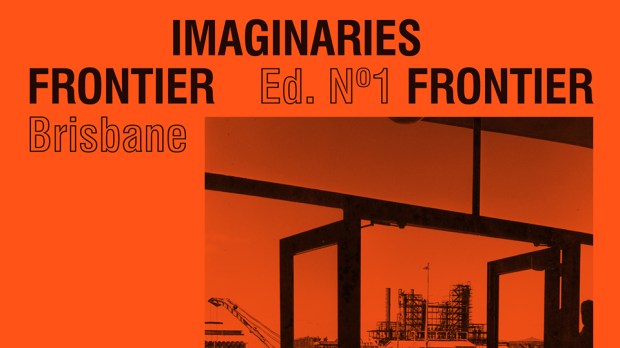
Frontier Imaginaries Poster from QUT/IMA exhibition in Brisbane

Frontier Imaginaries is an exhibition currently being held across two sites in Brisbane: ‘No Longer at Ease‘ in the Institute of Modern Art and ‘The Life of Lines‘ at Queensland University of Technology.

Beth Povinelli is one of the artists featured in ‘The Life of Lines‘  – she is also Franz Boas Professor of Anthropology at Columbia University.

Beth’s research forms a critique of late liberalism – she dubs it an ‘anthropology of the otherwise’ – which I find vital to current debates about Australian identities and our visions of the future, both here and around the world.  At the launch of Frontier Imaginaries, she argued that Australia is on the front lines of a crisis in Western thought, brought about in part by the pressures of climate change and the rise of digital technology.

Originally a philosophy student, Beth’s love of Australian movies led her to visit the country on a grant application in 1984. She eventually found herself working as an anthropologist and advocate for Indigenous communities. As she says, her career has been less about “explaining” Indigenous culture and society to others, more about helping to analyze how late liberal power appears from an Indigenous perspective.

Read more →

A Speaky Week

On Tuesday, I’ll be over at the University of Southern Queensland, giving talks and workshops to staff and students across faculties. You can follow them online via this livestreaming link – the fun kicks off at 11am Australian Eastern Standard Time.

Then on Thursday I’m joining the Broadband for the Bush Conference on rural and regional access to digital technology and communications, running a presenterless workshop session on planning for the future. I’ll be drawing on science fiction, Afrofuturism, and comics alongside debates around copyright, government policy, and the presentation of financial data.

You can follow via the hashtag #BushBroadband on social media. I feel like non-Aussies are going to think that’s something far more salacious than it actually is…

On health and well-being

Professor Martin Paul Eve of Birkbeck College, University of London writes today in the Times Higher Education Supplement about suffering a stroke in his twenties. You can read  ‘Coping with Illness’ here.

I’ve been working with medics and healthcare professionals as part of my 2016 creative residency in Queensland, Australia. I use Martin’s story as part of my workshops. It reminds practitioners that healthcare is about people as well as processes, and highlights how culture and access to information shape our experience of health and wellbeing.

When health organisations seek to deliver targeted community interventions, develop inclusive health systems, or improve their relationships with the populations they serve, there are overlaps with my field of creative work and community engagement.

Read more →

Beyond Panels

Here’s the ever-thoughtful Justin Hoenke on conference presentations:

We’re thinking about similar things down under…last month, the State Library of Queensland experimented with a Presenterless Workshop format, as part of a wider campaign by science communicator David Robertson, called Beyond Panels.

Read more →

Sunday Read, Supplemental: Dancing Zombie Cops Can Only Be A Good Thing

I just saw the Running Man Challenge video recorded by police in New Zealand Aotearoa this week.

The video is part of a drive by Kiwi cops to recruit more officers, especially from Maori, Asian, Middle Eastern, Pacific Island, and Indian backgrounds.

I did a double take, because the cop who closes out the routine is Sergeant Sonny Iosefo of South Auckland.

Sonny also starred in our 2013 zombie siege at Tupu Youth Library, as an officer who came in to protect a group of teens from an invasion of the living dead.

Read more →

Sunday Read: Beyond Secret Cinema

My belated Sunday morning read is this piece from the Guardian on London’s Secret Cinema, which blends movie screenings with theatrical experiences and themed activities:

I’m a big fan of participatory live-action storytelling and I’m fascinated by opportunities to blur the line between fiction and “real” experience, creating events where attendees shape the outcome of a story.

I went to a Secret Cinema event a few years back and was pretty disappointed – the set design and costumes were fancy, but the opportunities to get involved in the storytelling were minimal. I’d gone to see Casablanca and while it was cool to sing La Marseillaise at a bunch of actors in Nazi uniform, the rest of the “immersive experience” consisted of overpriced snacks and a “casino” barely worthy of a student union’s James Bond night. The Guardian piece captures the extent to which Secret Cinema events are now more about taking your money than letting you step into the world of a story.

Read more →

Marvellous, Electrical: In The Doll Hospital

I was expecting hokey gothic from my trip to Brisbane’s Doll Hospital.

Instead I got stories from the Greek Cypriot migration, and some thoughts on how Australian attitudes have changed.

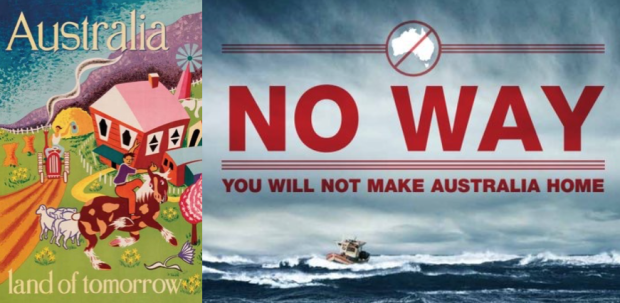
Australian migration posters from the mid 20th century and early 21st century

Read more in this week’s Marvellous, Electrical.