After Orlando

If you work in a cultural institution, what do you do in response to a tragedy like the shooting in Orlando last week?

You see a lot of rainbow flags on social media and there’s a hashtag going round, #LoveIsLove. There have been gatherings in major cities, showing solidarity with Florida and letting each local LGBTQ community know they are celebrated and cherished.

These are wonderful things but I wanted us at the State Library of Queensland to do more.

On Monday morning, we fast-tracked a project to acquire a major piece of Australian LGBTQ oral history – the final interview tapes of Bernard King.

King was the flamboyant, gay, notoriously acid-tongued pioneer of Aussie TV cookery and talent shows. We discovered the tape as part of my weekly newsletter Marvellous, Electrical when I interviewed King’s biographer Stephanie Clifford-Smith.

You can read the Bernard King edition of Marvellous, Electrical here.

This is a major acquisition of materials from a forgotten Queensland icon whose work was under-represented in the state’s libraries and archives. You’ll see more about it through official channels in coming weeks.

The interviews will now be digitised by the library’s Queensland Memory team. State Library oral histories currently available online include the LGBT Lives: Oral Histories collection and the Greg Weir collection.

I have to say massive thanks to Dianne Byrne and Gavin Bannerman of Queensland Memory for helping us to pursue this acquisition.

I also spent my evenings this week investigating Queensland’s Panic Defence – a lingering clause of the state legal code which seems to allow killers to claim they were provoked to manslaughter if their victim made a homosexual pass at them.

Alongside celebration and solidarity, it’s important to look to our own doorsteps and recognise where prejudice and injustice can be found right before our eyes. Discussion of the Panic Defence led to some uncomfortable truths about murder and straight male privilege in Australia’s Sunshine State.

You can read Marvellous, Electrical: The Panic Defence here.

Marvellous, Electrical: Adventures of a Wandering Cook

Angela Hirst of Wandering Cooks tends the garden at her Brisbane food incubator

Brisbane is just shading into winter now, and while it doesn’t get too cold in subtropical Queensland, you still need to make a little effort if you want a place to feel cosy.

On the fringe of the cultural quarter, entrepreneur Angela Hirst is doing just that, as she plays host to the city’s most adventurous chefs and diners at her “food incubator” Wandering Cooks.

In this week’s newsletter, Angela explains the links between philosophy, architecture, permaculture, and her attempt to create a special place for culinary innovators in the heart of Brisbane.

You can read this week’s Marvellous, Electrical here.

Beyond Panels: The Presenterless Future?

Our quest to mitigate guest speakers’ privilege, plus include audiences as participants in workshops and panel discussions, continues.

Last week I spoke at USQ – where audience members were invited on stage as part of my live-streamed presentation – and I also delivered a workshop “Are we asking the right questions of our digital future?” at Broadband for the Bush.

For the latter, I wanted to create a way of talking about the future that was open to all and could even be held in venues with limited access to technology.

I put together twelve provocations: 400-word texts, followed by questions which served to prompt discussion. Workshop participants were invited to choose one or two of the twelve provocations, read them, and then discuss them with their tablemates.

Read more

Dimestore Futurism

This week I spoke at both the University of Southern Queensland (USQ) and the national Broadband for the Bush Forum. The Forum is an annual gathering of people working to improve access to digital communications in remote and regional Australia. You can watch the USQ talk above.

Both events aimed to get people questioning their assumptions and exploring what they exclude or overlook in their visions of the future.

Read more

No Longer at Ease / The Life of Lines – Interview with Beth Povinelli

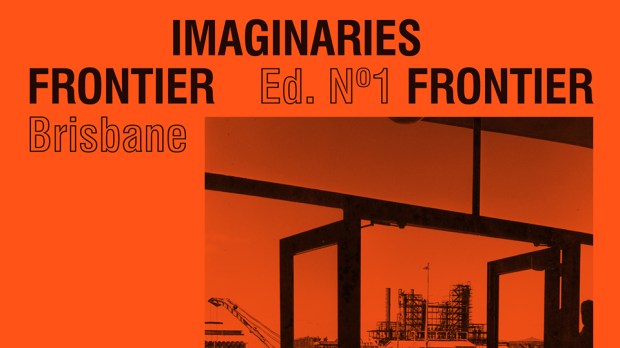
Frontier Imaginaries Poster from QUT/IMA exhibition in Brisbane

Frontier Imaginaries is an exhibition currently being held across two sites in Brisbane: ‘No Longer at Ease‘ in the Institute of Modern Art and ‘The Life of Lines‘ at Queensland University of Technology.

Beth Povinelli is one of the artists featured in ‘The Life of Lines‘  – she is also Franz Boas Professor of Anthropology at Columbia University.

Beth’s research forms a critique of late liberalism – she dubs it an ‘anthropology of the otherwise’ – which I find vital to current debates about Australian identities and our visions of the future, both here and around the world.  At the launch of Frontier Imaginaries, she argued that Australia is on the front lines of a crisis in Western thought, brought about in part by the pressures of climate change and the rise of digital technology.

Originally a philosophy student, Beth’s love of Australian movies led her to visit the country on a grant application in 1984. She eventually found herself working as an anthropologist and advocate for Indigenous communities. As she says, her career has been less about “explaining” Indigenous culture and society to others, more about helping to analyze how late liberal power appears from an Indigenous perspective.

Read more

A Speaky Week

On Tuesday, I’ll be over at the University of Southern Queensland, giving talks and workshops to staff and students across faculties. You can follow them online via this livestreaming link – the fun kicks off at 11am Australian Eastern Standard Time.

Then on Thursday I’m joining the Broadband for the Bush Conference on rural and regional access to digital technology and communications, running a presenterless workshop session on planning for the future. I’ll be drawing on science fiction, Afrofuturism, and comics alongside debates around copyright, government policy, and the presentation of financial data.

You can follow via the hashtag #BushBroadband on social media. I feel like non-Aussies are going to think that’s something far more salacious than it actually is…

On health and well-being

Professor Martin Paul Eve of Birkbeck College, University of London writes today in the Times Higher Education Supplement about suffering a stroke in his twenties. You can read  ‘Coping with Illness’ here.

I’ve been working with medics and healthcare professionals as part of my 2016 creative residency in Queensland, Australia. I use Martin’s story as part of my workshops. It reminds practitioners that healthcare is about people as well as processes, and highlights how culture and access to information shape our experience of health and wellbeing.

When health organisations seek to deliver targeted community interventions, develop inclusive health systems, or improve their relationships with the populations they serve, there are overlaps with my field of creative work and community engagement.

Read more

Beyond Panels

Here’s the ever-thoughtful Justin Hoenke on conference presentations:

We’re thinking about similar things down under…last month, the State Library of Queensland experimented with a Presenterless Workshop format, as part of a wider campaign by science communicator David Robertson, called Beyond Panels.

Read more

Sunday Read: Beyond Secret Cinema

My belated Sunday morning read is this piece from the Guardian on London’s Secret Cinema, which blends movie screenings with theatrical experiences and themed activities:

I’m a big fan of participatory live-action storytelling and I’m fascinated by opportunities to blur the line between fiction and “real” experience, creating events where attendees shape the outcome of a story.

I went to a Secret Cinema event a few years back and was pretty disappointed – the set design and costumes were fancy, but the opportunities to get involved in the storytelling were minimal. I’d gone to see Casablanca and while it was cool to sing La Marseillaise at a bunch of actors in Nazi uniform, the rest of the “immersive experience” consisted of overpriced snacks and a “casino” barely worthy of a student union’s James Bond night. The Guardian piece captures the extent to which Secret Cinema events are now more about taking your money than letting you step into the world of a story.

Read more