Sunday Read: Beyond Secret Cinema

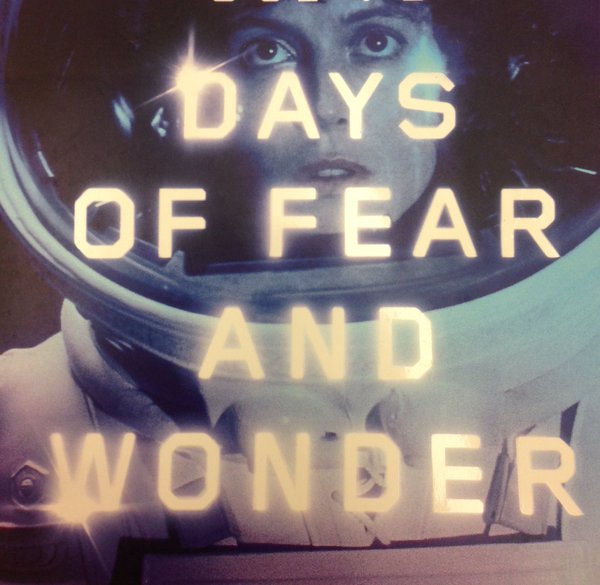
My belated Sunday morning read is this piece from the Guardian on London’s Secret Cinema, which blends movie screenings with theatrical experiences and themed activities:

I’m a big fan of participatory live-action storytelling and I’m fascinated by opportunities to blur the line between fiction and “real” experience, creating events where attendees shape the outcome of a story.

I went to a Secret Cinema event a few years back and was pretty disappointed – the set design and costumes were fancy, but the opportunities to get involved in the storytelling were minimal. I’d gone to see Casablanca and while it was cool to sing La Marseillaise at a bunch of actors in Nazi uniform, the rest of the “immersive experience” consisted of overpriced snacks and a “casino” barely worthy of a student union’s James Bond night. The Guardian piece captures the extent to which Secret Cinema events are now more about taking your money than letting you step into the world of a story.

Read more

Where Do You Find Yourself? Space, Play, and Duty in the Australian Digital Library

Are there still cultural backwaters in the digital age? Three months in to my year-long residency at the State Library of Queensland, I’ve written about Australian libraries, regional engagement, and digital literature for The Writing Platform.

I’m very interested in the vogue for locative literature, where texts are linked to physical spaces through digital or conventional media. But there are questions still to be asked: not just whether we add a virtual layer of story and literature to physical spaces, but who gets to create the content in that virtual layer.

Forest comic for Fun Palace

If writers are having a creative and critical conversation about the world, and in the locative age we are venturing outside of traditional venues, we still need to ask: who are “we” having those conversations with? And how could a simple online comic maker start expanding that circle of storytelling, literary production, and critical discussion?

You can read the full article, ‘Where Do You Find Yourself? Space, Play, and Duty in the Australian Digital Library’, at The Writing Platform.

Future Libraries: Towards a presenterless workshop?

This week I spoke at the Future Libraries two-day event at the State Library of Queensland. It was an opportunity for public librarians from across Australia’s Sunshine State to discuss plans, dreams, and schemes for the coming year.

There’s always a tension at such sessions, though hopefully it’s a productive one. On one hand, people like to be engaged, inspired, and provoked by speakers who they might not otherwise get a chance to hear or question. On the other, Powerpoint preachers don’t always make a lasting change, they don’t necessarily listen to the experience and creativity already in the room, and all too often those voices broadcasting from the stage are drawn from the same pool.

So, at Future Libraries, with just seventy-five minutes in the “naptime slot” straight after lunch, I tried to give Queensland librarians the best of both worlds.

We made comics together, but I also shared stories of the Lambeth library siege and Birmingham’s library cuts alongside the threats faced in Australia. We celebrated how public librarians are at their best under pressure, from Christchurch to Ferguson, but then it was time to get the whole room talking.

So we tried a version of the Presenterless Workshop.

This is an activity I’ve piloted with various groups, including library staff development sessions in London and regional England. Participants are each given one sheet of instructions from a set of five. By following the instructions on their sheet, they form groups which discuss what libraries should and can do from a range of perspectives. Those groups then share their discussion as a presentation or exhibition, and even the ways in which they interpret the instructions can be provocative and productive.

Rebel Rebel

As libraries evolve to meet today’s needs, and transform their own institutional processes and bureaucracy, we so often hear the mantra “Don’t ask permission, beg forgiveness”. Even I’ve said it in presentations, but I now I see that the spirit of the phrase is not quite right.

Although it encourages people to be less hesitant about trying new things, and has a rebellious ring to it, it also forces innovators into the position of the naughty schoolboy, breaking the rules but still ultimately desirous of, and dependent on, the institution’s resources, support, and long-term approval.

Instead, this presenterless workshop encourages participants to consider that organizational rules are more like guidelines to be interpreted than rules to be either obeyed or broken. A lot of the work I do is finding ways to marry up bright ideas and inspiring fun – like zombie sieges or time travel workshops – with the policies, plans, and success measures of big bureaucratic organizations. There’s almost always some wiggle room somewhere for you to justify creative activities, it just takes a little negotiation.

If you want to listen to a library superstar who is not your typical rebel-posing white bloke, I recommend Wellington Libraries’ Adrienne Hannan, a reservist combat medic and children’s librarian who compares library policies to military rules of engagement – not laws to be transgressed, but a framework within which soldiers must make serious practical decisions, under pressure, in a timely way.

Presenterless Workshop Resources

If you fancy running a presenterless staff development workshop in your library, I’ve included the relevant worksheets as free, Creative Commons-licensed PDF files in this blog post. Download them, play with them, give them a go — and let me know how you get on.

Presenterless Workshop Organizer Notes – PDF download

Presenterless Workshop Participant Sheets – PDF download

Electrical updates

There’s been some new entries on Marvellous, Electrical in recent weeks.

Here’s a few highlights:

You can sign up for weekly updates from Curious, Mysterious, Marvellous, Electrical here.

Libraries: the seven-fingered fist?

Last week saw the first of my guest columns for Library as Incubator in the US, following my experiences as Creative in Residence at the State Library of Queensland, Australia.

This first piece explores libraries as gateways to other worlds, showcases the work of Queensland’s Signature Team, and explores the challenges of working with a cultural institution that serves a region three times the size of France.

You can read my guest column over at Library as Incubator.

Rock and Roll Writers’ Festival: Playlist

My playlist is up for Brisbane’s first Rock and Roll Writers Festival.

Growing up at the tail-end of the mixtape generation, compiling songs was a way of connecting with friends and strangers alike, all through high school.

Now Leanne de Souza and her team at the Festival are working with the team at Playlistr to share music selections from Festival contributors and friends.

If you’re not a Spotify user, you can find my mixtape on YouTube, too.

And the one must-listen track is this…sweet video, too.

We The Humanities: Reflections

I just finished a seven-day stint at the rotating Twitter account @wethehumanities, where scholars, researchers, and practitioners from across the arts and humanities get to share their work and thoughts with around four thousand people online.

If the humanities are a creative and critical conversation about what it means to be human, who are “we” having those conversations with?

What opportunities do scholars create for members of the public to have a go at what they do? And to *fall in love* with what they do?

I wrote on these questions, and my experience at the helm of @wethehumanities, for City University London, here.

We The Humanities: Interview with Simon Groth, if:book

This week you can find me over at @wethehumanities, a rotating Twitter account where people working in the humanities get to share ideas, experiences, and stories. I’m using my week to talk about the grey areas between fact and fiction, dream and experience, stories and everyday life – as well as people who cross back and forth over the walls of universities and academic institutions.

Today we’re joined by Simon Groth, a Brisbane-based writer and editor who also leads if:book Australia, exploring the future of literature in the digital age.

Simon is currently completing a doctoral thesis at Queensland University of Technology, which “sits somewhere between creative writing and media studies.” 

He explains:

I’m looking at how digital tools can be (and are being) used to change the relationship between writers and readers. In particular, I’ve been fascinated by the technical innovation of experimental writers from around the 1960s. These writers took radical steps such as removing the binding of books in order to give the reader greater control over the narrative.

Part of what I’m investigating is how contemporary digital tools can bring greater nuance and subtlety to this kind of innovation. It also means I have to write a novel-length work without a predetermined order of chapters, which at some point I’ll be turning over to a small group of ‘play testers’. Basically, it’s been a three-year study into how I like to make things difficult for myself.

Read more