Wild play: fun and freedom in cultural institutions

Choose what you want to do … dance, talk, or be lifted up to where you can see how other people make things work. Sit out over space with a drink and tune in to what’s happening elsewhere in the city. Try starting a riot or beginning a painting – or just lie back and stare at the sky.

– Fun Palace draft design, 1961

It’s been satisfying to watch the message of play spread across museums, libraries, and other public institutions over the last few years.  It’s timely, as the entertainment industry, too, begins to explore participatory and immersive forms of engagement. Events like Fun Palaces remind us that play is a vital element of learning and exploration. Play in cultural spaces, public or private, can promote self-directed learning, creative development, or simply the joy of using your imagination.

Now I’m wondering if play could get even wilder.

I guess structured or programmed play is great, insofar as it reminds people working in museums, galleries, and libraries to offer more than just colouring-in when they provide kids’ activities. But what that programming mustn’t do is mistake itself for schooling. Play belongs to all ages, and institutions should avoid controlling play to such an extent that it just becomes formal education all over again.

Scott Eberle of America’s National Musuem of Play has blogged brilliantly about going beyond structured play, using the example of “riotous” champion skier Bode Miller:

Raised in rough country New Hampshire, homeschooled in a household without electricity or indoor plumbing, he’s at home in the woods alone with his rambling, original thoughts.[…] Miller’s goal, the personal objective that superseded all others, was to pursue speed and fun. Let the medals fall where they may; winning or losing were merely by-products of this unruly pursuit. Usually the strategy worked for him, but wipeouts, too, are quite beside the point for Miller. (“I was having the greatest time making mistakes, crashing,” he once said.) He has instead set out to explore human capability, gravity, and his equipment’s tolerances at the limits of performance—“to ski as fast as the natural universe will allow.”

Skiing on the brink this way, trading control for fun, he plunges downhill “right on the edge of what my skis and the snow will hold up to.” A brilliant French thinker, the play-theorist Roger Caillois, once looked for a name for this special joy, the dizzying pleasure of swings and roller-coasters and stunt-flying and steeplechase and skiing. “Vertigo” came close. But in the end he borrowed a Greek word that fit better: ilinx, “the whirlpool.”

Eberle’s piece resonates well with a blog post written last year by Anna Cutler, director of learning at London’s Tate Gallery. Cutler argues that cultural institutions like theatres, galleries, and I would add libraries, should not “replace or mimic school’s curricular aspirations, since that is, after all, the specialism of schools and the expertise of teachers.”

She goes on to write:

I have yet to meet a teacher who has said that they come to any cultural institution or event to create the same conditions as their classroom. In fact, they are in search of different and more expansive experiences for their students. I suggest that it is the responsibility of cultural institutions to offer ‘more than’ and ‘different from’ what can be achieved in school, to provide experiences and learning opportunities that can only happen outside the classroom and that support what the teachers do by taking a journey beyond the letter of the curriculum.

The wild ride Eberle describes on the ski slopes, the sense that you can have “the greatest time making mistakes, crashing”, can happen in cultural institutions too. Sport, art, and games all offer opportunities to go off the currricular piste, pursuing instead the dizzying pleasure “at the limits of performance.”

Fun Palaces showed how this feeling of playful exploration could flourish in communities of all kinds around the world, using partnerships to extend the reach and capacities of individual institutions. 2013’s zombie siege in Parkes, Australia – a pretty wild ride in itself – was a library event run together with local schools, cops, firefighters, and student volunteers from Charles Sturt University. This chimes nicely with R. David Lankes’ call for public libraries to “unleash” their communities, rather than attempting to be all things to all people.

So – can we trade control for fun in arts and culture? That might be scary: when we acknowledge that everyone has some creative contribution to make in life, we surrender the old privileges of authorship and prestige along with the old constraints. But even when budgets are tight – especially when budgets are tight – we must take opportunities to innovate, whether that’s  in publishing, universities, galleries, or museums.

What would happen if these institutions went off-piste? What lies at the limits of performance?

Beangrowers, Big Brothers, Time Travel, and Play

I’ve got a few blog posts lined up over the coming weeks. I’ve just met a number of deadlines, and the break allows me to turn some of my notes into text fit for human consumption.

Big Brother Timebomb logo

Raiding TV for inspiration

Late last year, I wrote about using action-adventure stories from TV, movies, and comics to inspire new play activities. I’m a geek for old telly: the shows of the past offer great inspiration for today. The technical constraints and different pace of television from fifty years ago means that heroes often faced perils which are easy to mimic in a setting like a library or museum.

There’s no shame in plundering the past, either. Present-day TV producers do it all the time. Robert Thirkell’s excellent book on reality TV, C.O.N.F.L.I.C.T., tells us how Jane Root, an executive producer with a stellar career at Discovery Network and the BBC, drew on her own nostalgia to create compelling new formats:

You know how we came up with I Love The 1980s[?…We rewatched] The Rock and Roll Years. David Mortimer and I got Rock and Roll Years out of the BBC archive because I’d remembered it from when I was a child. A lot of the younger BBC team had never seen it and I showed it to them in my office and said, “What could we do that could bring this show back?” I Love The 1980s, the hit the team went on to create, turned out to be even bigger in America, where it ran on VH1 for years.

Get Real

I’m also a sucker for reality TV, although these days I find I’m usually too busy to keep up with it. Big Brother, with its cast of housemates trying to complete challenges, avoid eviction, and not go bonkers over ten weeks, was always one of my student favourites. I still remember characters like the drama queen Makosi from BB6 or the kilted rebel Sandy from BB3, a personal shopper who managed to escape from the house over a wall.

People get sniffy about reality TV, but it’s really no different to drama or comedy: you create a format which offers exciting situations, and then set it loose like a shark in the sea, moving forward, consuming new contestants, new scenarios. Great formats like Doctor Who, Family Feud (Family Fortunes in the UK), or Big Brother, run and run.

What’s more, reality puts people who aren’t entertainment professionals in front of the camera. For all that we might deride reality show participants as wannabes, and for all that they’re at the mercy of production teams, those contestants are also an example of the barrier breaking down between audiences and artists.

Bean Brother

When I was an infant school teacher, I worked with a class of thirty kids, most of whom didn’t speak English at home. One term, we had to grow a bean from a seed on a wad of damp cotton wool in a plastic cup. I remember doing the same when I was a pupil. It’s one of those rites of passage every British kid goes through, the foundation of natural science: infants starting to practice taking measurements and observing living things carefully.

I wanted my class’ bean experiment to be lively and fun, so we reimagined our science project as “Bean Brother”. Each day, we’d play Paul Oakenfold’s iconic Big Brother theme tune before bringing our plants out before the class.

My long-suffering teaching assistant would put on a Geordie accent to mimic Marcus Bentley, the famed narrator of UK Big Brother. Our kids would use a video camera to report on their bean’s growth in a “televised update from the Bean Brother house” before drawing, writing observations, and completing their other science tasks. They were engaging with elements of the pop culture that surrounded us, doing serious learning about science, using audiovisual equipment to record their own stories, and best of all, they were playing while they did it. Bean Brother made the daily routine exciting, incorporated modern media both as something to consume and create…and each anonymous bean took on its own life as a contestant for our class to cheer on.

This year’s UK Big Brother is called “Timebomb.” You can see the trailer here:

I’m excited, looking at the iconography lifted from Doctor Who, steampunk, and the Transformers movies. Earlier this year, Celebrity Big Brother drew on the imagery of dark fairytales, but this new series is even closer to my heart. Russell T. Davies’ superlative run on Who already featured a Big Brother episode and now I’ve started to think of the Big Brother house as a TARDIS control room.

I’m curious to see how the Big Brother production team apply the concept of “time distortion” to a reality show. It’s harder to mess with causality in a live production than a scripted, pre-recorded series. Whatever they get up to, and however well it works, I think that anyone who is interested in play, cultural programming, and community outreach should take a good look at what Big Brother producers Endemol are up to this year.

Read more about the new UK Big Brother at Digital Spy, and to see what a time travel themed play activity in a public institution might look like, go check out Auckland’s citywide 2013 heritage programme, TimeQuest.

#Citylis talk with library students at City University

I had a great visit to City University in London today, talking with students on the Master’s course #citylis, convened by Ernesto Priego.

Our conversation covered everything from the art history of Aby Warburg to civil unrest in Ferguson, Missouri, tabletop gaming, and, of course, the inevitable zombie battles.

Here’s a PDF download of the notes from my talk on comics, libraries, and community, “Words and Pictures, Space and Play.”

Also speaking to the students was James Baker, curator of Digital Research at the British Library. His presentation on “Future Libraries: Considering Publishing” can be viewed here.

I often say that a neighbourhood library is like the TARDIS on your streetcorner – an ordinary box which can take you anywhere in human knowledge or imagination. If that’s true, watching James speak about the British Library’s digital innovations was like watching Doctor Who dance around the TARDIS control panel, flicking switches and levers with gleeful abandon.

You can find more of James’ work via his Twitter account @j_w_baker and his website, Cradled in Caricature.

To see more of what City University’s library students get up to, check out #citylis and #inm380 on Twitter.

Josie Long on BBC Artsnight: The importance of art for suburban communities

Writer and comedian Josie Long has made a short film for the BBC which neatly captures the reasons why arts venues and programmes are so important to suburban communities, those which are seen as “not pretty enough to be in Kent, and not exciting enough to be in London.”

The argument resonates with my work last year on Fun Palaces and the ongoing debate around arts access in Australia.

Josie Long on Artsnight

Check out Josie Long’s report from last Friday’s edition of Artsnight.

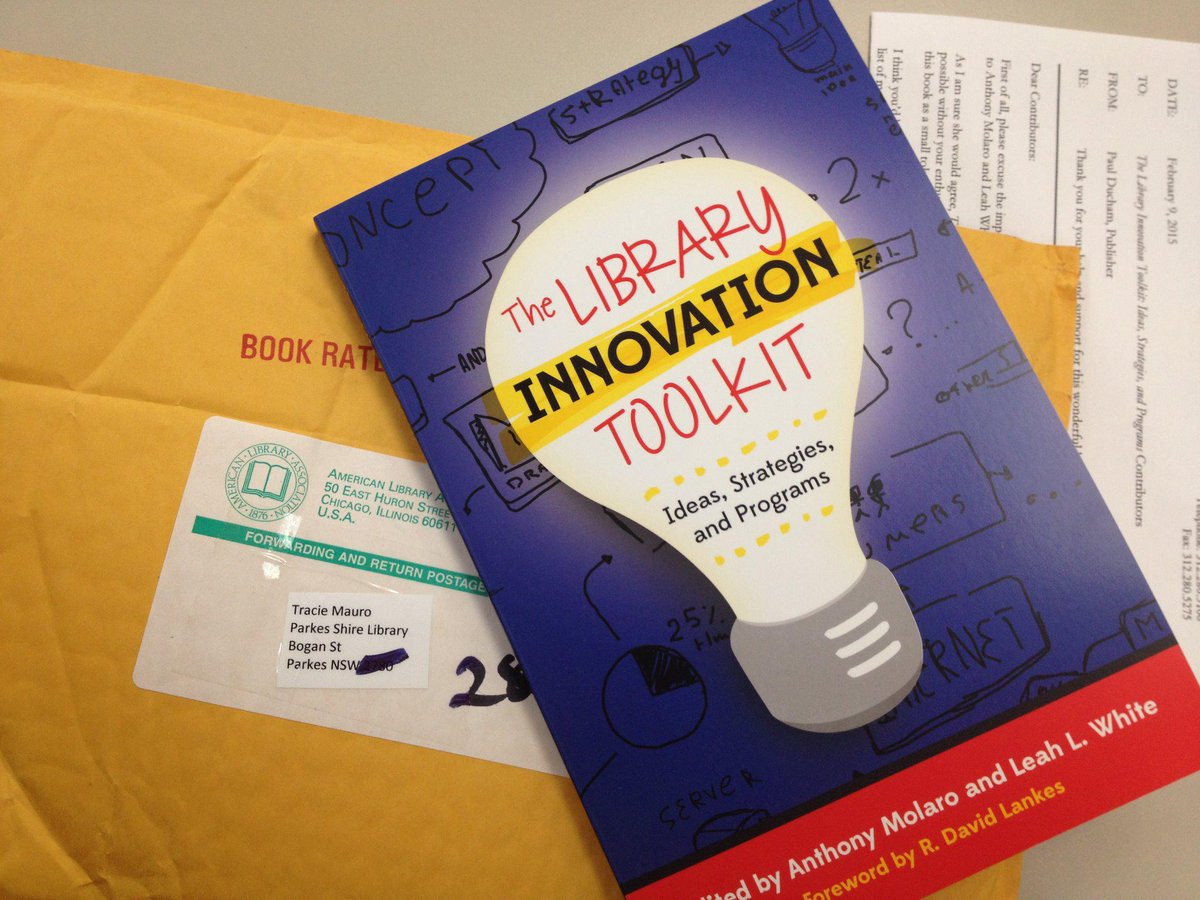
The Library Innovation Toolkit, Out Now

The Library Innovation Toolkit

The Library Innovation Toolkit is out today from ALA Editions!

The book “encourages readers to take big risks, ask deeper questions, strive for better service, and dream bigger ideas”, with practical examples and suggestions for 21st century library services.

I wrote “Monsters, Rockets, and Baby Racers”, the chapter on working with children and young people, together with Tracie Mauro of Australia’s Parkes Library.

Readers will get inspiration and case studies from the team which picked up a 2014 national award for innovation in youth services.

If you fancy unleashing the power of play and immersive storytelling in your museum, gallery, school, or library, the book’s worth checking out. You can buy it from ALA Editions at their website.

Team Waitangi: Teaching against the grain in West London

Team Waitangi, a group of West London teachers, dress up as the cast of Cinderella

Ngā mihi o te Kirihimete, West London

Team Waitangi got its name five years ago, just before Christmas. I was teaching what the Brits call infants – 4 to 7 years old, specifically Year 1 or 1st Grade – in a deprived suburban corner of West London. Our staff were pretty diverse, with teachers from New Zealand, South Africa, and Australia. The school served a diverse community, too: most kids were from families that didn’t speak English at home, new migrants who had come to us from Somalia, Iraq, Sri Lanka. Celebrations like Ramadan and Diwali were more important to our kids than, say, Easter. Even more than usual, this meant I did as much listening as talking, as much learning as teaching.

Read more

Guest Post: Santhoshi Chander, “A Love Letter to Parkes”

This slideshow requires JavaScript.

I was trying to find the words to look back on an eventful season with Parkes Shire Libraries, culminating in this year’s Australian national award for innovation in library youth services. I could have talked about how the country stereotypes have yielded to reveal a town of tough and funny and mad and passionate people. I could have recounted how all the amazing things we’ve done were really about a community that was ready for change, and a bunch of smart librarians who recognised that fact, and who drafted in an outsider to provoke and support and sustain that change.

Instead, I wanted the last word to come from someone else. One of our local writers, but one who – like me – came to Parkes a stranger and a foreigner. 

Santhoshi Chander of the town writers’ group Author-rised kindly allowed me to share her thoughts about the experience of finding a new home out in the Aussie regions. “Ex-city-slicker” San divides her time between Sydney and Parkes.

A Country Fling, or
A Love Letter to Parkes

It seemed from the beginning the stakes were against us. I’m not claiming our story has Romeo and Juliet status. But in our own way, we started as star crossed lovers.

Read more

Reader-in-Residence article in SCAN Magazine

Parkes High School’s teacher librarian Tracy Dawson has an article in the latest SCAN magazine about the Reader-in-Residence role which I held in Parkes across late 2013 and early 2014.

The role was designed to link the school and wider community in a celebration of storytelling, literacy, and culture in all its forms. Events included teen publishing workshops, our biggest ever zombie roleplay, urban myth writing, and the inaugural Central West Comics Fest, which will be returning in 2015. I also mentored high school students, led sessions for the Parkes writers’ group, and worked with the school’s special needs unit.

Tracy gives a teacher’s perspective on how trying new things, pushing boundaries, and reaching out to a wider community also yielded great benefits to students at the high school. You can also read her guest posts on this site about Auckland’s XXUnmasked project and the work of a teacher librarian.

SCAN magazine is a refereed journal published by the New South Wales Department of Education, focussed “on the interaction between information in a digital age and effective student learning.” You have to subscribe for recent issues, but the archive is publicly available – I’ll let readers know when the current issue moves into the free archive.

“You ate my battleship???” – Pub librarianship and tabletop games

Last night, the team at Parkes Library headed to the Railway Hotel for an evening of drinks, dining, and tabletop games.

After chatting with ABC Central West about the project, we invited residents from across the region to drop in and try their hand at some of the games we’ve been developing this year. People could take on the challenge of the Tabletop Superheroes adventure we devised for Fun Palaces 2014:

Library users Jake and Kellie brought in their own home-made game for people to try – it was beautifully made and fiendishly difficult.

There was also a new game, Battle Pizzas, which set pub patrons against one another in a game of wits. The prize? Dinner itself.

You can read more about Battle Pizzas, and download instructions, at the Parkes Dog-Eared website. You can also download the Tabletop Superheroes adventure, which can be remixed under a Creative Commons licence. We played the games in the pub but they’re designed for all ages; we think they’d work just as well in schools, libraries, or the comfort of your own home. Give them a go. Have fun!

Debbie Gould at Parkes Fun Palace: Making Games with the Currajong Disability Group

Debbie Gould is one of the librarians I work with in Parkes, New South Wales. She creates and delivers library programmes for the Currajong Disability Group. Currajong clients are people who require some degree of care. They are diverse in ability, with some who are nonverbal, some needing 24/7 care, and others who have learning disabilities. Debbie created a game for Parkes’ Fun Palace last month and was then able to share it with her clients in the group on one of their weekly visits.

Here’s Debbie talking about her work with the Currajong group, and how she brings Parkes’ philosophy of fun and open-ended learning to library users with disabilities.

This image is licensed by Parkes Shire Library under a CC 4.0 BY-NC-ND licence http://creativecommons.org/licenses/by-nc-nd/4.0/

At Parkes Library, we believe that libraries are about so much more than books and shelves. Our job is helping our whole community to learn, explore, and have fun on their own terms.

I started working with the Currajong Disability group at the start of 2012. I’ve been doing it for almost three years now, but the clients change and so I’m always adapting my programme to suit them.

In the early days, it was trial and error. I wasn’t concerned about not being able to relate to the clients, but I was concerned that I wouldn’t be able to provide a programme that worked for everyone, all the time. I wanted all the clients to enjoy their library time. As the weeks passed, I could see that the group did enjoy themselves. Their needs were met even though I was experimenting as I went along, finding out what was going to work best. That was part of the experience!

Building a relationship with the clients took time. It was important to watch and listen as well as present to the group. Clients have different ability levels, and my sessions had to take that into consideration.

In the group, we explore books and stories as well as practical and playful activities. I have found that the world of my clients is very factual. The world of fiction relies on imagination and a sense of “let’s pretend” which can be difficult for my clients. Concepts such as animal characters in books taking on human characteristics aren’t always understood. Quite often clients don’t get the punch line at the end of a story because it isn’t a “real” experience.

Clients work better with non-fiction and real life activities, where as many of the senses can be engaged as possible. Simple science experiments and activities are often popular. Each session I try to incorporate sight, hearing, touch, smell. Taste is explored sometimes but I have to be mindful that not all clients are able to take food by mouth and some have special dietary needs.

This slideshow requires JavaScript.

When I designed a game for Parkes’ Fun Palace weekend, I chose to make a maze based on old sideshow games. Players had to drop a ping-pong ball into a slot and try to land on a high score. Age and ability was not a hindrance to playing the game I created. I saw the joy people had playing it at the Fun Palace, and knew that my clients would have a good time with it.

Watching the Currajong group play my game was interesting. They all interacted with it in different ways, but they were all excited to see the end result. They loved the mystery of just where the ball would land. Each of them played their own version of the game – even if it wasn’t quite what I’d intended, they still achieved the goal of landing a score with the ping pong ball.

Relationships are key to making this group work. Without a solid relationship between clients, carers, and the library, our sessions would not be successful. There is no way a programme could run and meet the goals set if the presenter was not mindful of the clients and their needs.

All relationships take time to develop; they need genuine interest, concern, and respect. A little bit of yourself has to be given in each session you present. If it isn’t, then you aren’t presenting effectively. Working with disabled adults is a privilege and it has been exciting to see each client share a bit of their personality in the sessions. The joy and reward from the sessions is priceless and being able to expand the world the clients live in is amazing.

This is a condensed version of a blog post which originally appeared at Parkes’ site, Dog Eared.