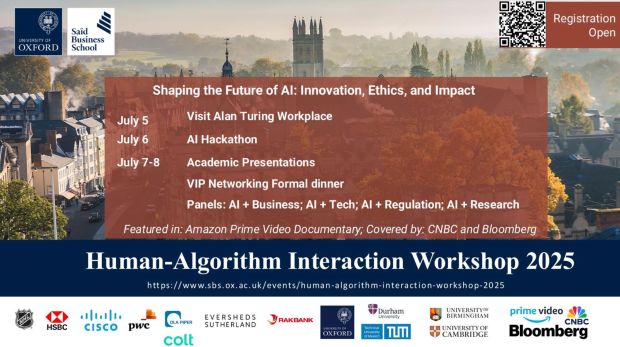
Oxford Human-Algorithm Interaction Workshop 2025

I’m pleased to be presenting at the University of Oxford’s Human-Algorithm Interaction Workshop 2025, on “Governing the futures you didn’t see coming: artificial intelligence scenarios“.

Do join us in Oxford, 5-8 July, for an interdisciplinary event delving into the complex and evolving relationship between humans and algorithms.

The annual workshop is a gathering of industry leaders, AI pioneers, and leading researchers who will explore the evolving role of AI in business, governance, and society. This year’s theme is “Shaping the future of AI: innovation, ethics and impact.”

Find out more and register here.

Scripturient: To Dream Like A Human

The world could always be otherwise than it is. Sometimes fate is only a failure of imagination. The trajectory of automation is not only uncertain, it is unwritten. The fundamental question is less about technical capacity than ethics, authority, and accountability: Who will create the future – and with what ends in mind?

In the latest instalment of ‘Scripturient’, my quarterly column for Information Professional magazine, I draw together comments from a few different thinkers on automation and art.

You can read ‘To Dream Like A Human’ here.

Blink and You’ll Miss It: Surveillance, Society, Foresight, AI

“How can we use events which haven’t happened yet to help us understand surveillance and society?”

Over at the blog Blink on Medium, I have a short piece with colleagues Carissa Véliz, Malka Older, and Annina Lux, reflecting on how to think critically about automation and surveillance in a season “swarming with futures”.

The post ties in to our recent article for Surveillance & Society, “The Art of Strategic Conversation: Surveillance, AI, and the IMAJINE Scenarios“.

“An app is not going to solve our democracy; it’s something we have to solve ourselves.”

In the new issue of the journal Surveillance & Society, Oxford’s Carissa Véliz, sci-fi writer and aid worker Malka Older, and Capgemini Invent’s Annina Lux join me to talk about how future scenarios can inform discussion, debate, and decision-making about the relationship between artificial intelligence and surveillance.

Read “The Art of Strategic Conversation: Surveillance, AI, and the IMAJINE Scenarios” here.

Scripturient: AI and the future of intellectual property

The latest edition of Scripturient, my column for Information Professional magazine, features Alex Roberts of IP Australia, the government body responsible for administering intellectual property (IP) law in Australia.

As director of the agency’s IPAVentures unit, Alex leads a team dedicated to exploring what might be needed for the IP rights system of the future. They use foresight and innovation tools to consider how we regulate “creations of the mind”: everything from literary and artistic works to trademarks, brand names, and protected product designs.

Recently, IPAventures developed a set of scenarios exploring the impact of generative AI on intellectual property – ranging from ever more lengthy and elaborate patent specifications to accelerated ideations by inventors and even changes to the regulation of plant breeding.

You can read more about the scenarios, and IPAVentures’ work, in our interview from the latest issue of Information Professional magazine.