Guest post: XXUnmasked at Auckland Libraries

I’m pleased to announce that Auckland Libraries’ XXUnmasked media literacy project for teenage girls has just won an award for community outreach. This week on the blog, Tracy Dawson of Parkes High School Library in Australia reports on the project led by Ali Coomber of Auckland Libraries and Dr Pani Farvid of Auckland University of Technology.

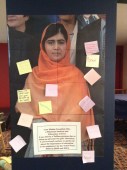
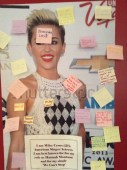
XXUnmasked – double the power, not the standards!

Something that always amazes me is when young girls say “I’m not a feminist.” When any woman says it, actually. I remember several years ago, in my previous guise as an English teacher, talking to a group of top senior English students studying what was then called 3 Unit English in New South Wales. We were discussing the brilliant Margaret Atwood’s The Handmaid’s Tale, and despite that horrific and unsettling story of the loss of female identity, voice, independence, none could see the value of feminism.

Now when feminism is often seen as a dirty word at the same time that all-pervading media images of women are more blatantly misogynistic than ever, how do we help our young women avoid being active participants, let alone passive observers, in their own diminution? Read more

Easter holidays!

It’s holiday time for me…As I pack up my bags in Parkes, New South Wales, I’m almost at the end of my stint in the southern hemisphere. Last week, Robert Virtue of the Australian Broadcasting Corporation profiled me and my work in a short report on radio and online.

I’ve got a couple of new projects in the pipeline, but for now I wish you all a happy Easter.

I’m back on the road. See you after the break!

Parkes Radio Telescope - "The Dish"
Parkes Radio Telescope – “The Dish”

Book publishing workshops for your library

This slideshow requires JavaScript.

Last year, Parkes Shire ran a series of one-day publishing workshops for local teens. Our local libraries, high school, and TAFE joined forces to offer teens a game-based look at the business of selling books. This write-up lets you see what we did and run your own version.

Why publishing workshops?

Publishing is changing fast in the 21st century and people aren’t always clued in on how writers get their words out to readers. We wanted local teens to think about the business side of publication. What are the challenges of acquiring books for sale? How do publishers market their choices to the public in an age of social media? We wanted our event to be locally devised but relevant to the global publishing industry.

What did we do?

Read more

Creation/Curation: Making Urban Myths in the Library

This week, screenwriter and critic Martyn Pedler joined us in Parkes for activities based on his 2011 movie EXIT.

EXIT follows a group of people who have come to believe that reality is a maze, thousands of years old. Human beings have lived in the maze for so long that some have settled down, had families, forgotten the impulse to escape. But the fabled exit door is still out there, for those who remember.

The Parkes team have already made youth activities featuring zombies, time travel, and kaiju. We wanted to build on this and offer something a little more cerebral. The premise of Martyn’s movie offers the perfect springboard for a range of games and creative play.

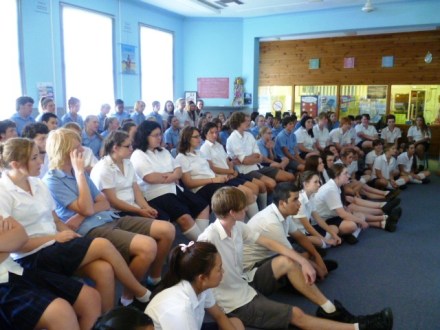
Audience for Martyn Pedler's talk

Martyn spent Tuesday in the library at Parkes High School, where he spoke about his career to over 200 students across two 90-minute sessions. They heard him explain how EXIT began with his 2008 exhibition Melbourne and Other Myths.

Martyn had become bored with the city he’d lived in for many years and was trying to reignite his love for Melbourne by creating new urban legends. For example, Houdini had visited in 1910. He dived into one of the city’s rivers. What, Martyn asked, if some of his unique magic had spilled into the water and infected Melbourne for generations to come?

The Old City Treasury Museum transformed these fantasies into a three-month exhibition. Melbourne and Other Myths presented Martyn’s words alongside found objects. In the exhibition, the stories became secret histories. And one of these myths, about a cult who believe the city is a maze they must escape, inspired EXIT.

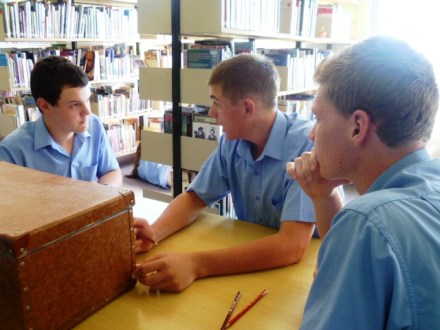
In our first EXIT activity, Parkes teens created their own myths for an exhibition of weird and wonderful objects. You can find the instructions for ‘Curating Modern Myths’ below.

This slideshow requires JavaScript.

Curating Modern Myths

You’ll need:

  • A selection of intriguing objects (at least 1 for every 4 participants)
  • 1 file card for every 4 participants
  • Rough paper and pencils
  • 1 coloured token for each participant
  • A prize for the winning group

Instructions:

1. Form a group of 3-4.

2. Choose an object from the collection.

3. Have each person in your group tell a story about the object. It can be as weird or as magical or as gruesome as you wish…

4. Choose one story from your group or combine your stories to create a single myth.

5. Write the main ideas from your myth on paper.

6. Collect a file card. You’ll use this to label your object in the exhibition.

7. Write a description of your object and your urban myth on the card.

8. Nominate a curator of your object, who will stay with it and explain its story to others.

9. Other members of group collect a token and walk around the exhibition, talking to the other groups’ curators.

10. Give the token to the curator of your favourite exhibit.

11. Each group’s curator will record all the tokens for their exhibit on the scoreboard (we used a whiteboard).

12. The urban myth with the most votes will win a PRIZE!

Over the coming school year, Parkes students will continue to create activites based on EXIT. Staff and students will make and play games based on the themes of mapping, puzzles, escape, and a world beyond the everyday – and you’ll find those games outside of the classroom too, on the school campus and even on the streets of the town.

My personal favourite from Tuesday’s activity was the “Cold War atomic briefcase” whose dual locks had to be simultaneously released to prevent a detonation.

Atomic briefcase myths

I think the students who came up with that need to watch Kiss Me Deadly before too long…

VALA Remixed: Ten Magic Words for Australasian Libraries and their Friends, 2014-2016

Last week I gave a keynote at VALA in Melbourne. It’s a biennial conference for people who work in galleries, museums, and libraries. The text below builds on key ideas from my speech – you can see a full video at the VALA website.

TARDIS on the Powell Estate, graffiti;ed
Think of the public library as the TARDIS on your streetcorner…a local gateway to human knowledge and dreams

Read more

Radio, radio: Australian Broadcasting Corporation coverage of Central West Comics Fest

The final preparations are being made for the first Central West Comics Fest this weekend, bringing together retailers, comics creators, and fans from across New South Wales to celebrate the art of graphic storytelling.

You can hear an interview with me and Parkes branch librarian Tracie Mauro on the ABC website by clicking on this link (mp3 audio). You can also read more about the festival on the ABC website.

If you live in the Central West and love comics, we look forward to seeing you on Saturday!

Information for the 2014 Central West Comics Fest

Central West Comics Fest, VALA, Parkes Writers’ Group, Sci-Fi and Squeam

Aaaand we’re……back from the long summer holidays in the sweltering Aussie heat! And straight into the whirlwind of adventure.

Saturday, February 15th 2014 is a historic date for comics fans of all ages from across the Central West region of New South Wales – marking the first comics festival for this part of rural Australia.

Australian comics creator Pat Grant, author of the acclaimed meditation on youth, migration, and coastal identity Blue, will be offering workshops to adults and older teens alongside Marcelo Baez, who has drawn for everyone from Marvel to Microsoft, National Geographic to GQ Magazine, and will be schooling us in the ways of comic-book storytelling. In addition, the lovely folk at Sydney’s Kings Comics are venturing out of the CBD to offer their wares to people from across the region – a chance to peruse and purchase the latest comics, merch, and memorabilia without making the epic voyage all the way to Sydney.

More information can be found on the Central West Comics Fest poster:

Information for the 2014 Central West Comics Fest

In related news, I was recently interviewed for Melbournian radio station Joy FM’s Sci-Fi and Squeam podcast, talking about pop culture, libraries, and, inevitably, zombies, with the smart and suave Emmet O’Cuana – you can find my segment on their podcast, from 26:50 on the Joy FM website.

There were also some kind words for Parkes Writers’ Group from 2013 Banjo Patterson Poetry Award winner Jim Cassidy (although I’m not sure how I feel about being compared to Andrew Flintoff!) – you can read them at the Parkes Champion Post website here and see the kind of strange, all-ages, continent-hopping, Barbra Streisand-themed activities we get up to at the group here.

Finally, next week sees my keynote speech to the biennial Australasian culture-and-technology conference VALA – expect Doctor Who references, current affairs, the history of librarianship, and musings on hipsterity alongside the usual celebration and championing of public libraries.

<vworp vworp!>

A season of adventure: September-November 2013 roundup

The robot warriors assemble on the eve of battle
The robot warriors from Parkes’ BIG BOX BATTLE assemble on the eve of conflict!

Regular readers of this blog will be aware that it’s been an intense season over here in Australia, creating new programmes, training librarians and writers in the arcane arts of roleplay and immersive storytelling, and even taking up cudgels on behalf of libraries everywhere.

I just finished giving a talk to librarians of the Australian Library and Information Association in Queensland – you can hear a short pre-recorded version of my presentation at Soundcloud.

This talk is the culmination of a season advocating for libraries to challenge their own boundaries and reach out in new ways, to new communities and new partners.

Of course, in 2013, every speaker at every library conference is preaching a gospel of change, innovation, and transformation – those are the buzzwords of the hour – but I’ve made the effort to link these concepts to practical, affordable, and unexpected examples – from comic book dice games in the Philippines to day-long zombie sieges and Godzilla-versus-robot battles for schoolkids in Australia, citywide time travel storylines in New Zealand, interactive storytelling for writers in Sydney, and – perhaps scariest of all – bringing Barbra Streisand songs into a rural writers’ group.

It has also involved pushing back against voices in the arts who sideline local libraries as venues for all forms of culture and knowledge – see the recent debate about e-books and community outreach for more on that. Serving marginal communities is one of the things librarians do best, and it is vital that the profession advocates for itself in this time of dramatic change.

Librarians and supporters of the local library must remember that libraries are under threat, especially from people who equate them with shelfy places good for little more than storing books. In the UK, public library visits have continued to decline, in a context of branch closures and volunteer-run libraries replacing trained information professionals. In New Zealand, proposed changes to the Local Government Act jeopardise funding for community library developments. In the USA, the EveryLibrary campaign has highlighted the challenges faced by Californian libraries seeking funding, and the mind-boggling story of the Louisiana election in which a parish councillor is seeking to trade a library for a jail, disparaging his librarians for serving “Mexicans, junkies, and hippies“!

It’s never been more important for libraries to demonstrate, on a practical, grassroots level, their relevance to every member of the community. I’m pleased that library organisations and senior managers are addressing questions of branding and strategy, but it’s also vital that we make a difference on the front line, in grassroots settings and customer-facing roles.

A great essay by Adrienne Hannan of Wellington City Libraries in New Zealand – probably the single best piece about libraries I’ve read this year – sets out how librarians of all ranks should act strategically, working with integrity and immediacy as a fighting force on behalf of the forces of culture, literacy and knowledge. Read ‘The Strategic Librarian‘ here…and prepare for battle.

Popcorn? Connor Tomas O’Brien and Chris Cormack on the battle for libraries’ future

Find an update to this blog debate at Popcorn Complacency: Supporting Readers and Writers at Australia’s Margins, on this site.

Today on the blog I’m joined by writer, web developer, and Australian creative-man-about-town Connor Tomas O’Brien plus Kiwi open source advocate (and fellow developer) Chris Cormack of Koha.

Connor is the director of the EWF Digital Writers’ Festival. He came to my attention after a Twitter conversation which led to his article “A very quiet battle” for the journal Kill Your Darlings. In it, he addressed sci-fi author Ursula Le Guin’s argument that publishers are deliberately making it untenable for public libraries to loan e-books to their patrons.
Connor Tomas O'Brien at Kill Your Darlings

“That’s probably true, and actually not very surprising,” Connor replied, suggesting that “ebooks and public libraries fundamentally just don’t mix”:

After all, if we accept that one of the core roles of the public library system is to make work freely available, and to make that work as convenient as possible to access… well, it’s already extremely easy to acquire ebooks freely and easily online without paying a cent. If we ignore the copyright implications, the torrenting website The Pirate Bay is, in a sense, like a modern day Library of Alexandria […D]igital lending systems are so complex, restrictive, and counterintuitive that it’s far more convenient for somebody with a limited income to pirate an ebook than rent it from their public library. The Pirate Bay, though illicit, offers a superior system of unrestricted free digital access to written work than any public library in existence. (For reference, here’s a breakdown of a typical library’s ebook checkout restrictions).

It’s hard to see things improving. Public libraries were established to facilitate the distribution of physical objects, not digital files. The conceptual framework for lending – involving one patron visiting a physical space, removing a book from the collection for a limited period, then returning it for others to enjoy – breaks down when it comes to ebooks, which can be accessed anywhere and endlessly duplicated.

Connor acknowledged that “The public library […] is nowhere near obsolete. In some cases, it’s more important than ever”, but without giving examples of what he expected the library to do in this brave new world. And when he signed off the article like this:

For now, there’s not much to do, really, but grab the popcorn and sit back and watch as publishers and librarians battle it out (very, very quietly, of course).

Well, of course this got my dander up. I was minded of Edward Burke’s “All that is necessary for the triumph of Evil is that good men do nothing.” If people complacently munch popcorn while public libraries ail and the smallest, most disadvantaged communities lose their free point of access to human knowledge and culture, they’re actually helping a deeper slide into inequality across the nation.

So I got in touch with Connor and asked him to talk through his ideas about the future of public libraries – and to bolster my limited technical knowledge, I talked also with Chris Cormack of Koha, an open-source software developer who spoke at this year’s Auckland Libraries Youth Hui. I won’t deny I’ve got a soft spot for Chris ever since I found out he arranged for the Māori hero Maui to attend his son’s birthday party – the kind of parenting that chimes so well with the spirit of playful learning.

The following interview comes from stitching together e-mail discussions with Connor and Chris. Connor ran out of time because of his work with the Digital Writers’ Festival, but I hope interested readers will be able to pursue the issue further online – you can find Connor online as @mrconnorobrien and Chris as @ranginui.

After reading Connor’s article, I asked him: “Aren’t the systems around e-book lending only so complex because publishers are trying to enforce unenforceable, outdated business systems? It’s so easy to publish an ebook now: aren’t publishers trying to create an artificial scarcity, because the traditional business model was based on scarcity of the physical text? I’ve heard it argued that libraries should directly value and reward authors for the work that they do, rather than the distributors who might be increasingly irrelevant. Rather than the problem being libraries, isn’t the problem a publishing business model which places intrinsic value not on the work, but on its transmission?”

Read more

Finding Library Futures, 3: Time Travel at the Speed of Pop Culture

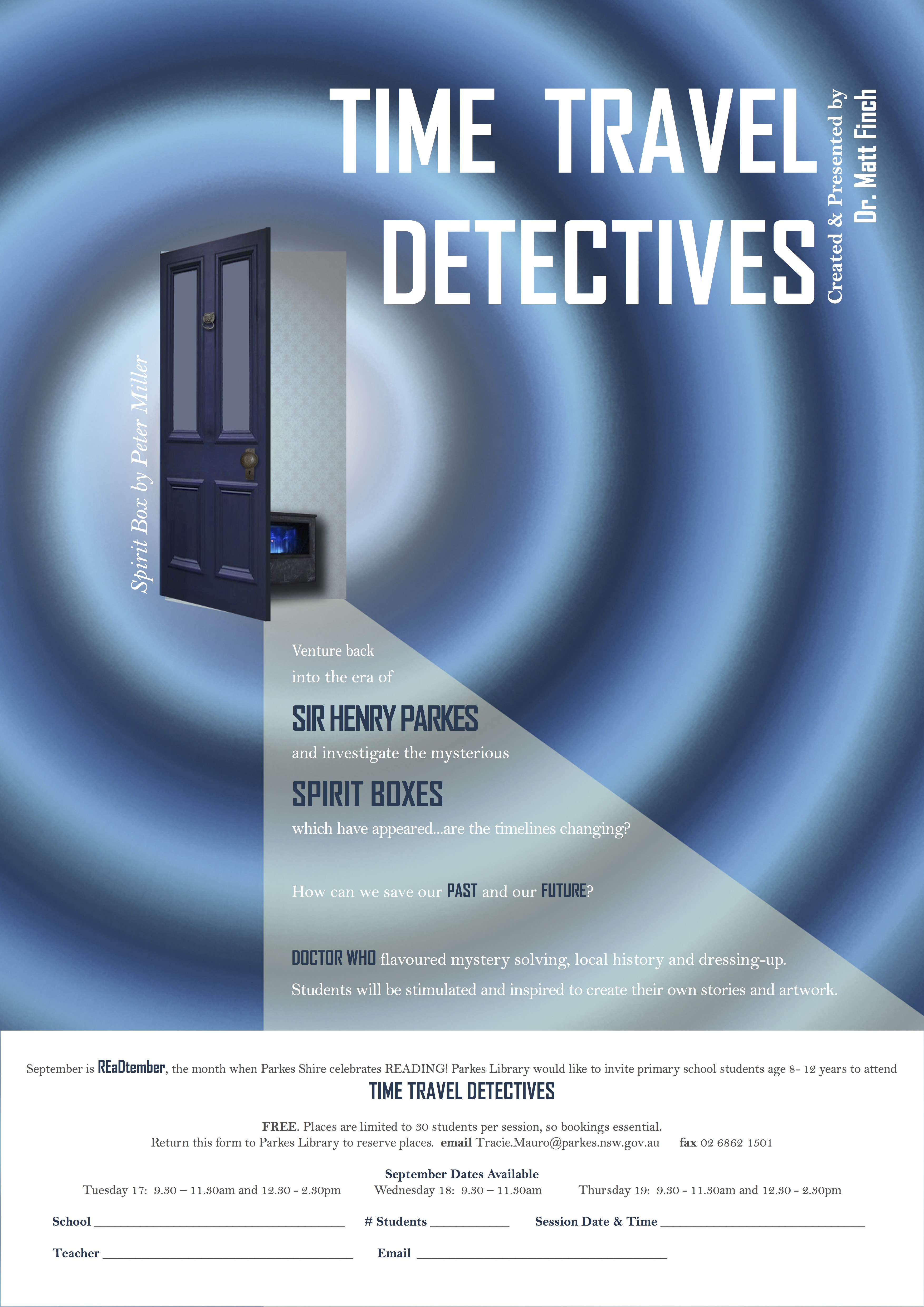
This article looks at Time Travel Detectives, my recent youth activity for Parkes Library in New South Wales. For more on the concept of storylining a public library system’s youth offerings, see TimeQuest – A Scientific Romance for Libraries.

Poster from Parkes Library's Time Travel Detectives event with Matt Finch

Let’s start with science. Australia’s new government might have decided there’s no need for a dedicated science minister, but scientific research is not going to simply stop in Australia. We need to encourage children and young people to develop that sense of wonder which impels scientific research around the world.

I’m currently based in Parkes, New South Wales. It’s a quiet rural town, but one which played a vital part in putting a man on the moon. Its radio telescope, celebrated in the movie The Dish, helped Neil Armstrong to make that giant leap back in 1969.

Invited to make school holiday activities for the September vacations in Parkes, I wanted to find something which respected the town’s history and scientific traditions, but also offered an adventure that looked forward as well as back.

My work is based on storytelling and immersive play. In creating a science-themed activity, I don’t seek to duplicate the work of science educators, but rather inspire and intrigue audiences with an adventure that would get them thinking about the scientific method and the practice of disciplined observation.

Spirit Box
Spirit Box

Read more