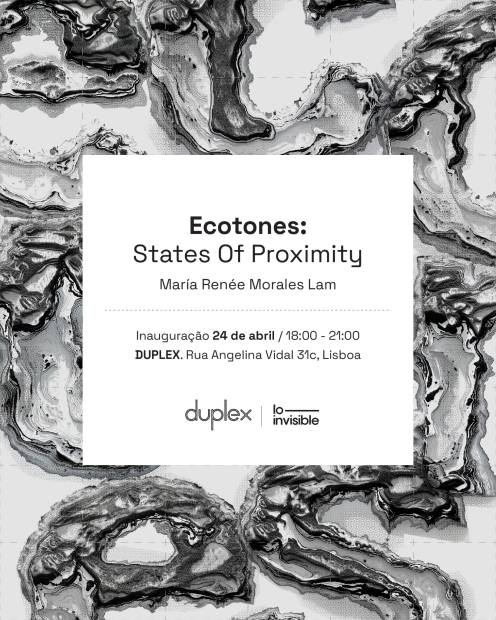
I’m pleased to have written the accompanying notes for the upcoming exhibition Ecotones: States of Proximity, by the glass artist María Renée Morales Lam.
María Renée Morales Lam’s work has long concerned itself with unseen forces and past dynamics that make themselves visible and palpable in moments of encounter and contact. The concept of the ecotone, which lends its name to this exhibition, describes regions of transition between ecological communities – including tidal areas, estuaries, and the riparian zones which mark the edges of rivers, streams, and lakes against the land. In each of these places, materials – and life itself – may flow and exchange in valuable ways.
Here, we are invited to the meeting point of the everyday world and an artspace in which Morales Lam’s principal medium, glass, toys with our perceptions of materiality and our understanding of the properties of light.
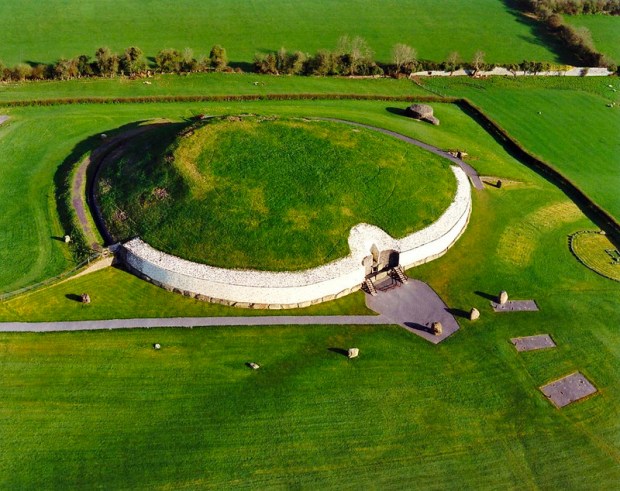
The prehistoric Newgrange mound, one of the world’s oldest extant funerary monuments, by Flickr user Ron Cogswell – CC BY 2.0
Emerging capabilities in artificial intelligence create the possibility of new relationships between the living and the dead.
After physical decease, what digital entities might live on in our stead? What agency will they have? How will the underlying technologies be developed, deployed, and managed? How will identity be authenticated?
What will be the impact on how individuals, families, communities, and societies approach the end of life, its associated rituals, and the ways in which we remember those who are gone?
Our team will use scenario planning to explore these questions and more, envisaging different future contexts for the relationship between AI and the afterlife, encompassing all aspects of memorial culture, funerary practices, and posthumous existence in the digital world.
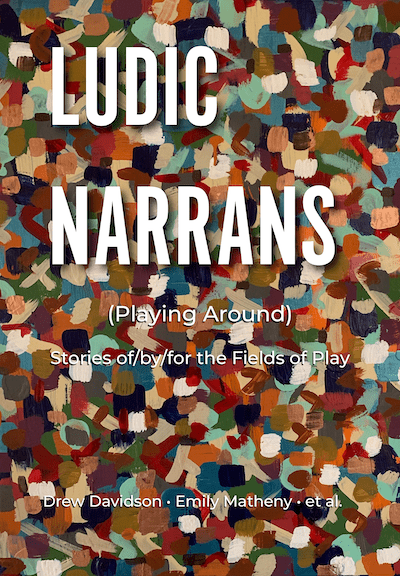
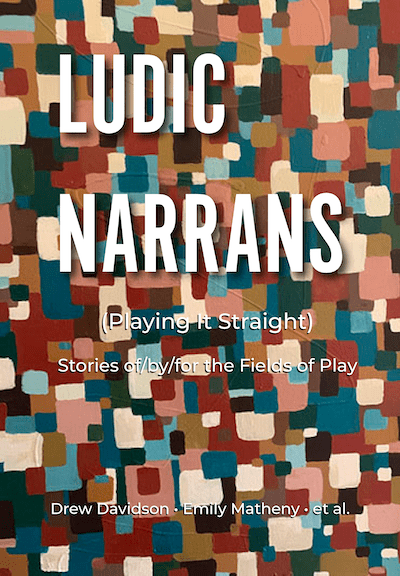
I’m one of many interviewees in the two new Ludic Narrans books by Play Story Press, a “playful oral history” of fields including gaming, mixed reality, immersive theatre, sports, interactive roleplay and more – bringing together a vast amount of research into different forms of play by Drew Davidson of Carnegie Mellon University.
I was a guest on the latest Strategy Meets Reality podcast with consultant, strategic adviser, and ex-instructor of the Royal Military Academy Sandhurst, Mike Jones.
Catch up on YouTube below, or wherever you get your podcasts.
I made a guest appearance on the latest episode of “Not Another KM Podcast”, hosted by Brittany Persinger and Rachel Teague, to talk about scenario planning, foresight, and knowledge management.
If social impact means creating long-term change, then we face a difficult problem: we live in turbulent times, and the future in which our impact will unfold is deeply uncertain.
Scenario planning can help by developing multiple plausible and contrasting futures, relevant to current concerns but challenging to our assumptions. Building and using scenarios offers the opportunity to critically explore expectations, hopes, and fears about the world within which we hope to make an impact.
Scenarios can inform the design of impact metrics which embody deeper values by considering the question: What might future generations wish we had measured in hindsight?
As we consider what inhabitants of different future scenarios might value, we can then identify and design appropriate impact measures to implement today.
“If global governance comprises not just formal institutions and regulations but the ‘mood music’ of the world, what part do we all have to play in shaping that mood today and taking responsibility for the future which transpires? Will leaders take collective action and contribute to digital civil society? Will digital platforms embrace a duty of care towards the most vulnerable users? Or will competitive opportunity be sought in the cracks, if tectonic shifts occur in the management of the global internet?”
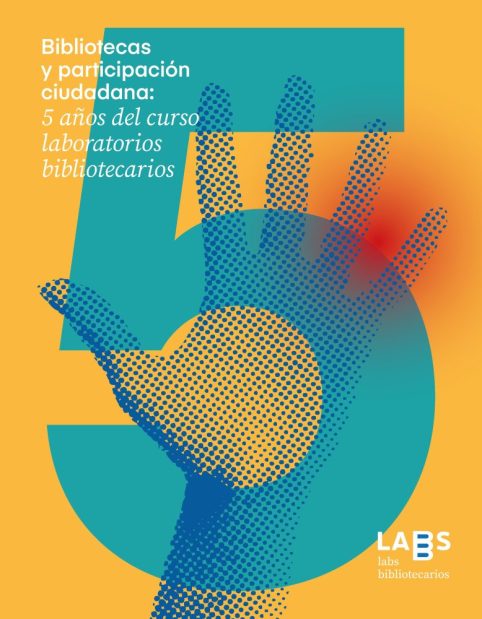
It has been my pleasure to contribute to the course as a tutor since its inception, and to make a small contribution to the celebratory volume, which offers a range of practical tools for those who might want to set up their own “citizen laboratory”, working with communities and institutions to experiment and innovate on social and cultural issues.
One of my contributions to the 2025 Global Youth Climate Summit, hosted by the University of Oxford, has just gone online at the Oxford Climate Change Challenge site.
enables people not to say, “Which future do I think I want, from the limits of my perception and understanding today”, but instead to ask “How would people in each different future judge the decision which I currently think to be so wise?”
This is the true benefit of manufactured hindsight: a kind of epistemic humility in the face of uncertainty, where instead of presuming we know what’s best for times which haven’t arrived yet, we enter into dialogue with potential futures and see beyond the received wisdom which may limit as well as reassure us.
If we simply ask ourselves, as we head into a new year, how this moment will be remembered, it tells us something about our understanding of the here-and-now – but also our beliefs about the future which is ahead of us.
The answers we come up with provide us with assumptions to explore, test, and challenge. What if a different future awaits, perhaps one that will judge us by different values and standards to those we hold today? What if hindsight will teach us a lesson we hadn’t yet imagined?
By exploring this question and different potential answers, we can reach for wisdom, rather than simply pointing at the future we think we want, on the basis of where we stand in the uncertain present.