I made a guest appearance on the latest episode of “Not Another KM Podcast”, hosted by Brittany Persinger and Rachel Teague, to talk about scenario planning, foresight, and knowledge management.
If social impact means creating long-term change, then we face a difficult problem: we live in turbulent times, and the future in which our impact will unfold is deeply uncertain.
Scenario planning can help by developing multiple plausible and contrasting futures, relevant to current concerns but challenging to our assumptions. Building and using scenarios offers the opportunity to critically explore expectations, hopes, and fears about the world within which we hope to make an impact.
Scenarios can inform the design of impact metrics which embody deeper values by considering the question: What might future generations wish we had measured in hindsight?
As we consider what inhabitants of different future scenarios might value, we can then identify and design appropriate impact measures to implement today.
“If global governance comprises not just formal institutions and regulations but the ‘mood music’ of the world, what part do we all have to play in shaping that mood today and taking responsibility for the future which transpires? Will leaders take collective action and contribute to digital civil society? Will digital platforms embrace a duty of care towards the most vulnerable users? Or will competitive opportunity be sought in the cracks, if tectonic shifts occur in the management of the global internet?”
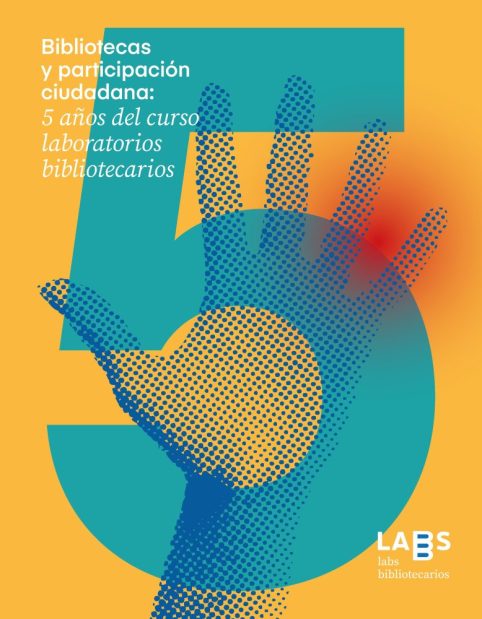
It has been my pleasure to contribute to the course as a tutor since its inception, and to make a small contribution to the celebratory volume, which offers a range of practical tools for those who might want to set up their own “citizen laboratory”, working with communities and institutions to experiment and innovate on social and cultural issues.
One of my contributions to the 2025 Global Youth Climate Summit, hosted by the University of Oxford, has just gone online at the Oxford Climate Change Challenge site.
enables people not to say, “Which future do I think I want, from the limits of my perception and understanding today”, but instead to ask “How would people in each different future judge the decision which I currently think to be so wise?”
This is the true benefit of manufactured hindsight: a kind of epistemic humility in the face of uncertainty, where instead of presuming we know what’s best for times which haven’t arrived yet, we enter into dialogue with potential futures and see beyond the received wisdom which may limit as well as reassure us.
If we simply ask ourselves, as we head into a new year, how this moment will be remembered, it tells us something about our understanding of the here-and-now – but also our beliefs about the future which is ahead of us.
The answers we come up with provide us with assumptions to explore, test, and challenge. What if a different future awaits, perhaps one that will judge us by different values and standards to those we hold today? What if hindsight will teach us a lesson we hadn’t yet imagined?
By exploring this question and different potential answers, we can reach for wisdom, rather than simply pointing at the future we think we want, on the basis of where we stand in the uncertain present.
“What I liked most about the workshop was getting to experience a framework for discourse between different stakeholders where everyone was approaching challenging ideas with an amount of vulnerability and openness. Things like the icebreaker question and being pushed outside of our cognitive comfort zones led to a kind of shared sense of uncertainty and unease that made it much easier for conversation and creativity to happen.”
Words from a participant at the scenarios workshop I led as part of the Peat Hub Ireland initiative, funded by the Irish Environmental Protection Agency and delivered by UCD colleagues under the leadership of Florence Renou-Wilson, including David Wilson, Kate Flood, and Elena Aitova.
We explore how the structures, dynamics, and value of internet governance may play out in different scenarios – and the implications for the situations and decisions we face today.
“In times of uncertainty, what we can imagine ahead of us matters.”
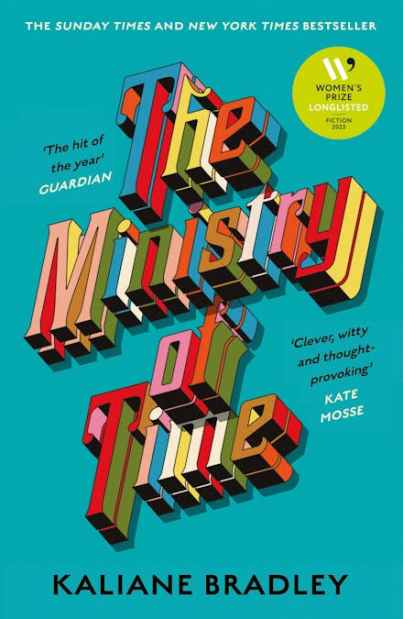
I write on Kaliane Bradley’s wonderful novel The Ministry of Time for the British Science Fiction Association’s journal Vector, and consider the book’s wider implications for public imagination in a turbulent era.
“Time travel in science fiction has, itself, a history and prehistory, a present, and presumably a future. It has the potential for new and emergent ideas of temporality – scientific, poetic, popular, expert – to succeed those currently held by researchers, philosophers, artists, authors, critics, and the general public of the day…Perhaps Bradley’s novel will also, in times to come, show itself to be one of the works that opened the door onto a new era of popular time travel fiction. This new era is one which, however fraught, creates new opportunities for us to face up to the uncertainties around us.”
Organizations are made up of people, so conflict within them is hardly unusual – it can even be a necessary part of meaningful collaboration. But in a highly polarized, digital, and volatile era, where the line between “the world” and “the organization” may be thinning, do we need new ways to define and approach organizational conflict?
Debbie Bing and Eliza Orleans explore this question and consider potential responses at ISPSO 2025 – the hybrid gathering devoted to the study of organizations, with a special focus this year on questions of justice and fairness. I’m honoured to be moderating Eliza & Debbie’s session – Saturday June 28th, 9.30am-11am Eastern – and it’s not too late to register for the conference, in-person or online.