On Saturday, 3rd October, eleven venues run by Lambeth Libraries and Lambeth Archives will open their doors for people to try their hand at the arts and sciences, storytelling and play, exploration and adventure.
Novelist, therapist, and radio host Lucy Beresford will be joining us at Clapham Library for a Q&A session, as will the entrepreneur Tara Benson, founder and CEO of Here and Now. Staff from City University will be running zine workshops and library tours exploring the science of serendipity.
At Waterloo Library, Chris Thompson of Orbital Comics will be running a comics creating workshop and recording a special episode of his Pop Culture Hound podcast.
At Upper Norwood Library, there will be special board game and tabletop roleplay sessions from Andy Horton, librarian at Regent’s University – and across the borough, you’ll also find jewellery making, firefighters, art, science, dance, play, and all kinds of creative mayhem.
Stella Duffy, co-director of the national Fun Palaces event, will be leading a walking and writing tour of Lambeth, visiting each one of our library venues.
The Fun Palace vision – of participants not audiences, of locally made art and science and play – exemplifies the best work that I’ve seen in libraries, galleries, and museums over the past few years.
In Lambeth, our partnership with Orbital Comics builds on experience devising collaborations between retailers and libraries in New Zealand and Australia.
In a time of budget cuts and austerity, Library Fun Palaces emphasise community collaboration and the power of volunteering, while still recognising the unique skills which professional librarians have to offer.
On Monday, I start a new project with Dulwich Picture Gallery in South London. As part of the youth scheme NCS The Challenge, I’ll be helping a group of teen volunteers to create arts outreach activities for the Bermondsey Street Festival on 19th September.
We’ll be drawing on art exhibited at Dulwich, but a gallery is as much about the relationships between culture and community as the items in a given collection – so we’ll also be looking at forms of original artmaking and play which Challenge volunteers will devise and deliver for the Bermondsey fair.
Dulwich Picture Gallery has a proud tradition as the world’s first purpose-built public art gallery; I’m excited to be helping the gallery take public outreach onto the streets of London, in the same community spirit as Fun Palaces.
Darran Anderson’s recent talk at the Victoria and Albert Museum reminded me of the importance of Escher as an influence on pop culture, especially computer games, and I’m excited to see the playful, pop-cultural approach Dulwich is taking with this exhibition.
Today, Fun Palaces kicked off in earnest at Lambeth Libraries, with a workshop for staff and allies from libraries, universities, businesses, and the wider community.
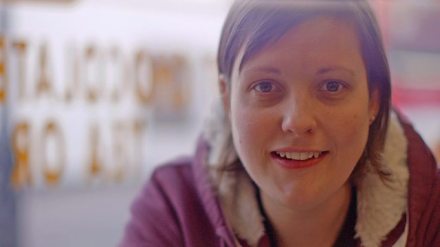
Also, Kim sketched me from our Skype conversation above – I don’t think I’ve ever been drawn before…
The word Kim and I latched onto in our Skype discussion is “syzygy” – and before too long, I’ll be telling you why in a blog post on this site. In the meantime, you can find out more about Kim’s keynote online and also it’s worth following her on Twitter – @kimtairi.
After a stint carrying out research for publishers and media productions – projects which I’ll look forward to talking about when I’m allowed to! – I’m pleased to announce that I’ll be working as a creative producer with the London Borough of Lambeth, helping their library staff to devise and deliver ten Fun Palaces with local communities on Saturday 3rd October 2015.
I’m looking forward to taking things further with Lambeth in 2015. Our events will tie in to Black History Month and feature a range of stargazing, cybernetic, all-embracing, all-ages art and adventure. Watch this space for more news.
In the meantime you can read my article “Pushing the Limits: Play, Explore, Experiment” for British librarians’ in-house magazine CILIP Update, which looks at Fun Palaces alongside other arts and community adventures from the UK, Australia, and New Zealand:
Choose what you want to do … dance, talk, or be lifted up to where you can see how other people make things work. Sit out over space with a drink and tune in to what’s happening elsewhere in the city. Try starting a riot or beginning a painting – or just lie back and stare at the sky.
– Fun Palace draft design, 1961
It’s been satisfying to watch the message of play spread across museums, libraries, and other public institutions over the last few years. It’s timely, as the entertainment industry, too, begins to explore participatory and immersive forms of engagement. Events like Fun Palaces remind us that play is a vital element of learning and exploration. Play in cultural spaces, public or private, can promote self-directed learning, creative development, or simply the joy of using your imagination.
Now I’m wondering if play could get even wilder.
I guess structured or programmed play is great, insofar as it reminds people working in museums, galleries, and libraries to offer more than just colouring-in when they provide kids’ activities. But what that programming mustn’t do is mistake itself for schooling. Play belongs to all ages, and institutions should avoid controlling play to such an extent that it just becomes formal education all over again.
Raised in rough country New Hampshire, homeschooled in a household without electricity or indoor plumbing, he’s at home in the woods alone with his rambling, original thoughts.[…] Miller’s goal, the personal objective that superseded all others, was to pursue speed and fun. Let the medals fall where they may; winning or losing were merely by-products of this unruly pursuit. Usually the strategy worked for him, but wipeouts, too, are quite beside the point for Miller. (“I was having the greatest time making mistakes, crashing,” he once said.) He has instead set out to explore human capability, gravity, and his equipment’s tolerances at the limits of performance—“to ski as fast as the natural universe will allow.”
Skiing on the brink this way, trading control for fun, he plunges downhill “right on the edge of what my skis and the snow will hold up to.” A brilliant French thinker, the play-theorist Roger Caillois, once looked for a name for this special joy, the dizzying pleasure of swings and roller-coasters and stunt-flying and steeplechase and skiing. “Vertigo” came close. But in the end he borrowed a Greek word that fit better: ilinx, “the whirlpool.”
Eberle’s piece resonates well with a blog post written last year by Anna Cutler, director of learning at London’s Tate Gallery. Cutler argues that cultural institutions like theatres, galleries, and I would add libraries, should not “replace or mimic school’s curricular aspirations, since that is, after all, the specialism of schools and the expertise of teachers.”
She goes on to write:
I have yet to meet a teacher who has said that they come to any cultural institution or event to create the same conditions as their classroom. In fact, they are in search of different and more expansive experiences for their students. I suggest that it is the responsibility of cultural institutions to offer ‘more than’ and ‘different from’ what can be achieved in school, to provide experiences and learning opportunities that can only happen outside the classroom and that support what the teachers do by taking a journey beyond the letter of the curriculum.
The wild ride Eberle describes on the ski slopes, the sense that you can have “the greatest time making mistakes, crashing”, can happen in cultural institutions too. Sport, art, and games all offer opportunities to go off the currricular piste, pursuing instead the dizzying pleasure “at the limits of performance.”
Fun Palaces showed how this feeling of playful exploration could flourish in communities of all kinds around the world, using partnerships to extend the reach and capacities of individual institutions. 2013’s zombie siege in Parkes, Australia – a pretty wild ride in itself – was a library event run together with local schools, cops, firefighters, and student volunteers from Charles Sturt University. This chimes nicely with R. David Lankes’ call for public libraries to “unleash” their communities, rather than attempting to be all things to all people.
So – can we trade control for fun in arts and culture? That might be scary: when we acknowledge that everyone has some creative contribution to make in life, we surrender the old privileges of authorship and prestige along with the old constraints. But even when budgets are tight – especially when budgets are tight – we must take opportunities to innovate, whether that’s in publishing, universities, galleries, or museums.
What would happen if these institutions went off-piste? What lies at the limits of performance?
I’ve got a few blog posts lined up over the coming weeks. I’ve just met a number of deadlines, and the break allows me to turn some of my notes into text fit for human consumption.
Big Brother Timebomb logo
Raiding TV for inspiration
Late last year, I wrote about using action-adventure stories from TV, movies, and comics to inspire new play activities. I’m a geek for old telly: the shows of the past offer great inspiration for today. The technical constraints and different pace of television from fifty years ago means that heroes often faced perils which are easy to mimic in a setting like a library or museum.
There’s no shame in plundering the past, either. Present-day TV producers do it all the time. Robert Thirkell’s excellent book on reality TV, C.O.N.F.L.I.C.T., tells us how Jane Root, an executive producer with a stellar career at Discovery Network and the BBC, drew on her own nostalgia to create compelling new formats:
You know how we came up with I Love The 1980s[?…We rewatched] The Rock and Roll Years. David Mortimer and I got Rock and Roll Years out of the BBC archive because I’d remembered it from when I was a child.A lot of the younger BBC team had never seen it and I showed it to them in my office and said, “What could we do that could bring this show back?” I Love The 1980s, the hit the team went on to create, turned out to be even bigger in America, where it ran on VH1 for years.
Get Real
I’m also a sucker for reality TV, although these days I find I’m usually too busy to keep up with it. Big Brother, with its cast of housemates trying to complete challenges, avoid eviction, and not go bonkers over ten weeks, was always one of my student favourites. I still remember characters like the drama queen Makosi from BB6 or the kilted rebel Sandy from BB3, a personal shopper who managed to escape from the house over a wall.
People get sniffy about reality TV, but it’s really no different to drama or comedy: you create a format which offers exciting situations, and then set it loose like a shark in the sea, moving forward, consuming new contestants, new scenarios. Great formats like Doctor Who, Family Feud (Family Fortunes in the UK), or Big Brother, run and run.
What’s more, reality puts people who aren’t entertainment professionals in front of the camera. For all that we might deride reality show participants as wannabes, and for all that they’re at the mercy of production teams, those contestants are also an example of the barrier breaking down between audiences and artists.
Bean Brother
When I was an infant school teacher, I worked with a class of thirty kids, most of whom didn’t speak English at home. One term, we had to grow a bean from a seed on a wad of damp cotton wool in a plastic cup. I remember doing the same when I was a pupil. It’s one of those rites of passage every British kid goes through, the foundation of natural science: infants starting to practice taking measurements and observing living things carefully.
I wanted my class’ bean experiment to be lively and fun, so we reimagined our science project as “Bean Brother”. Each day, we’d play Paul Oakenfold’s iconic Big Brother theme tune before bringing our plants out before the class.
My long-suffering teaching assistant would put on a Geordie accent to mimic Marcus Bentley, the famed narrator of UK Big Brother. Our kids would use a video camera to report on their bean’s growth in a “televised update from the Bean Brother house” before drawing, writing observations, and completing their other science tasks. They were engaging with elements of the pop culture that surrounded us, doing serious learning about science, using audiovisual equipment to record their own stories, and best of all, they were playing while they did it. Bean Brother made the daily routine exciting, incorporated modern media both as something to consume and create…and each anonymous bean took on its own life as a contestant for our class to cheer on.
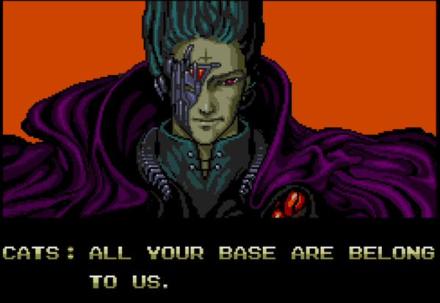
This year’s UK Big Brother is called “Timebomb.” You can see the trailer here:
I’m excited, looking at the iconography lifted from Doctor Who, steampunk, and the Transformers movies. Earlier this year, Celebrity Big Brother drew on the imagery of dark fairytales, but this new series is even closer to my heart. Russell T. Davies’ superlative run on Who already featured a Big Brother episode and now I’ve started to think of the Big Brother house as a TARDIS control room.
I’m curious to see how the Big Brother production team apply the concept of “time distortion” to a reality show. It’s harder to mess with causality in a live production than a scripted, pre-recorded series. Whatever they get up to, and however well it works, I think that anyone who is interested in play, cultural programming, and community outreach should take a good look at what Big Brother producers Endemol are up to this year.
I had a great visit to City University in London today, talking with students on the Master’s course #citylis, convened by Ernesto Priego.
Our conversation covered everything from the art history of Aby Warburg to civil unrest in Ferguson, Missouri, tabletop gaming, and, of course, the inevitable zombie battles.
I often say that a neighbourhood library is like the TARDIS on your streetcorner – an ordinary box which can take you anywhere in human knowledge or imagination. If that’s true, watching James speak about the British Library’s digital innovations was like watching Doctor Who dance around the TARDIS control panel, flicking switches and levers with gleeful abandon.
Writer and comedian Josie Long has made a short film for the BBC which neatly captures the reasons why arts venues and programmes are so important to suburban communities, those which are seen as “not pretty enough to be in Kent, and not exciting enough to be in London.”
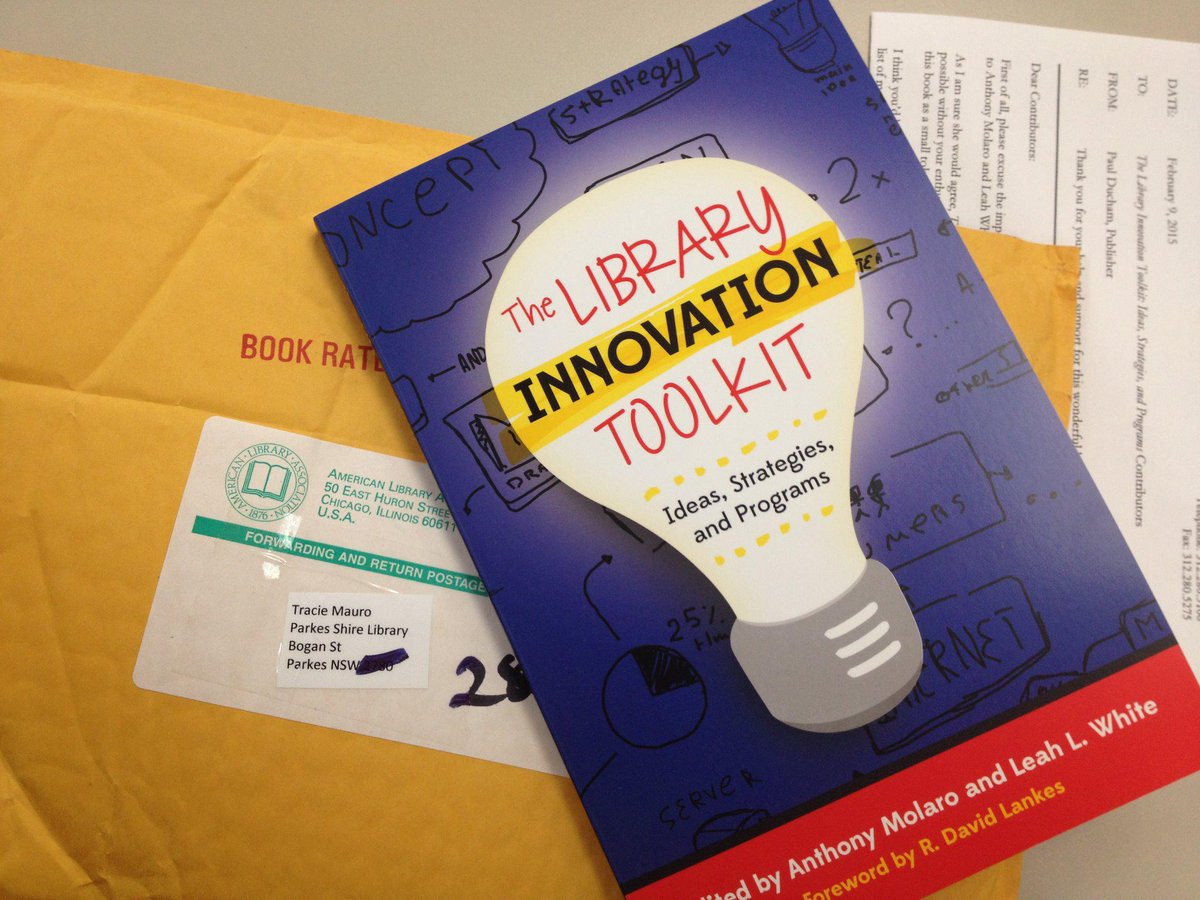
The book “encourages readers to take big risks, ask deeper questions, strive for better service, and dream bigger ideas”, with practical examples and suggestions for 21st century library services.
I wrote “Monsters, Rockets, and Baby Racers”, the chapter on working with children and young people, together with Tracie Mauro of Australia’s Parkes Library.




 Big Brother Timebomb logo