As we finally reach the opening of Dark Night, Auckland Libraries’ guerrilla season of events exploring sex and sexuality, I’m blogging on the way that films and literature shape the way we think about relationships.
It’s a different take on the arguments I’ve been making in recent weeks, that libraries offer a place for us to immerse ourselves in culture and participate in a way unique from any other space.
The books we read and the movies we watch can have drastic effects on the lives we lead: in this third Dark Night post, I look at the way films skewed my take on romance and led to me poisoning myself for love at a London railway station. Read more →
I’m also offering you a different take on the arguments I’ve been making in recent weeks, that libraries offer a place for us to immerse ourselves in culture and participate in a way unique from any other space. Libraries as a place of imagination, learning, and connection applies to everyone, from the guy who wants an auto repair manual to the devotee of erotic fan fiction. As I argued last time on this blog, in a world where Fifty Shades of Grey sells 70 million copies world wide, libraries need to be part of the conversation around contemporary erotica.
Here, I wanted to connect our most intimate relationships with two kinds of text – the movies and literature we consume, but also the wider discourse of city life.As Auckland’s Dark Night opens with the New York-set movie Shame, I figured the time was ripe to contemplate “Sex and the Super City”.
So if you don’t know me, this is the Big Secret: I’m not actually a librarian myself, but currently an adviser to Auckland Libraries, the largest public library system in Australasia. (My wayward career is best described on my ‘About Me’ page). I make up fun stuff for people to do in public spaces, and so today I’m writing about immersive play in libraries. By ‘immersive play’ I mean activities which physically draw your library patrons into the world of a book, artwork, or other piece of media – whether through craft, gaming, roleplay, or content creation.
The big revelation for me came when running a workshop to decide the future of Auckland’s collections management policy – not, frankly, the sexiest task in a public library service, but most rewarding in the long run. Not just because we had a cathartic Nerf gun shoot out as part of the activity, but because I discovered the UN’s Missions of the Public Library.
(I go on a lot about this document, but it’s something really worth hammering home).
The mission statement doesn’t even use the word “books”. It talks about reading, sure – but this is not a manifesto for shelves. Instead, the focus is on activities like stimulating imagination and creativity, providing access to cultural expressions of all performing arts, supporting the oral tradition, and providing opportunities for personal creative development.
So, how do we bring those missions of creativity, play, independent learning, and performance to life while remaining true to libraries’ heritage of literacy and reading? Let’s see if we can do it in six bullet points… Read more →
I’m lucky enough to work for Auckland Libraries, the largest public library system in Australasia. Their strategy document Te Kauroa – Future Directions posits libraries as “your space of imagination, learning, and connection.” A public institution whose value in connecting us all to the sum total of human culture and knowledge goes beyond books on shelves into the realms of play, performance, and interactive digital outreach.
That book domino video captures the blend of charm, creativity and outright cheek which I think lies at the heart of the best public libraries – so I challenged Kiwi librarians on Twitter to do as well as Bookmans, or go one further, and post the results on YouTube.
I’ll personally bake a cake for the first librarian in New Zealand who, in my judgment, matches or outdoes Bookmans’ stirling online effort.
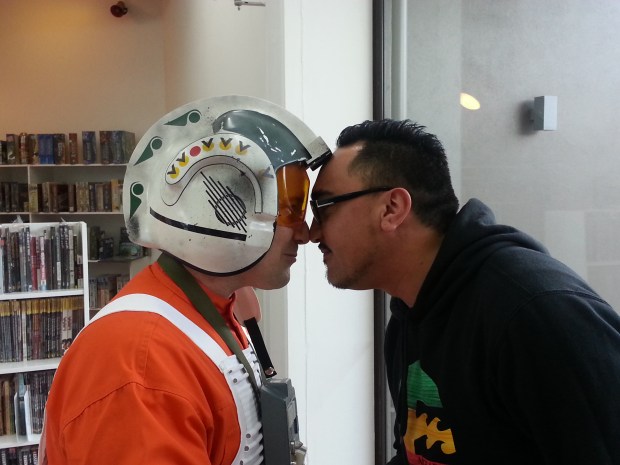
Librarians in Auckland ventured into comic book stores to celebrate Star Wars Day and Free Comic Book Day by issuing memberships and loaning items from their collections. More soon, but in the meantime here’s Twitter coverage via Storify.
Although Kiwi librarians are attempting to push back with the Twitter hashtag #morethanbooks, responses have tended to focus on the fact that libraries use e-books too, and include other items like music in their collections as well.
The simple truth is, libraries aren’t about books on shelves, or compact discs, or even e-readers. Those are tools, mere means to an end.
A library isn’t just a storage space for books on shelves – it’s also a place where musicians perform; where computer software is written; where teens get to wrestle a zombie-bitten police officer to the ground while debating the ethics of surviving a disaster scenario.
Yet one local politician has said “Why not replace libraries with e-readers?” and Kiwi librarians are on the defensive, letting their enemies set the terms of the debate. Read more →
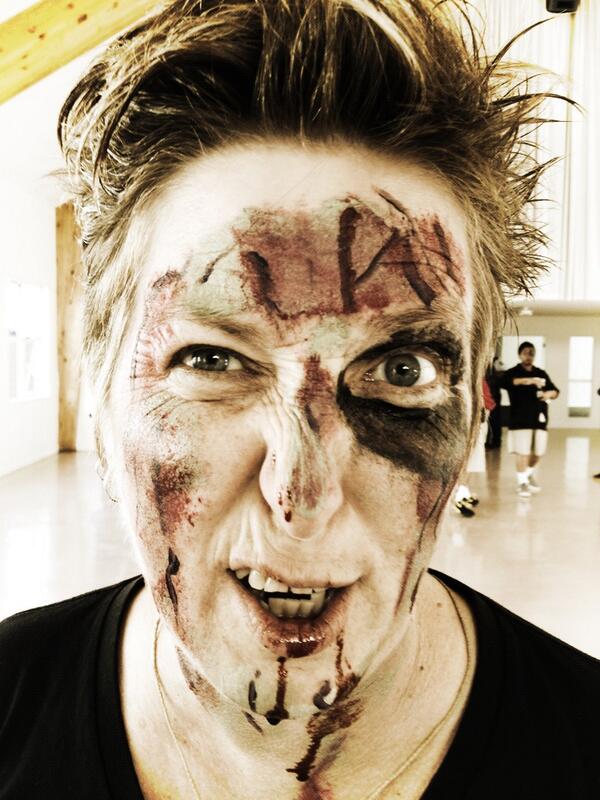
Auckland Libraries’ Anne Dickson led teen zombie hordes against a group of survivors in Tupu Youth Library
Last Friday in Tupu Youth Library, South Auckland, I ran an interactive live-action zombie event for teens on their school holidays.
The ‘survivors’, aged from 12 to 18, found themselves besieged in a meeting room while zombies feasted on hapless victims outside. Teens made barricades from furniture, used library resources to plan their escape from South Auckland, and faced special challenges including detecting potential zombie victims and even wrestling with a zombified police officer!





 matt finch / mechanical dolphin