IMAJINE: The Future of Food

What do IMAJINE‘s scenarios for the future of European regional inequality imply for how Europe feeds itself in times to come?

Regional dynamics affect, and are affected by, the agrifood sector and its vital supply chains. Questions of environmental sustainability, logistics, health, and lifestyle are all entwined.

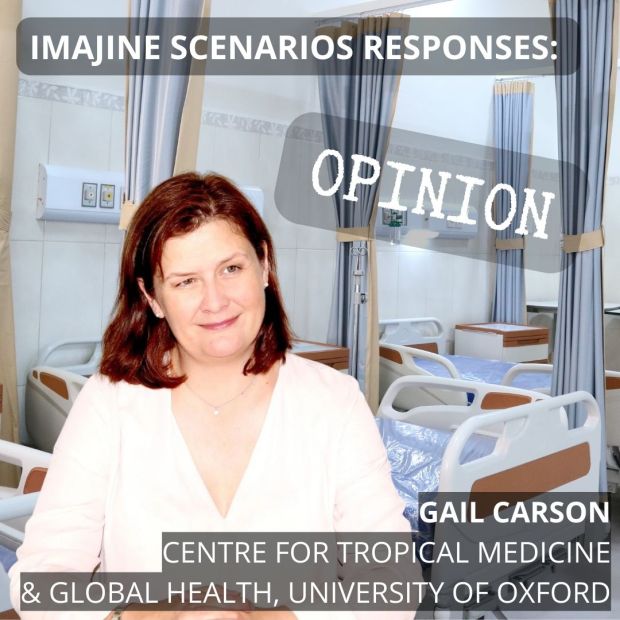
In the IMAJINE project’s latest expert response, Singaporean futurist Luke Tay explores IMAJINE’s four scenarios for Europe in 2048 from a food futures perspective.

Foresight & The Environment of Democracy @ 2022 Council for European Studies Conference

I’m presenting twice at the online portion of the Council for European Studies’ conference in June.

First, National University of Ireland, Galway’s Marie Mahon, Monash Sustainable Development Institute’s David Robertson, and I will talk about “Reimagining Environmental Futures” based on the IMAJINE scenarios for the future of European regional inequality.

Then Malka Older of Arizona State University and I will present a paper on “Agency, Accountability, and Imagined Futures: Exploring Democracy and Environmental Stewardship Through Speculative Fiction and Foresight”.

Early bird registration continues until April 11th and the last day to register is May 10th. Find out more at the conference website.

IMAJINE: Digital Futures

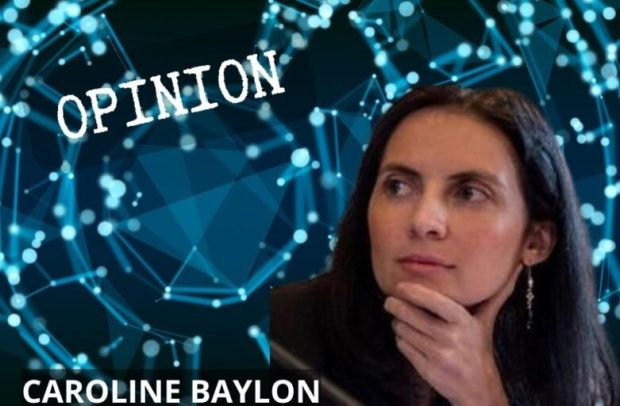
Citizens gaming artificially intelligent policy mechanisms, a telepresence Luddite movement, ecological damage from cyberattacks, corporations supplanting governments, & rights for intelligent software agents – Caroline Baylon of the UK’s All-Party Parliamentary Group for Future Generations explores potential implications for the digital world, cybersecurity, and AI in the IMAJINE scenarios.

You can read Caroline’s response to the scenarios at the IMAJINE website.

Open to uncertainty? Workshop for OER22

Together with the Open University’s Anne Gambles and Simon Ashby, and Open Education Global’s Executive Director Paul Stacey, I’ll be running an online workshop for the OER22 conference hosted by the Association for Learning Technology.

Our session, “Open to uncertainty?”, explores ways of strategic thinking which support the goals of the open education movement in times of turbulence, uncertainty, novelty, and ambiguity.

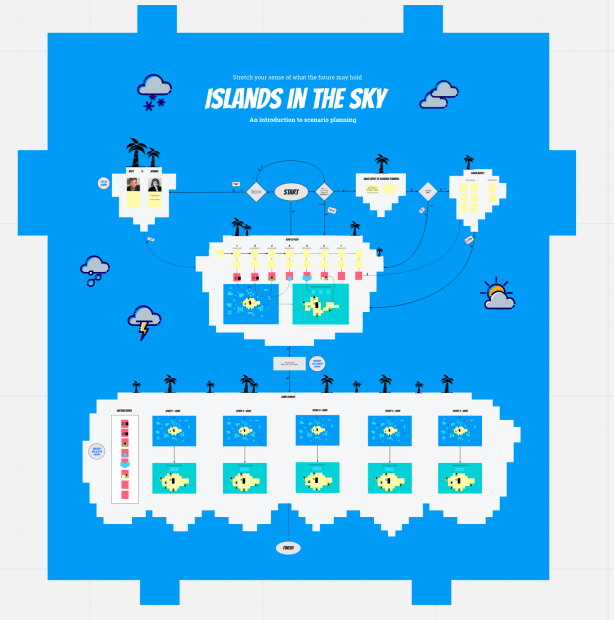
In addition to practical, participatory activities, we’ll share experiences from the Open University’s ongoing ‘Islands in the Sky‘ project and last year’s development of Open Education Global’s new strategic plan.

OER22 is a hybrid event running 26-28 April, promising to “put the spotlight on both the value and limitations of open education in a (post)pandemic world”. Find out more at the conference website.

Facing the Strategic Sublime: Scenario Planning as Gothic Narrative

Marie Mahon of NUI Galway and I are in Vector with a new piece taking a literary approach to strategy, scenarios, and foresight.

In “Facing the Strategic Sublime: Scenario Planning as Gothic Narrative“, we investigate how constructing plausible future scenarios can help people to test their assumptions, suspend preconceptions, and engage with issues and information that they had previously framed out of consideration.

In doing this, we argue, scenarios are akin to Gothic literature, offering what Leila Taylor calls “a means of working through the discomfort of a changing world through the safety of fiction”.

Treating scenarios in this way “restores both our humility with regard to external forces that may seem almost unbearable to face, & the troubling sense that our own desires may not be pure or uncomplicated…”

See more at the Vector website.

Library Journal: COVID-era scenarios for Reading, Pennsylvania

“It was clear we should not wait out COVID-19. We needed a vision for where our services were headed, even if we couldn’t fully see what lay in store.”

In Library Journal, Bronwen Gamble of the Reading Public Library in Pennyslvania writes with me about our experience developing COVID-era scenarios to inform strategy for one of the United States’ oldest public libraries.

You can read our piece “Change the Scene” at the Library Journal website.

IMAJINE Workshop: Territorial Inequalities, Cohesion Policy, and Spatial Justice

On 23rd March in Brussels, the IMAJINE project hosts a hybrid event bringing together researchers & policy experts to discuss territorial inequalities within Europe.

IMAJINE explores key questions of territorial inequality, cohesion, and spatial justice: do Europeans have equal rights and opportunities regardless of where they live? Is your ability to realise your rights compromised by where you live?

You can’t simply “run the numbers” when it comes to the future of justice, because it is defined narratively and socially. Questions of what is fair and just are framed, debated, discussed, and negotiated over time.

As well as gathering and analysing fresh data about European inequalities today, IMAJINE explores the theories and concepts by which those inequalities are understood. It also investigates the mechanisms which institutions and communities use to intervene in inequalities. The IMAJINE team have developed future scenarios to help people explore how these issues might play out and be understood in times to come.

You can see IMAJINE’s four scenarios for the future of European regional inequality in 2048 here (PDF download).

On 23rd March, as part of the one-day IMAJINE event, a panel will discuss the IMAJINE scenarios and what they might help us to learn – or unlearn – about regional inequalities in the present. Find out more, and sign up for the event, here.

The collective hero?

In Uncanny magazine, Ada Palmer and Jo Walton write about “the protagonist problem“. In stories, who has “the power to save the day, make the difference, solve the problem, and change everything?” Who possesses that quality which makes them the one to lead the action, to advance the plot?

“Think of the formula for an action team,” they write. “There might be five characters: the smart one, the strong one, the kid, the love-interest, and…the protagonist, whose distinguishing feature may be described as courage, or a pure heart, or determination, but really comes down to writing, that they’re the one who always lands the final blow.”

(One of the ways we know that Mad Max: Fury Road is the story of Charlize Theron’s Furiosa is that she is the one to kill the principal villain. Max, imprisoned as the start of the film as a “blood bag” for his valuable universal donor’s Type O blood, serves the same purpose at the film’s end, when his transfusion prevents Furiosa’s hard-won victory from costing her life).

Palmer and Walton argue that it’s “harmful when people see themselves as not protagonists, and differently harmful when people see themselves as protagonists.”

If we feel that we are not protagonists in a world which has them, we may experience

imposter syndrome, feelings of powerlessness, inaction, cynicism, and despair. It leads to the belief that if you personally don’t resemble a protagonist (if you falter, have undramatic setbacks, mundane problems, job hunting, laundry, rent) then you can’t be one of the special few whose actions matter.

This feeling also causes us, Palmer and Walton argue, to believe that mundane activities such as grassroots organising and even voting lack the power to truly change things, as they do not seem “heroic”. To believe real life has protagonists is to succumb to talk of heroes and villains, the conspiracy theorist’s belief that some secret plan underpins the state of the world, and the notion that acting like a character in a book, film, or videogame is the right way to address the world’s problems.

For those who not only accept that there are real-life protagonists, but believe themselves to be cast in that role, the consequences can be even more troubling: “recklessness, power trips, and […] the expectation that breaking rules is okay so long as it’s you.” Palmer and Walton give the example of people who were not COVID deniers yet felt that their gathering wouldn’t be the one to cause a problem; the rules didn’t apply to them.

Read more

Scripturient: Information and Exformation

For years you think talking means finding, discovering, understanding, understanding at last, being illuminated by the truth. But no: when it takes place, all you know is that it is taking place; it’s there, you’re talking, you’re writing: talking is only talking, simply talking, writing is only writing, making the shapes of letters on a blank piece of paper.

– Georges Perec

How do you talk about a thing without talking about it? What is concealed by our efforts to make ourselves understood?

The latest Scripturient column for Information Professional is an experiment with “exformation” – the negative space of information.