I had a great visit to City University in London today, talking with students on the Master’s course #citylis, convened by Ernesto Priego.
Our conversation covered everything from the art history of Aby Warburg to civil unrest in Ferguson, Missouri, tabletop gaming, and, of course, the inevitable zombie battles.
I often say that a neighbourhood library is like the TARDIS on your streetcorner – an ordinary box which can take you anywhere in human knowledge or imagination. If that’s true, watching James speak about the British Library’s digital innovations was like watching Doctor Who dance around the TARDIS control panel, flicking switches and levers with gleeful abandon.
My guest editorial for Public Library News, “The TARDIS on your streetcorner,” is out this week. Editor Ian Anstice offered me the chance to share my some of my experiences working with community libraries in Australia and New Zealand, and of course I worked a Doctor Who reference in there too.
Next month, I’ll be giving a guest lecture to students at City University, London. I’ll be talking about “Words and Pictures, Space and Play” alongside digital curator James Baker from the British Library and information science lecturer Ernesto Priego, who is also presiding genius at The Comics Grid.
I have a new piece out at the Cultural Gutter, a site which hosts essays about disreputable art in all its forms.
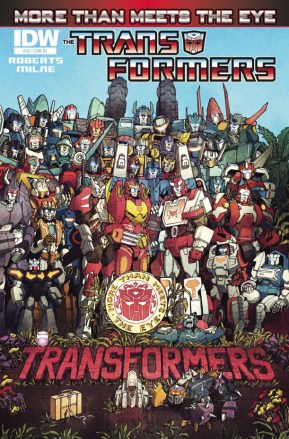
“The Romance of the Machine” looks at Hasbro’s Transformers toys, in particular their current comic More Than Meets The Eye. My essay explores how even big-brand media can be “rich enough to speak of loss, grief, thwarted dreams, the desire to do good in an imperfect world, and, most importantly, of love.“
Parkes High School’s teacher librarian Tracy Dawson has an article in the latest SCAN magazine about the Reader-in-Residence role which I held in Parkes across late 2013 and early 2014.
The role was designed to link the school and wider community in a celebration of storytelling, literacy, and culture in all its forms. Events included teen publishing workshops, our biggest ever zombie roleplay, urban myth writing, and the inaugural Central West Comics Fest, which will be returning in 2015. I also mentored high school students, led sessions for the Parkes writers’ group, and worked with the school’s special needs unit.
Tracy gives a teacher’s perspective on how trying new things, pushing boundaries, and reaching out to a wider community also yielded great benefits to students at the high school. You can also read her guest posts on this site about Auckland’s XXUnmasked project and the work of a teacher librarian.
SCAN magazine is a refereed journal published by the New South Wales Department of Education, focussed “on the interaction between information in a digital age and effective student learning.” You have to subscribe for recent issues, but the archive is publicly available – I’ll let readers know when the current issue moves into the free archive.
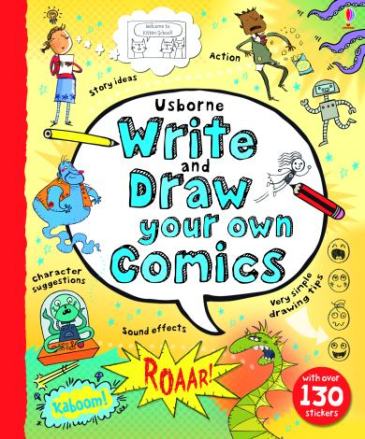
Earlier this year, I was a consultant on Write and Draw Your Own Comics, a book created by the talented Louie Stowell, plus a range of brilliant artists, for the children’s publisher Usborne. I’m very pleased to announce that Write and Draw Your Own Comics is now available for purchase. In the UK, you can pick up a copy from Amazon or other outlets; in Australia and New Zealand try Booktopia, Dymocks, and Paperplus.
Tracy Dawson of Parkes High School Library has already linked Write and Draw Your Own Comics to the Aussie curriculum, too – click the link in the tweet below to find out more.
So you’ll have seen the announcement that Marvel is finally going to give us a female-led superhero film in Captain Marvel, due July 2018. I’m pleased, of course, that they’re making space for a badass, awesome woman to be the lead in a Hollywood superhero franchise, especially one tied to the current Marvel money train. But also because Captain Marvel – then Ms. Marvel – is one of the first superhero comics I read.
Back in the mid-eighties, the department store chain British Home Stores put out a hardback annual called The Superheroes Special Edition, filled with old Marvel reprints. My mum bought me a copy as a present; I read it over and over, put a glittery name label on the inside cover, and took it into school. I remember the X-Men facing off against Sentinels, the Fantastic Four pitted against alien dopplegangers, and the Silver Surver fighting the Abomination – all supremely awesome to the five-year-old mind.
But my very favourite story came from Ms. Marvel #5. In it, New York magazine editor Carol Danvers has a premonition that a “Super-Truck” of radioactive cargo is going to be attacked. Carol has to transform into Ms. Marvel, an alien alter ego with a separate personality from Carol’s. Not only is she at war within, but when she goes to protect the truck, Ms. Marvel is mistaken for a villain and attacked by another superhero, the Vision.
I remember being captivated by this story. A superhero who was at war with her secret identity; a superhero who had to fight “proper” heroes who didn’t trust her; a superhero who uses trickery to triumph – as in the page at the top of this post, in which Ms. Marvel sets a trap for the Vision. With stories like this, I took it for granted that of course girls could be superheroes too – not just token characters, but strong protagonists facing complex challenges. Ms. Marvel was unquestionably cool in the same way that Mildred Hubble from The Worst Witch and Dinah from the Demon Headmaster books were. I have to thank my mum for buying me all of these books and introducing me to all of these awesome characters. Thanks Mum!
I’m really pleased that kids who grow up with the next generation of Marvel movies, boys and girls alike, will also see Carol Danvers battling baddies and saving the world.
It’s a beautiful Sunday morning in Parkes, and life is grand, so I thought it might be a good day to share three great writers with you. These are all pop-culture pundits whose essays make excellent weekend reading.
Emmet O’Cuana – Challenger of the Unknown
“The Suburbs” by O’Cuana, Rinehart, and Switalski
Emmet is a Melbourne-based comics writer, critic, and occasional radio host who has interviewed me on a couple of occasions. Each time he forced me to question my opinions and raise my thinking to a new level. The first time our chat ranged from Star Crash to Kierkegaard; the second he asked smart and challenging questions about the live-action zombie games I’d been running in Australia and New Zealand.
My favourite pieces by Emmet are still forthcoming – he wrote an insightful chapter on comics creator Grant Morrison in Darragh Greene and Kate Roddy’s Grant Morrison and the Superhero Renaissance, plus a great essay for the comics site Sequart which made me re-evaluate James Robinson’s Starman, a comic which I love and thought I knew everything about. Watch out for them next year.
Carol has featured on my site a few times before. She quietly produces meticulous, poetic criticism, taking apart icons from the past and present to examine what it means to be human. I’ve previously raved about her writing on Mario Bava’s Danger:Diabolik (“If we had a lesbian cinema that took Danger: Diabolik as its starting point, I, for one, would be much happier”) and on Superman as a positive burlesque of masculinity:
I’ve come to see Superman’s greatest powers as not his strength or heat vision, but his restraint and his theatricality both in restraining that power while pretending to fight as hard as he can and in passing as Clark Kent. As I see him now, Superman is always performing one way or another.
Frank Collins – May Not Be Used Where There Is Life
Frank writes on classic television for British site MovieMail, and at his own site Cathode Ray Tube. I’ve long had a fondness for old television shows, but through Frank’s chronicle of twentieth century telly I discovered obscure gems like the fourth-wall-breaking Strange World of Gurney Slade.
Frank’s current MovieMail series tracing the history of British TV sci-fi showcases his critical strengths: erudition, insight, and elegance. Frank can capture the essence and wider resonance of a TV show in a single descriptive paragraph, as he does here for the wildly different Red Dwarf, Space:1999, and Sapphire and Steel:
This slideshow requires JavaScript.
That’s all for today: three clever souls thinking out loud about the stories we tell ourselves on the page and screen. Go check them out, if you’re looking for a Sunday read. And have a great weekend!
Something different here at my website today. A podcast instead of a blog post. A podcast discussing that most profound of subjects… TRANSFORMERS!
What can giant fighting robots teach us about stories? What can they teach us about love? Are glorified toy commercials of interest to anyone other than kids, scholars, and nostalgics?
This slideshow requires JavaScript.
Today’s discussion takes us from 1984 and the origins of the Transformers brand through cartoons, toys, and movies to the latest comics published by IDW. Daisy and Neill also discuss the mythic resonance of children’s television, the medium of comics, and the way pop culture shapes and is shaped by our own relationships with others. It runs for just under 30 minutes and you can find it below.
Daisy’s currently researching her doctorate in literary tourism and children’s literature at the University of York. She’s @chaletfan on Twitter, and you can also find her at Did You Ever Stop to Think.





 matt finch / mechanical dolphin