On Saturday, 3rd October, eleven venues run by Lambeth Libraries and Lambeth Archives will open their doors for people to try their hand at the arts and sciences, storytelling and play, exploration and adventure.
Novelist, therapist, and radio host Lucy Beresford will be joining us at Clapham Library for a Q&A session, as will the entrepreneur Tara Benson, founder and CEO of Here and Now. Staff from City University will be running zine workshops and library tours exploring the science of serendipity.
At Waterloo Library, Chris Thompson of Orbital Comics will be running a comics creating workshop and recording a special episode of his Pop Culture Hound podcast.
At Upper Norwood Library, there will be special board game and tabletop roleplay sessions from Andy Horton, librarian at Regent’s University – and across the borough, you’ll also find jewellery making, firefighters, art, science, dance, play, and all kinds of creative mayhem.
Stella Duffy, co-director of the national Fun Palaces event, will be leading a walking and writing tour of Lambeth, visiting each one of our library venues.
The Fun Palace vision – of participants not audiences, of locally made art and science and play – exemplifies the best work that I’ve seen in libraries, galleries, and museums over the past few years.
In Lambeth, our partnership with Orbital Comics builds on experience devising collaborations between retailers and libraries in New Zealand and Australia.
In a time of budget cuts and austerity, Library Fun Palaces emphasise community collaboration and the power of volunteering, while still recognising the unique skills which professional librarians have to offer.
Today, Fun Palaces kicked off in earnest at Lambeth Libraries, with a workshop for staff and allies from libraries, universities, businesses, and the wider community.
Also, Kim sketched me from our Skype conversation above – I don’t think I’ve ever been drawn before…
The word Kim and I latched onto in our Skype discussion is “syzygy” – and before too long, I’ll be telling you why in a blog post on this site. In the meantime, you can find out more about Kim’s keynote online and also it’s worth following her on Twitter – @kimtairi.
After a stint carrying out research for publishers and media productions – projects which I’ll look forward to talking about when I’m allowed to! – I’m pleased to announce that I’ll be working as a creative producer with the London Borough of Lambeth, helping their library staff to devise and deliver ten Fun Palaces with local communities on Saturday 3rd October 2015.
I’m looking forward to taking things further with Lambeth in 2015. Our events will tie in to Black History Month and feature a range of stargazing, cybernetic, all-embracing, all-ages art and adventure. Watch this space for more news.
In the meantime you can read my article “Pushing the Limits: Play, Explore, Experiment” for British librarians’ in-house magazine CILIP Update, which looks at Fun Palaces alongside other arts and community adventures from the UK, Australia, and New Zealand:
I’ve got a few blog posts lined up over the coming weeks. I’ve just met a number of deadlines, and the break allows me to turn some of my notes into text fit for human consumption.
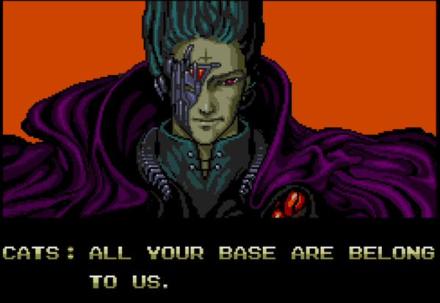
Big Brother Timebomb logo
Raiding TV for inspiration
Late last year, I wrote about using action-adventure stories from TV, movies, and comics to inspire new play activities. I’m a geek for old telly: the shows of the past offer great inspiration for today. The technical constraints and different pace of television from fifty years ago means that heroes often faced perils which are easy to mimic in a setting like a library or museum.
There’s no shame in plundering the past, either. Present-day TV producers do it all the time. Robert Thirkell’s excellent book on reality TV, C.O.N.F.L.I.C.T., tells us how Jane Root, an executive producer with a stellar career at Discovery Network and the BBC, drew on her own nostalgia to create compelling new formats:
You know how we came up with I Love The 1980s[?…We rewatched] The Rock and Roll Years. David Mortimer and I got Rock and Roll Years out of the BBC archive because I’d remembered it from when I was a child.A lot of the younger BBC team had never seen it and I showed it to them in my office and said, “What could we do that could bring this show back?” I Love The 1980s, the hit the team went on to create, turned out to be even bigger in America, where it ran on VH1 for years.
Get Real
I’m also a sucker for reality TV, although these days I find I’m usually too busy to keep up with it. Big Brother, with its cast of housemates trying to complete challenges, avoid eviction, and not go bonkers over ten weeks, was always one of my student favourites. I still remember characters like the drama queen Makosi from BB6 or the kilted rebel Sandy from BB3, a personal shopper who managed to escape from the house over a wall.
People get sniffy about reality TV, but it’s really no different to drama or comedy: you create a format which offers exciting situations, and then set it loose like a shark in the sea, moving forward, consuming new contestants, new scenarios. Great formats like Doctor Who, Family Feud (Family Fortunes in the UK), or Big Brother, run and run.
What’s more, reality puts people who aren’t entertainment professionals in front of the camera. For all that we might deride reality show participants as wannabes, and for all that they’re at the mercy of production teams, those contestants are also an example of the barrier breaking down between audiences and artists.
Bean Brother
When I was an infant school teacher, I worked with a class of thirty kids, most of whom didn’t speak English at home. One term, we had to grow a bean from a seed on a wad of damp cotton wool in a plastic cup. I remember doing the same when I was a pupil. It’s one of those rites of passage every British kid goes through, the foundation of natural science: infants starting to practice taking measurements and observing living things carefully.
I wanted my class’ bean experiment to be lively and fun, so we reimagined our science project as “Bean Brother”. Each day, we’d play Paul Oakenfold’s iconic Big Brother theme tune before bringing our plants out before the class.
My long-suffering teaching assistant would put on a Geordie accent to mimic Marcus Bentley, the famed narrator of UK Big Brother. Our kids would use a video camera to report on their bean’s growth in a “televised update from the Bean Brother house” before drawing, writing observations, and completing their other science tasks. They were engaging with elements of the pop culture that surrounded us, doing serious learning about science, using audiovisual equipment to record their own stories, and best of all, they were playing while they did it. Bean Brother made the daily routine exciting, incorporated modern media both as something to consume and create…and each anonymous bean took on its own life as a contestant for our class to cheer on.
This year’s UK Big Brother is called “Timebomb.” You can see the trailer here:
I’m excited, looking at the iconography lifted from Doctor Who, steampunk, and the Transformers movies. Earlier this year, Celebrity Big Brother drew on the imagery of dark fairytales, but this new series is even closer to my heart. Russell T. Davies’ superlative run on Who already featured a Big Brother episode and now I’ve started to think of the Big Brother house as a TARDIS control room.
I’m curious to see how the Big Brother production team apply the concept of “time distortion” to a reality show. It’s harder to mess with causality in a live production than a scripted, pre-recorded series. Whatever they get up to, and however well it works, I think that anyone who is interested in play, cultural programming, and community outreach should take a good look at what Big Brother producers Endemol are up to this year.
TimeQuest Postapocalyptic Auckland Skyline by Nicola Brady
Heritage is one of the most exciting challenges in community outreach. It’s an opportunity to dispel the myth that the past is staid or somehow divorced from the present. Many public and private bodies hold weird and wonderful archives, unique traces of the generations that have preceded us. Everything we do and dream is rooted in what has gone before, whether we like it or not, and yet the past is not fixed, as we uncover new truths, new ways of looking at those who have gone before us. The strange and beautiful thing about historical narrative and memory is that even a path you’ve already trodden can still change course in retrospect.
Two years ago I visited Auckland in New Zealand for a six month contract as Service Development Adviser to the city’s libraries. My brief was “to push the boundaries in how our large public library network creates innovative programmes for children and young people […] to inspire others to experiment and learn from the experience of working in fresh, even unexpected ways.”
During my stay, Auckland celebrated its 2013 Heritage Festival, an annual “opportunity for everyone, locals and visitors to Auckland, to celebrate and remember our past and discover our heritage.”
With my Auckland Council hat on, I looked for ways to make the past thrilling, and immediate, and to create opportunities for each neighbourhood library to take responsibility for devising and delivering inspired, playful programming.
A trip to Chromacon, the city’s festival of illustration, led to a meeting with British expatriate artist Nicola Brady. Her drawing of a crumbling present-day Auckland was the perfect inspiration for a time-travelling heritage event.
Nicola’s doomy vision provoked questions: What if we made our heritage programming about both the future and the past? What if we turned it into a dynamic mission of rescue, with participants making their own choices about the value of history?
TimeQuest was born: a season of cultural programming for the school holidays, with a heritage theme and an overarching narrative:
Auckland, 2379. It’s the end for planet Earth – a red sun burns in the sky and the ground is parched of life.
The last survivors are preparing to leave for a new home on the other side of the galaxy, when the scientist Maia completes her greatest invention – a time portal that can take you to any moment in Auckland’s history.
Her plan: to send you back in time to recover the best books, art, and objects from New Zealand’s past. Time has run out for the planet Earth, but we can still rescue the best of our heritage and take it with us to our new home.
Where will you go – and when?
What will you choose to save?
Time Quest – Raid the past to save the future.
For me, it was important to create a storyline which respected New Zealand’s bicultural past and future. If we were going to imagine a postapocalyptic science fiction setting, it would be one where Māori identity was front and centre. Our defiant genius hero would be a Māori woman and a scientist, who invited TimeQuest participants to make their own decisions about the value of heritage, rather than accept some dusty authoritarian imposition.
My Auckland supervisor, Peter Thomas, is a Māori public servant with extensive experience offering guidance and representation to government bodies working in New Zealand. He helped us to choose the right name for our rebellious female science-hero, and also took me through the process needed to approve the use of a quote I’d found at Auckland Museum, which became the motto of TimeQuest:
“Haere mai, e tai, kei te wera te ao”
“Come and see, the world is going to be burned”
These were the words recalled by an eyewitness to the 1886 eruption of Mount Tarawera, a violent natural disaster which decimated communities. I had seen the quotation in a display on volcanoes and earthquakes at the Auckland Museum, and saw it as a symbol of our programme’s link between an imagined future and authentic historical accounts. Peter helped guide me through the sensitivities around using a quotation in this way.
To balance out the gravity and drama of our programme, we also created an alternate promotional image which was friendlier and more cartoony, for TimeQuest events featuring younger children.
Auckland Libraries – Timequest logo
Having established our storyline, we wanted to be sure that local communities would create their own events and not just copy some central voice of authority. We wanted local stories, local histories, local art, and local play – so rather than create a prescriptive centralised programme, we created a resource pack with eight model activities to serve as inspiration for local librarians to devise their own versions.
Our simple missions included robotic dress-up, Nerf gun battles, creative writing, and research activities for a variety of age ranges. In many ways these events were the forefathers to later projects like Time Travel Detectives, Write Your Own Urban Myths, and Big Box Battle.
Auckland’s librarians ran with the inspiration they’d been given and came up with sessions such as these:
Time travellers from the year 2379 are on their way to find out information about the culture and life of the tweens and teens of today. They’ve asked us to make a teen’s room that they can teleport to the future. Help us to design and decorate a representation of what a teen’s room looks like in 2013.
Life in 2379 is rather bleak. With the sun burning out, life on earth is dying. The time travellers have come back to 2013 to gather enough knowledge and resources to save the future generations. But they will need enough sustenance to do this. Tweens and teens will be asked to investigate the vitamins and minerals humans need to keep healthy and strong. They will then be blending up some fruity concoctions for the travellers to take back with them to help them save the world.
Time travellers, to slow the sun and save the future you have been asked to bring back to the future Maui, the Māori hero of How Maui slowed the sun. Listen to the story and help Maui to catch and slow the sun again by making your own fishhooks and ropes.
It was great to watch local librarians take on the challenge and the opportunity of a heritage programme that left space for their own creativity. TimeQuest was just one of many experiments in Auckland over my six month stint there: everything from zombie battles to librarians in comic book stores and a national youth libraries conference.
Over the last couple of years, I’ve watched with pleasure as participatory, local, and lively approaches to culture and creativity have spread. For me, the most promising model for a decentered, participatory approach to the arts in local communities has been Fun Palaces, the British event co-directed by the Kiwi-raised Stella Duffy from an original 1960s idea by Joan Littlewood and Cedric Price. If it’s true that the neighbourhood public library is the gateway to all human knowledge and culture, then Fun Palaces are a beautiful fit for libraries’ swashbuckling cultural mission.
I had a great visit to City University in London today, talking with students on the Master’s course #citylis, convened by Ernesto Priego.
Our conversation covered everything from the art history of Aby Warburg to civil unrest in Ferguson, Missouri, tabletop gaming, and, of course, the inevitable zombie battles.
I often say that a neighbourhood library is like the TARDIS on your streetcorner – an ordinary box which can take you anywhere in human knowledge or imagination. If that’s true, watching James speak about the British Library’s digital innovations was like watching Doctor Who dance around the TARDIS control panel, flicking switches and levers with gleeful abandon.
My guest editorial for Public Library News, “The TARDIS on your streetcorner,” is out this week. Editor Ian Anstice offered me the chance to share my some of my experiences working with community libraries in Australia and New Zealand, and of course I worked a Doctor Who reference in there too.
Next month, I’ll be giving a guest lecture to students at City University, London. I’ll be talking about “Words and Pictures, Space and Play” alongside digital curator James Baker from the British Library and information science lecturer Ernesto Priego, who is also presiding genius at The Comics Grid.
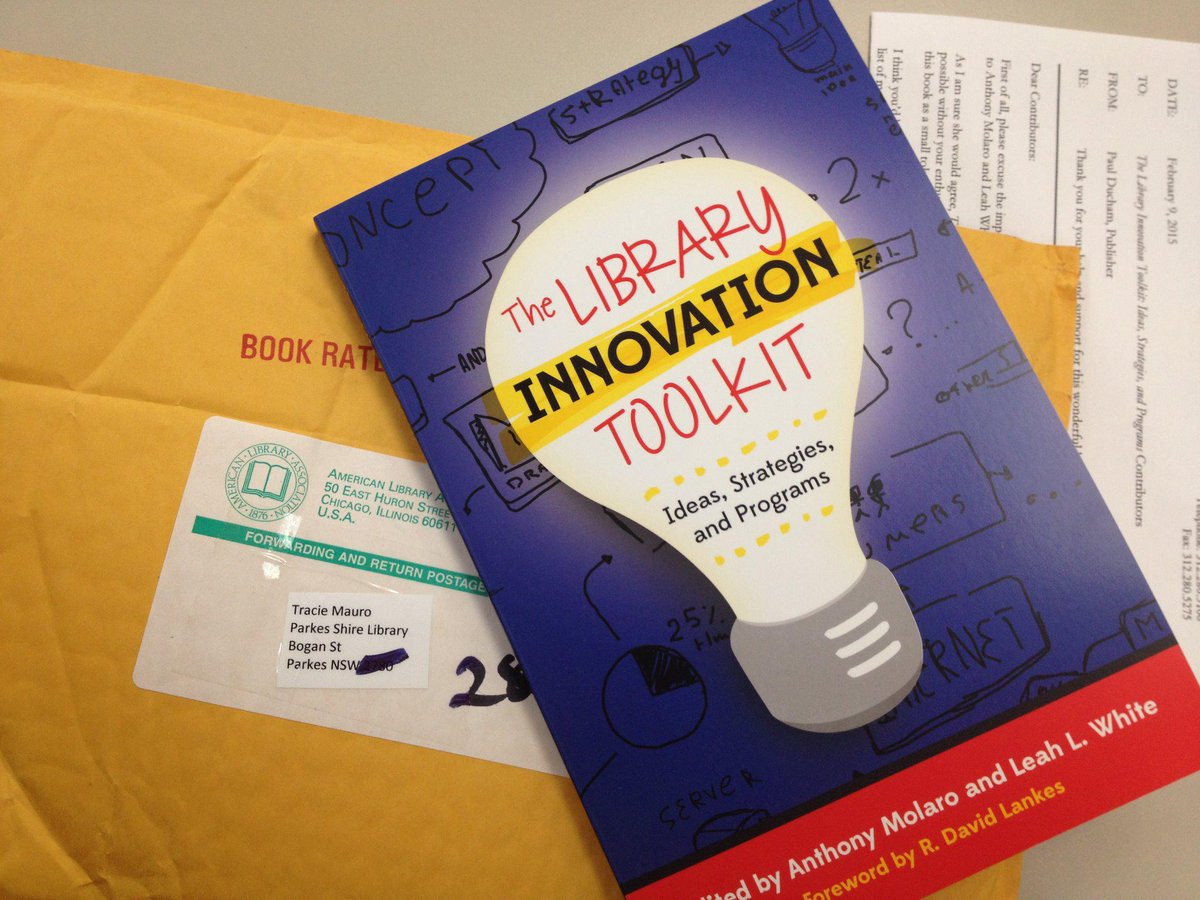
The book “encourages readers to take big risks, ask deeper questions, strive for better service, and dream bigger ideas”, with practical examples and suggestions for 21st century library services.
I wrote “Monsters, Rockets, and Baby Racers”, the chapter on working with children and young people, together with Tracie Mauro of Australia’s Parkes Library.
I was trying to find the words to look back on an eventful season with Parkes Shire Libraries, culminating in this year’s Australian national award for innovation in library youth services. I could have talked about how the country stereotypes have yielded to reveal a town of tough and funny and mad and passionate people. I could have recounted how all the amazing things we’ve done were really about a community that was ready for change, and a bunch of smart librarians who recognised that fact, and who drafted in an outsider to provoke and support and sustain that change.
Instead, I wanted the last word to come from someone else. One of our local writers, but one who – like me – came to Parkes a stranger and a foreigner.
Santhoshi Chander of the town writers’ group Author-rised kindly allowed me to share her thoughts about the experience of finding a new home out in the Aussie regions. “Ex-city-slicker” San divides her time between Sydney and Parkes.
A Country Fling, or A Love Letter to Parkes
It seemed from the beginning the stakes were against us. I’m not claiming our story has Romeo and Juliet status. But in our own way, we started as star crossed lovers.



 Big Brother Timebomb logo


 matt finch / mechanical dolphin