Postcards from the Future: Behind the Scenes at Wondrous Strange #notenoughscifi

Imagine letting your community dream wildly of the world to come.

Imagine collaborating on a future history spanning millennia.

Imagine turning public space into something that was wondrous and strange.

Screen Shot 2017-10-19 at 11.22.14

As part of our time-travel themed festival of weirdness, storytelling, art and science at Ann Arbor District Library, we asked visitors to write postcards from the future.

We collected over 80 tales stretching from 2018 to the year 5000.

Read more

Cool Story Bro at Big Fork Theatre

I tell stories and I always want to push myself to develop my storytelling skills. New challenges, new audiences, new ways of getting a tale onto the page or stage or screen.

I’m interested in memory, too: how we make it, preserve it, remake and share it.

Tonight I’m embracing both of those things with a session as guest storyteller for Brisbane improv troupe Big Fork Theatre.

Big Fork run a series called “Cool Story Bro”, where a storyteller recounts tales from their life in response to shouted audience prompts. Those stories then become the basis for skits improvised by the performers.

You can join me and the Big Fork gang at Cool Story Bro this Friday, 20th October at Hands On Art, 150 Enoggera Terrace, Paddington.

Wondrous Strange at Ann Arbor District Libraries

I’m just back from a week delivering training and community engagement for Ann Arbor District Libraries, an acclaimed public library service in Michigan, USA.

The micro-residency culminated in an all-ages half-day event called “Wondrous Strange”, blending play, history, prophecy, technology, art, craft, science fiction, time travel, and storytelling.

Screen Shot 2017-10-19 at 11.22.14.png

Wondrous Strange was an opportunity for the Ann Arbor community to venture into an imagined world blending fact and fiction, and to create their own shared stories and experiences stretching from recorded history into the distant future.

More on my Michigan visit soon, but for now here’s a short video from last Sunday’s session.

#NotEnoughScifi: John M. Ford & the Funny Business / Part 3

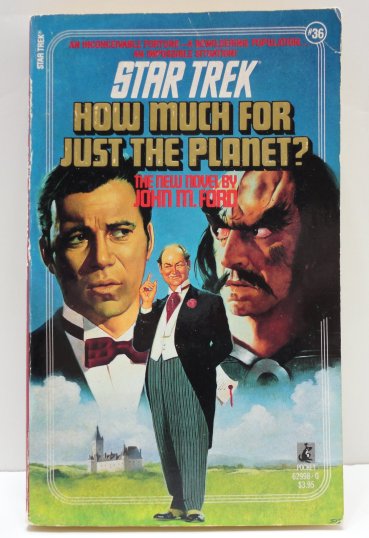
I started reading obscure author John M. Ford’s Star Trek books recently and I was blown away by how good they are.

I mentioned this online and other Ford fans started coming out of the woodwork:

Then I picked up a rulebook for a roleplaying game – GURPS Infinite Worlds – to research a time-travel-themed event I’m working on with a client.

Of course, whose name did I find among the co-authors?

Screen Shot 2017-08-25 at 15.59.41.png

Ford wasn’t just a novelist or poet – he also worked on role-playing games, devising scenarios and background material that other people could use to play out their own stories.

The past couple of years I’ve been working on ways to use such games for professional development, so I was pretty excited to have Ford come back into my life so soon.

Not only did he work on Infinite Worlds – a time-travel/parallel universe setting which, as the title suggests, can encompass almost any other scenario or genre – but he created an award-winning caper for the game Paranoia, and a manual for people who wanted to play as the traditionally villainous Klingons in the Star Trek game.

And here’s where we come back round to Ford’s novels, and to the making of fun and brilliant things in the cracks and spaces of big-money enterprises.

Here is where we talk about The Final Reflection.

final-reflection

Read more

#NotEnoughScifi: John M. Ford & the Funny Business / Part 2

Life is messy. The structures and services we design need to reflect that.

Creative responses to the world resist programming and procedure. You have to be flexible when you seek to address the challenges of this uncertain, unpredictable existence.

And if you’re going to plan and scheme a better future, that process should be intellectually stimulating, exciting: fun, even. Because if a vision of the future doesn’t engage, convince, and inspire, how are you going to make it work?

Let’s talk about Star Trek.

915sai2l15l

Read more

Marvellous, Electrical: Lusophone

We’re revisiting two previous instalments of Marvellous, Electrical in a new form this month.

My partner Marta Cabral reads “The Dough“, about Brisbane’s baker of Portuguese pastries, in a bilingual version here:

Portuguese speakers can also enjoy Marta reading “Foolaru”, my Australia Day piece from 2017, here:

Marvellous, Electrical is a two-year project in the form of an email newsletter from across Queensland, Australia and beyond.

You can subscribe to the newsletter here and enjoy the full archive at this link.

Everyday Stories and Creativity: Regional Queensland and Transformative Technology

I joined forces with Donna Hancox, Director of Research Quality in Creative Industries at Queensland University of Technology, to talk about the impact of digital technology on rural and regional Australia.

This slideshow requires JavaScript.

You can read “Everyday Stories and Creativity: Regional Queensland and Transformative Technology” over at The Writing Platform.

A museum is a story is a house and a home – @paulrbowers

Paul Bowers is Head of Exhibitions at Australia’s Museum Victoria.

During this week’s Museums Galleries Australia conference, Paul took time out to write a few words about the term “narrative”, currently in vogue among cultural institutions.

Paul argues that narrative can be a dangerous label for cultural institutions to bandy about.

“Narrative is singular, but the museum experience (stories, facts, things, people, audiences) is diverse”, he writes. He points out that few people experience a museum or exhibition as a defined story with a beginning, middle, and end. He reminds us that the museum is “conceptualised in law, policy, and culture as a never-ending entity”, unlike stories which come to a conclusion.

Paul starts to imagine “post-narrative exhibitions”, more open-ended experiences that break the constraints of linear narrative and which also step out of the “genres” within which culture professionals often see themselves:

We are often in a heroic genre – questing against ignorance. We have a lot of scientist-as-hero, in which they use effort, brains and a ‘magical agent’ (such as a DNA machine) to defeat ignorance. […] We should think about our character – are we Aragorn, Frodo, or Gandalf? The kingly hero, the ‘nobody’ with a heart of pure courage, or the wise one who initiates others into their knowledge? A museum could be all or any of these, but we usually default to being Gandalf without it being thought through.

Paul also talks about “shared universes” and trans media properties like the world that has sprouted from Marvel comics:

In a storyworld, the makers, the characters, the audience, are all together in enacting a story. They all believe. So I see that we need to place ourselves within a storyworld as well, not as simply the abstract producers of the product people come to see. If I use Dr Who as an example, when i read the comics, watch the TV show, buy the products or indeed do all three, I am having a consistency of engagement with the storyworld. Dr Who is always clever and kind. But I am not shut out of the TV show if I don’t read the comics. How do we achieve that – how can all our audiences feel part of one consistent ‘Museum world’ whether they attend everything we do or just visit the website now and again? And how does the storyworld idea promote continued and deepening engagement? I might watch a show on Netflix just because it’s part of the Marvel Cinematic Universe and I liked the Iron Man films. That’s very different from promoting a show to me, and I think it’s deeper than ‘brand loyalty’ – I’m not being loyal to the brand, I’m being loyal to a storyworld.

Paul suggest we look beyond the world of essays and prose fiction to poetry, for a less structured experience, one which grants more power to the reader:

Literature is an interesting metaphor. We try to think like novelists, or the great essay writers. But I think exhibitions are closer to poetry. Individual moments, brief and rich in meaning, clustered together in suite and bound together as one entity: exhibits as poems, an exhibition as a volume of poetry, and the museum as a body of work of a range of poets.

But I’d point to another form, too: the short story. Deceptively similar to longer prose forms, the short story at its best manages to fold great swathes of experience and vision into a tiny textual construct. It is not a path from beginning to end, but a space which you can explore in different directions.

The great Alice Munro – my beloved Alice Munro – put it best, in the introduction to one of her story collections:

A story is not like a road to follow … it’s more like a house. You go inside and stay there for a while, wandering back and forth and settling where you like and discovering how the room and corridors relate to each other, how the world outside is altered by being viewed from these windows. And you, the visitor, the reader, are altered as well by being in this enclosed space, whether it is ample and easy or full of crooked turns, or sparsely or opulently furnished. You can go back again and again, and the house, the story, always contains more than you saw the last time. It also has a sturdy sense of itself of being built out of its own necessity, not just to shelter or beguile you.

Alice Munro imagines a story as a building to be explored, containing multitudes. And maybe museums, galleries, and libraries – all those cultural institutions which exist for their users to explore – could be like her stories too: not fixed paths leading us helplessly from beginning to end, but spaces at once familiar and surprising, ever enticing, comfortable enough to welcome us but challenging enough to merit repeat visits.

Read Paul Bowers’ “On Misusing ‘Narrative’ In Exhibitions” here.