ISF Podcast: Threat Horizon and the auDA scenarios

I recently joined the Information Security Forum’s Mark Ward and auDA’s Sophie Mitchell for a short podcast discussion exploring foresight, uncertainty, cybersecurity, and Internet governance.

We looked at these issues through the prism of auDA’s recent scenarios for the future of the Internet and ISF’s own Threat Horizon foresight product.

Check out our episode of the ISF podcast here.

Time, Space, and Unbelonging: An Online Conversation with Kay Sohini, 27th October

“They say that time heals. But in my experience, grief slows down time. It interrupts the directional, linear way we perceive time.”

What special relationship does the comics medium have to time? How do comics-making and comics-reading affect our own experience of time? And what might the future hold for comics?

On 27th October, I’ll be joining researcher and comics creator Kay Sohini for “Time, Space, and Unbelonging”, a one-hour conversation which forms part of the 2024 Thinking Through Drawing event.

This year, the theme of Thinking Through Drawing is “Marking Time”: find out more about my session with Kay, and the wider event, which includes online and in-person gatherings, here: https://www.thinkingthroughdrawing.org/ttd-24-marking-time.html

Oxford Scenarios Programme 2024

In an uncertain world, scenario planning equips you with skills and tools to deal effectively with potential opportunities, threats and challenges.

This new video from the team at Oxford’s Saïd Business School showcases the latest cohort from the award-winning Oxford Scenarios Programme, which helps participants learn how to develop robust strategies in the face of numerous plausible futures.

As one graduate of the programme puts it, “I always come to Oxford expecting to have my mind really stretched…the thing that surprised me most this time was that I’ve come away with a feeling of confidence that I can take what I’ve learned and really apply it in my day job.”

(It’s also a tremendous amount of fun).

Enrolment is now open for April and October 2024. Find out more here: https://www.sbs.ox.ac.uk/programmes/executive-education/person-programmes/oxford-scenarios-programme

“Portraits of queer futurity” at National Portrait Gallery, Canberra

Where do we find the limits of identity and desire? What secret possibilities of thinking the world anew exist in quiet suburbs, remote farmsteads, Olympic pools, and the farthest reaches of time and space?

Join me next month for a special online virtual tour of Australia’s National Portrait Gallery, exploring portraits that offer different gateways to worlds beyond, blending past, present and future.

‘The future is queerness’s domain. Queerness … allows us to see and feel beyond the quagmire of the present.’ – José Esteban Muñoz

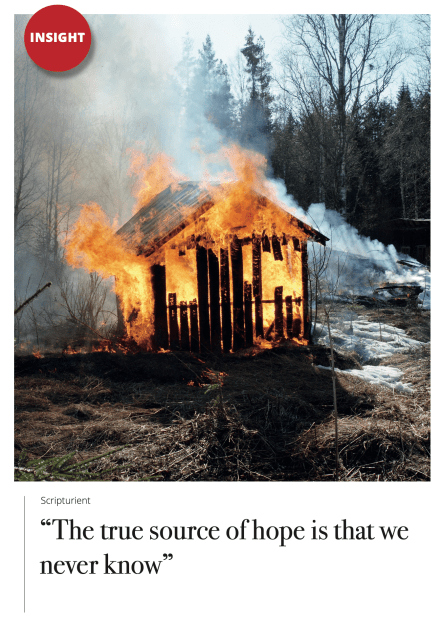
“The True Source of Hope Is That We Never Know”: Scripturient x Design by Fire, with Brett Milligan

The latest edition of Scripturient, my quarterly column for Information Professional magazine, is out now and can be downloaded here.

In it, I interview UC Davis’s Brett Milligan, who together with Emily Schlickman is the author of Design by Fire, a new book exploring our relationship to wildfires.

A transcript from the interview underpinning my column can be read below.

Matt: What was your first ever encounter with fire in nature?

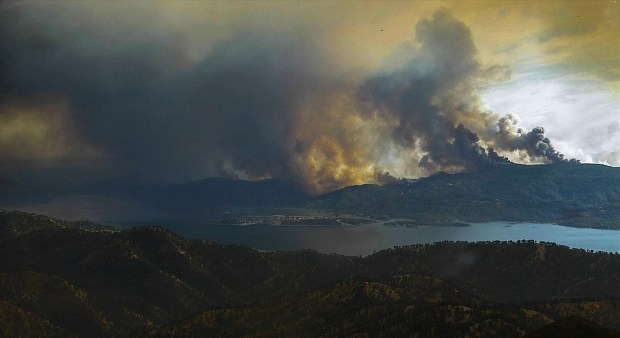
Brett: It would have been the hearth at home, or campfires; my dad took me, sometimes the whole family, camping a lot as a kid and would be very clear about taking care to extinguish it properly. I wasn’t exposed to wildfires until my time in California, decades later, and my first close-up experience with a large wildfire, the smoke, the immediacy of it, came with the LNU (Sonoma-Lake-Napa Unit) complex fires a few years back.

By Dripwoods – Taken of the LNU Hennessey Fire, CC BY-SA 4.0, https://commons.wikimedia.org/w/index.php?curid=93869076
Read more

Climate action and the vantage point of imagined futures: a scenario-based conversation

npj Climate Action has today published a new article, “Climate action and the vantage point of imagined futures: a scenario-based conversation“, co-written by Marie Mahon, Malka Older, David Robertson, and myself.

Drawing on the example of the IMAJINE project, the peer-reviewed piece explores how scenarios can provide the basis for discussion across disciplines and offer fresh ways to nourish our thinking about climate action.

It covers topics including: the nature of climate change and our understanding of it in different scenarios; questions of risk and responsibility now and in times to come; the use of scenarios to identify current blind spots and stimulate creative thinking; and the possibility that scenarios might offer fresh perspectives which allow us to reevaluate our notions of the sustainable “good life” and identify vulnerabilities which are overlooked in the present day.

Read the whole piece at npj Climate Action.

Peat Hub Ireland: 2050 Scenarios

I’m just back from collaborating with the Peat Hub Ireland team on a scenarios workshop which invited participants from across the communities and institutions involved in Irish peatlands management to explore three visions of the world in 2050.

Historians, scientists, community members, officials, archaeologists, educators, researchers, activists, and businesspeople all gathered to find new ways to think about sustainability and custodianship, suitable for times of turbulence and unpredictability.

It was quite unique to run a scenarios day incorporating a two-hour break for a lunchtime country walk – but being out on the bog gave us a shared experience of the landscape whose future we were exploring, and some useful metaphors for dealing with conditions of uncertainty.

Our work built on the scenario elements of the Horizon Europe-funded IMAJINE project, which were led by the University of Galway’s Marie Mahon and myself. Peat Hub Ireland’s Florence Renou-Wilson, David Wilson, and Kate Flood worked with me to develop IMAJINE materials into a fresh set of scenarios for the world of peatlands management in 2050. We were supported in delivering the workshop by colleagues including Elena Aitova and Liz Bruton.

You can find out more about Peat Hub Ireland at their website – and there’s an account of the day from the Department of the Environment, Climate, and Communications’ Dave Dodd here. Stay tuned for more about the scenarios, too.

Scripturient: To Dream Like A Human

The world could always be otherwise than it is. Sometimes fate is only a failure of imagination. The trajectory of automation is not only uncertain, it is unwritten. The fundamental question is less about technical capacity than ethics, authority, and accountability: Who will create the future – and with what ends in mind?

In the latest instalment of ‘Scripturient’, my quarterly column for Information Professional magazine, I draw together comments from a few different thinkers on automation and art.

You can read ‘To Dream Like A Human’ here.