My Visit to Library Island: Sherlonya Turner, Ann Arbor District Library

Library Island, the participatory activity which reaches the parts other professional development cannot reach, is here! You can read more and download your copy of the free, CC-licensed PDF file here.

I’m featuring some accounts of the Island from people who have attended Island sessions, or run Islands of their own, to give you a better sense of what it means to take part in, or even organise, your own Library Island. 

Today, Sherlonya Turner of Ann Arbor District Library (AADL) in Michigan, USA joins us for her account of running Library Island. Sherlonya and her colleagues ran a tailor-made session at LibCamp 2019, a professional development event for regional librarians hosted by AADL.

Sherlonya is a great public library leader, and, in her regular contributions to AADL’s culture blog Pulp, one of Libraryland’s most talented writers. Here’s what happened when she took charge of Library Island earlier this year.

When Managers Cut Loose: Being Playful with Colleagues

Read more →

Clemson University Visits Library Island

This week, South Carolina’s Clemson University Libraries became the latest organisation to visit Library Island, with their own lively adaptation of the free, CC-licensed core toolkit.

View this post on Instagram

This #TuesdayTrip we walked over to the Hendrix Student Center for our Professional Development Day, a chance for our employees to learn the ins and outs of other library job positions through a professional development game called Library Island. Each employee was assigned to a library with a new job position or role such as librarian, tech, dean, student, etc. Everyone was then given a task and had to find the corresponding person to help them with it, making the room operate like a library. Through this game, employees gained insight into their coworkers’ jobs and experienced both the good aspects and the challenges. After the game, we discussed what we learned. One employee said she now understands the demand placed on our financial officer, while someone who’s island was located far from the others realized how distance can impact an employee’s job, like those at our off-site Library Depot. Many employees said they realized they had a lot of assumptions about their coworkers’ jobs and the activity helped interpret them more clearly. But of course we couldn’t play a game and not have some fun! Stay tuned for this week’s #LibraryShenanigans to find out how we overthrew the dean, caught crooks stealing from Special Collections, declared a new library, ran out of books, and met a flamingo named Clarence. #NextTimeOnDragonBallZ . . . #clemson #clemsonlibraries #librariesofclemson #librariesofinstagram #library #cooperlibrary #academiclibrary #clemsonuniversity #southcarolina #clemsontigers #books #reading #learning #tuesday #trip #vacation #holiday #adventure #woohoo #employee #work #beach #island #hawaii #libraryisland

A post shared by Clemson Libraries (@clemsonlibraries) on

“Each employee was assigned to a library with a new job position or role such as librarian, tech, dean, student, etc. Everyone was then given a task and had to find the corresponding person to help them with it, making the room operate like a library. Through this game, employees gained insight into their coworkers’ jobs and experienced both the good aspects and the challenges.

After the game, we discussed what we learned. One employee said she now understands the demand placed on our financial officer, while someone who’s island was located far from the others realized how distance can impact an employee’s job, like those at our off-site Library Depot.

Many employees said they realized they had a lot of assumptions about their coworkers’ jobs and the activity helped interpret them more clearly. But of course we couldn’t play a game and not have some fun!”

This slideshow requires JavaScript.


Find out more and follow their Island adventures by visiting Clemson Libraries on Instagram, or read more about running a Library Island of your very own.

The Complete Yoga for Futurists

We might be excellent at making plans, but what future will those plans have to inhabit?

How do we take into account the roles and relationships which define our world, when we try to imagine that world’s future?

How can we cultivate flexibility and mindfulness when it comes to thinking about the futures which may await us?

If you’d like to reflect on these questions, the final “Yoga for Futurists” is here.

“Yoga for Futurists 3” is a standalone instalment of my video series offering “rough and ready” ways to swiftly improve the conversations you’re having about the future and your place in it.

You can watch the complete 3-part “Yoga for Futurists” playlist on YouTube.

What’s Your Process? Getting Stuff Written

I love writing. It means everything to me. It’s excruciating. It kills me. I couldn’t do without it.

Not just big, epic, heartfelt things make me feel this way. It happens every time I try to string a sentence together.

Reports, articles, academic essays.

Emails to business contacts (How much warmth to offer without wasting their time? How short to make paragraphs so the points are kept clear? How to sign off?).

I’m still thinking too hard about a twelve-word message I once wrote on LinkedIn in response to a moderately enticing offer of work. Too casual? Too brusque? 

The other week I got a piece published in The Conversation, a website which helps academics and researchers get their work out to a wider audience. The article was about using public libraries to help communities think about the future, using a method called scenario planning.

The article has been well received and widely shared among library professionals. It only got a minor tweak from the editor before it was published, but the final draft took a fair bit of work and I needed help to get there. So I thought I’d share the process with you here on the blog.

Read more →

#Apollo50: Learning from Missions and Moonshots

It’s fifty years this month since the Apollo 11 crew made their journey to the moon.

Today, “moonshot” is an organizational buzzword for efforts to achieve bold and impactful objectives. Everyone seems to want to find their own moon and shoot for it.

Early US design mock-up of a lunar landing module

Meanwhile, thinkers like Mariana Mazzucato explore the possibility of taking on Europe-wide social challenges with a new form of “mission-oriented innovation” (PDF download). Mazzucato writes that:

Societal challenges are complex. More complex than going to the moon, which was mainly a technical feat. To solve them requires attention to the ways in which socio-economic issues interact with politics and technology, to the need for smart regulation, and to the critical feedback processes that take place across the entire innovation chain.

With the new vogue for missions and moonshots, what could we learn from the original Apollo programme? I went to Stephen B. Johnson’s excellent 2002 book The Secret of Apollo: Systems Management in American and European Space Programs to find out. Here are a few of the things I picked up. Read more →

How Public Libraries Can Help Us Prepare For the Future – The Conversation

Could public libraries revolutionise politics and society by helping local communities to develop long-term foresight?

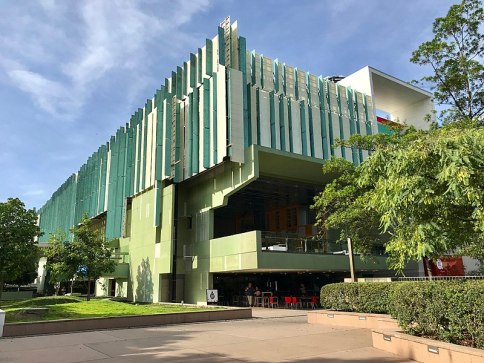
800px-state_library_of_queensland_01
State Library of Queensland by Wikipedia users Kgbo – CC BY-SA 4.0

My first piece for The Conversation, “How Public Libraries Can Help Us Prepare For the Future“, has just gone live.

It draws on research I conducted with the University of Southern Queensland’s Kate Davis and conversations with Rafael RamĂ­rez of Oxford’s SaĂŻd Business School.

The article explores the possibility of using public libraries as hosts for deeply local scenario planning initiatives, putting foresight tools commonly used by policymakers, big business, and the military in the hands of grassroots communities.

You can read “How Public Libraries Can Help Us Prepare For the Future” over at The Conversation now.

Summer Reading, Summer Viewing: Film and Fiction

It’s summer in the northern hemisphere, and that means holiday season for many of us.

I’m a pretty voracious reader at any time of year, but I squeeze in one or two extra books when the days run longer and vacations slow the pace of people’s work emails. And a trip to the movies takes you out of the heat and out of your head, with an air-conditioned spell in the world of someone else’s projected dream.

Inverted Manhattan skyline from the cover of Fleishman is in Trouble
The flipped city of New York, from the cover of Fleishman Is In Trouble

My summer recommendations are two very different works of art about New York, one old and one new, both offering prisms through which to look at how we live together today. Read more →