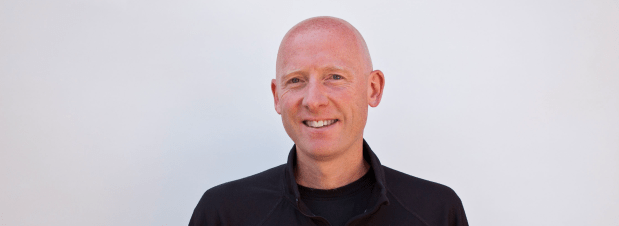
Betty Sue Flowers, Ph.D., is a writer, editor, and international business consultant, Emeritus Professor at the University of Texas, and former Director of the Lyndon Baines Johnson Library and Museum.
She has been a consultant for NASA and the CIA, Visiting Advisor to the Secretary of the Navy, Public Director of the American Institute of Architects, and editor of scenarios for organisations including Shell International, the OECD, the University of Oxford, and the World Business Council for Sustainable Development.
She has written scholarly works on Robert Browning, Adrienne Rich, and Christina Rossetti among others, as well as serving as a consultant to television series including PBS’s Joseph Campbell and the Power of Myth. You can see more of her work and her extensive publication history here.
In September 2020, I talked with Betty Sue about her career, her accomplishments, and her understanding of the diverse fields she’s worked in, from foresight and healthcare to poetry, literary studies, and library leadership.
You’ve had such a varied and accomplished career, it’s hard to know where to start. Then I saw one of the earliest and most curious entries on your CV: you were a lab assistant at something called the Rhythmic Systems Laboratory?
I started life off as a scientist. I put my way through college working in a zoology lab. I’m still in touch with my mentor, who went on to the University of Virginia. My love of poetry took me away from that path – I just kept following it in another direction.
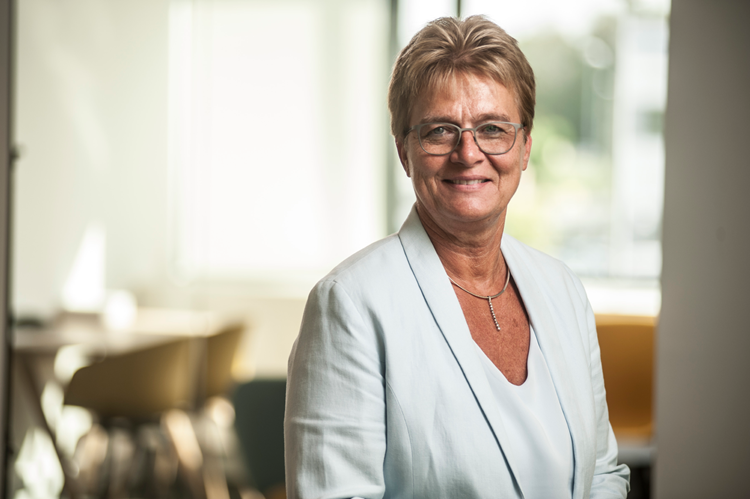
Saskia Van Uffelen is the Digital Champion for Belgium, tasked with promoting the benefits of digital society as part of the European Commission’s efforts to ensure every European citizen acquires the digital skills they need to remain productive, employable and enfranchised. After a career encompassing roles at Xerox, Compaq, HP, Arinso, Bull, and Ericsson, she is currently Corporate Vice President for the French group GFI, supervising developments in the Benelux countries. Saskia is also the author of Dare For Tomorrow: Leading, Working, Learning, and Living in a Digital World.
The crises of 2020 have moved many aspects of our lives online, not always without complications. I started by asking what this year looks like from the perspective of Belgium’s Digital Champion.
My keynote will launch the Okoberfest’s Strategy & Innovation summit with a two-hour session on Wednesday, October 7 at 10:00 a.m. Pacific Time.
The highly participatory session will help attendees to develop skills in strategic foresight and decision-making, suitable for the uncertainties of 2020 and beyond. Tried and tested practical tools will be accompanied by international examples and case studies, including the current IMAJINE project examining the future of the European Union at a regional level.
The conference’s wider offer will also enable attendees to explore issues including creative placemaking, equity & anti-racism, efficiency, and happiness in local government.
On September 23rd, at 09:30 AM Eastern Time, I’ll be joining Erik Boekesteijn at the online CIL & IL Connect 2020 conference for a quick chat about foresight and futures for information professionals, their institutions, and the communities they serve. Erik is running a daily interview strand with a range of information professionals and their allies as part of the event.
In 1992, a consignment of around thirty thousand bath toys was lost from the Ever Laurel, a container ship bound from Hong Kong to Tacoma, Washington. During a storm in the North Pacific Ocean, several containers were washed overboard, including one bearing “Friendly Floatees”. These Chinese-made toys took the form of red beavers, green frogs, blue turtles, and yellow ducks, and when the container holding them broke open, the Floatees were free to travel the oceans.
Ten months after the spill, most of these bath toys arrived on the beaches near Sitka, Alaska, but not all of them shared this fate. A number spent the winter of 1992-93 frozen in the ice of the Bering Sea. Some floated back into the North Pacific, and yet others made their way through the Arctic Ocean to the North Atlantic. Oceanographers eagerly studied their unexpected trajectories, which revealed previously unknown information about ocean currents.
In his book Footsteps in the Dark, the American historian George Lipsitz uses this event to explore how cultural phenomena such as pop music also circulate via hidden currents, finding new life and new uses in different times and different places around the world.
He describes how KC and the Sunshine Band found their sound by combining influences from Pentecostal Christianity, doo-wop, Santería drumming and Bahamian “junkanoo” carnival music; how the infectious beat of Dion’s “The Wanderer” has its roots in the Italian tarantella; how a composition by George Clinton of Parliament owes its “operatic” quality to synagogue chanting which Clinton heard in childhood at a schoolfriend’s bar mitzvah.
Lipsitz also attends to the social uses of such music. Analysing the Isley Brothers number which gives his book its title, he considers it an account of 1970s Black American experiences which were neglected by journalists and historians:
“As far as we know, the Isley Brothers did not intend to be historians of these changes or even to create a historical record of them with their music. They never chose to present an empirical accounting of events organized in chronological order, nor did their songs speak directly about politics, laws, or leaders. The Isley Brothers did not do research in traditional archives filled with government documents, personal records, or diaries of famous people. Yet they displayed extraordinary familiarity with and knowledge of what we might call the alternative archives of history, the shared memories, experiences, and aspirations of ordinary people, whose perspectives rarely appear in formal historical archival collections.”
Lipsitz gives us the tools to look not only at the past, but also the future, through lenses we might have previously neglected: sifting pop culture for overlooked clues to social change, examining cultural movements to understand the hidden currents which drive them, and making meaning from the “Friendly Floatees” which have drifted away from the course prescribed by the dominant social, political, and economic order.
“My hope,” he writes, “is that reading popular music as history and interpreting history through popular music will help us to hear the footsteps in the dark, to see how history happens and why music matters.” I believe that Lipsitz’s book also has much to teach us about the way we look at the future. Read more →
“Queerness is primarily about futurity and hope. That is to say that queerness is always in the horizon.” – José Esteban Muñoz
1: Future blindspots in gender, identity, and sexuality
I’ve been spending most of my time on foresight and strategy for several years now. It’s challenging, lively work, helping people and organisations to look at the future and seek out their blindspots to support better decisionmaking. Often we construct scenarios, imagined future contexts, to inform that work, creating plausible futures which challenge current assumptions and provide a unique vantage point on the present.
Late last year, I wrote about the whiteness of foresight and the ways in which this kind of work, and its practitioners, might be blinkered by lack of diversity. But those aren’t the only kind of blinkers we encounter when we turn our gaze towards the future.
Before lockdown, I attended a scenarios workshop constructing big global futures, intended to explore fundamental questions about the ways our societies will be organised in decades to come.
The project generated a number of visions of the world in 2050, with huge changes not only to how we live and work together, but even the ways in which technology might be integrated into our own bodies. Yet despite all this radical transformation, people shied away from reimagining the personal relationships which underpinned this world. In the finished scenarios, featuring a number of personas from each imagined future, there was little sense of the ways in which family life and its related intimacies might have changed or been changed by the forces at work in each version of 2050.
Looking around the room at the workshop participants – largely white, European, degree-educated, mostly presenting as straight – I wondered what questions we had refused to ask ourselves, or address, as a result of our own identities and points of view, the life experiences and perspectives we had brought to the workshop by mere virtue of who we were. Read more →
We discussed different foresight methodologies, the particular challenges and opportunities in working on futures with trade unions, and, inevitably, COVID-19, but our conversation began with Aída’s sporting career, and the lessons it taught her about coping with turbulence and uncertainty.
Matt:
What was your journey to becoming a foresight practitioner? You were a lawyer, and a competitive open-water swimmer – how did that lead you to work on foresight, and how did it prepare you for the role?
Aída:
In many ways I saw myself as a swimmer first and everything else second! I studied and practiced law, completed a doctorate. As an open water swimmer I competed at international level, also racing in Open Water World Cups. Read more →
I recently had the opportunity to speak with Steve Thomas of the American library podcast Circulating Ideas and Ian Anstice of the UK’s Public Libraries News. Both conversations were released online this week.
Ian asked me some questions about the COVID-19 pandemic, libraries’ response to it, and what might be on the horizon for our societies and the institutions that serve them.
Like any good foresight practitioner, I sought to offer questions of my own, and provocations more than prophecy. We discussed resilience, anticipation, and both the dangers and opportunities that organisations face during a prolonged, indefinite season of turbulence and uncertainty. I think the points will be useful for people outside of the library and information sector. You can read our conversation at the Public Libraries News site.
Great piece on library futures @DrMattFinch Yes! Let's "find new ways to measure and communicate the difference libraries make to their communities and…(enable) previously marginalized voices and communities to be heard and recognized." https://t.co/8GYzPBw5NV
Last week, I put together this one-hour video session for America’s Engaging Local Government Leaders network, ELGL.
It’s a straightforward foresight and strategy starter pack, no nonsense, no jargon, helping to answer the questions “Where are we going?” and “What should we do?”
The session is aimed at US local government leaders, but should work for a wide range of institutions, communities, and settings.
‘Never assume the future will be an extension of the past’ Scenario planning in the Age of COVID-19
Matt Finch sat down with Trudi Lang, a senior fellow in management practice at Oxford University’s Saïd Business School. Lang is a researcher and strategist with particular expertise in scenario planning, a foresight methodology that seeks not to predict the future but to usefully challenge our assumptions about what’s coming next.
“The key challenge of government is to prepare for a future in which we will be surprised time and again,” said Peter Ho, then Singapore’s top civil servant, in 2009.
Few people at the start of 2020 would have anticipated an enormous symmetric shock affecting the entire world, demanding drastic interventions from the state — yet experts had been warning of a pandemic for considerable time. Indeed, as the New York Times reported in March, the US federal government had rehearsed for a pandemic three times over the last four years.
With the world plunged into uncertainty, how do we navigate the turmoil of the current pandemic and look beyond the crisis, into a future that is hard to picture clearly? Read more →