As I discovered on my visit out to the cotton fields of the Darling Downs, digital technology is changing the way we farm. Cows are milked in robotic dairies. Drones are herding and surveying cattle from the skies. Self-driving machines are steering across Queensland’s fields, tending crops and baling cotton.
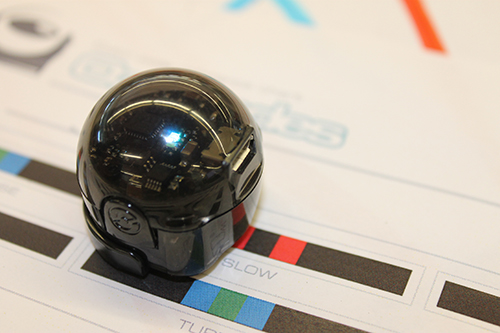
I worked with Eva Ruggiero and Tammy Morley of the State Library’s Regional and Public Libraries Team to devise a game which explored robotics in agriculture.
After months of planning and preparation, communities across Queensland are gearing up to celebrate the arts and sciences in all their forms, partnered with a range of libraries and other institutions.
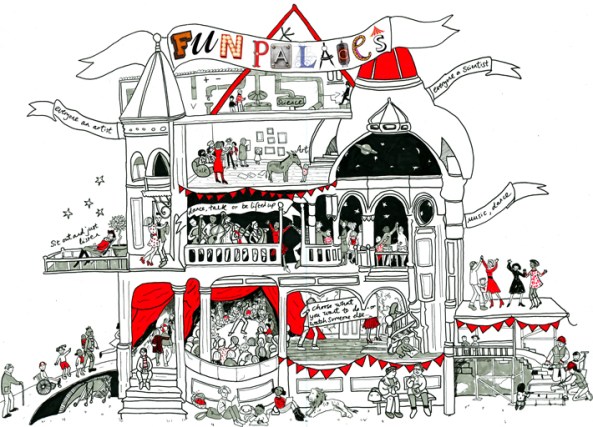
From the islands of the Torres Strait to the cotton fields of the Darling Downs, plus every library in the city of Brisbane, and of course our own State Library on the city’s South Bank, the first weekend in October will see a swathe of venues open their doors for community-led events celebrating the Fun Palace motto “everyone an artist, everyone a scientist.”
I’ll be with the State Library team on Saturday, supporting events including our Scrub Turkey Sessions devised with urban ecologist Professor Darryl Jones of Griffith University.
My belated Sunday morning read is this piece from the Guardian on London’s Secret Cinema, which blends movie screenings with theatrical experiences and themed activities:
I’m a big fan of participatory live-action storytelling and I’m fascinated by opportunities to blur the line between fiction and “real” experience, creating events where attendees shape the outcome of a story.
I went to a Secret Cinema event a few years back and was pretty disappointed – the set design and costumes were fancy, but the opportunities to get involved in the storytelling were minimal. I’d gone to see Casablanca and while it was cool to sing La Marseillaise at a bunch of actors in Nazi uniform, the rest of the “immersive experience” consisted of overpriced snacks and a “casino” barely worthy of a student union’s James Bond night. The Guardian piece captures the extent to which Secret Cinema events are now more about taking your money than letting you step into the world of a story.
It’s been an eventful weekend, and I’m five days out from running a day-long experimental project here in the UK – more on that further down the line – but I wanted to share some of the excitement from yesterday’s International Games Day at the British Library (BL) in central London.
Gary Green of Surrey Libraries invited me to join the team of volunteers who were running events under the leadership of BL Digital Curator Stella Wisdom.
There were video games, board games, and some that were just a little off the wall, including the bizarre German box-stacking game Ordnungswissenschaft:
We were able to play this by repurposing the boxes from the infamous Comic Book Dice, which had also made a visit to the BL.
I got introduced to the German game by gaming aficionado Ross Fowkes. Ross also showed me a digital jousting game which used motion sensors and the music of Bach in multi-player battles.
“Johann Sebastian Joust” was inspired by a party game played with lemons and spoons. One quick trip to the supermarket later and we had unleashed the Lemon Knights in the heart of the library.
Both the BL’s child-friendly daytime sessions and the later evening event were great successes, with lots of visitors trying their hand at games old and new. Stella and her team did an incredible job playing host to a wide range of people and offering some truly bizarre activities. (Libraries are sometimes cautious about wild play, so I was delighted that Stella gave us permission for a full-on lemon battle in the shadow of the venerable stacks).
I’ll be talking about digital comics projects including the Fun Palaces Comic Maker and a new version of Comic Book Dice from Manila’s Museum of Contemporary Art and Design, plus my game for The Lifted Brow, “A Tear in Flatland“.
Tabletop Superheroes was quick to learn and difficult to master, an all-ages Dungeons and Dragons-style game which tied in with the School for Supervillains theme we’d taken from guest author Louie Stowell. You can download it now from Parkes Shire Library.
This year in South London, roleplaying game expert Andy Horton – a librarian at Regent’s University – will be hosting a special Fun Palaces game event at Upper Norwood Library.
Andy and friends will be giving Fun Palaceers the chance to try their hand at a range of role-playing and board games, and there also be a specially-written Dungeons and Dragons scenario for people brave enough to take on a Fun-Palatial quest.
Like Stephann Makri and the #Citylis zinemakers, Andy’s another academic who is partnering with public libraries this October in the name of play, learning, and outreach. Fun Palaces salute you, Dungeon Master!
Upper Norwood Library is a special case among those taking part in Lambeth’s Fun Palaces this year. Jointly funded by Croydon and Lambeth for 100 years, it’s a public library which provides a model for local government co-operation in providing cultural and information services to a local community.
We spent four hours on the streets of South London, playing Comic Book Dice, getting people to dress up as figures from historic paintings, and sharing strange facts about art from the Dulwich collection – like The Takeaway Rembrandt, the second most stolen painting in the world…
The NCS teen volunteers will be running their own, completely self-directed art event, PROJECT SCREAM, in Ruskin Park on Saturday 26th September.
I’ll be back at Dulwich in December for my event Your Mind Is The Scene of the Crime, an activity which invites you to explore what lies in others’ hearts, delve into the dark side of the gallery, take secrets and lies and make them into art.
Your Mind Is The Scene of the Crime is part of Dulwich Picture Gallery’s Escher season. More news soon!
We’ll be running hands-on art events for visitors to the festival, exploring what arts outreach looks like beyond the gallery walls and getting our young volunteers to work as mentors, workshop leaders, and creators in their own right. All very Fun Palaces – can you sense a recurring theme this autumn?
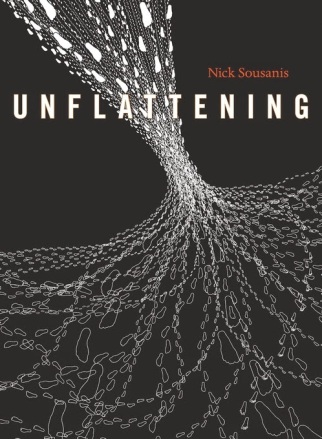
Australian arts journal The Lifted Brow has just published my review of Nick Sousanis’ doctoral-thesis-as-comic-book, Unflattening.
The review is a little different – it’s an online choose your own adventure, which sees the reader trapped in a mysterious library, trying to locate Nick’s book and escape in one piece.
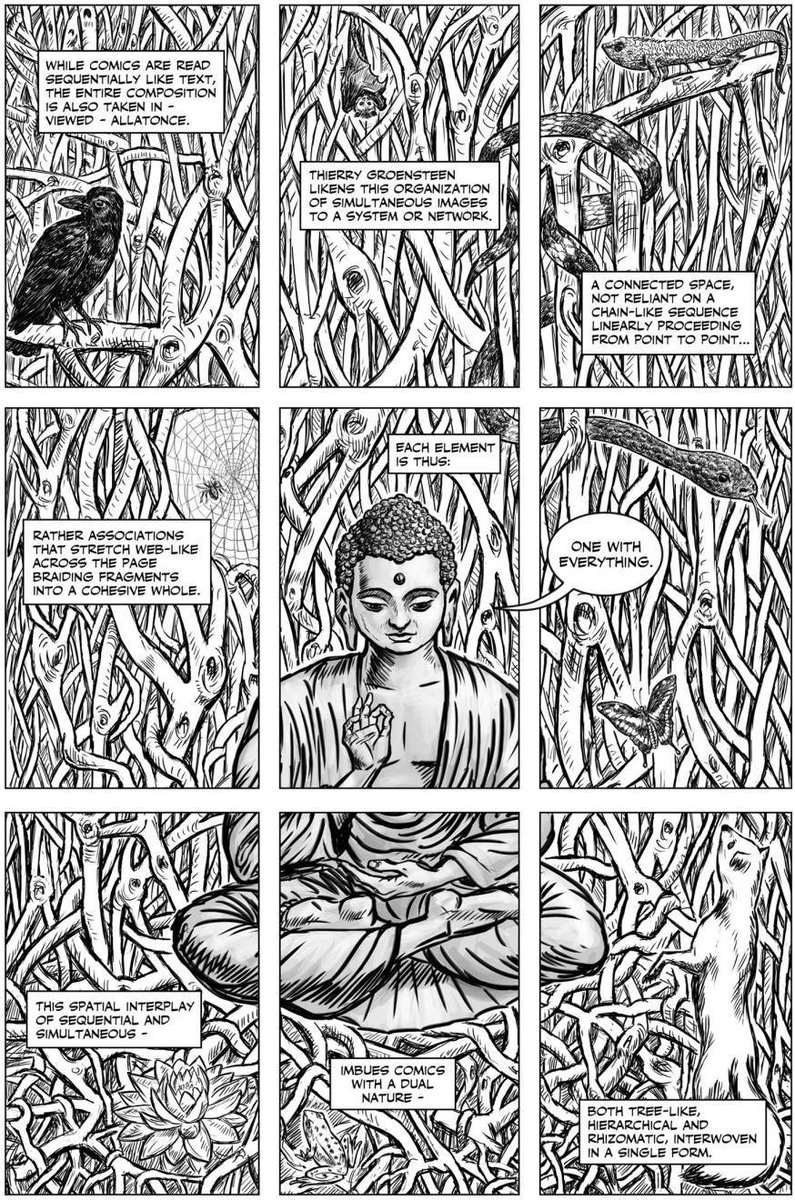
The Lifted Brow piece is something special to me, though. It comes from being persuaded of Nick Sousanis’ case, in Unflattening, that the traditional priority of words over illustrations is wrong: words and images cannot be explored separately from one another.
Reading the book, it becomes difficult to feel satisfied with comics criticism that deals in words alone. Alternatives like Terry Elliot’s experiments with digital annotation of Unflattening look increasingly appealing; therefore I decided to create my response to Unflattening in the form of a game: a set of sequential incidents which the reader can navigate at will – rather like the panels of a comic book.
I’ve got a few blog posts lined up over the coming weeks. I’ve just met a number of deadlines, and the break allows me to turn some of my notes into text fit for human consumption.
Big Brother Timebomb logo
Raiding TV for inspiration
Late last year, I wrote about using action-adventure stories from TV, movies, and comics to inspire new play activities. I’m a geek for old telly: the shows of the past offer great inspiration for today. The technical constraints and different pace of television from fifty years ago means that heroes often faced perils which are easy to mimic in a setting like a library or museum.
There’s no shame in plundering the past, either. Present-day TV producers do it all the time. Robert Thirkell’s excellent book on reality TV, C.O.N.F.L.I.C.T., tells us how Jane Root, an executive producer with a stellar career at Discovery Network and the BBC, drew on her own nostalgia to create compelling new formats:
You know how we came up with I Love The 1980s[?…We rewatched] The Rock and Roll Years. David Mortimer and I got Rock and Roll Years out of the BBC archive because I’d remembered it from when I was a child.A lot of the younger BBC team had never seen it and I showed it to them in my office and said, “What could we do that could bring this show back?” I Love The 1980s, the hit the team went on to create, turned out to be even bigger in America, where it ran on VH1 for years.
Get Real
I’m also a sucker for reality TV, although these days I find I’m usually too busy to keep up with it. Big Brother, with its cast of housemates trying to complete challenges, avoid eviction, and not go bonkers over ten weeks, was always one of my student favourites. I still remember characters like the drama queen Makosi from BB6 or the kilted rebel Sandy from BB3, a personal shopper who managed to escape from the house over a wall.
People get sniffy about reality TV, but it’s really no different to drama or comedy: you create a format which offers exciting situations, and then set it loose like a shark in the sea, moving forward, consuming new contestants, new scenarios. Great formats like Doctor Who, Family Feud (Family Fortunes in the UK), or Big Brother, run and run.
What’s more, reality puts people who aren’t entertainment professionals in front of the camera. For all that we might deride reality show participants as wannabes, and for all that they’re at the mercy of production teams, those contestants are also an example of the barrier breaking down between audiences and artists.
Bean Brother
When I was an infant school teacher, I worked with a class of thirty kids, most of whom didn’t speak English at home. One term, we had to grow a bean from a seed on a wad of damp cotton wool in a plastic cup. I remember doing the same when I was a pupil. It’s one of those rites of passage every British kid goes through, the foundation of natural science: infants starting to practice taking measurements and observing living things carefully.
I wanted my class’ bean experiment to be lively and fun, so we reimagined our science project as “Bean Brother”. Each day, we’d play Paul Oakenfold’s iconic Big Brother theme tune before bringing our plants out before the class.
My long-suffering teaching assistant would put on a Geordie accent to mimic Marcus Bentley, the famed narrator of UK Big Brother. Our kids would use a video camera to report on their bean’s growth in a “televised update from the Bean Brother house” before drawing, writing observations, and completing their other science tasks. They were engaging with elements of the pop culture that surrounded us, doing serious learning about science, using audiovisual equipment to record their own stories, and best of all, they were playing while they did it. Bean Brother made the daily routine exciting, incorporated modern media both as something to consume and create…and each anonymous bean took on its own life as a contestant for our class to cheer on.
This year’s UK Big Brother is called “Timebomb.” You can see the trailer here:
I’m excited, looking at the iconography lifted from Doctor Who, steampunk, and the Transformers movies. Earlier this year, Celebrity Big Brother drew on the imagery of dark fairytales, but this new series is even closer to my heart. Russell T. Davies’ superlative run on Who already featured a Big Brother episode and now I’ve started to think of the Big Brother house as a TARDIS control room.
I’m curious to see how the Big Brother production team apply the concept of “time distortion” to a reality show. It’s harder to mess with causality in a live production than a scripted, pre-recorded series. Whatever they get up to, and however well it works, I think that anyone who is interested in play, cultural programming, and community outreach should take a good look at what Big Brother producers Endemol are up to this year.


 Big Brother Timebomb logo
 matt finch / mechanical dolphin