#NotEnoughSciFi – Hope and Holodecks Revisited

This week in Michigan, I’m leading a series of talks, workshops, and pilot sessions on immersive play and live-action experiences in libraries and other community settings.

To tie in with these sessions, I’ve written a little piece about Hope and Holodecks – incorporating Blade Runner, Star Trek, Captain America….and Romy and Michele’s High School Reunion.

This slideshow requires JavaScript.

Look, I think one day we’ll get holodecks.

That was what Star Trek: The Next Generation called the interactive, fully immersive spaces where crew members could conjure ultrarealistic, AI-driven virtual experiences of play, sport, storytelling, historical research, or even technical experimentation.

I think one day they’ll arrive.

I think that whatever the library becomes or is replaced by in the future will look a lot like the holodeck. Instead of summoning information in containers like books or web pages, it will feel like an immersive, flowing sensory and social experience.

It won’t be libraries or other knowledge institutions that develop them, though – it costs too much money.

What’s interesting about how Star Trek imagines that experience is not the pseudoscientific technology behind it. It’s how fluent all the characters are in its use.

They walk into that magic space, summon a story or game or simulation, and tailor it to their requirements. Read more

Pineapple GLAM with @amywalduck

Today I’m joined by Amy Walduck, Queensland State Manager for the Australian library association ALIA.

legitlibrarian

Amy’s a government research librarian, musician, social media maven, and culture professional extraordinaire. She’s also creator of the @QLDLibraries Twitter account celebrating library achievements across Australia’s Sunshine State.

dhjwbhev0ainocc

Amy was my partner in crime on various initiatives at the State Library of Queensland, including baking cakes for occupational therapists at Griffith University. She’s a natural networker, enthusiastic, innovative, and determined: great qualities in an ever-changing sector like Libraryland.

Pinned to the top of Amy’s Twitter timeline for most of 2017 has been this statement:

I started our chat by asking Amy: Why did you make this your 2017 life goal?  Read more

Library Island hits #nls8

My professional development roleplay Library Island visited the New Librarians Symposium at the National Library of Australia last weekend.

c2gd1k9usaa_j88

Librarians old and new joined forces to explore their work with communities in new, messy, and productive ways.

Going beyond the vogue for design thinking, the safe, fictional space of “Library Island” allowed us to engage with knotty questions of office politics, limited resources, managerial edicts, and library users who are sometimes airbrushed out of “future visions” – such as homeless people or those whose behaviour might be challenging to staff. Read more

Best #FyreFestival Ever: From Melbourne to Library Island

1. #FyreFestival

So you may have been watching accounts of the Fyre Festival’s collapse on social media.

The much-hyped “luxury music retreat”, taking place on the Bahamas’ Exuma Islands, charged thousands of dollars for tickets. On arrival, festivalgoers found themselves stranded in emergency-relief tents, their luggage confiscated and dumped in a shipping container. By the end of the first day, the organisers had cancelled the event and attendees were struggling to leave the island.

One of the event producers gleefully noted that she hadn’t been made to sign a nondisclosure agreement and gave an account of what she saw as the festival’s inevitable downfall to New York magazine.

Festival organiser Billy McFarland told Rolling Stone:

The Exumas didn’t have a really great infrastructure – there wasn’t a great way to get guests in here – we were a little bit ambitious. There wasn’t water or sewage. It was almost like we tried building a city out of nothing and it took almost all of our personal resources to make this happen, and everything we had, to make this festival go on.

All of which reminds me of a wet weekend in Melbourne.

2. Chance, skill, and disaster

Over the past fifteen months, I’ve been working with health practitioners, librarians, and other professionals on ways to incorporate play and storytelling in their training and development.

As research for this, I took part in a game of Best Festival Ever at Arts House Melbourne in July last year.

Best Festival Ever, subtitled How To Manage A Disaster, is a participatory theatre presentation devised by Boho Interactive. Attendees take on the role of event producers faced with bringing a festival together at the last possible minute, dealing with sponsors, talent, merch booths, caterers, and bathrooms – as well as a party-hungry horde of festivalgoers.

By playing a series of simple games of chance or skill, the players collaboratively contribute to the success or failure of the festival as a whole – firstly as it’s being organised, and then in the latter stages of the game, improvising a response to catastrophic events.

Boho’s team originally created the game to explore environmental science through interactive theatre. The result is a lively event which examines whether our decision-making processes are well-equipped to deal with natural and man-made systems. Playing the game and attempting to run the “Best Festival Ever” forces us to confront the way we approach complex systems with more serious real-world consequences – such as the environment we live in.

If you get a chance to play this one day, you really should.

3. The Road to Library Island

It’s not hard to see how a game of Best Festival Ever – which only takes a couple of hours to play – might have sharpened the thinking of Fyre Festival’s organisers. Playing a frantic game against the clock to see if a festival’s Portaloos get cleaned is a marvellous way of focussing your attention on infrastructure. And a little time playing in the sandbox gives you the chance to prepare for the future – not just for what you hope or expect to happen, but also the catastrophic collapse of the systems you have in place.

library island

Libraries have proved resilient in these kinds of catastrophic scenarios, perhaps because of their strong connections to the community they serve. Whether it’s Scott Bonner’s team keeping their library open during the 2014 Ferguson riots, or Christchurch Libraries’ work during the earthquakes which struck their city in Aotearoa/New Zealand, libraries have some pretty great success stories to share from times of disaster.

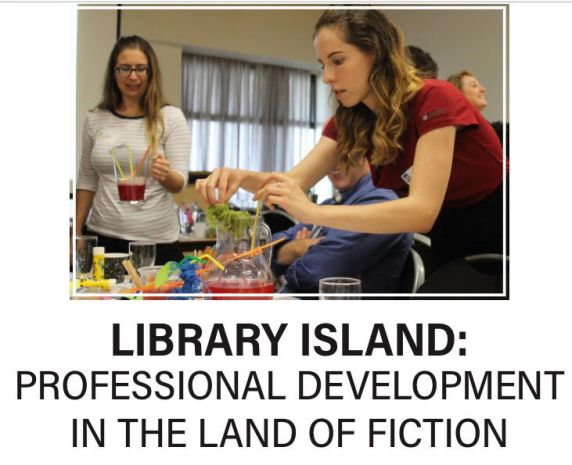
So we spent last year working on a professional development session called Library Island. Our game uses this kind of play-based scenario to explore national strategies for public libraries, the problems of day-to-day library operations, and the challenges that arise when unexpected pressures are placed on the system.

Already Library Island has led to new communications and strategic approaches at the State Library of Queensland, and we’ll be taking the game to both the NLS8 and LIANZA conferences later this year. You can read more about Library Island, and this approach to professional development, in the current issue of Library Life.

In the meanwhile, why not pass some time with the Schadenfreude-heavy story of #FyreFestival on social media?

Library Island: The Professional Benefit of Play

What is the professional benefit of play? When is it better to impose an objective, and when should we learn through experimentation and happy accident? How can we “fail better” without wasting valuable resources?

library island.jpg

In this month’s Library Life magazine, I explore these questions through an account of the Library Island project I’ve been developing during my time at the State Library of Queensland.

Could it be that our next innovation challenge is to break down the walls between fact and fiction? Could story-based, open-ended play be as valuable for professionals as for children? Could it be physical, low-tech, and improvisational as well as digital?

You can read Library Life April 2017 here as a PDF download – my piece starts on page 12.

Perpetual Stage: The Value of Pretend Play

I just binge-watched a TV show; rare for me, these days. I love TV but it’s so time-consuming. Your evenings and weekends just seep away in front of the screen.

But I felt I had to watch FX’s Legion, the show about a troubled young man who may be mentally ill and may have psychic powers. It’s a gorgeously shot and well acted eight-part show from Noah Hawley, who was also responsible for Fargo.

I saw people online complain about the show being too whimsical and indulgent; I’ve seen it called pretentious and precious.

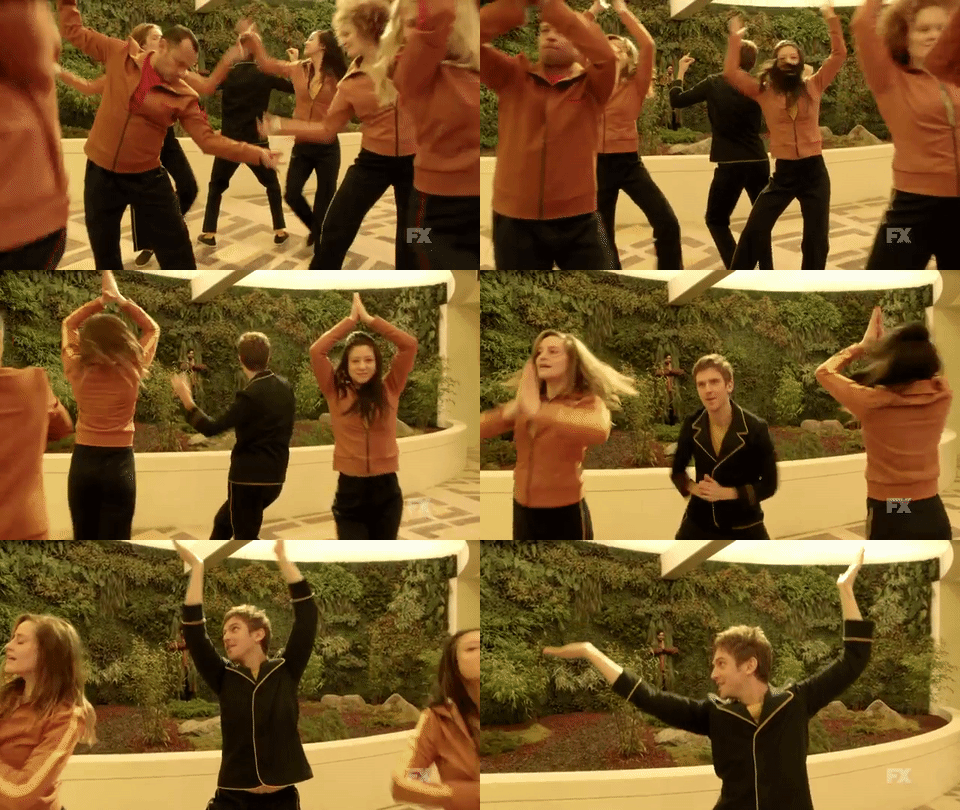
I’m not convinced. Yes, a lot of goofy stuff happens in the series – but I found it easy to forgive, because it felt like the adult version of kids playing with action figures.

dan-stevens-dance-gif

Did you do that as a kid? I couldn’t get enough of it. Transformers. Action Force. Manta Force, even. I played Star Wars, too – I didn’t even like Star Wars films much, but I loved the toys. When I went to hospital when I was about 10 years old, I found He-Man figures in the children’s ward. I’d never played He-Man before, but it didn’t stop me.

Read more

Outback adventures with Tammy & Matt

I spent last week on the road with the State Library of Queensland’s Tammy Joynson, delivering professional development with a twist & consulting with librarians & local government on future policies, strategies, plans and schemes.

You can see a 2-minute recap of our adventures here.

Sunday Read: Beyond Secret Cinema

My belated Sunday morning read is this piece from the Guardian on London’s Secret Cinema, which blends movie screenings with theatrical experiences and themed activities:

I’m a big fan of participatory live-action storytelling and I’m fascinated by opportunities to blur the line between fiction and “real” experience, creating events where attendees shape the outcome of a story.

I went to a Secret Cinema event a few years back and was pretty disappointed – the set design and costumes were fancy, but the opportunities to get involved in the storytelling were minimal. I’d gone to see Casablanca and while it was cool to sing La Marseillaise at a bunch of actors in Nazi uniform, the rest of the “immersive experience” consisted of overpriced snacks and a “casino” barely worthy of a student union’s James Bond night. The Guardian piece captures the extent to which Secret Cinema events are now more about taking your money than letting you step into the world of a story.

Read more

Bermondsey Street Festival with Dulwich Picture Gallery and The Challenge

This Saturday you’ll find me at the Bermondsey Street Festival alongside volunteers from NCS The Challenge and the staff of Dulwich Picture Gallery, the world’s first purpose-built public art gallery.

We’ll be running hands-on art events for visitors to the festival, exploring what arts outreach looks like beyond the gallery walls and getting our young volunteers to work as mentors, workshop leaders, and creators in their own right. All very Fun Palaces – can you sense a recurring theme this autumn?

There’ll be more from me at Dulwich later this year, with an M.C. Escher-inspired play session in December. Stay tuned.

“At last, something I can talk about!” – Fun Palaces at Lambeth Libraries

After a stint carrying out research for publishers and media productions – projects which I’ll look forward to talking about when I’m allowed to! – I’m pleased to announce that I’ll be working as a creative producer with the London Borough of Lambeth, helping their library staff to devise and deliver ten Fun Palaces with local communities on Saturday 3rd October 2015.

Fun Palaces are the international movement creating pop-up venues for communities to try their hands at science and the arts. Last year, I worked with Parkes Library on Australia’s first Fun Palace which incorporated tabletop games and supervillainous challenges alongside creative play for all ages.

I’m looking forward to taking things further with Lambeth in 2015. Our events will tie in to Black History Month and feature a range of stargazing, cybernetic, all-embracing, all-ages art and adventure. Watch this space for more news.

In the meantime you can read my article “Pushing the Limits: Play, Explore, Experiment” for British librarians’ in-house magazine CILIP Update, which looks at Fun Palaces alongside other arts and community adventures from the UK, Australia, and New Zealand:

CILIP Update Finch Article Cover Image

Sign up to create your own Fun Palace at the Fun Palaces website.