José Esteban Muñoz: Foresight and Cruising Utopia

“Queerness is primarily about futurity and hope. That is to say that queerness is always in the horizon.” – José Esteban Muñoz

1: Future blindspots in gender, identity, and sexuality

I’ve been spending most of my time on foresight and strategy for several years now. It’s challenging, lively work, helping people and organisations to look at the future and seek out their blindspots to support better decisionmaking. Often we construct scenarios, imagined future contexts, to inform that work, creating plausible futures which challenge current assumptions and provide a unique vantage point on the present.

Late last year, I wrote about the whiteness of foresight and the ways in which this kind of work, and its practitioners, might be blinkered by lack of diversity.  But those aren’t the only kind of blinkers we encounter when we turn our gaze towards the future.

Before lockdown, I attended a scenarios workshop constructing big global futures, intended to explore fundamental questions about the ways our societies will be organised in decades to come.

The project generated a number of visions of the world in 2050, with huge changes not only to how we live and work together, but even the ways in which technology might be integrated into our own bodies. Yet despite all this radical transformation, people shied away from reimagining the personal relationships which underpinned this world. In the finished scenarios, featuring a number of personas from each imagined future, there was little sense of the ways in which family life and its related intimacies might have changed or been changed by the forces at work in each version of 2050.

Looking around the room at the workshop participants – largely white, European, degree-educated, mostly presenting as straight – I wondered what questions we had refused to ask ourselves, or address, as a result of our own identities and points of view, the life experiences and perspectives we had brought to the workshop by mere virtue of who we were. Read more

Nesta interview: Using scenarios to reimagine our strategic decisions

Earlier this year, I took part in the ‘Scenarios and the Future of Work’ project, hosted by the Danish Design Centre in conjunction with the innovation foundation Nesta.

Rain on the Mountain

Nesta’s Juan Casasbuenas interviewed me about the experience, and the benefits of scenario planning, for their blog.

“Scenarios should stretch your thinking and challenge you to reimagine where you’re headed strategically, but they’re always grounded in the here and now: looking at the weather on the mountain to understand what might happen in the valley below.”

We also talked about technology, fear, and the surprising history of photographic manipulation which lies behind deepfakes.

This slideshow requires JavaScript.


You can read “Using scenarios to reimagine our strategic decisions” here.

“You are swimming with the whole ocean”: Interview with Aída Ponce Del Castillo, European Trade Union Institute

Last month, Aída Ponce Del Castillo of the European Trade Union Insitute’s Foresight Unit joined me to talk about her journey from world-class swimmer to foresight professional, doing strategy and scenarios research for the labour movement.

We discussed different foresight methodologies, the particular challenges and opportunities in working on futures with trade unions, and, inevitably, COVID-19, but our conversation began with Aída’s sporting career, and the lessons it taught her about coping with turbulence and uncertainty.

Matt:
What was your journey to becoming a foresight practitioner? You were a lawyer, and a competitive open-water swimmer – how did that lead you to work on foresight, and how did it prepare you for the role?

Aída:
In many ways I saw myself as a swimmer first and everything else second! I studied and practiced law, completed a doctorate. As an open water swimmer I competed at international level, also racing in Open Water World Cups. Read more

Looking ahead: Circulating Ideas / Public Libraries News

I recently had the opportunity to speak with Steve Thomas of the American library podcast Circulating Ideas and Ian Anstice of the UK’s Public Libraries News. Both conversations were released online this week.

Ian asked me some questions about the COVID-19 pandemic, libraries’ response to it, and what might be on the horizon for our societies and the institutions that serve them.

Like any good foresight practitioner, I sought to offer questions of my own, and provocations more than prophecy. We discussed resilience, anticipation, and both the dangers and opportunities that organisations face during a prolonged, indefinite season of turbulence and uncertainty. I think the points will be useful for people outside of the library and information sector. You can read our conversation at the Public Libraries News site.

Meanwhile, over at Circulating Ideas, Steve and I talked about what it would mean to bring scenario planning and other foresight methodologies into a public library setting, building on my recent presentation to America’s Engaging Local Government Leaders network and a previous academic article co-authored with Rafael Ramírez.

You can listen to my chat with Steve, and many other excellent episodes of Circulating Ideas, at the podcast’s website, and the episode is also available over at Apple Podcasts.

Planning for Uncertainty: Scenarios and Foresight for Local Government

Last week, I put together this one-hour video session for America’s Engaging Local Government Leaders network, ELGL.

It’s a straightforward foresight and strategy starter pack, no nonsense, no jargon, helping to answer the questions “Where are we going?” and “What should we do?”

The session is aimed at US local government leaders, but should work for a wide range of institutions, communities, and settings.

You can read more about the session and download a PDF “handout” with slides and further reading at the ELGL webpage, and I previously spoke with the ELGL team about leadership and foresight on their podcast last year.

Scenario planning in the Age of COVID-19: Mandarin Interview with Trudi Lang

My interview with Oxford University’s Trudi Lang for the Mandarin, published in late April 2020, can now be shared beyond their paywall. The full text of the piece appears below.

‘Never assume the future will be an extension of the past’ Scenario planning in the Age of COVID-19

Matt Finch sat down with Trudi Lang, a senior fellow in management practice at Oxford University’s Saïd Business School. Lang is a researcher and strategist with particular expertise in scenario planning, a foresight methodology that seeks not to predict the future but to usefully challenge our assumptions about what’s coming next.

“The key challenge of government is to prepare for a future in which we will be surprised time and again,” said Peter Ho, then Singapore’s top civil servant, in 2009.

Few people at the start of 2020 would have anticipated an enormous symmetric shock affecting the entire world, demanding drastic interventions from the state — yet experts had been warning of a pandemic for considerable time. Indeed, as the New York Times reported in March, the US federal government had rehearsed for a pandemic three times over the last four years.

Despite such rehearsals and the warnings of experts, many governments have been caught on the back foot by COVID-19. Countries that were considered to have an excellent capacity for pandemic response — the US and UK had been ranked highest among 195 countries’ ability to prevent and mitigate pandemics in 2019 — have found themselves floundering.

With the world plunged into uncertainty, how do we navigate the turmoil of the current pandemic and look beyond the crisis, into a future that is hard to picture clearly? Read more

Our feral future: working on the crises you did(n’t) see coming

Over the last few weeks, on and offline, I’ve been having a lot of conversations about “preparing for the future you didn’t see coming”.

The foresight approaches which I favour tend to avoid predicting the future. Instead, I work with clients to highlight the futures you didn’t anticipate, either because you had a strategic blindspot or because you chose to ignore them.

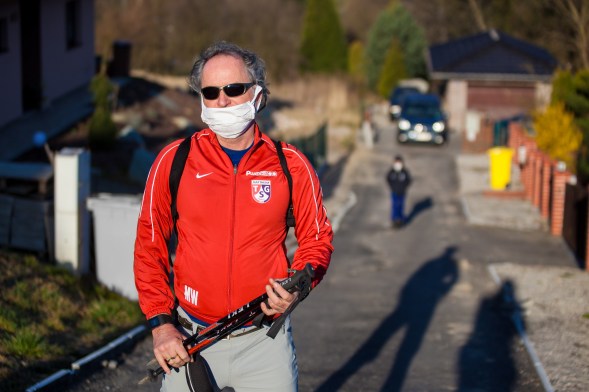
Man with protective mask
Man with protective mask by Wikipedia user Tadeáš Bednarz – CC BY-SA 4.0

Was the pandemic one of the futures we couldn’t see coming, or one which we chose not to? And since its arrival, have our responses been based on what is really unfolding, or on mental models which we had previously constructed? Read more

Real Time – Webinar with R. David Lankes

Today I spoke with leading US information professional R. David Lankes about foresight, strategy, and coping with uncertainty beyond immediate short-term crisis response.

David created one of the first 100 web sites ever, plus the first web presence for CNN, the Discovery Channel, and the U.S. Department of Education. We spoke about what he foresaw at the beginning of the Internet age, the surprises which emerged along the way, and how we might learn from the past when the future is uncertain and unlikely to repeat what went before.

You can watch the YouTube video below, or read more at the Librarians.Support website.