Peat Hub Ireland Report including Peatlands 2050 scenarios

“What I liked most about the workshop was getting to experience a framework for discourse between different stakeholders where everyone was approaching challenging ideas with an amount of vulnerability and openness. Things like the icebreaker question and being pushed outside of our cognitive comfort zones led to a kind of shared sense of uncertainty and unease that made it much easier for conversation and creativity to happen.”

Words from a participant at the scenarios workshop I led as part of the Peat Hub Ireland initiative, funded by the Irish Environmental Protection Agency and delivered by UCD colleagues under the leadership of Florence Renou-Wilson, including David Wilson, Kate Flood, and Elena Aitova.

You can see the full report, including an appendix on the scenarios, at the EPA website. Thanks to all the colleagues and to the host of our scenario session at Tyrrellspass, County Westmeath – it’s a rare delight to run a scenario workshop with a ninety minute bog walk in the middle of it…

Right Here, Right Now Global Youth Climate Summit

I’m pleased to be delivering two sessions as part of the University of Oxford’s contribution to the Right Here Right Now Global Youth Climate Summit, a 24-hour virtual event presented by UN Human Rights and the Saïd Business School.

The online gathering brings together students and educators from across the world to share ideas about embedding climate action at the heart of education systems.

Find out more at the Saïd Business School website or register for the 24-hour livestream here.

'Dreaming Spires', by Flickr User JJBullock - Copyright JJ Bullock 2010
‘Dreaming Spires’, by Flickr User JJBullock – Copyright JJ Bullock 2010

Climate action and the vantage point of imagined futures: a scenario-based conversation

npj Climate Action has today published a new article, “Climate action and the vantage point of imagined futures: a scenario-based conversation“, co-written by Marie Mahon, Malka Older, David Robertson, and myself.

Drawing on the example of the IMAJINE project, the peer-reviewed piece explores how scenarios can provide the basis for discussion across disciplines and offer fresh ways to nourish our thinking about climate action.

It covers topics including: the nature of climate change and our understanding of it in different scenarios; questions of risk and responsibility now and in times to come; the use of scenarios to identify current blind spots and stimulate creative thinking; and the possibility that scenarios might offer fresh perspectives which allow us to reevaluate our notions of the sustainable “good life” and identify vulnerabilities which are overlooked in the present day.

Read the whole piece at npj Climate Action.

After Earth Day: New adventures in planetarity

This past weekend saw the celebration of Earth Day on 22nd April. Since 1970, the date has provided a moment of focus and celebration for communities and organizations focussed on protecting our environment.

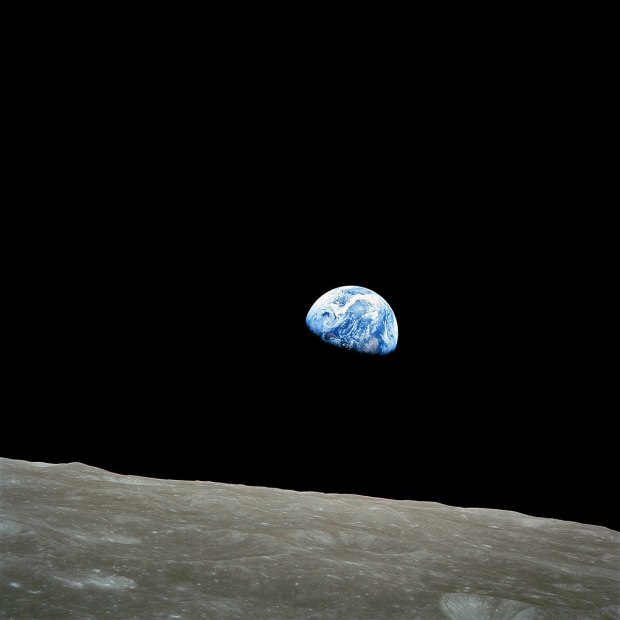
The first Earth Day was shaped by many factors. These included the 1969 Santa Barbara oil spill in Southern California, which caused public outrage and helped motivate Republican President Richard Nixon to found the US Environmental Protection Agency, and the Earthrise photograph taken by Apollo astronaut Bill Anders in 1968, which has been described as “the most influential environmental photograph ever taken”.

Earth Day serves to draw our attention, energising debate and action around what must be done to protect and sustain our planet’s environment. The events from over fifty years ago, which helped to inspire its creation, remind us of the ongoing need to cultivate fresh perspectives, in order to act effectively in these complex and turbulent times.

Read more

Romancing the Gothic: Climate, Justice, and the Strategic Sublime

I’m very pleased to be joining the Romancing the Gothic lecture series for a session on “Climate, Justice, and the Strategic Sublime: Scenarios as Gothic Genre”.

The lecture, which will take place at 10am BST on Sunday 21st May, with a repeat at 7pm BST the same day, forms part of the “EcoHorror, Nature and the Gothic” lecture season.

Register for the 10am BST session on Eventbrite here.

Register for the 7pm BST session on Eventbrite here.

Fast, deep, and uncertain: the currents of thought and feeling

Big whorls have little whorls which feed on their velocity,
And little whorls have lesser whorls and so on to viscosity

Lewis Fry Richardson

These lines appear in Sarah Dry‘s tremendous book Waters of the World, a work of history which explores how scientists, researchers, and passionate amateurs gradually pieced together an understanding of our global climate system. The story spans continents and generations; some of its characters collaborate or compete, while others work alone, unaware of the wider context in which their endeavours might be received. Some don’t even live to see the difference that their research will make to the world. There are false starts and dead ends. Politics, from the sweep of colonialism to the pettiness of institutional squabbles, plays its part; and for all that this is a tale of systematic observation and theorisation, it’s no less deeply human for that. As one of Dry’s scientists, Joanne Simpson, put it:

“I think I am generally perceived as a pretty cool character. Nothing could be farther from the truth. To understand how a woman, or a man, for that matter, creates original work in any field, it is necessary to penetrate the emotional masks, and my masks have intentionally been hard to penetrate.”

Dry’s book, and particularly its chapter on “Fast Water”, exploring the currents of the ocean’s depths, makes me think of the ways that emotions can swirl around us and within us when we address difficult issues, alone or together.

Read more

Interview with Paul Bowers, Part 2: Bureaucratic Radicalism

Late in November 2020, I caught up with Paul Bowers, CEO of the Australian sustainability organisation Renew, for a brief chat. (You can read the first part here).

Renew evolved from the Alternative Technology Association of Australia, and today it advocates for sustainable living in homes and communities across the nation. In the second part of our conversation, Paul and I spoke about systemic change, revolution and reform, and encouraging the choice to live sustainably.

Parliament House, Canberra, by Wikimedia user JJ Harrison – CC BY-SA 3.0

You’ve written on “bureaucratic radicalism“, which seems to speak to this issue of what happens when the green hackers of the 80s find themselves represented on federal committees and contributing to the building code.

Bureaucratic radicalism was my attempt to think through how you systematize good practice, and using existing power structures in order to do that. My first thought is to consider what we need to learn from First Nations peoples, from communities where environmental sustainability and good practice is part of what you learn from childhood.

Read more

Interview with Paul Bowers, Part 1: What do you do when the revolution is over?

Late in November 2020, I caught up with Paul Bowers, CEO of the Australian sustainability organisation Renew, for a brief chat.

Renew, which evolved from the Alternative Technology Association of Australia, advocates for sustainable living in homes and communities across the nation. Paul, following a storied career in the Australian museums & galleries sector, joined Renew as CEO in March.

In our conversation, we talked about Paul’s journey across sectors, the nature of creativity, the challenges of a sustainability organisation’s evolving mission, and the opportunities which await.

Matt:

You joined Renew in March. What’s it like taking up a CEO role in the midst of a crisis like this?

Paul:

For me, the idea of being in charge of an organization while not being in lockdown feels strange! Because I knew nothing else, it became normal so quickly.  On the third or fourth day of my role, I had to shut the office and put in place rules and procedures for working from home.

We’ve been doing that for seven months, over two lockdowns. We’re only just starting to go back to the office now.

It’s much easier to apply the technical and functional requirements of management and leadership at a distance. What’s hard is putting the emotional aspect back in, especially when that’s a relationship of one to many. I’m very happy and open when it comes to one-to-one emotional relationships, but having to hold that relationship to an entire community – and on an unfamiliar medium too – was hard.

Read more