Futures of the networked world – auDA Internet governance scenarios

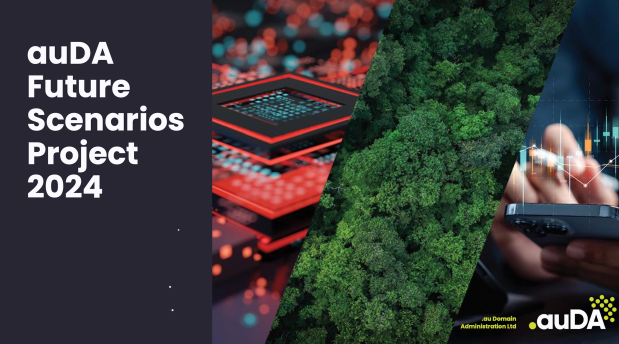
Australia’s Internet domain name self-regulatory body, the .au Domain Administration (auDA), has released a public version of its scenarios exploring the future of Internet governance. I’m pleased to have supported auDA in this process, and you can find the full scenario set here.

auDA is endorsed by the Australian government to administer the .au domain, with a mission to ensure it is a secure, accessible, and trusted asset for Internet users. In addition to its domestic duties, auDA also advocates for the .au domain and participates in global Internet governance processes. The organisation’s Future Scenarios Project provides a basis for wider strategic and policy conversation about our networked world and its governance, and how they might evolve in times to come.

You can read auDA’s own blog introducing the scenarios here – and there’ll be more to come, from auDA and myself, in due course.

Scenarios, cinema, and the horizon of dreams

“…of all forms of art, only film could show the remote horizon of dreams as a habitable country and, at the same time, could turn familiar landscapes into a vague scenery fit only for dreams.”

Gerald Murnane, The Plains

The word scenario came into strategy thanks to Leo Rosten, the humourist and screenwriter who also did work for the RAND Corporation during the mid-20th century. Rosten took a term, already slightly outdated in Hollywood, which meant “an outline for a proposed film”, and applied it to RAND colleagues’ future projections which invited Cold War policymakers to “think the unthinkable”. (If we go a little further, the word’s etymology takes us back to an Italian theatrical term meaning a stage set, scenery, or backdrop).

Even in the age of TikTok and bite-sized streaming video, the cinematic metaphor still has power. As Gerald Murnane’s words suggest, plausible yet challenging visions of the future context can enable us to imagine what it would mean to dwell in a place that once seemed to linger on the far horizon. In turn, that experience allows us to recognise that everything we take for granted in the here-and-now is in fact as malleable and overdetermined as the stuff of a dream.

Read more

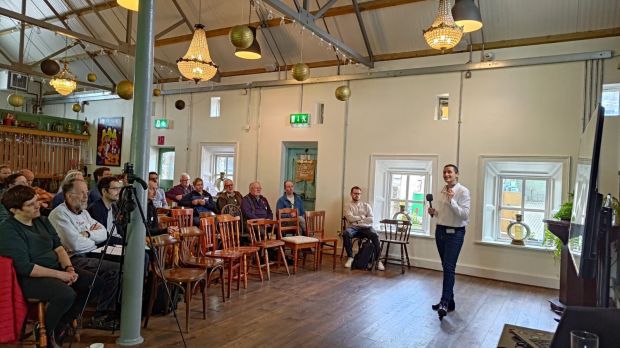
auDA Future of the Internet Scenarios Launch, 7 May 2024

How might global Internet governance change in times to come? What uncertainties surround our networked world, and how might they play out in ways that challenge the assumptions underpinning “business as usual” today?

Together with Australia’s auDA and a wide range of international stakeholders, I’ve worked to develop a set of scenarios for the future of the Internet in 2044.

They invite all of us who work with digital technologies to consider plausible, challenging, and relevant futures that offer fresh vantage points on the issues we face today.

Join auDA’s CEO Rosemary Sinclair AM, myself, and the team next month for the launch of these scenarios online. 7th May, 1pm AEST – with a recording to follow.

The View from Fourth Place

The concept of practising failure perhaps prompts us to discover our inner dweeb, to be underachievers, to fall short, to get distracted, to take a detour, to find a limit, to lose our way, to forget, to avoid mastery, and, with Walter Benjamin, to recognise that “empathy with the victor inevitably benefits the rulers.”

– Judith Halberstam, The Queer Art of Failure

It’s a funny thing, foresight work.

You help people to build pictures of the future context for a given entity or issue — but you’re not saying what you think is going to happen.

We’re not in the prediction business, nor even that of saying what we want the future to be.

Instead, we’re looking at ways in which today’s uncertainties might play out over time, challenging current assumptions and expectations, even current hopes and fears.

The scenarios we create together can offer unique vantage points on the issues of the here-and-now: manufactured hindsight. You know, as a scenario user or learner, that you’ve done a good job if you see something strategically useful which you couldn’t see at the outset of your work.

That sense of going beyond what you could already perceive, or conceive, is sometimes called the “a-ha” moment: a realisation, not always comfortable, that things could be otherwise.

This is why scenarios should be built with people, not for them. Re-perception of our current situation comes as much from the process as the end product; you can’t outsource the thinking that lets you see the world anew.

Still, as my Oxford colleague Gerard Drenth points out, there’s a danger of “So what?”

The work can’t just be interesting, it has to be useful.

Some people think that what’s useful is to “get it right” – to correctly forecast what the future will bring.

But the job is not merely to guess what happens next. Rather, it’s to see what we’re missing in our understanding of what’s already around us, right here and now.

Read more

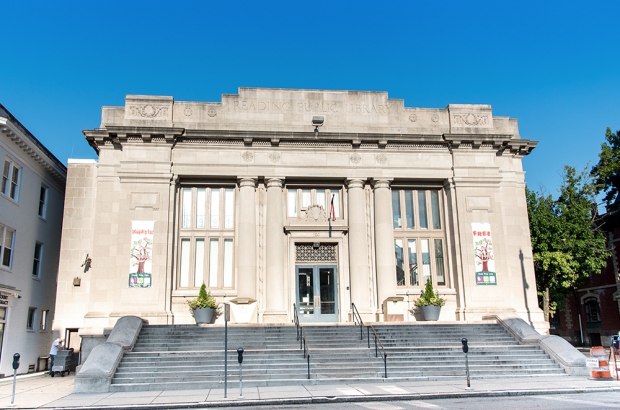
Reading Public Library: Scenarios to inform resilient strategy

“The flexibility of the plan in part helps us to present our goals and efforts, because those goals and efforts can reshape as real world events interfere with business as usual…It really leaves room for creativity and the flexibility to adjust to the real world.”

Melissa Adams, executive director of Pennsylvania’s Reading Public Library, interviewed by Nancy K. Herther of the University of Minnesota, explains how a COVID-era scenario planning process informs robust and resilient strategy for her organisation and community.

“Another advantage was experienced during the transition between executive directors. The plan was decidedly not the prior executive director’s plan, it was the organization as a whole body’s plan. This made it easier for me, as the incoming executive director, to keep the plan moving forward…the article we co-authored has helped me really take ownership of this strategic plan.”

Reading Public Library, Pennsylvania

BMJ Medical Humanities Podcast: Scenario Planning, Healthcare, and the Humanities with Professor Matthew Molineux

Years ago, casting around for a way to explore “applied medical humanities”, I read Matthew Molineux’s essay “A Labour in Vain”, a kind of intellectual history of occupational therapy which spoke directly to the fraught, pragmatic question of what good we really do, when we strive to help others. It’s one of my all-time favourite pieces of scholarly writing and you can find it as a free PDF download from publishers Wiley here.

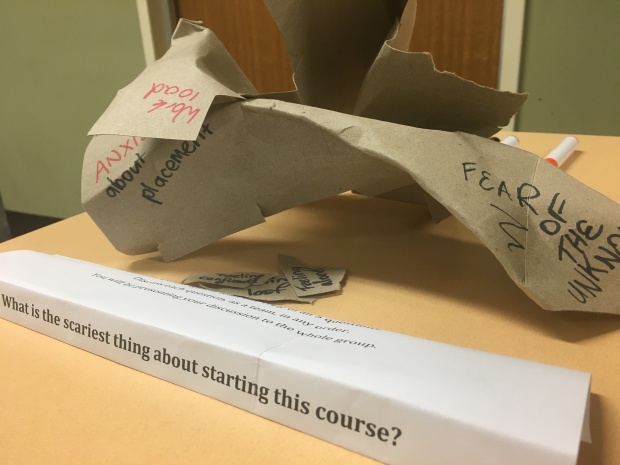
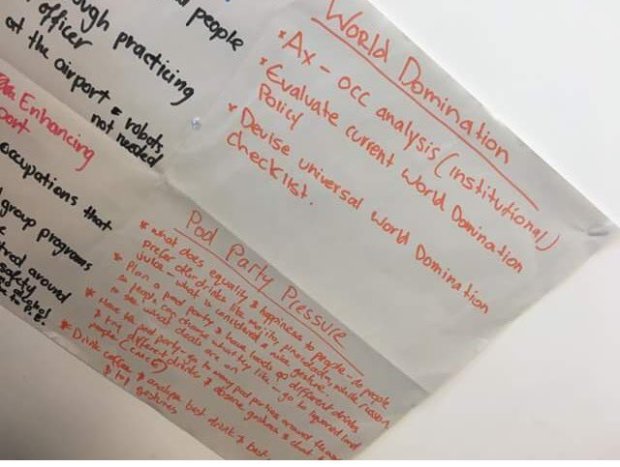
Working with Matthew in a collaboration between Griffith University and State Library of Queensland, I got to know him not just as a great writer, but a colleague and a friend. Combining a creative hands-on approach to occuaptional therapy education with foresight and psychodynamic work, we took Griffith students to distant futures — all in the service of exploring occupational therapists’ role in a changing world.

Toys, cake, and cardboard were just some of the materials which were brought into the work, which included a challenge to produce an edible presentation. The students were resourceful, empathetic, creative, good-humoured – exemplfying the best characteristics of their profession.

Now for The BMJ’s Medical Humanities podcast, Matthew and I join hosts Cristina Hanganu-Bresch and Brandy Schillace to explore scenario planning, healthcare, art, foresight, and the humanities.

Book Chapter: Scenarios as a device for forming common futures

“Scenarios as a device for forming common futures”, the chapter I co-authored with UCL’s Richard Sandford for the volume Building the Post-Pandemic University, can now be read for free online.

We argue that:

Universities need to develop ways of creating their own narratives of the future, in order to anticipate what lies ahead and recognise possibilities for change.

By developing their own capacity to imagine possible futures, rather than working with future narratives designed outside the university, institutions will be better placed to recognise their distinctive and heterogeneous character, to be clear about their particular orientation to the future and potential contribution to its development, and to strengthen the university community through this shared process.

You can find our discussion of scenarios, foresight, and universities’ particular situation as complex, internally diverse “engines of the future”, at Elgar Online.

'Dreaming Spires', by Flickr User JJBullock - Copyright JJ Bullock 2010
‘Dreaming Spires’, by Flickr User JJBullock – Copyright JJ Bullock 2010

Scenario Planning Blog at BMJ Medical Humanities

“Though it’s just a trick of the calendar, as the new year begins our thoughts inevitably turn to the future. Yet we cannot gather data from events that haven’t happened yet, and forecasts drawing on precedent can flounder when situations are unstable.”

For the BMJ Medical Humanities blog, I cover a few scenario planning basics as we make our way into 2024.

Jay Huang from Pleasanton, USA – Low Fog Sunrise @Golden Gate Bridge, CC BY 2.0.