I made a guest appearance on the latest episode of “Not Another KM Podcast”, hosted by Brittany Persinger and Rachel Teague, to talk about scenario planning, foresight, and knowledge management.
If social impact means creating long-term change, then we face a difficult problem: we live in turbulent times, and the future in which our impact will unfold is deeply uncertain.
Scenario planning can help by developing multiple plausible and contrasting futures, relevant to current concerns but challenging to our assumptions. Building and using scenarios offers the opportunity to critically explore expectations, hopes, and fears about the world within which we hope to make an impact.
Scenarios can inform the design of impact metrics which embody deeper values by considering the question: What might future generations wish we had measured in hindsight?
As we consider what inhabitants of different future scenarios might value, we can then identify and design appropriate impact measures to implement today.
“If global governance comprises not just formal institutions and regulations but the ‘mood music’ of the world, what part do we all have to play in shaping that mood today and taking responsibility for the future which transpires? Will leaders take collective action and contribute to digital civil society? Will digital platforms embrace a duty of care towards the most vulnerable users? Or will competitive opportunity be sought in the cracks, if tectonic shifts occur in the management of the global internet?”
One of my contributions to the 2025 Global Youth Climate Summit, hosted by the University of Oxford, has just gone online at the Oxford Climate Change Challenge site.
enables people not to say, “Which future do I think I want, from the limits of my perception and understanding today”, but instead to ask “How would people in each different future judge the decision which I currently think to be so wise?”
This is the true benefit of manufactured hindsight: a kind of epistemic humility in the face of uncertainty, where instead of presuming we know what’s best for times which haven’t arrived yet, we enter into dialogue with potential futures and see beyond the received wisdom which may limit as well as reassure us.
If we simply ask ourselves, as we head into a new year, how this moment will be remembered, it tells us something about our understanding of the here-and-now – but also our beliefs about the future which is ahead of us.
The answers we come up with provide us with assumptions to explore, test, and challenge. What if a different future awaits, perhaps one that will judge us by different values and standards to those we hold today? What if hindsight will teach us a lesson we hadn’t yet imagined?
By exploring this question and different potential answers, we can reach for wisdom, rather than simply pointing at the future we think we want, on the basis of where we stand in the uncertain present.
“What I liked most about the workshop was getting to experience a framework for discourse between different stakeholders where everyone was approaching challenging ideas with an amount of vulnerability and openness. Things like the icebreaker question and being pushed outside of our cognitive comfort zones led to a kind of shared sense of uncertainty and unease that made it much easier for conversation and creativity to happen.”
Words from a participant at the scenarios workshop I led as part of the Peat Hub Ireland initiative, funded by the Irish Environmental Protection Agency and delivered by UCD colleagues under the leadership of Florence Renou-Wilson, including David Wilson, Kate Flood, and Elena Aitova.
“In times of uncertainty, what we can imagine ahead of us matters.”
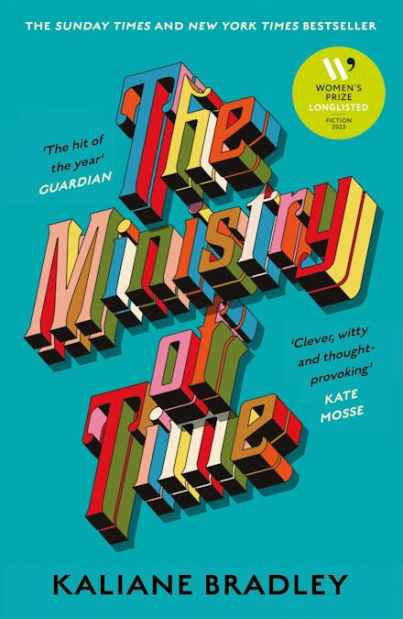
I write on Kaliane Bradley’s wonderful novel The Ministry of Time for the British Science Fiction Association’s journal Vector, and consider the book’s wider implications for public imagination in a turbulent era.
“Time travel in science fiction has, itself, a history and prehistory, a present, and presumably a future. It has the potential for new and emergent ideas of temporality – scientific, poetic, popular, expert – to succeed those currently held by researchers, philosophers, artists, authors, critics, and the general public of the day…Perhaps Bradley’s novel will also, in times to come, show itself to be one of the works that opened the door onto a new era of popular time travel fiction. This new era is one which, however fraught, creates new opportunities for us to face up to the uncertainties around us.”
I’m speaking at the UCL Languages of the Future conference on 6th June, presenting a paper titled “Are we even talking about tomorrow? Uncertainty, agency, and the encounter with the sublime”.
The event brings together contributors from across academia and broader society to think through the complex relationships between languages and times to come. We’ve been given a few big questions to chew on, like: How can “languages of the future” encapsulate specific individual disciplines, embrace diverse knowledge systems, convey the urgency of problems that are yet to arise, and honour the voices of the more-than-human world?
I’ll be standing on the shoulders of thinkers like UCL’s Richard Sandford to explore uncertainty, agency, and the “thick present”: an understanding of the here-and-now encompassing remembrance and anticipation. As Rafael Ramírez and Angela Wilkinson have it,
The future is always an aspect of the present. The future has not “taken place,” but the present always “holds” the future, and holds it as potential. Indeed, the future is never “later,” is it always (experienced, imagined) “now.”
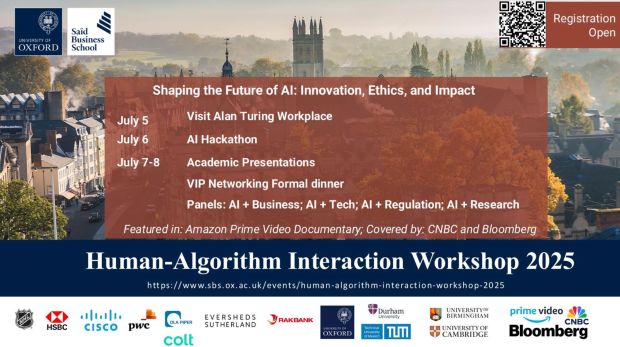
I’m pleased to be presenting at the University of Oxford’s Human-Algorithm Interaction Workshop 2025, on “Governing the futures you didn’t see coming: artificial intelligence scenarios“.
Do join us in Oxford, 5-8 July, for an interdisciplinary event delving into the complex and evolving relationship between humans and algorithms.
The annual workshop is a gathering of industry leaders, AI pioneers, and leading researchers who will explore the evolving role of AI in business, governance, and society. This year’s theme is “Shaping the future of AI: innovation, ethics and impact.”




 matt finch / mechanical dolphin