The global innovation foundation Nesta has just published Imagination unleashed: Democratising the knowledge economy, a report on building inclusion in the era of radical change shaped by digital infrastructures, networks, services, and products.
It’s a compelling document which explores current challenges to our societies and sets out a broad-ranging agenda for addressing them in ways which promote inclusion and equity.
Reading this report from an information professional’s perspective suggests a great number of opportunities for libraries and other information institutions to play a part in making a fairer and more prosperous world, where more people get to realise their full potential.
In this post, I’m going to talk you through the report, suggesting a few of the implications and opportunities – and I’d encourage anyone interested in the future of knowledge to check out the report alongside this commentary. Read more →
#NotEnoughSciFi is an occasional series looking at works of science fiction and fantasy which I think might be useful for organisations, institutions, companies, and communities which are trying to get ready for the shape of things to come.
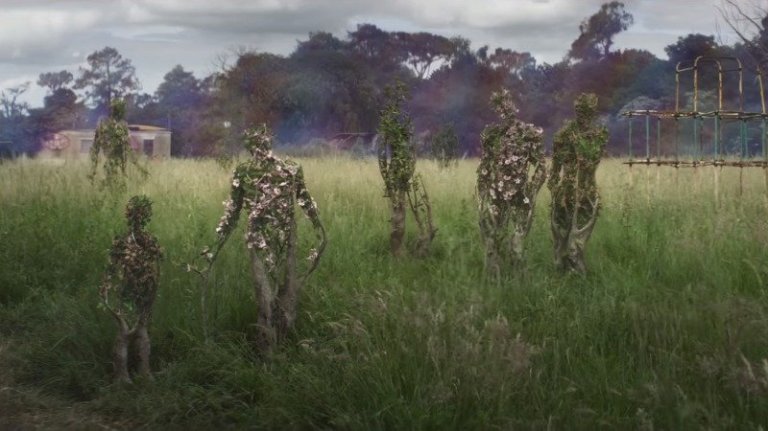
This week’s entry focusses on Jeff Vandermeer’s “Southern Reach Trilogy”, the first book of which was adapted into the Netflix movie Annihilation last year. See previous entries from #NotEnoughSciFi here.
The most common source of management mistakes is not the failure to find the right answers. It is the failure to ask the right questions. Nothing is more dangerous in business than the right answer to the wrong question.
– Peter Drucker
After a mysterious event, an unknown force takes over a backwater of the southeastern US coast. Warded from the outside world by a barrier that defies physicists’ understanding, the so-called “Area X” begins to distort the environment in ways which are difficult to study, record, or comprehend.
Over a period of years, a government agency tasked with understanding and controlling the zone sends in countless expeditions, to little avail. The latest group, composed entirely of women, also succumbs to the zone’s weird dangers. The sole returning survivor, a taciturn biologist, is compromised by her encounter with Area X – but what has happened to her? And what does it mean for the affected zone – or for life as we know it on Earth?
This is the world of Jeff Vandermeer’s “Southern Reach Trilogy” – Annihilation, Authority, and Acceptance – the first instalment of which was filmed by Netflix, with Natalie Portman in the lead role, last year.
Netflix’s Annihilation is a visually sumptuous adventure which challenges sci-fi’s traditional gender imbalances by following an all-women team of explorers into the mysterious zone. But there are even richer pickings to be found in Vandermeer’s trilogy.
The “Southern Reach” books offer a complex exploration of institutional and personal encounters with unknown or uncontrollable phenomena. Their refusal to offer easy answers, their dissection of office politics and power relations, and their critique of the structures by which we seek to make sense of and control the world, all make them valuable fodder for a special edition of #NotEnoughScifi. Read more →
I’ll be at next month’s Bibliothekskongress in Leipzig, a gathering of German-speaking librarians and information professionals. If you’re attending, come say hello and talk Library Island – or catch me online.
Ändern sich Bibliotheken zu schnell oder nicht schnell genug?
Was bieten wir einer Welt, die sich schnell und radikal zu verändern scheint?
Wie sieht gute Führung in der Bibliothek des 21. Jahrhunderts aus?
Library Island simuliert fünf Jahre im Leben von Bibliotheken in einem kleinen Land. Die Spieler übernehmen die Rolle von Bibliothekaren, Regierungs- und Gemeindemitgliedern.
Die Spieler verhandeln politische Konflikte und soziale Herausforderungen (oder sogar Naturkatastrophen!) und passen das Spiel dann an ihre eigenen lokalen Probleme.
Es ist ein einfaches Spiel, das nur mit Papier und Stiften gespielt wird, aber es ermöglicht den Spielern, komplexe Szenarien und unbequeme Themen zu besprechen.
Ich habe Library Island entwickelt, um Organisationen zu unterstützen, ihre Vision und Mission für die Zukunft zu definieren und umzusetzen. Library Island schafft Raum für die Erkundung einer ungewissen oder schwierigen Zukunft und hilft Mitarbeitern, Führungskräften und Trägern einen strategischen Standpunkt zu entwickeln.
Man kann Library Island als eigenständigen Workshop oder als Teil eines umfassenderen strategischen Prozesses nutzen. Es ist spielerisch, belebend, zum Nachdenken anregend und macht sogar Spaß!
I’m pleased to announce I’ll be joining the team at Oxford University’s Saïd Business School (SBS) as a facilitator on the upcoming Oxford Scenarios Programme.
‘Dreaming Spires’, by Flickr User JJBullock – Copyright JJ Bullock 2010
Over at The Cultural Gutter, there’s a thoughtful piece about Netflix’s recent interactive film, Black Mirror: Bandersnatch.
The choose-your-own adventure film allowed viewers to shape the story of a young programmer trying to develop a computer game in 1984. Presented with either-or choices to make via their TV’s remote control, someone watching Bandersnatch can influence the outcome of the narrative – but as the story develops, the choices are increasingly unpalatable and the question of who is controlling whom becomes increasingly prominent.
The Cultural Gutter’s Alex Macfadyen writes:
What watching Bandersnatch felt like to me was entrapment. A choice between two terrible things is still a choice, but I often didn’t agree with any of the available options. There also seemed to be no way to avoid making some of the choices because you just got brought back to them after the other options resulted in a dead end. The writers clearly had a very specific moral direction they wanted the story to go, and the viewer is ultimately corralled into creating the narrative they want.
Part of that narrative was the construction of me, the viewer, as the person forcing the character to make bad choices and lose his mind, but the viewer also only has access to the paths that the writers dictated for them so it’s more an illusion of choice. There is no path that leads to a good outcome, but you have to follow them all to find that out. In the end, I think the only choice you could make that would resolve the ethical conflict they’ve posed would be to refuse to participate and stop watching altogether.
Playing Bandersnatch, and reading Macfadyen afterwards, reminded me of a British Library Labs event I attended a couple of years back.
Jon Ingold, who has made several great choose-your-own adventure games including the subtle and troubling World War 2 drama The Intercept, spoke about the relationship between players and authors of such adventures.
Rejecting the language of “empowering players” or “co-creating game narratives together”, Ingold described adventure games as puzzles where the author attempts to lure the player into a trap of their own choosing – a trap to which the player must then find a brilliant escape. The player is never in control of the story, any more than the rat who turns left or right at a given corner is in control of the maze.
These problems of choice and control lie at the heart of the workshops I’ve been running over the past couple of years. To what extent can we allow participants in an event to surprise us?
The challenge for me has always been – how can you let people surprise you?
Choose-your-own adventures, from Bandersnatch to Ingold’s more sophisticated offerings, are ultimately more like mazes which one can only choose to run or not run. (The promo art for Bandersnatch helps to make this clear).
In activities like Library Island, I’ve been trying to devise opportunities for people to tell their own stories and genuinely shape the outcome of a collective narrative – the benchmark for this being whether the players were able to do something the author didn’t see coming.
Library Island players have brought fraud, civil unrest, and workers’ rights issues to sessions – helping us to address the most serious challenges to a community within the safer space of a playful, fictional setting. In the very first pilot for the game, a character stole a plane which they had illegally bought using government funds – something I definitely hadn’t accounted for – and an event which led on to serious discussion of scrutiny, oversight, and accountability for the use of public money.
Since then, players have only made the problem worse — delightfully worse.
A fictional scenario (library island) lets us talk about tough situations in a freer, less scary way; and helps unleash creativity and imagination about the future. @DrMattFinch#alamw18
Games which genuinely let people contribute to the outcome of a story also have the potential to change the way we look at the future.
Too often, when planning for the months and years to come, we see our options as constrained, like the forking but pre-written paths of Bandersnatch and its kin, railroading us towards a limited number of possible futures.
This can sap our ability to imagine a better world than the one we expect, but it can also make us vulnerable to harmful futures we didn’t see coming; financial crises, political upsets, and environmental disasters, for example.
In a turbulent era, finding ways to allow many voices to offer their story and participate in constructing plausible future scenarios help us to prepare for the world which is to come – a world which has not been pre-written by a game designer, and which therefore denies us both the safety and constraint of someone else’s narrative.
Collaborating with the Enemy, by Adam Kahane, looks at peacemaking and negotiation work, drawing on examples from Thailand, South Africa, and Colombia. Kahane is remarkably honest about his frustrations and failures, as well as his successes, in projects intended to promote collaboration under the most difficult conditions. It’s well worth a read, to challenge and inspire you.
For Bad Therapy, the authors interviewed a number of leading practitioners on the topic of their greatest failures. The resulting discussions are brave, humbling, and food for thought in any profession.
What would it mean to focus on one’s failures in this way? What do bad librarianship, bad journalism, bad teaching or curation or medicine or design look like when the practitioner themselves admits to a job done poorly? This book is excellent for anyone interested in professional learning and growth, whatever field they work in.
Finally, I was four years late to an encounter with Atul Gawande’s Being Mortal, a 2014 reflection on the decisions and dilemmas associated with end-of-life care.
The challenges faced in caring for those who are close to death emphasise and highlight problems which we confront in any healthcare setting. These include the limits of the patient’s right to choose, the authority of the physician over those in their care, and quality of life versus the drive to preserve life at all costs.
Gawande’s typically sensitive and personal discussion of these topics reminded me of Sherwin Nuland’s 1992 National Book Award winner How We Die. The challenge that faces us in healthcare is that the same issues Nuland identified more than twenty-five years ago still plague our health systems today.
I visited Vienna’s superlative Jewish Museum on my recent trip to the city. Their exhibitions and programmes are always sharp, relevant, and thoughtfully curated.
Currently, they’re hosting an exhibition on Kabbalah, the esoteric branch of Judaism which has been popularised by various celebrities from David Bowie to Madonna.
I wandered round, learned a little, and made some unexpected connections as well.
Copenhagen was the last stop on my workshop tour of the Nordic countries. I ran two sessions – a full day for librarians from across Denmark and Germany, plus a half day for Danish library managers. My hosts were Bibliotekarforbundet – the Danish Union of Librarians.
This slideshow requires JavaScript.
We used a range of methods and techniques, including the Library Island activity, to explore issues of advocacy, strategy, inclusion, innovation, and coping with a turbulent political environment.
Participants discussed the possibilities of an uncertain future with their peers, then began to design practical responses to the challenges they had identified.
At the managers’ workshop, it became clear that tools were needed to support quick, credible internal and external conversations about libraries’ changing role in Danish society. These would be used to build stakeholder understanding of Danish libraries’ mission, and help staff members to see how their work fit into the larger priorities of their organisation. Read more →
The International Federation of Library Associations, IFLA, has released a new guide designed to help librarians and library advocates to tell compelling stories about library activities, projects and programmes, showing their impact on communities and people’s lives.
“Libraries and the Sustainable Development Goals” is a practical document and storytelling tool, linked to the United Nations goals which IFLA uses to demonstrate libraries’ global relevance.