Getting Your Head Around Value-Creating Systems

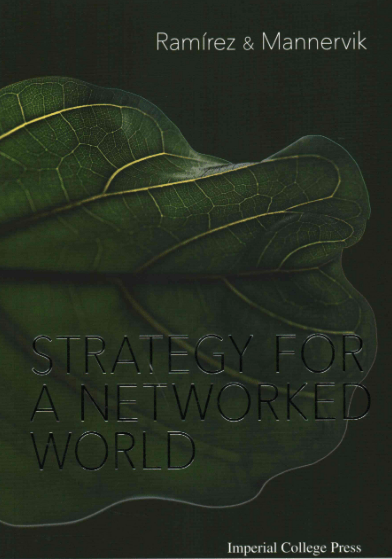
Here are some notes & thoughts from one of my summer reads – Rafael Ramírez and Ulf Mannervik’s Strategy for a Networked World.

Cover of Rafael Ramírez and Ulf Mannervik, Strategy for a Networked World

This book sets out the latest version of a strategic approach called Value-Creating Systems (VCS). The late Richard Normann and his colleagues first developed VCS over 20 years ago. Its focus on relationships and connections, exploring collaboration as well as competition in business environments, seems ever more relevant in our increasingly networked world.

As people go on summer holidays and the pace of work in the northern hemisphere slows a little, it’s a great time to read, learn, and grow.

Read more

How Public Libraries Can Help Us Prepare For the Future – The Conversation

Could public libraries revolutionise politics and society by helping local communities to develop long-term foresight?

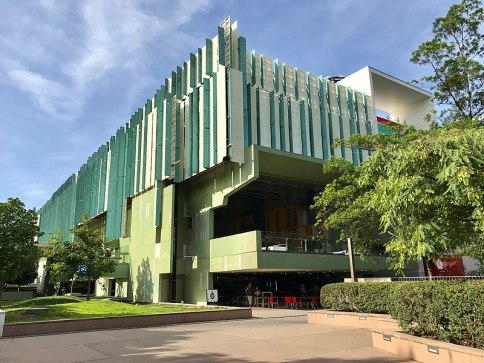
800px-state_library_of_queensland_01
State Library of Queensland by Wikipedia users Kgbo – CC BY-SA 4.0

My first piece for The Conversation, “How Public Libraries Can Help Us Prepare For the Future“, has just gone live.

It draws on research I conducted with the University of Southern Queensland’s Kate Davis and conversations with Rafael Ramírez of Oxford’s Saïd Business School.

The article explores the possibility of using public libraries as hosts for deeply local scenario planning initiatives, putting foresight tools commonly used by policymakers, big business, and the military in the hands of grassroots communities.

You can read “How Public Libraries Can Help Us Prepare For the Future” over at The Conversation now.

Public Libraries News: Mission to Library Island

Investigating potential futures as they emerge elsewhere in the world, avoiding “copy and paste” innovation, playing games to figure out the choices our organisations should make next: I talk Library Island & scenario planning with Ian Anstice over at the UK’s Public Libraries News website.

Florida Webinar: Get Started with Strategy

If you work in a Florida library, you can join me for a special webinar next month: “Get Started with Strategy: Practical Planning for the Future“.

  • How do we prepare for the future when the road ahead is unclear?
  • What technological and social changes should our library be anticipating?
  • What information do we need to begin strategic planning and how do we get it?
  • How do we get our colleagues or stakeholders on board with a vision or mission that best suits our community’s needs?
6767979825_3b78521787_o.jpg
“Weclcome to Florida Sign” by Flickr user DonkeyHotey, used under CC-BY 2.0 licence

On 17th July, this one-hour session for Florida librarians will introduce you to simple, quick-to-master tools and techniques for building strategic awareness and setting out your service’s plan for the future.

Find out more at the Florida Library Webinars site – you have to be a staff member of a Florida library to participate, so you’ve either got two weeks to move there and find work, or reach out to me directly for a webinar or workshop of your very own.

Yoga for Futurists, Part 1

Got a pen, paper, and fifteen minutes to think about the future?

This short video, “Yoga for Futurists“, will help you build strength and flexibility in the ways you or your organization looks at the future.

You can also read more about one of the activities featured in this video, “Arrows of Time“, on this blog.

So if you feel like stretching your sense of the world to come, and the ways by which you might choose your future, grab something to write with and press play on the video above.

Library Island Is Here!

Welcome to Library Island!

This interactive training activity helps participants to explore strategy, innovation, and the messy business of working with communities. We’ve spent the last two years perfecting Library Island with university staff, health workers, museum professionals, students, and, yes, librarians.

The free CC-licensed print-and-play kit is now available for download in PDF format. Feel free to adopt it, adapt it, and make your own visit to Library Island.

Read more about Library Island, and what it has done for professionals all over the world, here.

The World When We’re Gone

I was in a room with more than a hundred smart and lively library leaders from across the state of California and I asked them:

What do California and the future have in common?

My favourite answer was: “They’re both getting hotter.”

As always with these things, participants come up with wittier and more perceptive answers than you ever did when you thought of the question.

That is, of course, the point: if you have 100+ people in the room, is the best way to find bright ideas & useful answers for one person to talk, and one hundred to listen – or should you get all the minds in the room at work on the problem?

So I asked my hundred guests what California and the future have in common, but I did also have an answer of my own in mind:

They’re both socially constructed — we talk them into existence.

This is true for the future because it exists only in terms of our hopes, fears, plans, predictions, strategies, expectations, anticipations, and the blind spots which we are currently failing to detect or anticipate. In the strategic planning work I’ve done with Rafael Ramirez and the team at Oxford’s Saïd Business School, the scenario approach emphasises this, constructing plausible futures – not predictions – in order to challenge the assumptions of the present.

It’s also true to say that we talk California into existence, because any human-made identity must be labelled, demarcated, defined in opposition to what it is not, talked about until it sticks and perhaps even takes on a life of its own – or at least a life bigger than any one of us. California exists as a geographical territory and history, a legal code and legislature, a perceived “state of mind”, but also as a blurry and porous concept, susceptible to reinterpretation and change. The Mexican province of Baja California, for example, reminds us that even the name of California predates US statehood and speaks to a previous colonial history.

One way to think about ourselves differently – to step outside the necessities of the day-to-day and the usual frameworks by which we seek to understand and control the future – is to imagine the world after we’re gone.

It’s not the full, rigorous construction of plausible futures which we conduct in scenario planning, but it is a useful way of testing our assumptions – and as Rafael Ramirez puts it, even “back-of-the-napkin” futures work can help us prepare for the world to come.

So here are two questions I sometimes offer to organisations that I work with:

Imagine a hundred years from now, your work has been a huge success and changed the face of society for the better. The head of state comes to the commemoration and gives a speech celebrating your organisation’s work. What do they talk about?

Imagine that five years from now, after a catastrophe, society has collapsed and your organisation has ceased to exist. How do people feel about that? What do they miss about your work? What structures or arrangements did they have to construct to replace the role you served in society? 

Think about these questions. Answer them for yourself, but also share them with your colleagues and clients and other stakeholders, to see how their responses compare with yours. You might be surprised by what you find – or reassured by the common ground which exists. Either way, you’ll only find out if you choose to step back from the day-to-day and dare to imagine a world after you’re gone.

And if you want to give it a California spin, well: here’s Los Angeles’ L7.

Questioning the future of the written word

Something this weekend reminded me of the time I was too lazy to transcribe the builder’s order for materials and just scanned the plank he’d been writing on, so I could email it to the merchants.

d4hykglxsaan0uz

Later, I was talking to my friend David, who teaches at a university. These days, student papers are submitted and marked electronically. That won’t surprise you, I’m sure, but what impressed me was that David delivers his marks and feedback as audio files which the students can then listen to when they get their grades.

The students have responded positively to the audio feedback, and David finds it more efficient, too. He reads the paper once, then goes back through it dictating into his phone. Not only does he get the work done in less time, but it helps him to highlight the reading experience to his students: “By the time I get to this point in the essay, I’m lost, because you haven’t established your argument on the preceding pages.”

Another friend who works in a senior academic role refuses to give book reports in written form; instead, he will mark out two hours of his time and take editors and publishers through his comments orally, over the phone. It saves time, means he can work from his notes, and enables them to question him or seek clarification as they go.

Attendees working on tasks for Matt's workshop at the Royal Dutch Library

Earlier this month, I was leading an event for the Royal Dutch Library of the Netherlands exploring the future of our relationship to the written word. We pondered how new technologies and their social impact might affect this relationship, including developments in machine recognition of text and speech.

“If voice recognition and machine transcription were perfect,” we asked, “what would we gain? What would we lose?”

One of the first responses was immediate and positive. “No one would ever have to take minutes in a meeting again.”

We then started to explore issues around archiving and preservation, disability and accessibility, and division between technological ‘haves’ and ‘have-nots’.

Such explorations formed the basis of our event’s opening activity, which encouraged participants to challenge their thinking about the future, rather than resting on the assumptions of the past. It’s part of an ongoing project at the library to develop a space which explores the Netherlands’ relationship to the written word.

The 1954 "Groene Boekje" guide to the Dutch language. Image by Wikipedia, used under a CC BY-SA 3.0 licence.
The 1954 “Groene Boekje” guide to the Dutch language. Image by Wikipedia, used under a CC BY-SA 3.0 licence.

This is particularly interesting in a Dutch context, because the Dutch language is regulated by an international treaty which seeks to maintain consistency between use in the Netherlands, Belgium, and Suriname.

The Dutch Language Union puts out a regular publication, the “Green Book”, which includes official spellings for all Dutch words. However, another publication – the “White Book” – suggests alternative rules which some Dutch publishers and firms have preferred to follow. (The official spelling reform of 2015 was particularly controversial).


All of this dispute, debate, and linguistic politics provided rich pickings for a group of Dutch culture and information professionals trying to imagine a library space devoted to the future of the written word in the heart of Den Haag.

This slideshow requires JavaScript.

From speech recognition to linguistic treaties, graffiti and doodles, hate speech and ‘fake news’, the value of fan fiction, battles over privacy, piracy, and copyright, and the political power of the written word, there’s so much to be discussed when we imagine the future of reading and writing.

If you’d like to contemplate some of the questions we asked ourselves, you can read them in this PDF download.