New article: Uncertainty, agency, and the future context of internet governance

Uncertainty, agency, and the future context of internet governance: a foresightful conversation” is an article I co-wrote for the Journal of Internet Technology and Politics with colleagues Lucia Vesnic-Alujevic, Sophie Mitchell, Zoe Hawkins, and Cho Khong.

We explore how the structures, dynamics, and value of internet governance may play out in different scenarios – and the implications for the situations and decisions we face today.

Photo by panumas nikhomkhai on Pexels.com

Oxford Human-Algorithm Interaction Workshop 2025

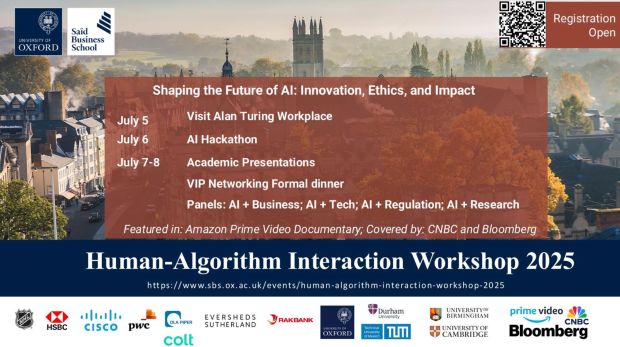
I’m pleased to be presenting at the University of Oxford’s Human-Algorithm Interaction Workshop 2025, on “Governing the futures you didn’t see coming: artificial intelligence scenarios“.

Do join us in Oxford, 5-8 July, for an interdisciplinary event delving into the complex and evolving relationship between humans and algorithms.

The annual workshop is a gathering of industry leaders, AI pioneers, and leading researchers who will explore the evolving role of AI in business, governance, and society. This year’s theme is “Shaping the future of AI: innovation, ethics and impact.”

Find out more and register here.

Scripturient: To Dream Like A Human

The world could always be otherwise than it is. Sometimes fate is only a failure of imagination. The trajectory of automation is not only uncertain, it is unwritten. The fundamental question is less about technical capacity than ethics, authority, and accountability: Who will create the future – and with what ends in mind?

In the latest instalment of ‘Scripturient’, my quarterly column for Information Professional magazine, I draw together comments from a few different thinkers on automation and art.

You can read ‘To Dream Like A Human’ here.

Futures of the networked world – auDA Internet governance scenarios

Australia’s Internet domain name self-regulatory body, the .au Domain Administration (auDA), has released a public version of its scenarios exploring the future of Internet governance. I’m pleased to have supported auDA in this process, and you can find the full scenario set here.

auDA is endorsed by the Australian government to administer the .au domain, with a mission to ensure it is a secure, accessible, and trusted asset for Internet users. In addition to its domestic duties, auDA also advocates for the .au domain and participates in global Internet governance processes. The organisation’s Future Scenarios Project provides a basis for wider strategic and policy conversation about our networked world and its governance, and how they might evolve in times to come.

You can read auDA’s own blog introducing the scenarios here – and there’ll be more to come, from auDA and myself, in due course.

“What’s after archives?”: Kate Eichhorn and the End of Forgetting

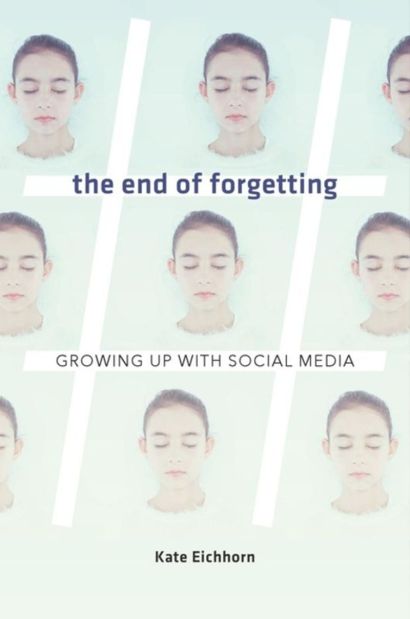
I’m proud to present a Q&A transcript with the New School for Social Research’s Professor Kate Eichhorn, author of The End of Forgettting.

We spoke earlier this year to discuss who gets to tell their own story in the age of social media, what are the consequences to such stories being shared, and what power do we have to forget or be forgotten in this new digital era? This conversation formed the basis for an instalment of “Scripturient”, my column in Information Professional magazine, but now you can read a Q&A expanding on that text, below.

Matt: When did the idea for The End of Forgetting coalesce?

Kate: Prior to working on this book, I had been thinking about and writing about archives for many years. There was a moment when I literally asked myself, what’s after archives? I immediately thought, it’s forgetting. But all of my colleagues who work in archives were very quick to remind me that the archive and forgetting are inextricably linked. So, this book was a kind of natural extension of my earlier work on archives. But the book, while not a personal book, is informed by personal circumstances. On the one hand, when I started working on the book, my kids were maybe 11 and 13, so I was certainly thinking about the tween girls and their relationship to social media. As a parent, I also started to think about how different my life would have been had I been on social media when I was their age. I am almost certain that I would have either said or done things I would have regretted and that there would have been consequences. 

Read more

Scripturient: The End of Forgetting

The latest installment of my “Scripturient” column for Information Professional magazine features the New School’s Kate Eichhorn, author of The End of Forgetting.

Together, we discussed: Who gets to tell their own story in the age of social media? What are the consequences of such stories being shared? 

How will digital media transform the ways we remember and are remembered, now and in times to come?

Will old deeds, old relationships, and our own former selves become inescapable thanks to new technologies and the capitalist frameworks in which they are deployed?

Read more in “Owning your own story” (PDF download).

Scripturient: Data Ethicist Sam Nutt, London Office of Technology and Innovation

“People want to discover the future together, and that future, for us, is always a shared one.”

From the pages of Information Professional magazine, my most recent “Scripturient” column, featuring Sam Nutt of the London Office of Technology & Innovation (LOTI) on “doing data ethically” – going beyond research and compliance to help “practically discover what the values are which should be driving how we use data: not my values, but those of the organisation, of the city, and of the residents we serve.”