I’m speaking at the UCL Languages of the Future conference on 6th June, presenting a paper titled “Are we even talking about tomorrow? Uncertainty, agency, and the encounter with the sublime”.
The event brings together contributors from across academia and broader society to think through the complex relationships between languages and times to come. We’ve been given a few big questions to chew on, like: How can “languages of the future” encapsulate specific individual disciplines, embrace diverse knowledge systems, convey the urgency of problems that are yet to arise, and honour the voices of the more-than-human world?
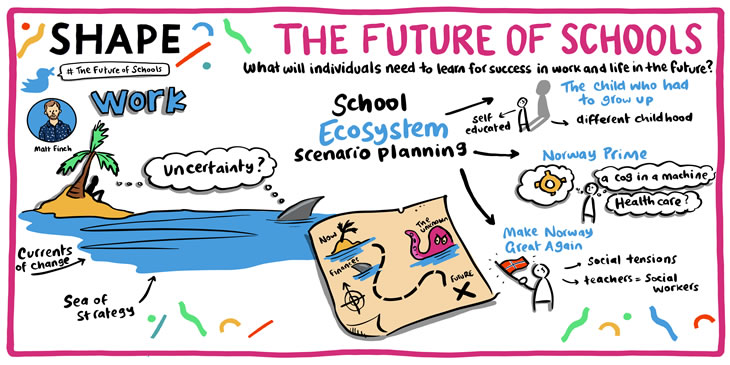
I’ll be standing on the shoulders of thinkers like UCL’s Richard Sandford to explore uncertainty, agency, and the “thick present”: an understanding of the here-and-now encompassing remembrance and anticipation. As Rafael Ramírez and Angela Wilkinson have it,
The future is always an aspect of the present. The future has not “taken place,” but the present always “holds” the future, and holds it as potential. Indeed, the future is never “later,” is it always (experienced, imagined) “now.”








 matt finch / mechanical dolphin

