Blink and You’ll Miss It: Surveillance, Society, Foresight, AI

“How can we use events which haven’t happened yet to help us understand surveillance and society?”

Over at the blog Blink on Medium, I have a short piece with colleagues Carissa Véliz, Malka Older, and Annina Lux, reflecting on how to think critically about automation and surveillance in a season “swarming with futures”.

The post ties in to our recent article for Surveillance & Society, “The Art of Strategic Conversation: Surveillance, AI, and the IMAJINE Scenarios“.

UNESCO Prospects Journal: Scenarios and the future of education

The question for teachers, learners, and the various organizations and communities in which they participate becomes “How will we adapt, evolve, and thrive even if uncertainties play out in ways for which we had not initially prepared?”

In the UNESCO International Bureau of Education’s journal Prospects, the University of Oslo’s Steffen Krüger, the University of Agder’s Niamh Ní Bhroin, and I discuss the “Schools and/or screens” scenario project for the digitalisation of education in Norway.

UNESCO Headquarters sign. (C) Matt Finch, 2023

We show how challenging issues raised in the context of distant imagined futures proved to be immediately pertinent in the developing Covid-19 pandemic, and, as a wide range of actors explore the possibility of a new social contract for education, we reflect on how future scenarios can provide fresh perspectives on issues that are difficult or even impossible to resolve within current frames of reference, including questions of equity and justice that may be construed differently in times to come.

Read “Unlearning, relearning, staying with the trouble: Scenarios and the future of education” at Prospects online.

ISF Threat Horizon Podcast: Exploring Cybersecurity Scenarios

On the latest episode of the Information Security Form (ISF) podcast, I speak with ISF’s Max Brook and Mark Ward about using scenarios to help security practitioners see beyond present problems: exploring uncertainty, attending to blind spots, and strategizing more effectively under conditions of uncertainty.

“An app is not going to solve our democracy; it’s something we have to solve ourselves.”

In the new issue of the journal Surveillance & Society, Oxford’s Carissa Véliz, sci-fi writer and aid worker Malka Older, and Capgemini Invent’s Annina Lux join me to talk about how future scenarios can inform discussion, debate, and decision-making about the relationship between artificial intelligence and surveillance.

Read “The Art of Strategic Conversation: Surveillance, AI, and the IMAJINE Scenarios” here.

The Conversation: How activity in outer space will affect regional inequalities in the future

My latest piece in The Conversation explains how the IMAJINE scenarios used plausible futures to explore the relationship between European regional inequalities and activity in outer space.

You can read “How activity in outer space will affect regional inequalities in the future” here.

Photo by Pixabay on Pexels.com

The power of an unresolved chord

In New York, I attended a concert, “Concerto per violini: 18th-century Italian virtuosi“, performed by members of Early Music New York (EM/NY).

At the end of the event, EM/NY announced the retirement from public performance of Frederick Renz, the storied conductor and early music expert who directs the organisation. They also announced that plans for future performances by EM/NY were as yet unclear.

The program notes for the event reminded us that, while most people think of concertos as works for solo instruments accompanied by an orchestra, the original definition of the term in the Baroque era, was “a work for musicians playing together.”

Such were the works performed at the EM/NY event, including pieces by Vivaldi, Arcangello Corelli, Pietro Locatelli, and Francesco Geminiani.

There’s a tension within the very name “concerto”: not just the way in which the term has evolved musically, but between the literal Italian meaning “gathering” or “accord” and the Latin derivation “concertare”, which denotes confrontation or battle. There are so many ways we can come together, in collaboration, competition, or opposition – sometimes “either/or”, sometimes “both/and”.

I was reminded of a workshop series which I ran for an organisation facing a challenging strategic situation, thick with uncertainty. Together, we built scenarios to explore how these uncertainties might play out in ways beyond their expectations, assumptions, hopes, or fears.

Those scenarios were then presented to the organisation’s board during an away day. Board members were introduced to the scenario planning approach, worked with the scenario material created by the organisation’s staff and other stakeholders, and then engaged in strategic conversation: what did these scenarios mean for the organisation? How could they inform the decisions which needed to be made?

Read more

After Earth Day: New adventures in planetarity

This past weekend saw the celebration of Earth Day on 22nd April. Since 1970, the date has provided a moment of focus and celebration for communities and organizations focussed on protecting our environment.

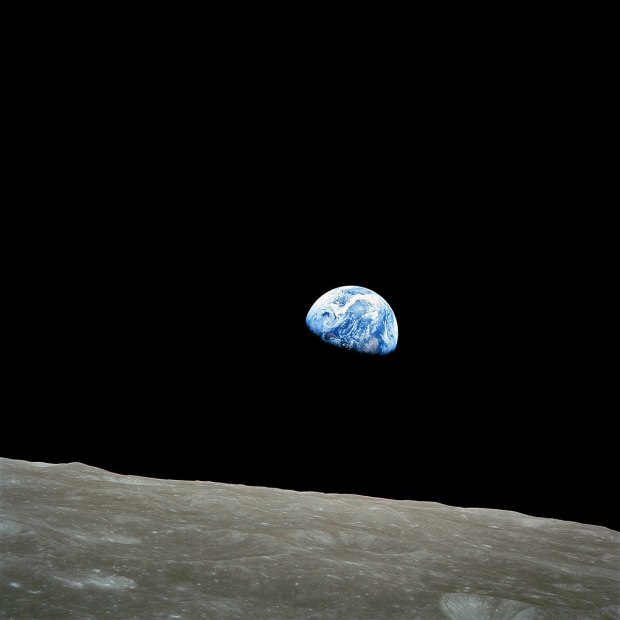
The first Earth Day was shaped by many factors. These included the 1969 Santa Barbara oil spill in Southern California, which caused public outrage and helped motivate Republican President Richard Nixon to found the US Environmental Protection Agency, and the Earthrise photograph taken by Apollo astronaut Bill Anders in 1968, which has been described as “the most influential environmental photograph ever taken”.

Earth Day serves to draw our attention, energising debate and action around what must be done to protect and sustain our planet’s environment. The events from over fifty years ago, which helped to inspire its creation, remind us of the ongoing need to cultivate fresh perspectives, in order to act effectively in these complex and turbulent times.

Read more