Chessboard Interrobang / Burden of Dreams

At a recent event, I was allowed just one slide to present an approach to strategic foresight.

Here it is:

On the left is a chessboard, the setting for a game where all the moves are knowable in advance, and the winning and losing conditions clearly defined. It’s just a matter of which piece goes where and when within the constraints of the rules. (Not that it makes chess easy!).

On the right is an interrobang, an unusual punctuation mark which is intended for use at the end of an exclamatory rhetorical question: Are you out of your mind!? Is this for real!?

To me, the point of manufacturing plausible futures when doing strategy work is more about the right hand side of the image than the left.

It’s not about identifying all the contingencies, or modelling all the ways you think the action could play out according to today’s rules.

It’s about showing you something which usefully pushes the bounds of what you believe is plausible; which uncovers issues previously unseen from your standpoint in the present, and makes you question yourself.

Read more

The Ghosts We See from the Mountains: IMAJINE at the Territorial Bodies Conference

I’m pleased to say I’ll be presenting at the Territorial Bodies Conference held at the University of Warwick in February 2023.

My paper, “The ghosts we see from the mountains: Scenario planning and the territorial body in time”, will explore the intersection between bodies and territories via the questions of spatial justice explored by the IMAJINE scenarios for the future of European territorial inequality, and consider how scenario planning can give insights into the ways we understand the relationship between bodies and territories over time.

Find out more at the University of Warwick conference website or via the Territorial Bodies account on Twitter.

Scenarios for the future of civil protection in Germany

I served as an expert respondent on the pro bono scenarios for the future of civil protection in Germany created by the team at CapGemini Invent.

German speakers (or those of you possessed of a decent machine translation option) can read more about the Katastrophenschutz 2035 scenarios here.

PUSH SUMMIT Podcast with Rowan Drury, Malin Leth, Anders Mildner

Altitude Meetings’ PUSH Summit on climate and democracy is currently taking place in the Swedish city of Malmö and online.

I joined sustainability consultant Rowan Drury, Malin Leth from Håll Sverige Rent – the Keep Sweden Tidy organisation, and Altitude’s own Anders Mildner to discuss issues of system change, futures thinking, strategy, and sustainability.

You can listen to the half-hour podcast here and watch my short online presentation to PUSH SUMMIT here.

TAFTIE x IMAJINE: Scenarios, productivity, and innovation policy

For the Asian Productivity Organization, Alex Glennie of the Innovation Growth Lab discussed the role of innovation agencies in Europe.

Alex’s presentation drew on the collaboration between the TAFTIE network of innovation agencies and the IMAJINE project looking at the future of European regional inequality.

You can watch Alex’s presentation on YouTube, and read more about “TAFTIE x IMAJINE” at the website of the OECD’s Observatory of Public Sector Innovation.

PUSH SUMMIT in Malmö and online

To launch Altitude Meetings’ PUSH SUMMIT exploring issues of democracy and sustainability in times of uncertainty, I spoke with Anders Mildner about scenarios, foresight, and some of the findings from the IMAJINE project.

See more from the PUSH SUMMIT, which takes place in Malmö, Sweden, and online, here.

Tomorrow’s Inequalities: Discussion with Mattia Vettorello

The designer and foresight practitioner Mattia Vettorello generously allowed me to join him for the final instalment of his podcast The Briefing Today.

During the episode, we talked about questions of foresight, changing social values, inequality, and injustice, using the IMAJINE scenarios as a case study.

You can hear previous instalments of the 22-episode series at Mattia’s website.

Time to ask some magical questions? Exploring the future of Europe’s innovation agencies

Over at the blog of OPSI, the OECD’s Observatory for Public Sector Innovation, Alex Glennie of Innovation Growth Lab, Marie Mahon of NUI Galway, and I have written about our work using the IMAJINE scenarios with TAFTIE, the European network of innovation agencies.

At the OPSI website, you can read our discussion of what happened when we used IMAJINE’s four visions of Europe in 2048 to help innovation agencies ask ‘magical questions’ about what lies ahead and the implications for innovation strategy & policy today.

The Time of the Surprise: Strategy for the Wooden World

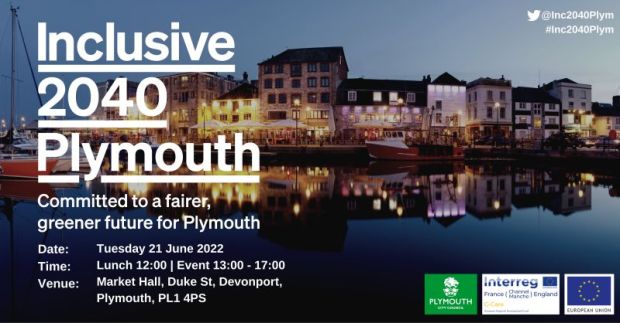
I spoke this week at the Inclusive 2040 event hosted in Plymouth, England, to explore the future of sustainable, equitable growth in that city.

Alongside speakers including Stephen Evans of the Learning and Work Institute, Fiona Tuck of Metro Dynamics, Alexis Bowater OBE, and Tim Sydenham, I presented an interactive session on strategic foresight, drawing on an adapted version of the IMAJINE scenarios.

Britain’s so-called “Ocean City” has been a strategically important naval site for centuries, thanks to its shipyards and dockyards. In exploring the future for the city, we also wanted to acknowledge its long history. Who we have been in the past shapes who we are today, and the potential for who we might need to become tomorrow.

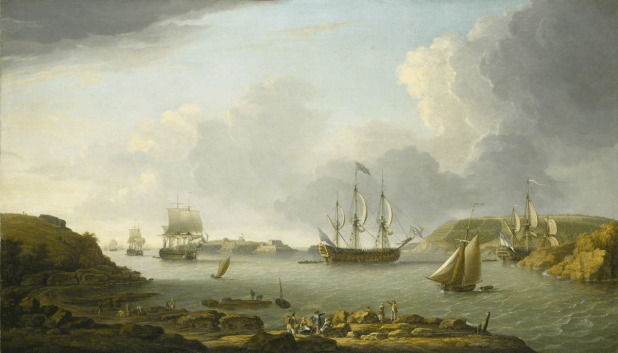
In Plymouth’s naval heyday, the time of the Napoleonic wars, each ship was its own “wooden world”, a microcosm moving through the ocean. The image of a man o’war sailing into battle evokes a particular notion of strategy: directing one’s own organization like a vessel through changing waters, assessing the conditions of the weather and the sea, weighing one’s limited resources, managing the morale of one’s crew, and making judicious choices in combat and competition with other, rival ships.

At times, leading an organization can feel like steering one of the ships pictured in Dominic Serres’ Return of a Fleet into Plymouth Harbour: even in a familiar setting, all is not certain. Some hazards are evident and well-charted; others may lie below the waterline; others still may vary with the conditions of the sea and the sky. Each figure in Serres’ painting, whether on the land or aboard a vessel large or small, will have a different perspective on the waters which the fleet is seeking to successfully navigate.

Such multiple perspectives can prove useful in helping us to understand the three elements which Geoffrey Vickers identified as fundamental to wise decision-making in his book The Art of Judgment:

What is going on? What does it mean for us? And what can we do about it?

Yet our world is different from that of centuries past. The connections and complexities which define it have evolved considerably, as has the speed and quality of communication. Strategizing today involves much more than guiding a single ship, squadron, or fleet in competition against hostile powers.

As Trudi Lang and Richard Whittington write in Harvard Business Review, we must adopt a broad view of strategy, rather than leaders’ traditional approach of “taking the long view and focusing on where they’re going”:

Thinking narrowly, in terms of traditional sectors, industries, or geographies, can limit or blindside an organization. A better approach is to think in terms of systems. Doing so sensitizes leaders to broad changes of context and allows them to bring actors together from many sectors, which in turn enables the creation of new value.

Read more

IMAJINE: Futures of Infectious Disease

COVID-19 has brought infectious disease, and the ways we fight or prevent it, to the forefront of discussion about the very biggest decisions our societies face. On issues ranging from economics, wellbeing, and sustainability to authoritarianism, democratic accountability, digital inclusion, privacy, and surveillance, the pandemic has become something we cannot ignore.

What might the future hold in terms of both infectious disease and the acts we take to counter it? For the IMAJINE project’s four scenarios for the future of Europe in 2048, Gail Carson of Oxford’s Nuffield Department of Medicine explores this question.

You can read her response to the scenarios at the IMAJINE website.