Peat Hub Ireland Report including Peatlands 2050 scenarios

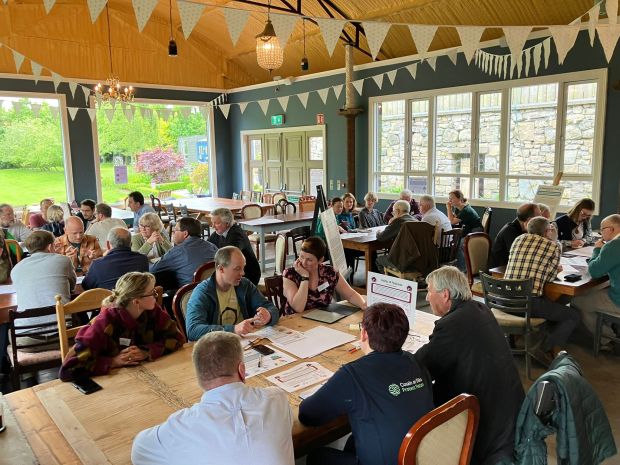
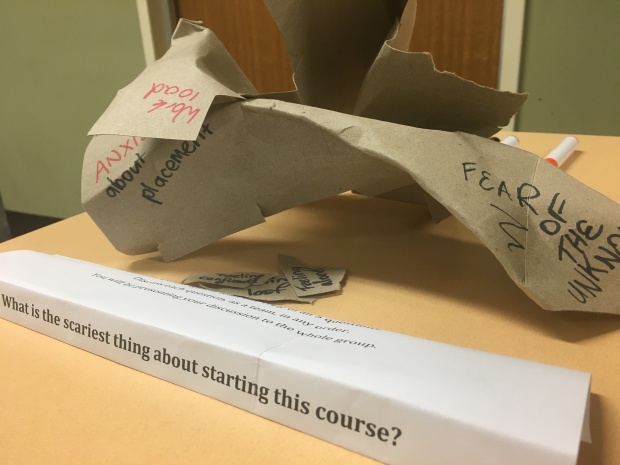
“What I liked most about the workshop was getting to experience a framework for discourse between different stakeholders where everyone was approaching challenging ideas with an amount of vulnerability and openness. Things like the icebreaker question and being pushed outside of our cognitive comfort zones led to a kind of shared sense of uncertainty and unease that made it much easier for conversation and creativity to happen.”

Words from a participant at the scenarios workshop I led as part of the Peat Hub Ireland initiative, funded by the Irish Environmental Protection Agency and delivered by UCD colleagues under the leadership of Florence Renou-Wilson, including David Wilson, Kate Flood, and Elena Aitova.

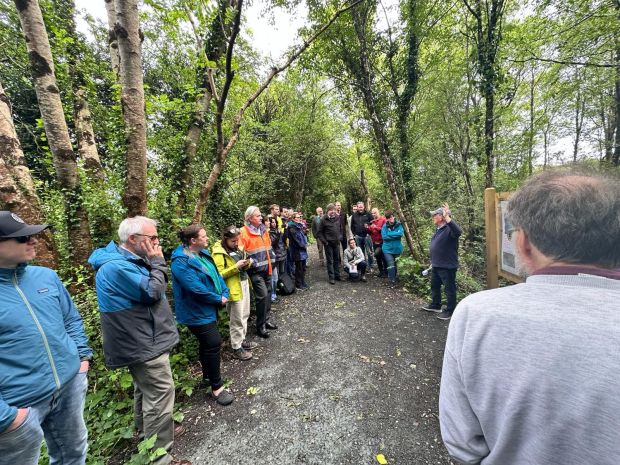
You can see the full report, including an appendix on the scenarios, at the EPA website. Thanks to all the colleagues and to the host of our scenario session at Tyrrellspass, County Westmeath – it’s a rare delight to run a scenario workshop with a ninety minute bog walk in the middle of it…

Climate action and the vantage point of imagined futures: a scenario-based conversation

npj Climate Action has today published a new article, “Climate action and the vantage point of imagined futures: a scenario-based conversation“, co-written by Marie Mahon, Malka Older, David Robertson, and myself.

Drawing on the example of the IMAJINE project, the peer-reviewed piece explores how scenarios can provide the basis for discussion across disciplines and offer fresh ways to nourish our thinking about climate action.

It covers topics including: the nature of climate change and our understanding of it in different scenarios; questions of risk and responsibility now and in times to come; the use of scenarios to identify current blind spots and stimulate creative thinking; and the possibility that scenarios might offer fresh perspectives which allow us to reevaluate our notions of the sustainable “good life” and identify vulnerabilities which are overlooked in the present day.

Read the whole piece at npj Climate Action.

Peat Hub Ireland: 2050 Scenarios

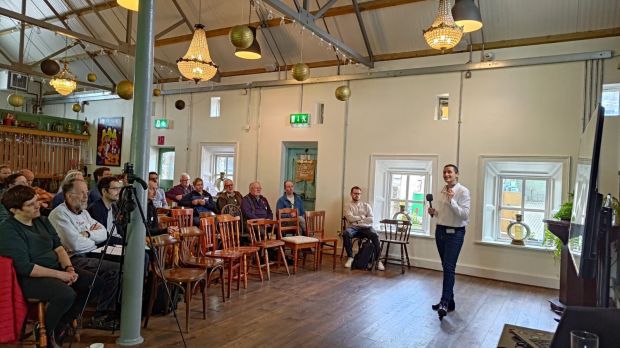
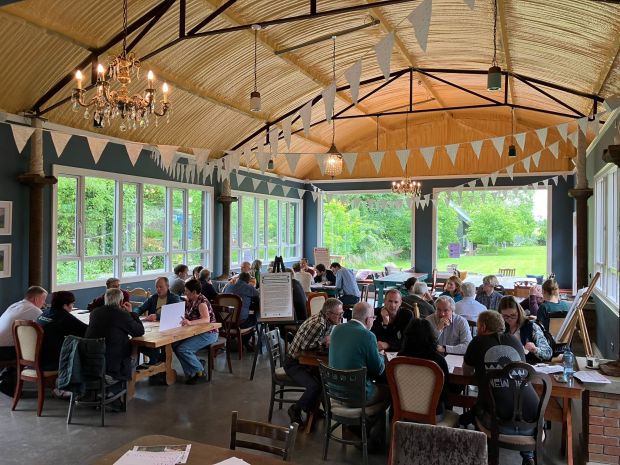
I’m just back from collaborating with the Peat Hub Ireland team on a scenarios workshop which invited participants from across the communities and institutions involved in Irish peatlands management to explore three visions of the world in 2050.

Historians, scientists, community members, officials, archaeologists, educators, researchers, activists, and businesspeople all gathered to find new ways to think about sustainability and custodianship, suitable for times of turbulence and unpredictability.

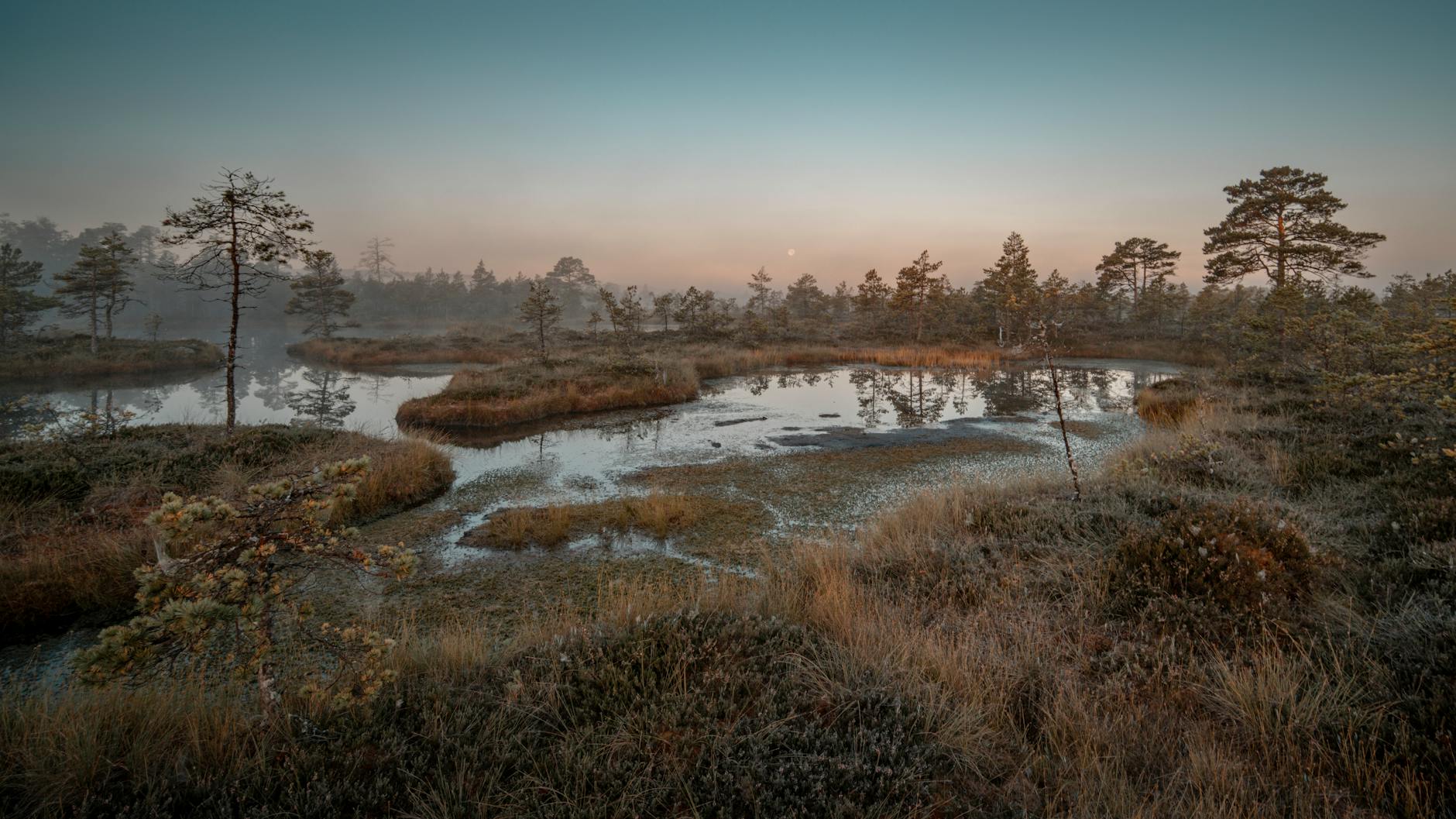
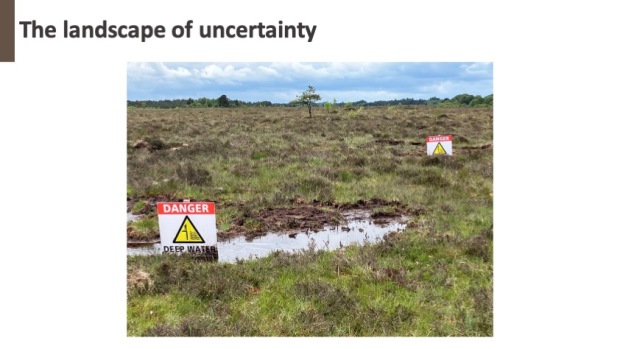
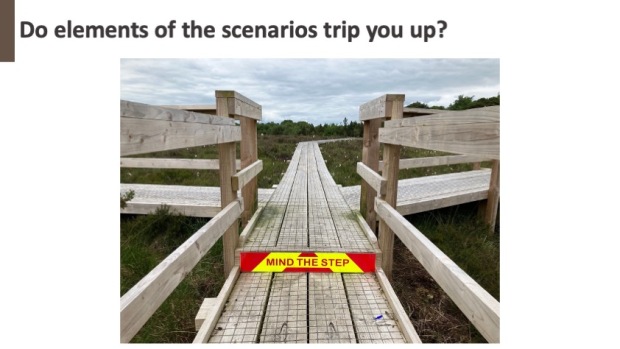
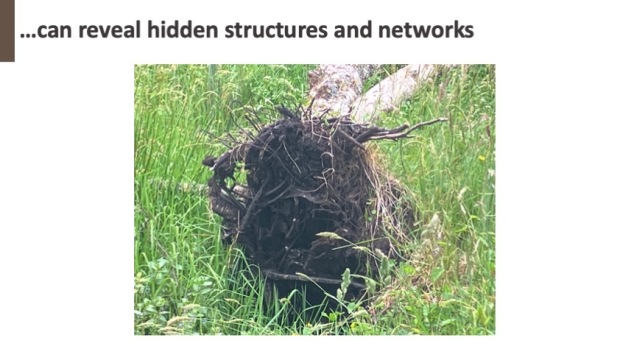
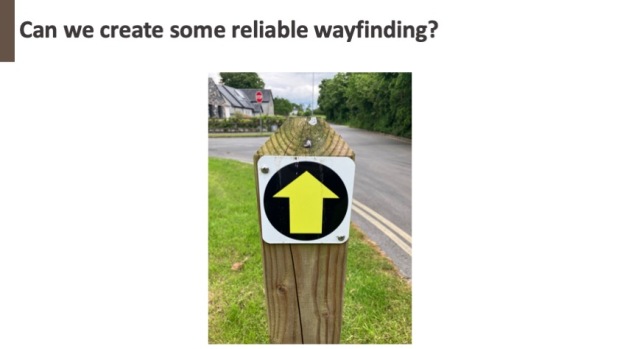
It was quite unique to run a scenarios day incorporating a two-hour break for a lunchtime country walk – but being out on the bog gave us a shared experience of the landscape whose future we were exploring, and some useful metaphors for dealing with conditions of uncertainty.

Our work built on the scenario elements of the Horizon Europe-funded IMAJINE project, which were led by the University of Galway’s Marie Mahon and myself. Peat Hub Ireland’s Florence Renou-Wilson, David Wilson, and Kate Flood worked with me to develop IMAJINE materials into a fresh set of scenarios for the world of peatlands management in 2050. We were supported in delivering the workshop by colleagues including Elena Aitova and Liz Bruton.

You can find out more about Peat Hub Ireland at their website – and there’s an account of the day from the Department of the Environment, Climate, and Communications’ Dave Dodd here. Stay tuned for more about the scenarios, too.

BMJ Medical Humanities Podcast: Scenario Planning, Healthcare, and the Humanities with Professor Matthew Molineux

Years ago, casting around for a way to explore “applied medical humanities”, I read Matthew Molineux’s essay “A Labour in Vain”, a kind of intellectual history of occupational therapy which spoke directly to the fraught, pragmatic question of what good we really do, when we strive to help others. It’s one of my all-time favourite pieces of scholarly writing and you can find it as a free PDF download from publishers Wiley here.

Working with Matthew in a collaboration between Griffith University and State Library of Queensland, I got to know him not just as a great writer, but a colleague and a friend. Combining a creative hands-on approach to occuaptional therapy education with foresight and psychodynamic work, we took Griffith students to distant futures — all in the service of exploring occupational therapists’ role in a changing world.

Toys, cake, and cardboard were just some of the materials which were brought into the work, which included a challenge to produce an edible presentation. The students were resourceful, empathetic, creative, good-humoured – exemplfying the best characteristics of their profession.

Now for The BMJ’s Medical Humanities podcast, Matthew and I join hosts Cristina Hanganu-Bresch and Brandy Schillace to explore scenario planning, healthcare, art, foresight, and the humanities.

The Conversation: How activity in outer space will affect regional inequalities in the future

My latest piece in The Conversation explains how the IMAJINE scenarios used plausible futures to explore the relationship between European regional inequalities and activity in outer space.

You can read “How activity in outer space will affect regional inequalities in the future” here.

Photo by Pixabay on Pexels.com

Fast, deep, and uncertain: the currents of thought and feeling

Big whorls have little whorls which feed on their velocity,
And little whorls have lesser whorls and so on to viscosity

Lewis Fry Richardson

These lines appear in Sarah Dry‘s tremendous book Waters of the World, a work of history which explores how scientists, researchers, and passionate amateurs gradually pieced together an understanding of our global climate system. The story spans continents and generations; some of its characters collaborate or compete, while others work alone, unaware of the wider context in which their endeavours might be received. Some don’t even live to see the difference that their research will make to the world. There are false starts and dead ends. Politics, from the sweep of colonialism to the pettiness of institutional squabbles, plays its part; and for all that this is a tale of systematic observation and theorisation, it’s no less deeply human for that. As one of Dry’s scientists, Joanne Simpson, put it:

“I think I am generally perceived as a pretty cool character. Nothing could be farther from the truth. To understand how a woman, or a man, for that matter, creates original work in any field, it is necessary to penetrate the emotional masks, and my masks have intentionally been hard to penetrate.”

Dry’s book, and particularly its chapter on “Fast Water”, exploring the currents of the ocean’s depths, makes me think of the ways that emotions can swirl around us and within us when we address difficult issues, alone or together.

Read more

Scripturient: Computing Taste – Interview with Nick Seaver

For the latest issue of Information Professional magazine, my Scripturient column features an interview with Nick Seaver, Assistant Professor of Anthropology at Tufts University.

Nick’s new book Computing Taste uses ethnographic fieldwork to explore how the makers of music recommendation algorithms understand and go about their work – from product managers thinking about their relationship with users to scientists theorising the act of listening itself as a kind of data processing and engineers for whom the world of music is a geography to be cared for and controlled.

You can read the latest Scripturient column featuring Nick as a PDF download here, and there’s a full transcript of our conversation, digging even deeper into these issues and other elements of Nick’s research, below.

Read more

Sustainability, Scenarios, and Spatial Justice: IMAJINE at Resilience.org

Over at Resilience.org, the blog of the Post-Carbon Institute, Marie Mahon of the National University of Ireland Galway, David Robertson of Monash Sustainable Development Institute, and I discuss the sustainability implications of the IMAJINE scenarios for the future of European regional inequality.

I especially valued David’s comments on the Metaverse-like SILICON SCAFFOLD scenario, where “Near-infinite virtual geographies undermine the notion of ‘limits’ or ‘planetary boundaries’[…and t]he resources we use as we navigate digital worlds are hidden from us.” Will notions of sustainability be fundamentally recast and reframed by the generations which succeed us? How will future circumstances cause those frames and the values which define them to change?

The mission of Resilience is to “envision a world of resilient communities and re-localized economies that thrive within ecological bounds.”

Read more about IMAJINE’s contribution to that discussion here.

Aesop’s Animals: Truth, Science, and Fable with Jo Wimpenny

What scientific truths lie behind the millennia-old collection of moral tales we know as Aesop’s Fables? Do the stories tell us something about real-life animal behaviour? How do our myths and metaphors match up to the realities of the natural world?

Zoologist Dr. Jo Wimpenny‘s new book Aesop’s Animals explores all of these questions, linking ancient stories to the latest research into animal behaviour, and challenging our assumptions about the animal kingdom.

Jo and I spoke on the eve of the book’s launch.

We might think we know what Aesop’s Fables are, but was there even really a historical Aesop? What do we mean when we talk about “Aesop’s Fables”?

An exact answer isn’t possible: Aesop’s Fables stretch back to something like two thousand five hundred years ago, which we know because certain ancient scholars of the time mentioned the fables in their writing. Those scholars certainly thought there was an Aesop, though it’s a disputed point; a lot of modern historians point to inaccuracies in descriptions of him, which suggest there may not have been a single author who bore that name. Today there are hundreds of fables attributed to Aesop, but some of these may have been created later, building on the existing tales.

The standard view is that Aesop was a slave, who might have been Greek, Turkish or Ethiopian, who created little moral fables, moral messages. They weren’t about animal behaviour, and they weren’t based on science, because science as we know it didn’t exist at that point. They used animal and mythological characters to communicate moral teachings.

The story goes that Aesop won his freedom by being a master storyteller – that he used his wit and intelligence to entertain and educate people, impressing those in power into granting him his freedom.

The basis for my book is less about whether Aesop was a real person, and more about this very real collection of stories which verifiably does date back to the ancient world.

Read more