This Digital Life @usqedu @thewritplatform: Mums, Dogs, and Inmates

The Writing Platform has published my three-part series on the work of Australia’s Digital Life Lab, an academic unit at the University of Southern Queensland exploring our experiences of the digital world.

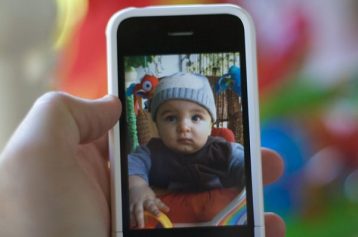
Part 1 in the series, “Mums“, looks at fake news, parenting decisions, and the information world of new mothers on social media, as researched by social scientist Kate Davis.
baby-600x398

Part 2, “Dogs“, follows researcher Ann Morrison’s investigations into animal-computer interaction, teasing out the implications of a world where animals and digital devices interact without a human intermediary.

cat-600x450

Finally, part 3, “Inmates“, looks at digital engagement in remote communities – principally the Australian prison population – through the lens of two projects: the Shakespeare Prison Project and Digital Life Lab’s ‘Making the Connection’ initiative, led by Professor Helen Farley.

fence-600x432

Find the whole series here at The Writing Platform.

 

Combats for Kindy and Other #Librarianstyle Stories

I’m over at Library Whisperers joining in the conversation, led by the brilliant Kim Tairi, around #LibrarianStyle – the fashion choices of people who work in and with libraries and other knowledge institutions.

There will always be a tension in the style choices of knowledge professionals, especially those working in public-facing institutions. Should staff wear uniforms? Do they make it easier to identify staff on the floor of the library, museum, or university?

Which ranks become exempt from uniform and what does that do for an “us and them” mentality?

Does sartorial expression ever become self-indulgent, distracting, or damaging to your professional role?

Do these questions play out differently depending on whether you identify as a man or a woman – with this patriarchal world placing more demanding expectations and standards on women in the workplace?

Read about teaching kindergarten in hiking gear, and taking on university roles in tweed and punk hairstyles – as well as cross-dressing for the Open 17 conference! – over at Library Whisperers.

#NotEnoughSciFi – Hope and Holodecks Revisited

This week in Michigan, I’m leading a series of talks, workshops, and pilot sessions on immersive play and live-action experiences in libraries and other community settings.

To tie in with these sessions, I’ve written a little piece about Hope and Holodecks – incorporating Blade Runner, Star Trek, Captain America….and Romy and Michele’s High School Reunion.

This slideshow requires JavaScript.

Look, I think one day we’ll get holodecks.

That was what Star Trek: The Next Generation called the interactive, fully immersive spaces where crew members could conjure ultrarealistic, AI-driven virtual experiences of play, sport, storytelling, historical research, or even technical experimentation.

I think one day they’ll arrive.

I think that whatever the library becomes or is replaced by in the future will look a lot like the holodeck. Instead of summoning information in containers like books or web pages, it will feel like an immersive, flowing sensory and social experience.

It won’t be libraries or other knowledge institutions that develop them, though – it costs too much money.

What’s interesting about how Star Trek imagines that experience is not the pseudoscientific technology behind it. It’s how fluent all the characters are in its use.

They walk into that magic space, summon a story or game or simulation, and tailor it to their requirements. Read more

LIANZA #Open2017 – Future Sound of Libraries / B-sides and rarities

This is the final part of a series on the LIANZA #Open17 library conference.

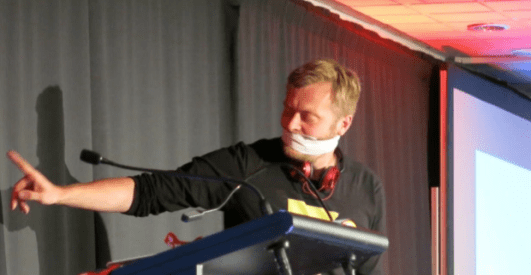
So you’ve seen how we planned a keynote where the main speaker keeps their mouth taped shut for nigh-on an hour. Seen what happened over the course of that hour. And even seen the consequences of the event.

This is the last post in this series setting out our process, so you can think about how to run such an activity, and push the boundaries even further than we did.

This slideshow requires JavaScript.

In this entry I’m just going to focus on all the stuff which remained below the waterline – songs which didn’t make it to the final session, videos which inspired us but whose inspiration might not be very visible in the finished product. Read more

Artists Ettamodern & Scribbletronics visit University of Southern Queensland

As part of this week’s Astronomy Festival at the University of Southern Queensland, we’re joined by Melbourne artists Wendy Catling and Peter Miller, aka Ettamodern and Scribbletronics.

This slideshow requires JavaScript.

Wendy is an artist, designer and teacher who employs light to create works on paper and fabric – particularly blueprint-style ‘cyanotypes’. Her prints are held in the collections of Warrnambool Art Gallery, the Australian National Gallery, and private owners.

Peter is a composer, sound designer, and audio-visual artist whose work includes sound design for films The Ring and Rango and additional design for Mad Max: Fury Road, as well as a sound installation in the Qantas first-class lounges in Sydney and Melbourne.

I’ve previously worked with Ettamodern and Scribbletronics on the Time Travel Detectives roleplay, which was built around two of Peter’s digital artworks. This children’s event blended steampunk adventure, optical illusions, and tablet technology to help kids explore Australia’s past and the scientific method.

This slideshow requires JavaScript.

On this visit, Wendy and Peter will join USQ staff, students, and the wider community to explore new opportunities to work at the meeting point of art, science, and community engagement. Find out more at the University of Southern Queensland’s website.

LIANZA #Open2017 – Future Sound of Libraries / The Process, pt. 3

This is part three of a series on the LIANZA #Open17 library conference, and my alternative keynote at that event. These blog posts should help you find ways to create your own participatory sessions, and to maximise their impact.

Last time, we went through everything that happened at the LIANZA Open 17 keynote, culminating in Rachael Rivera and Hamish Noonan’s excellent presentation on the services they have devised and delivered for homeless people in central Auckland. (You can read about their stupendous and internationally recognised work here).

I had approached Rachael to conclude the keynote so that it ended with a local voice and a speaker who was delivering practical front-line services to a New Zealand community. Rachael is a great example of a library branch manager whose teams are finding new and compelling ways to engage their community, from services for the homeless through to personalised one-to-one music sessions.

What happened next? How did this little library conference end up making national news in New Zealand? Read more

LIANZA #Open2017 – Future Sound of Libraries / The Process, pt. 2

This is part two of a series on the LIANZA #Open17 library conference, and my alternative keynote at that event. These blog posts should help you find ways to create your own participatory sessions.

Screen Shot 2017-09-29 at 20.57.36.png

You can also watch a Youtube Playlist based on the LIANZA keynote here.

So, it’s the afternoon of Sunday 24th September, 2017, at the Addington Raceway in Christchurch, Aotearoa New Zealand. Laurinda Thomas has just given an excellent talk about librarians’ professional identity and I’m invited to the stage.

I acknowledge the traditional owners of the land and say a few words in te reo Māori.

Then this appears on the conference screens: Read more

LIANZA #Open2017 – Future Sound of Libraries / The Process

This is part one of a three-part series on the LIANZA #Open17 library conference.

In August last year, the organisers of LIANZA Open 2017 invited me to be a keynote at their conference, the national gathering for the librarians of Aotearoa New Zealand.

Last week, it all happened – I taped my mouth shut for an hour and led an adventurous conference session which brought the audience onto the stage, delivered a working library service within the keynote hall itself, and got us coverage on New Zealand’s national news.

So what exactly took place over in the city of Christchurch, how did we get here, and what can we do with the experience? If I share with you not only the product, but the process, could you see your way to trying something like this…or even going beyond what we achieved in New Zealand?

Read more