Scripturient: Computing Taste – Interview with Nick Seaver

For the latest issue of Information Professional magazine, my Scripturient column features an interview with Nick Seaver, Assistant Professor of Anthropology at Tufts University.

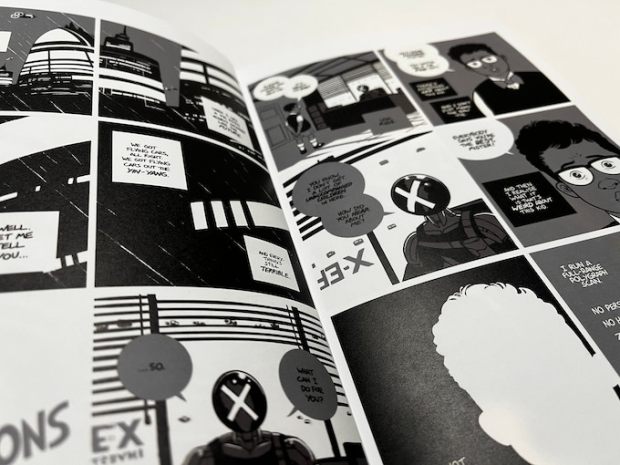
Nick’s new book Computing Taste uses ethnographic fieldwork to explore how the makers of music recommendation algorithms understand and go about their work – from product managers thinking about their relationship with users to scientists theorising the act of listening itself as a kind of data processing and engineers for whom the world of music is a geography to be cared for and controlled.

You can read the latest Scripturient column featuring Nick as a PDF download here, and there’s a full transcript of our conversation, digging even deeper into these issues and other elements of Nick’s research, below.

Read more

Preservation for All: Whose Future?

“We need to meet this inflection point with a more expansive imagination of what conservation work could be…The tools of the conservator can remind us of the fundamental human need for creativity, most especially under difficult or dehumanising conditions.”

In this short video for America’s National Gallery of Art, Sanchita Balachandran of The Johns Hopkins University speaks about “preservation for all” and strategising under TUNA conditions of turbulence, uncertainty, novelty, and ambiguity.

Chessboard Interrobang / Burden of Dreams

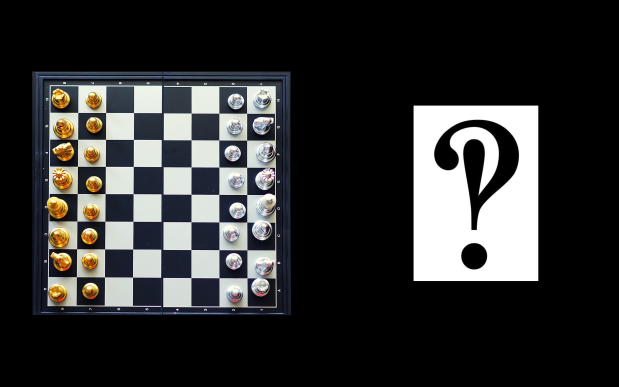
At a recent event, I was allowed just one slide to present an approach to strategic foresight.

Here it is:

On the left is a chessboard, the setting for a game where all the moves are knowable in advance, and the winning and losing conditions clearly defined. It’s just a matter of which piece goes where and when within the constraints of the rules. (Not that it makes chess easy!).

On the right is an interrobang, an unusual punctuation mark which is intended for use at the end of an exclamatory rhetorical question: Are you out of your mind!? Is this for real!?

To me, the point of manufacturing plausible futures when doing strategy work is more about the right hand side of the image than the left.

It’s not about identifying all the contingencies, or modelling all the ways you think the action could play out according to today’s rules.

It’s about showing you something which usefully pushes the bounds of what you believe is plausible; which uncovers issues previously unseen from your standpoint in the present, and makes you question yourself.

Read more

The Ghosts We See from the Mountains: IMAJINE at the Territorial Bodies Conference

I’m pleased to say I’ll be presenting at the Territorial Bodies Conference held at the University of Warwick in February 2023.

My paper, “The ghosts we see from the mountains: Scenario planning and the territorial body in time”, will explore the intersection between bodies and territories via the questions of spatial justice explored by the IMAJINE scenarios for the future of European territorial inequality, and consider how scenario planning can give insights into the ways we understand the relationship between bodies and territories over time.

Find out more at the University of Warwick conference website or via the Territorial Bodies account on Twitter.

Scenarios for the future of civil protection in Germany

I served as an expert respondent on the pro bono scenarios for the future of civil protection in Germany created by the team at CapGemini Invent.

German speakers (or those of you possessed of a decent machine translation option) can read more about the Katastrophenschutz 2035 scenarios here.

IMAJINE: Behavioural insights and interventions with Stefan Kaufman

A.I. that is better at exploiting behavioural science than humans are; transformations in land management that enhance the value and sustainability of natural resources; defence of “cognitive sovereignty” in a world of dark patterns and malevolent nudges; the weaponisation of behavioural insights in the service of “socio-technical Darwinism”…

A new response to the IMAJINE scenarios for European spatial justice from BehaviourWorks Australia’s Stefan Kaufman offers a foresight perspective on behavioural science, insights, and interventions in the Europe of 2048.

PUSH SUMMIT Podcast with Rowan Drury, Malin Leth, Anders Mildner

Altitude Meetings’ PUSH Summit on climate and democracy is currently taking place in the Swedish city of Malmö and online.

I joined sustainability consultant Rowan Drury, Malin Leth from Håll Sverige Rent – the Keep Sweden Tidy organisation, and Altitude’s own Anders Mildner to discuss issues of system change, futures thinking, strategy, and sustainability.

You can listen to the half-hour podcast here and watch my short online presentation to PUSH SUMMIT here.

TAFTIE x IMAJINE: Scenarios, productivity, and innovation policy

For the Asian Productivity Organization, Alex Glennie of the Innovation Growth Lab discussed the role of innovation agencies in Europe.

Alex’s presentation drew on the collaboration between the TAFTIE network of innovation agencies and the IMAJINE project looking at the future of European regional inequality.

You can watch Alex’s presentation on YouTube, and read more about “TAFTIE x IMAJINE” at the website of the OECD’s Observatory of Public Sector Innovation.

PUSH SUMMIT in Malmö and online

To launch Altitude Meetings’ PUSH SUMMIT exploring issues of democracy and sustainability in times of uncertainty, I spoke with Anders Mildner about scenarios, foresight, and some of the findings from the IMAJINE project.

See more from the PUSH SUMMIT, which takes place in Malmö, Sweden, and online, here.

IMAJINE scenario response – Colette Marshall, Director of Operations at Diabetes UK

“Diabetes is an interesting condition to explore in these scenarios because it’s like the canary in the coal mine. Type 2 diabetes, in particular, tells you the general population health, while Type 1 diabetes tells us about how society is dealing with a smaller group of people who have a condition which is eminently curable or preventable with the right level of research over the next 20 years… So diabetes becomes an interesting bellwether for social inequalities in each scenario, and for good sharing and rollout of the latest advances in healthcare.”

At the IMAJINE project website, Colette Marshall of Diabetes UK explores the future of diabetes, its treatment and management, in each of IMAJINE’s four scenarios for European regional inequality in 2048.

I especially liked Colette’s definition of trust as “confidence that partners will not exploit each other’s vulnerability”. There’s something there that takes us beyond trust in expertise: it’s about mutual recognition of vulnerability, and the motive for action, whether it’s exploitative or not, the power dynamic, which seems highly relevant.

Read more at the IMAJINE website.