LIANZA #Open2017 – Future Sound of Libraries / The Process, pt. 3

This is part three of a series on the LIANZA #Open17 library conference, and my alternative keynote at that event. These blog posts should help you find ways to create your own participatory sessions, and to maximise their impact.

Last time, we went through everything that happened at the LIANZA Open 17 keynote, culminating in Rachael Rivera and Hamish Noonan’s excellent presentation on the services they have devised and delivered for homeless people in central Auckland. (You can read about their stupendous and internationally recognised work here).

I had approached Rachael to conclude the keynote so that it ended with a local voice and a speaker who was delivering practical front-line services to a New Zealand community. Rachael is a great example of a library branch manager whose teams are finding new and compelling ways to engage their community, from services for the homeless through to personalised one-to-one music sessions.

What happened next? How did this little library conference end up making national news in New Zealand? Read more
LIANZA #Open2017 – Future Sound of Libraries / The Process, pt. 2

This is part two of a series on the LIANZA #Open17 library conference, and my alternative keynote at that event. These blog posts should help you find ways to create your own participatory sessions.

Screen Shot 2017-09-29 at 20.57.36.png

You can also watch a Youtube Playlist based on the LIANZA keynote here.

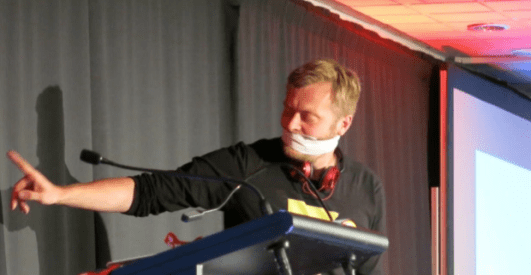
So, it’s the afternoon of Sunday 24th September, 2017, at the Addington Raceway in Christchurch, Aotearoa New Zealand. Laurinda Thomas has just given an excellent talk about librarians’ professional identity and I’m invited to the stage.

I acknowledge the traditional owners of the land and say a few words in te reo Māori.

Then this appears on the conference screens: Read more

LIANZA #Open2017 – Future Sound of Libraries / The Process

This is part one of a three-part series on the LIANZA #Open17 library conference.

In August last year, the organisers of LIANZA Open 2017 invited me to be a keynote at their conference, the national gathering for the librarians of Aotearoa New Zealand.

Last week, it all happened – I taped my mouth shut for an hour and led an adventurous conference session which brought the audience onto the stage, delivered a working library service within the keynote hall itself, and got us coverage on New Zealand’s national news.

So what exactly took place over in the city of Christchurch, how did we get here, and what can we do with the experience? If I share with you not only the product, but the process, could you see your way to trying something like this…or even going beyond what we achieved in New Zealand?

Read more

LIANZA Conference 2017

I’m just leaving Christchurch, Aotearoa New Zealand, after a fabulous few days with Kiwi librarians at their national conference LIANZA 2017.

There were workshops and a participatory, playful keynote, and other adventures besides. That keynote also made the national news.

More on all those things soon but for now, here’s a video with one or two highlights.


A Romance on Three Legs: The Ivory Archives / @IAMLaustralia

Is a library just a machine for making knowledge?

In such a place, can a piano be a research tool?

Why did a Kindertransport refugee from the Nazis acquire Glenn Gould’s favourite instrument for the National Library of Canada?

36_gould-piano-cd-318-2

Photo by National Arts Centre Archives, Canada

In advance of Australia’s 2017 IAML conference of music librarians, you can read the story of Gould’s beloved Steinway CD 318 over at Library as Incubator.

Check out “A Romance on Three Legs: The Ivory Archives” now.

Decolonising reading: the Murri book club of Townsville, Queensland

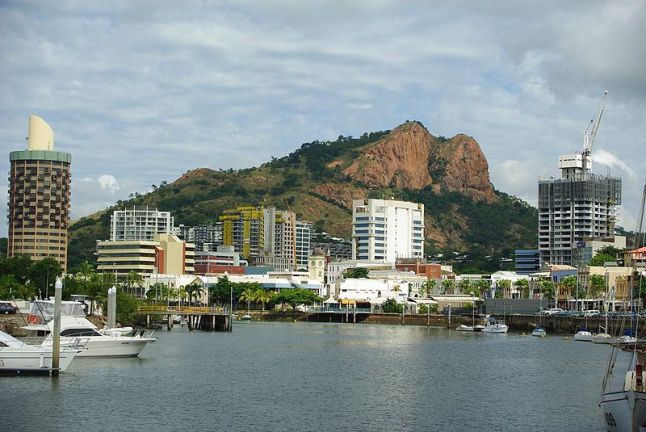
The brilliant Janeese Henaway of Townsville Libraries has just co-written an academic paper with researcher Maggie Nolan.

800px-townsvillecbd

The paper, ‘Decolonising reading: the Murri book club‘, explores the project to create and support an Indigenous book club in a regional Australian city, led by Janeese in her capacity as Indigenous Library Resources Officer.

If book clubs are an overwhelmingly white phenomenon, through which members ‘maintain their currency as literate citizens through group discussion’, what does it mean for Indigenous people to create and run their own book club? How does it differ from other clubs and activities? What are the tensions, concerns, opportunities, and expectations when Indigenous people reshape the book club format for their own purposes?

Janeese and Maggie explore decolonization of the book club as a social, cultural, and political institution. They ask how this project might address white ignorance and explore empathy across ethnic groups, and they consider the tension between oral and written traditions for Indigenous people living in the Australia of 2017.

Read ‘Decolonising reading: the Murri book club’ in Continuum Journal of Media & Cultural Studies today.

Surfing to Salford: @Mozlandia and The Long Fetch

“We look to Los Angeles
For the language we use
London is dead, London is dead…”

I never really listened to a lot of Morrissey, thinking about it. I mean, I had a bit of a Smiths phase at university and I put ‘Last of the International Playboys‘ on the mixtape for a stag do once — that’s about it.

Then Ziba Zehdar-Gazdecki, a cool librarian from Los Angeles, shared photos from a book event on social media.

Mozlandia? I had to find out more.

Read more

#NotEnoughScifi: John M. Ford & the Funny Business / Coda

We come to the final instalment of this series on the forgotten but brilliant science fiction writer John M. Ford.

Over the last few posts, we’ve looked at how he made nifty comedy out of the Star Trek franchise, and how his interest in games allowed him to lend nuance to the usual goodies-vs-baddies-in-space shenanigans when he was playing in other people’s universes.

This slideshow requires JavaScript.

We also thought about why thinking science-fictionally matters when we try to find new ways of doing things for our communities, our organisations, ourselves. And we considered how good ideas move between the world on the page and the world beyond it.

I wanted to end by coming back to Ford’s actual life in Minneapolis. Read more

#NotEnoughScifi: John M. Ford & the Funny Business / Part 3

I started reading obscure author John M. Ford’s Star Trek books recently and I was blown away by how good they are.

I mentioned this online and other Ford fans started coming out of the woodwork:

Then I picked up a rulebook for a roleplaying game – GURPS Infinite Worlds – to research a time-travel-themed event I’m working on with a client.

Of course, whose name did I find among the co-authors?

Screen Shot 2017-08-25 at 15.59.41.png

Ford wasn’t just a novelist or poet – he also worked on role-playing games, devising scenarios and background material that other people could use to play out their own stories.

The past couple of years I’ve been working on ways to use such games for professional development, so I was pretty excited to have Ford come back into my life so soon.

Not only did he work on Infinite Worlds – a time-travel/parallel universe setting which, as the title suggests, can encompass almost any other scenario or genre – but he created an award-winning caper for the game Paranoia, and a manual for people who wanted to play as the traditionally villainous Klingons in the Star Trek game.

And here’s where we come back round to Ford’s novels, and to the making of fun and brilliant things in the cracks and spaces of big-money enterprises.

Here is where we talk about The Final Reflection.

final-reflection

Read more